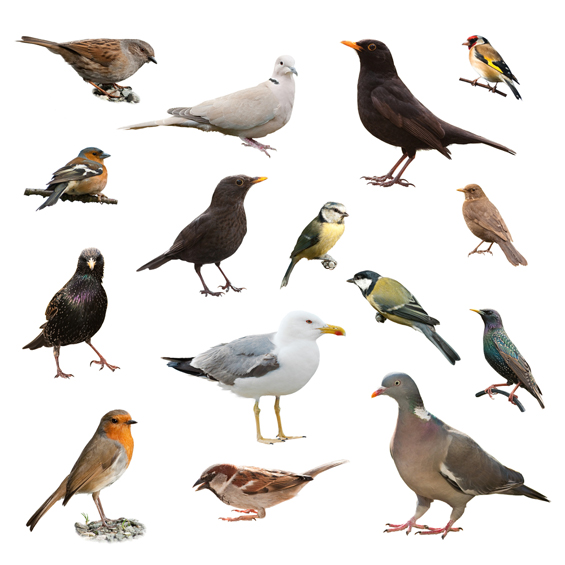
Shocking decline in UK birdlife 19th November 2012 Scientists have reported a huge decline in UK birdlife – from 210 million nesting birds in 1966, down to 166 million in 2012. Breeding birds have been disappearing at an average rate of one pair every minute.
These shocking statistics are contained in the State of the UK’s Birds 2012, a report published today by a group of conservation organisations, charting the ups and downs of bird populations over recent decades. The house sparrow has seen one of the greatest losses of any bird in the country. Although numbers have recently started to rise again, the UK still has barely one-third of the sparrows it did in 1966. The current population is estimated at around 10 million. Dr Mark Eaton is an RSPB scientist who worked on the report. Commenting on the figures, he said: “It is shocking to think that we’ve lost one in five of the individual birds that we had in the 1960s, especially when you think that the 44 million birds we have lost since 1966 is equivalent to the current adult human population of England and Wales.” There have been many changes in the UK which have affected birds, most notably changes in land use and the management of countryside and seas – these can change the amount or quality of key resources needed by birds, such as suitable places to nest or a shortage of food in summer or winter. For some species, however, including the house sparrow, the precise reasons behind these declines aren’t fully understood.
Dr Andy Musgrove, from the British Trust for Ornithology: “We have learnt a great deal about bird numbers in the UK and, particularly, how they have changed through time. Amongst individual species, whilst there have been some winners, the number of losers is greater and the long-term picture is sobering. There is still more to learn though, and we need the continuing support of ever greater numbers of volunteer birdwatchers, on whose efforts all of these numbers are based.” Richard Hearn, Head of Species Monitoring at Wildfowl & Wetlands Trust said: “Sea duck numbers in Europe have crashed, and they urgently need conservation. Velvet scoter overwintering in the UK have gone from several thousand birds to less than a hundred in just a few years, and the picture for long-tailed duck is similar. Several other species have also shown large declines. By tying our findings with similar reports from the Baltic and elsewhere, we’re getting a clearer understanding of the problem, but to be effective we need all countries to work more closely together.” Dr Tim Hill, Natural England’s Chief Scientist, said: “The State of the UK’s Birds report is a great example of ‘citizen science’ in action. Most of the information upon which the report is based is derived from the efforts of the nation’s network of skilled, volunteer ornithologists who contribute to national monitoring schemes like the Breeding Bird Survey and Wetland Bird Survey. Such schemes provide a high quality evidence base underpinning the work of government, conservation organisations and land managers in their joint efforts to conserve the natural environment and its wildlife.”
Comments »
|