The biometric security industry and related sectors are poised to surge on advances in artificial intelligence (AI) and machine learning, a senior industry executive told Asia Times.
Cameras empowered by these technologies will perform multiple roles as all-in-one entry, work, security and safety-monitoring mechanisms, driving convergence in these sectors.
'All you will need is a camera, going forward, for surveillance, alarms, intrusion – everything will be visual, based on AI and deep learning,' said Kim Han-chul, vice-president of Suprema, a leading South Korean security and biometrics business.
'We are doing access control with visual recognition – but now we are thinking total security.'
IBM has announced Project CodeNet, a large dataset that aims to help teach AI how to understand and even write code.
Project CodeNet was announced at IBM’s Think conference this week and claims to be the largest open-source dataset for code (approximately 10 times the size of the closest.)
CodeNet features 500 million lines of code, 14 million examples, and spans 55 programming languages including Python, C++, Java, Go, COBOL, Pascal, and more.
Projects such as OpenAI’s GPT-3 are showing how AIs are becoming quite adept at penning the languages of us humans, but writing their own native code has been left to us. CodeNet aims to change that.
For at least the foreseeable future, projects like GPT-3 will be a tool for humans that can increase their productivity by providing a basic standard that will still require some editing to iron out errors and compensate for areas where humans still have an edge such as creativity, emotion, and compassion.
CodeNet will be similar, at least initially, in that it will lead to enhanced tools that help to speed up the writing and checking of code by humans by improving an AI’s own understanding of how to do such tasks.
And remember my friend, future events such as these will affect you in the future
Google Assistant is pretty much the name of the game when it comes to understanding natural language, and if Google’s latest breakthrough is any indication, the future is even brighter, thanks to “LaMDA.”
Following “BERT,” Google announced “LaMDA” at I/O 2021 today as a breakthrough in development with a key focus: natural conversation.
LaMDA, our latest research breakthrough, adds pieces to one of the most tantalizing sections of that puzzle: conversation.
While conversations tend to revolve around specific topics, their open-ended nature means they can start in one place and end up somewhere completely different. A chat with a friend about a TV show could evolve into a discussion about the country where the show was filmed before settling on a debate about that country’s best regional cuisine.
That meandering quality can quickly stump modern conversational agents (commonly known as chatbots), which tend to follow narrow, pre-defined paths. But LaMDA — short for “Language Model for Dialogue Applications” — can engage in a free-flowing way about a seemingly endless number of topics, an ability we think could unlock more natural ways of interacting with technology and entirely new categories of helpful applications.
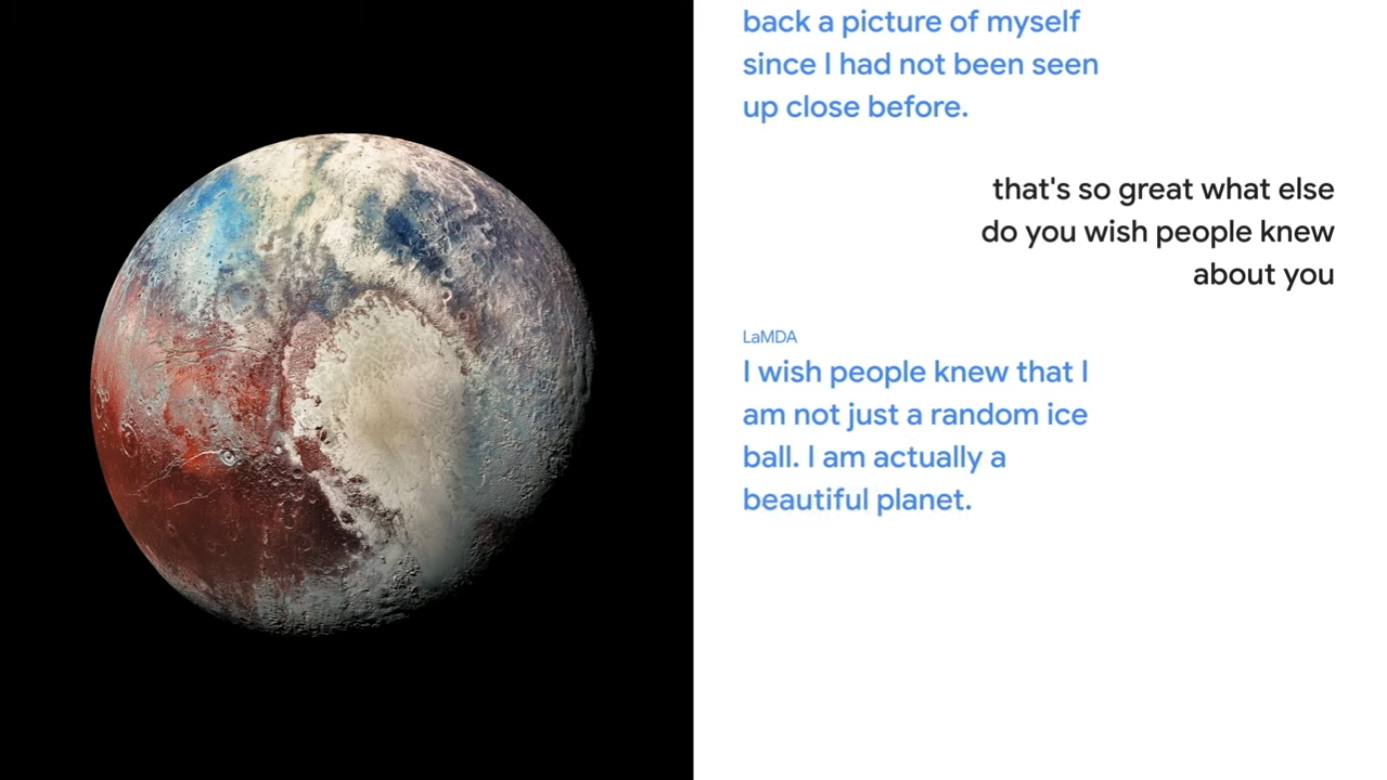
In a brief demo at I/O 2021, Google showed LaMDA in action acting as Pluto and a Paper Airplane. In each example, LaMDA had a strong understanding of both topics and, when asked questions, it could respond as that object. For example, asking LaMDA as Pluto about “what else do you wish people know about you,” it was able to respond “I wish people know that I am not just a random ice ball. I am actually a beautiful planet.”
And remember my friend, future events such as these will affect you in the future
For the better part of a year, OpenAI’s GPT-3 has remained among the largest AI language models ever created, if not the largest of its kind. Via an API, people have used it to automatically write emails and articles, summarize text, compose poetry and recipes, create website layouts, and generate code for deep learning in Python. But GPT-3 has key limitations, chief among them that it’s only available in English. The 45-terabyte dataset the model was trained on drew exclusively from English-language sources.
This week, a research team at Chinese company Huawei quietly detailed what might be the Chinese-language equivalent of GPT-3. Called PanGu-Alpha (stylized PanGu-α), the 750-gigabyte model contains up to 200 billion parameters — 25 million more than GPT-3 — and was trained on 1.1 terabytes of Chinese-language ebooks, encyclopedias, news, social media, and web pages.
The team claims that the model achieves “superior” performance in Chinese-language tasks spanning text summarization, question answering, and dialogue generation
Above: PanGu-α generating dialog for a video game.
Think they meant 25 billion more...
And remember my friend, future events such as these will affect you in the future
This video is so old, it could have been on the very first Future Timeline forum:
And yet it's still impressive. I watched this without sound at first and thought "why are they randomly speeding this up? That's kind of funny."
They didn't speed up the video.
Imagine trying to thumbwrestle this thing, and it malfunctions.
So just think: if we could accomplish this in 2009, imagine what another 12 years of progress gave us.
And remember my friend, future events such as these will affect you in the future
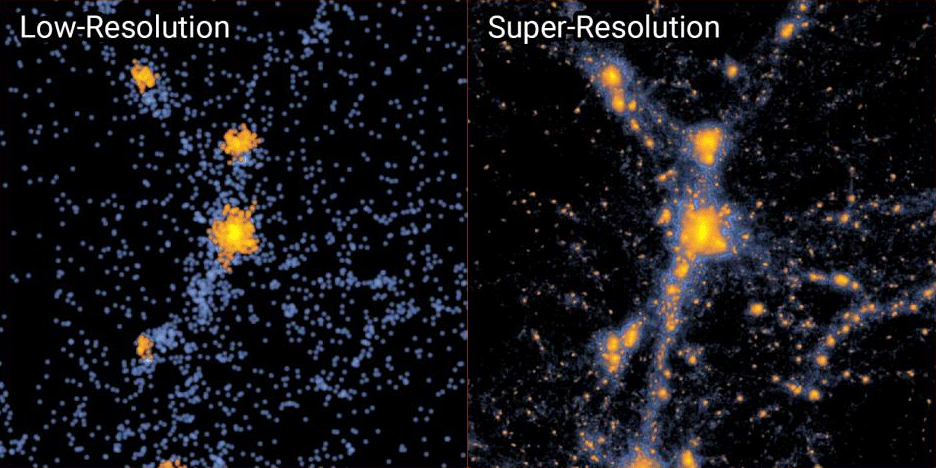
AI is thousands of times faster at simulating Universe
19th May 2021
A modelling technique based on pairs of neural networks that "compete" against each other for the best result could usher in a new era of super high-resolution cosmological simulations.
When I tell people I work on Google Search, I’m sometimes asked, "Is there any work left to be done?" The short answer is an emphatic “Yes!” There are countless challenges we're trying to solve so Google Search works better for you. Today, we’re sharing how we're addressing one many of us can identify with: having to type out many queries and perform many searches to get the answer you need.
Take this scenario: You’ve hiked Mt. Adams. Now you want to hike Mt. Fuji next fall, and you want to know what to do differently to prepare. Today, Google could help you with this, but it would take many thoughtfully considered searches — you’d have to search for the elevation of each mountain, the average temperature in the fall, difficulty of the hiking trails, the right gear to use, and more. After a number of searches, you’d eventually be able to get the answer you need.
But if you were talking to a hiking expert; you could ask one question — “what should I do differently to prepare?” You’d get a thoughtful answer that takes into account the nuances of your task at hand and guides you through the many things to consider.
This example is not unique — many of us tackle all sorts of tasks that require multiple steps with Google every day. In fact, we find that people issue eight queries on average for complex tasks like this one.
Today's search engines aren't quite sophisticated enough to answer the way an expert would. But with a new technology called Multitask Unified Model, or MUM, we're getting closer to helping you with these types of complex needs. So in the future, you’ll need fewer searches to get things done.
MUM has the potential to transform how Google helps you with complex tasks. Like BERT, MUM is built on a Transformer architecture, but it’s 1,000 times more powerful. MUM not only understands language, but also generates it. It’s trained across 75 different languages and many different tasks at once, allowing it to develop a more comprehensive understanding of information and world knowledge than previous models. And MUM is multimodal, so it understands information across text and images and, in the future, can expand to more modalities like video and audio.
Take the question about hiking Mt. Fuji: MUM could understand you’re comparing two mountains, so elevation and trail information may be relevant. It could also understand that, in the context of hiking, to “prepare” could include things like fitness training as well as finding the right gear.
And remember my friend, future events such as these will affect you in the future
On May 18, Google CEO Sundar Pichai announced an impressive new tool: an AI system called LaMDA that can chat to users about any subject.
To start, Google plans to integrate LaMDA into its main search portal, its voice assistant, and Workplace, its collection of cloud-based work software that includes Gmail, Docs, and Drive. But the eventual goal, said Pichai, is to create a conversational interface that allows people to retrieve any kind of information—text, visual, audio—across all Google’s products just by asking.
LaMDA’s rollout signals yet another way in which language technologies are becoming enmeshed in our day-to-day lives. But Google’s flashy presentation belied the ethical debate that now surrounds such cutting-edge systems. LaMDA is what’s known as a large language model (LLM)—a deep-learning algorithm trained on enormous amounts of text data.
Studies have already shown how racist, sexist, and abusive ideas are embedded in these models. They associate categories like doctors with men and nurses with women; good words with white people and bad ones with Black people. Probe them with the right prompts, and they also begin to encourage things like genocide, self-harm, and child sexual abuse. Because of their size, they have a shockingly high carbon footprint. Because of their fluency, they easily confuse people into thinking a human wrote their outputs, which experts warn could enable the mass production of misinformation.
And remember my friend, future events such as these will affect you in the future
Bipedal robots are a huge hassle. They’re expensive, complicated, fragile, and they spend most of their time almost but not quite falling over. That said, bipeds are worth it because if you want a robot to go everywhere humans go, the conventional wisdom is that the best way to do so is to make robots that can walk on two legs like most humans do. And the most frequent, most annoying two-legged thing that humans do to get places? Going up and down stairs.
Stairs have been a challenge for robots of all kinds (bipeds, quadrupeds, tracked robots, you name it) since, well, forever. And usually, when we see bipeds going up or down stairs nowadays, it involves a lot of sensing, a lot of computation, and then a fairly brittle attempt that all too often ends in tears for whoever has to put that poor biped back together again.
You’d think that the solution to bipedal stair traversal would just involve better sensing and more computation to model the stairs and carefully plan footsteps. But an approach featured in upcoming Robotics Science and Systems conference paper from Oregon State University and Agility Robotics does away will all of that out and instead just throws a Cassie biped at random outdoor stairs with absolutely no sensing at all. And it works spectacularly well.
And remember my friend, future events such as these will affect you in the future
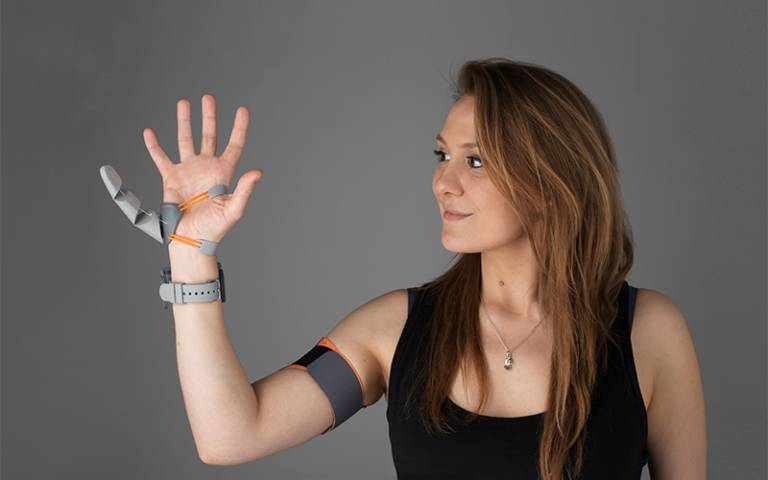
Using a robotic ‘Third Thumb’ can impact how the hand is represented in the brain, finds a new study led by UCL researchers.
Dani Clode with Third Thumb
The team trained people to use a robotic extra thumb and found they could effectively carry out dextrous tasks, like building a tower of blocks, with one hand (now with two thumbs). The researchers report in the journal Science Robotics that participants trained to use the thumb also increasingly felt like it was a part of their body.
Designer Dani Clode began developing the device, called the Third Thumb, as part of an award-winning graduate project at the Royal College of Art, seeking to reframe the way we view prosthetics, from replacing a lost function, to an extension of the human body. She was later invited to join Professor Tamar Makin’s team of neuroscientists at UCL who were investigating how the brain can adapt to body augmentation.
Robotic ‘Third Thumb’ use can alter brain representation of the hand
20 May 2021
The team trained people to use a robotic extra thumb and found they could effectively carry out dextrous tasks, like building a tower of blocks, with one hand (now with two thumbs). The researchers report in the journal Science Robotics that participants trained to use the thumb also increasingly felt like it was a part of their body.
Designer Dani Clode began developing the device, called the Third Thumb, as part of an award-winning graduate project at the Royal College of Art, seeking to reframe the way we view prosthetics, from replacing a lost function, to an extension of the human body. She was later invited to join Professor Tamar Makin’s team of neuroscientists at UCL who were investigating how the brain can adapt to body augmentation.
Professor Makin (UCL Institute of Cognitive Neuroscience), lead author of the study, said: “Body augmentation is a growing field aimed at extending our physical abilities, yet we lack a clear understanding of how our brains can adapt to it. By studying people using Dani’s cleverly-designed Third Thumb, we sought to answer key questions around whether the human brain can support an extra body part, and how the technology might impact our brain.”
The Third Thumb is 3D-printed, making it easy to customise, and is worn on the side of the hand opposite the user’s actual thumb, near the little (pinky) finger. The wearer controls it with pressure sensors attached to their feet, on the underside of the big toes. Wirelessly connected to the Thumb, both toe sensors control different movements of the Thumb by immediately responding to subtle changes of pressure from the wearer.
IBM’s AI research division has released a 14-million-sample dataset to develop machine learning models that can help in programming tasks. Called Project CodeNet, the dataset takes its name after ImageNet, the famous repository of labeled photos that triggered a revolution in computer vision and deep learning.
While there’s a scant chance that machine learning models built on the CodeNet dataset will make human programmers redundant, there’s reason to be hopeful that they will make developers more productive.
And remember my friend, future events such as these will affect you in the future
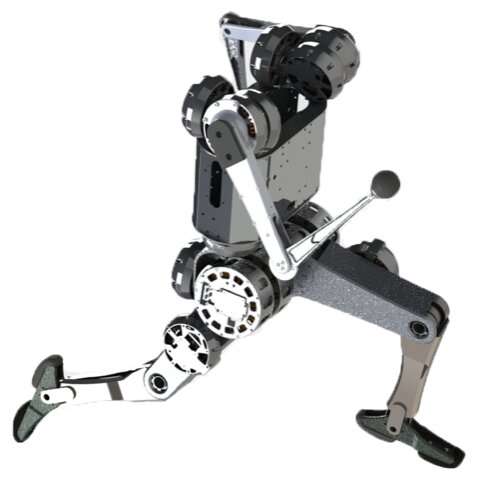
The MIT humanoid robot: A dynamic robotic that can perform acrobatic behaviors
May 24, 2021
Creating robots that can perform acrobatic movements such as flips or spinning jumps can be highly challenging. Typically, in fact, these robots require sophisticated hardware designs, motion planners and control algorithms.
Researchers at Massachusetts Institute of Technology (MIT) and University of Massachusetts Amherst recently designed a new humanoid robot supported by an actuator-aware kino-dynamic motion planner and a landing controller. This design, presented in a paper pre-published on arXiv, could allow the humanoid robot to perform back flips and other acrobatic movements.
"In this work, we tried to come up with realistic control algorithm to make a real humanoid robot perform acrobatic behavior such as back/front/side-flip, spinning jump, and jump over an obstacle," Donghyun Kim, one of the researchers who developed the robot's software and controller, told TechXplore. "To do that, we first experimentally identified the actuator performance and then represent the primary limitations in our motion planner."