BCIs & Neurotechnology News and Discussions
-
firestar464
- Posts: 8408
- Joined: Wed Oct 12, 2022 7:45 am
Re: BCIs & Neurotechnology News and Discussions
What could go wrong?
-
Powers

- Posts: 1183
- Joined: Fri Apr 07, 2023 7:32 pm
- Location: a.k.a Lurking, Member, Lorem Ipsum, ..., --- and ººº.
 Re: BCIs & Neurotechnology News and Discussions
Who can measure?
-
weatheriscool
- Posts: 26094
- Joined: Sun May 16, 2021 6:16 pm
- Contact:
Re: BCIs & Neurotechnology News and Discussions
Brain implant lets man control Amazon's Alexa with thought
https://medicalxpress.com/news/2024-09- ... ought.html
https://medicalxpress.com/news/2024-09- ... ought.html
A patient with a degenerative disease was able to command Amazon's Alexa digital assistant with his mind, the company behind the technological innovation announced Monday, letting him stream shows and control devices with only his thoughts.
An implant in a blood vessel on the surface of the 64-year-old man's brain let him mentally "tap" icons on an Amazon Fire tablet, brain-computer interface company Synchron said.
The patient, who is living with amyotrophic lateral sclerosis (ALS), was able to make video calls, play music, stream shows, control smart home devices such as lights, shop online, and read books by using his mind to direct Alexa, according to the New York-based company.
ALS is a degenerative nerve disease that leads to muscle weakness and paralysis.
-
weatheriscool
- Posts: 26094
- Joined: Sun May 16, 2021 6:16 pm
- Contact:
Re: BCIs & Neurotechnology News and Discussions
Surgery-free Neuralink rival enables thought-controlled smart home
By Abhimanyu Ghoshal
September 17, 2024
https://newatlas.com/technology/synchro ... interface/
By Abhimanyu Ghoshal
September 17, 2024
https://newatlas.com/technology/synchro ... interface/
Neurotech company Synchron has been making massive strides over the past couple of years. It's just announced that a trial participant has used its brain-computer interface (BCI) to turn on the lights in his home, see who is at the door, and choose what to watch on the TV – hands-free and without even a voice command.
That's thanks to Synchron's interface translating his thoughts into commands relayed to Amazon's Alexa service. The virtual assistant is set up on his tablet and connected to his smart home devices. The trial participant, who is living with amyotrophic lateral sclerosis (ALS) and can't use his hands, can simply think about navigating through options displayed on the tablet to engage them.
A 'Stentrode' embedded in a blood vessel on the surface of his brain houses electrodes that detect motor intent. The participant uses his thoughts to select which tiles to press on the interface and perform actions via Alexa. Watch him use the system in the video below.
-
weatheriscool
- Posts: 26094
- Joined: Sun May 16, 2021 6:16 pm
- Contact:
Re: BCIs & Neurotechnology News and Discussions
Future Neuralink Whole Brain Interfaces for $1000 Each
October 29, 2024 by Brian Wang
October 29, 2024 by Brian Wang
https://www.nextbigfuture.com/2024/10/f ... -each.htmlElon Musk gave a 30-minute lecture on @Neuralink last month at the 2024 Congress of Neurological Surgeons (CNS).
The first generation Neuralink device has 1000 electrodes and 100 electrodes are reading at about 10 bits per second per electrode.
The second generation Neuralink device should have 3000 electrodes and 1500 electrodes will be reading.
Future Neuralinks will have a million or more electrodes.
Neuralink will be able to fix any brain related problem that involves signals in and out. This means curing blindness where the optic nerve is damaged by directly stimulating the visual cortex. It could cure epilepsy and paralysis caused by nerve or spinal cord damage.
There are about 3000 neurosurgeons in the USA. Neuralink needs to scale the surgery with automation to ultimately provide the service to tens of millions and then billions of people. The neurosurgeons would shift overseeing the operating machines. This is similar to eye surgeons overseeing the LASIK laser machines.
In high volume (millions?), the Neuralink device will drop to $5000-10000. In really high volume (tens or hundreds of millions per year) the Neuralink device will drop to about $1000 each.
-
weatheriscool
- Posts: 26094
- Joined: Sun May 16, 2021 6:16 pm
- Contact:
Re: BCIs & Neurotechnology News and Discussions
High-tech brain computer interface trains you to relax and sleep better
By Bronwyn Thompson
October 31, 2024
By Bronwyn Thompson
October 31, 2024
https://newatlas.com/wearables/oxyzen-brain-ai/It's reasonable to say that, as we're increasingly plugged-in to a 24/7 cycle of news, entertainment and social media, we're finding less time to opt out and focus on self-care. And while meditation has shown to have well-studied mental and physical benefits, it can be a challenge to start and stick with.
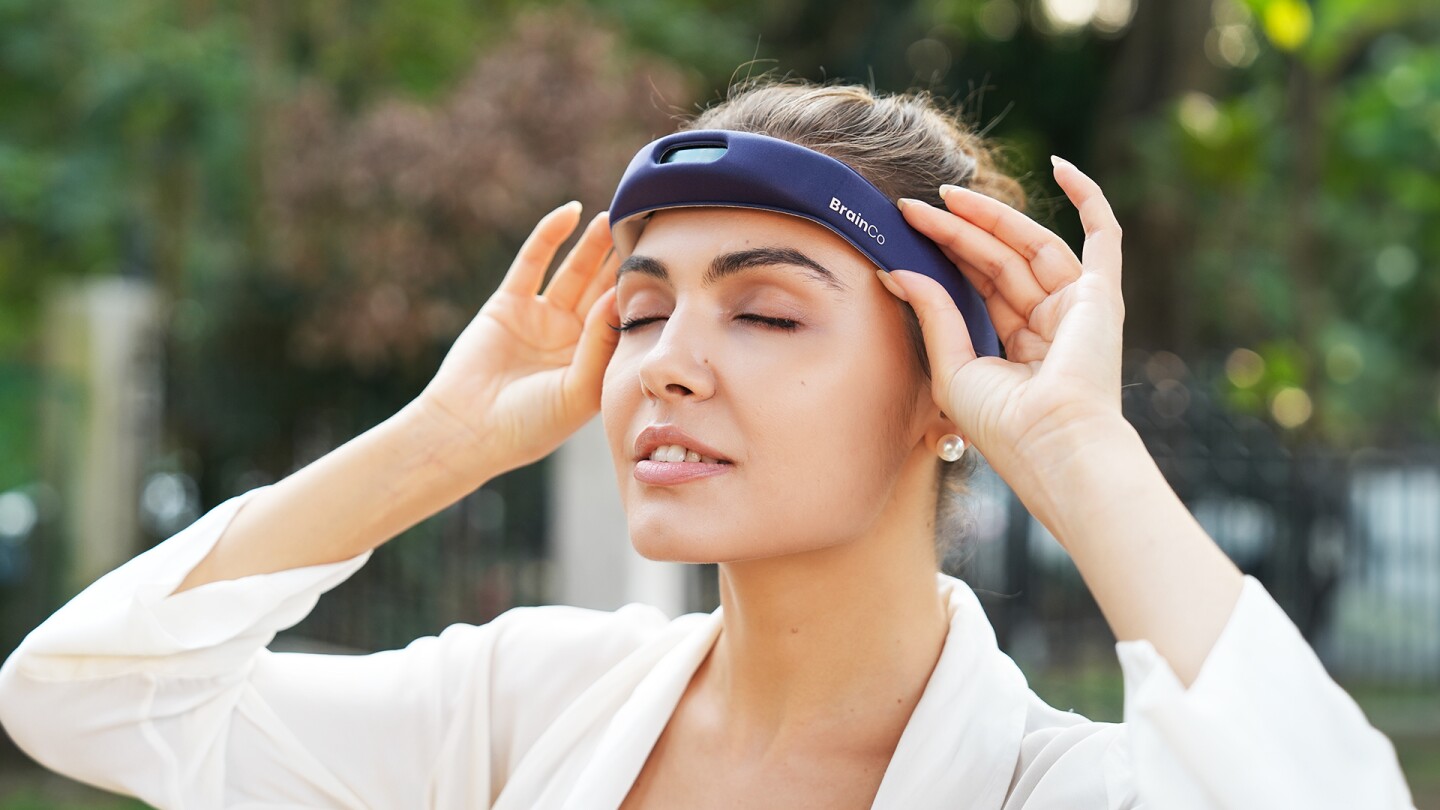
Now, the same smart technological advances that keep us glued to our screens may now also be able to train even the most resistant brains in the practice of meditation and mindfulness. OxyZen, designed by the Harvard Innovation Lab, is the newest innovation from BrainCo, an established tech company that has so far developed smart, AI-integrated prosthetics and knee joints to give wearers more autonomy and control over their mobility.
-
weatheriscool
- Posts: 26094
- Joined: Sun May 16, 2021 6:16 pm
- Contact:
-
firestar464
- Posts: 8408
- Joined: Wed Oct 12, 2022 7:45 am
-
weatheriscool
- Posts: 26094
- Joined: Sun May 16, 2021 6:16 pm
- Contact:
Re: BCIs & Neurotechnology News and Discussions
Brain stimulation helps partially paralyzed patients walk again
By Michael Irving
December 08, 2024
By Michael Irving
December 08, 2024
https://newatlas.com/medical-devices/pa ... imulation/
Two patients with spinal injuries have seen improvements in their ability to walk again, thanks to deep brain stimulation (DBS). Intriguingly, the therapy targets a region of the brain that normally isn’t associated with motor skills.
DBS involves surgically implanting electrodes into specific regions of the brain, where they can be activated to stimulate specific neurons. This technique has proven useful in treating neurological conditions like depression, Parkinson’s, Alzheimer’s and anorexia.
Now, DBS has been used to help two people with partial paralysis regain mobility in their legs. Researchers at EPFL and Lausanne University Hospital surgically implanted electrodes into the lateral hypothalamus (LH) region of their brains, while the patients were fully awake.
“Once the electrode was in place and we performed the stimulation, the first patient immediately said, ‘I feel my legs’,” said Jocelyne Bloch, the neurosurgeon who performed the procedure. “When we increased the stimulation, she said, ‘I feel the urge to walk!’ This real-time feedback confirmed we had targeted the correct region, even if this region had never been associated with the control of the legs in humans. At this moment, I knew that we were witnessing an important discovery for the anatomical organization of brain functions.”
-
weatheriscool
- Posts: 26094
- Joined: Sun May 16, 2021 6:16 pm
- Contact:
Re: BCIs & Neurotechnology News and Discussions
Inkjet-printed scalp tattoos may allow for on-the-go brain monitoring
By Ben Coxworth
December 13, 2024
By Ben Coxworth
December 13, 2024
https://newatlas.com/medical-devices/in ... g-tattoos/
While electroencephalography (EEG) can provide a wealth of information on the electrical activity of an individual's brain, that person is required to wear a clumsy skull cap full of electrodes. Such caps could soon be replaced, however, with inkjet-printed scalp tattoos.
Among other things, EEGs are frequently utilized to monitor and diagnose a wide variety of brain injuries and brain disorders such as epilepsy. They're also used to assess sleep problems, and even to allow paralyzed individuals to control computers (or other devices) via their thoughts.

-
weatheriscool
- Posts: 26094
- Joined: Sun May 16, 2021 6:16 pm
- Contact:
Re: BCIs & Neurotechnology News and Discussions
Three Patients With Neuralink Implants, 10 Bps and Study for Robotic Arm Control
January 19, 2025 by Brian Wang
Neuralink has been implanted in three patients, communication speed is nearing 10 bits per second and there is new study to integrate Neuralink to control robotic arms.
https://www.nextbigfuture.com/2025/01/t ... ntrol.html

Re: BCIs & Neurotechnology News and Discussions
Progress and Challenges in Brain Implants
January 24, 2025
Introduction:
January 24, 2025
Introduction:
Read more here: https://www.eurekalert.org/news-releases/1071599(Eurekalert) In a paper recently published in the leading journal "The Lancet Digital Health", a scientific team led by Stanisa Raspopovic from MedUni Vienna looks at the progress and challenges in the research and development of brain implants. New achievements in the field of this technology are seen as a source of hope for many patients with neurological disorders and have been making headlines recently. As neural implants have an effect not only on a physical but also on a psychological level, researchers are calling for particular ethical and scientific care when conducting clinical trials.
The research and development of neuroprostheses has entered a phase in which experiments on animal models are being followed by tests on humans. Only recently, reports of a paraplegic patient in the USA who was implanted with a brain chip as part of a clinical trial caused a stir. With the help of the implant, the man can control his wheelchair, operate the keyboard on his computer and use the cursor in such a way that he can even play chess. About a month after the implantation, however, the patient realised that the precision of the cursor control was decreasing and the time between his thoughts and the computer actions was delayed. "The problem could be partially, but not completely, resolved - and illustrates just one of the potential challenges for research into this technology," explains study author Stanisa Raspopovic from MedUni Vienna's Center for Medical Physics and Biomedical Engineering, who published the paper together with Marcello Ienca (Technical University of Munich) and Giacomo Valle (ETH Zurich). "The questions of who will take care of the technical maintenance after the end of the study and whether the device will still be available to the patient at all after the study has been cancelled or completed are among the many aspects that need to be clarified in advance in neuroprosthesis research and development, which is predominantly industry-led."
Don't mourn, organize.
-Joe Hill
-Joe Hill
Re: BCIs & Neurotechnology News and Discussions
Meta’s Brain-to-text Tech is Here. We are Not Remotely Ready.
Celia Ford
February 19, 2025
Introduction:
Celia Ford
February 19, 2025
Introduction:
Additional extract:(Vox) Elon Musk has arguably been the boldest broligarch when it comes to brain-machine interfaces. But Mark Zuckerberg is hot on his heels.
Shortly after Musk co-founded Neuralink — the company that’s put chips in three human brains, and counting — in 2016, Meta (then Facebook) also ventured into neurotechnology research, announcing plans to build tech that would let people type with their brains and hear language through their skin.
Since then, Meta-funded researchers have figured out how to decode speech from activity recorded from surgically implanted electrodes inside people’s brains. While brain surgery could feel worth it for a paralyzed person who wants to regain the ability to communicate, invasive devices like these are a hard sell for someone who just wants to type faster. Commercial devices regular people might actually want need to be wearable and removable, rather than permanent.
Read more here: https://www.vox.com/future-perfect/400 ... h-privacyThis month, though, Meta made a breakthrough.
In collaboration with the Basque Center on Cognition, Brain and Language, researchers at Meta’s Fundamental Artificial Intelligence Research (FAIR) lab were able to accurately decode unspoken sentences from brain signals recorded outside the skull — no surgery required.
Don't mourn, organize.
-Joe Hill
-Joe Hill
-
weatheriscool
- Posts: 26094
- Joined: Sun May 16, 2021 6:16 pm
- Contact:
Re: BCIs & Neurotechnology News and Discussions
Direct translation of brain imaging to text with MindLLM
https://medicalxpress.com/news/2025-02- ... ndllm.html
by Justin Jackson , Medical Xpress
https://medicalxpress.com/news/2025-02- ... ndllm.html
by Justin Jackson , Medical Xpress
Yale University, Dartmouth College, and the University of Cambridge researchers have developed MindLLM, a subject-agnostic model for decoding functional magnetic resonance imaging (fMRI) signals into text.
Integrating a neuroscience-informed attention mechanism with a large language model (LLM), the model outperforms existing approaches with a 12.0% improvement in downstream tasks, a 16.4% increase in unseen subject generalization, and a 25.0% boost in novel task adaptation compared to prior models like UMBRAE, BrainChat, and UniBrain.
Decoding brain activity into natural language has significant implications for neuroscience and brain-computer interface applications. Previous attempts have faced challenges in predictive performance, limited task variety, and poor generalization across subjects. Existing approaches often require subject-specific parameters, limiting their ability to generalize across individuals.
In the study "MindLLM: A Subject-Agnostic and Versatile Model for fMRI-to-Text Decoding," published on the pre-print server arXiv, MindLLM was evaluated using comprehensive fMRI-to-text benchmarks based on data from eight individuals (NSD—Natural Scenes Dataset), a widely used standard dataset in fMRI research.
Re: BCIs & Neurotechnology News and Discussions
Hong Kong University Engineering Team and Partner Universities Develop Revolutionary Brain-computer Interface Decoding System
March 26, 2025
Introduction:
March 26, 2025
Introduction:
Read more here: https://www.eurekalert.org/news-releases/1078402(Eurekalert) Professor Ngai Wong and Dr Zhengwu Liu from the Department of Electrical and Electronic Engineering at the Faculty of Engineering at the University of Hong Kong (HKU), in collaboration with research teams at Tsinghua University and Tianjin University, have conducted groundbreaking research on memristor-based brain-computer interfaces (BCIs). Published in Nature Electronics, this research presents an innovative approach for implementing energy-efficient adaptive neuromorphic decoders in BCIs that can effectively co-evolve with changing brain signals.
A brain-computer interface (BCI) is a computer-based system that creates a direct communication pathway between the brain and external devices, such as computers, allowing individuals to control these devices or applications purely through brain activity, bypassing the need for traditional muscle movements or the nervous system. This technology holds immense potential across a wide range of fields, from assistive technologies to neurological rehabilitation. However, traditional BCIs still face challenges.
"The brain is a complex dynamic system with signals that constantly evolve and fluctuate. This poses significant challenges for BCIs to maintain stable performance over time," said Professor Wong and Dr Liu. "Additionally, as brain-machine links grow in complexity, traditional computing architectures struggle with real-time processing demands."
The collaborative research addressed these challenges by developing a 128K-cell memristor chip that serves as an adaptive brain signal decoder. The team introduced a hardware-efficient one-step memristor decoding strategy that significantly reduces computational complexity while maintaining high accuracy.
Don't mourn, organize.
-Joe Hill
-Joe Hill
-
weatheriscool
- Posts: 26094
- Joined: Sun May 16, 2021 6:16 pm
- Contact:
-
weatheriscool
- Posts: 26094
- Joined: Sun May 16, 2021 6:16 pm
- Contact:
Re: BCIs & Neurotechnology News and Discussions
Brain waves become spoken words in AI breakthrough for paralysis
By Abhimanyu Ghoshal
April 01, 2025
https://newatlas.com/medical-tech/brain ... paralysis/
By Abhimanyu Ghoshal
April 01, 2025
https://newatlas.com/medical-tech/brain ... paralysis/
California-based researchers have developed an AI-powered system to restore natural speech for paralyzed people in real time and using their own voices.
This new technology from researchers at University of California Berkeley and University of California San Francisco, takes advantage of devices that can tap into the brain to measure neural activity, along with AI that actually learns how to build the sounds of a patient's voice.
That's far ahead of advancements as recent as last year in the field of brain-computer interfaces for synthesizing speech.
"Our streaming approach brings the same rapid speech decoding capacity of devices like Alexa and Siri to neuroprostheses," explained Gopala Anumanchipalli, an assistant professor of electrical engineering and computer sciences at UC Berkeley and co-principal investigator of the study that appeared this week in Nature Neuroscience. "Using a similar type of algorithm, we found that we could decode neural data and, for the first time, enable near-synchronous voice streaming. The result is more naturalistic, fluent speech synthesis."
-
weatheriscool
- Posts: 26094
- Joined: Sun May 16, 2021 6:16 pm
- Contact:
Re: BCIs & Neurotechnology News and Discussions
Upgraded Brain Implant Helps Stroke Survivor Generate Speech in Real Time
The 'mind-reading' interface now mimics natural language instead of sounding like a piece of outdated text-to-speech software.
By Adrianna Nine April 2, 2025
The 'mind-reading' interface now mimics natural language instead of sounding like a piece of outdated text-to-speech software.
By Adrianna Nine April 2, 2025
https://www.extremetech.com/science/upg ... -real-timeTwo years ago, we shared the story of how a novel pair of brain implants gave people experiencing paralysis the ability to translate their thoughts into speech. Since then, one of the implants has received a major upgrade. Scientists at the University of California, San Francisco have found a way to nearly eliminate delays in their "brain-to-voice" interface, making it far easier for stroke survivors and ALS patients to speak and respond to others in real time.
The interface consists of a paper-thin, 253-microelectrode array—placed in the cortex of a patient's brain—and a deep-learning model that turns neurological signals into words. As the patient "silently speaks a sentence," the model feeds its translations to a look-alike avatar on a screen, which talks on the patient's behalf.
A video published in 2023 demonstrates that the original system wasn't perfect. Speech generated by the interface was stilted, like early versions of Siri, and it would take several seconds for the interface to generate a response to another person's question. Still, the system was far better than the alternative: Ann, a 47-year-old stroke survivor, had previously used a letterboard to painstakingly conduct conversations with her family. The interface turned what would have been a five to seven-minute conversation into a single minute.
-
weatheriscool
- Posts: 26094
- Joined: Sun May 16, 2021 6:16 pm
- Contact:
Re: BCIs & Neurotechnology News and Discussions
Researchers Develop Ultra-Small Brain Sensor With 96% Accuracy
The sensor is slightly more invasive than an electrode but far less invasive than a Neuralink-style implant.
By Adrianna Nine April 16, 2025
The sensor is slightly more invasive than an electrode but far less invasive than a Neuralink-style implant.
By Adrianna Nine April 16, 2025
https://www.extremetech.com/science/res ... 6-accuracyResearchers have developed a novel brain sensor that picks up on users' brain signals with impressive accuracy—and it's so small that it can be weaved into the base of the hair. Only slightly more invasive than an electrode but far less invasive than a Neuralink-style implant, the sensor offers a new path forward for tech wearables and assistive devices, which increasingly use brain signals for both inputs and feedback.
Mechanical and biomedical engineers at the Georgia Institute of Technology describe their sensor in a paper for Proceedings of the National Academy of Sciences. Considered a brain-computer interface, or BCI, the sensor itself consists of conductive polymer microneedles that capture electrical changes in the brain. The microneedles then send those signals along a polyimide and copper wire. Together, this package constitutes a sensor less than a millimeter wide and roughly the length of a grain of rice.
-
weatheriscool
- Posts: 26094
- Joined: Sun May 16, 2021 6:16 pm
- Contact:
Re: BCIs & Neurotechnology News and Discussions
Soft brainstem implant delivers high-resolution hearing
https://medicalxpress.com/news/2025-04- ... ution.html
by Ecole Polytechnique Federale de Lausanne
https://medicalxpress.com/news/2025-04- ... ution.html
by Ecole Polytechnique Federale de Lausanne
Over the last couple of decades, many people have regained hearing functionality with the most successful neurotech device to date: the cochlear implant. But for those whose cochlear nerve is too damaged for a standard cochlear implant, a promising alternative is an auditory brainstem implant (ABI).
Unfortunately, current ABIs are rigid implants that do not allow for good tissue contact. As a result, doctors commonly switch off a majority of the electrodes due to unwanted side effects such as dizziness or facial twitching—leading most ABI users to perceive only vague sounds, with little speech intelligibility.
