https://news.sky.com/story/emergency-pl ... k-13225378Monday 30 September 2024 16:13, UK
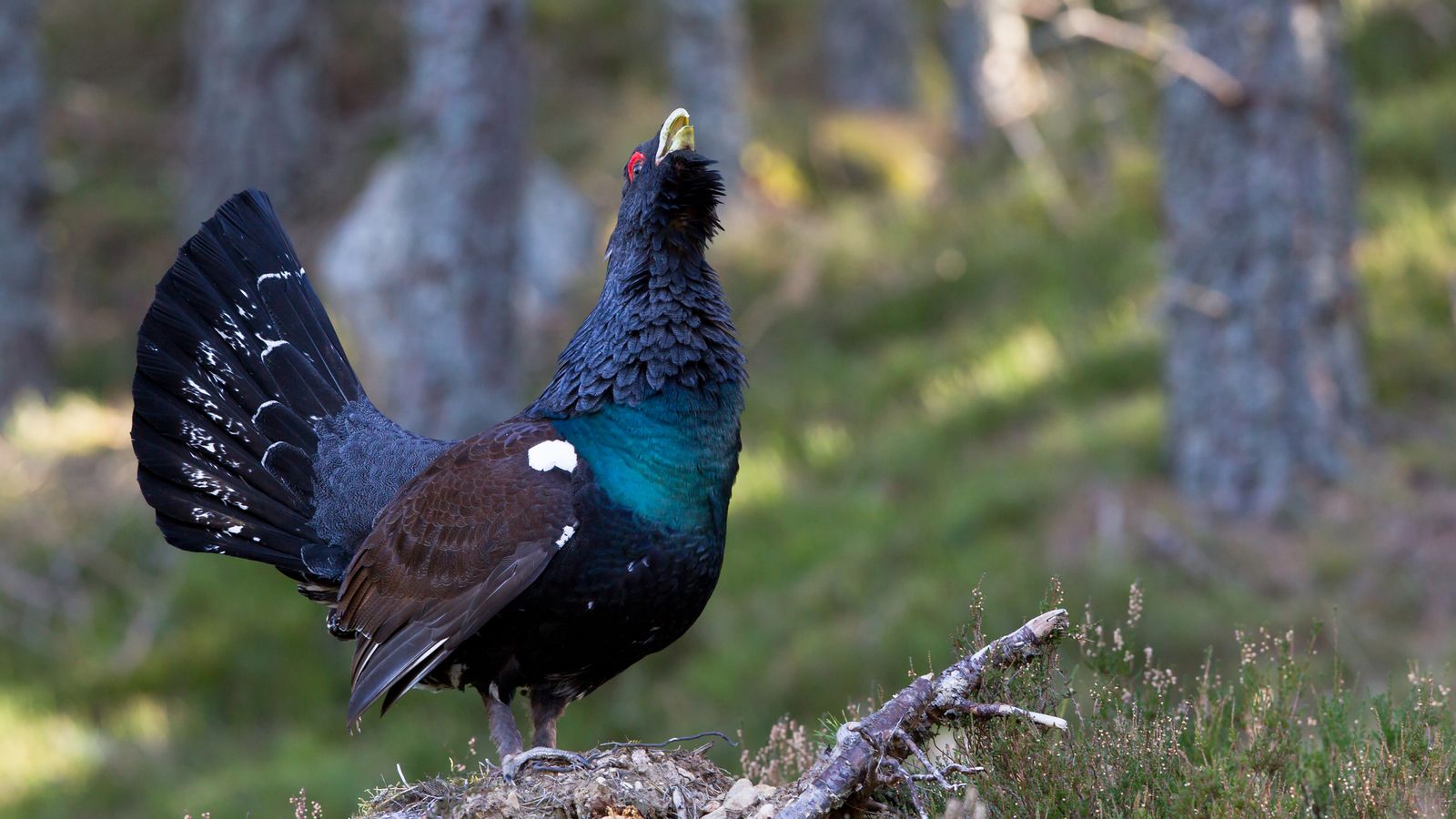
An emergency bid to save a population of capercaillie in the Scottish Highlands has been launched.
The rare species of woodland grouse has been in decline for decades and is expected to become extinct in the next 20 to 30 years.
Cairngorms National Park is home to 85% of the UK's capercaillie population, with only 532 remaining in Britain.
They are a ground-nesting species, with pine martens and badgers among the animals that eat their eggs and chicks.
In the early 1990s, it was predicted that capercaillie would be extinct in Scotland by 2010 and efforts were kickstarted by conservationists to save them.
Rewilding & Conservation News and Discussions
-
Time_Traveller

- Posts: 3025
- Joined: Sun May 16, 2021 4:49 pm
- Location: New York City, USA, November 5th 2032 C.E.
Re: Rewilding & Conservation News and Discussions
Emergency plan to save capercaillie in Cairngorms National Park
“In the quantum multiverse, every choice, every decision you've ever and never made exists in an unimaginably vast ensemble of parallel universes.”

Re: Rewilding & Conservation News and Discussions
Depressing. 
-----
Wildlife numbers fall by 73% in 50 years, global stocktake finds
10 October 2024
Human activity is continuing to drive what conservation charity the World Wide Fund for Nature (WWF) calls a "catastrophic" loss of species.
From elephants in tropical forests to hawksbill turtles off the Great Barrier Reef, populations are plummeting, according to a stocktake of the world's wildlife.
The Living Planet Report, external, a comprehensive overview of the state of the natural world, reveals global wildlife populations have shrunk by an average of 73% in the past 50 years.
The loss of wild spaces was "putting many ecosystems on the brink", WWF UK head Tanya Steele said, and many habitats, from the Amazon to coral reefs, were "on the edge of very dangerous tipping points".
The report is based on the Living Planet Index of more than 5,000 bird, mammal, amphibian, reptile and fish population counts over five decades.
https://www.bbc.co.uk/news/articles/c5y3j0vzpl3o

© Jacqueline Lisboa / WWF-Brazil
-----
Wildlife numbers fall by 73% in 50 years, global stocktake finds
10 October 2024
Human activity is continuing to drive what conservation charity the World Wide Fund for Nature (WWF) calls a "catastrophic" loss of species.
From elephants in tropical forests to hawksbill turtles off the Great Barrier Reef, populations are plummeting, according to a stocktake of the world's wildlife.
The Living Planet Report, external, a comprehensive overview of the state of the natural world, reveals global wildlife populations have shrunk by an average of 73% in the past 50 years.
The loss of wild spaces was "putting many ecosystems on the brink", WWF UK head Tanya Steele said, and many habitats, from the Amazon to coral reefs, were "on the edge of very dangerous tipping points".
The report is based on the Living Planet Index of more than 5,000 bird, mammal, amphibian, reptile and fish population counts over five decades.
https://www.bbc.co.uk/news/articles/c5y3j0vzpl3o
© Jacqueline Lisboa / WWF-Brazil
-
Time_Traveller
- Posts: 3025
- Joined: Sun May 16, 2021 4:49 pm
- Location: New York City, USA, November 5th 2032 C.E.
Re: Rewilding & Conservation News and Discussions
UK appoints first nature envoy to tackle species decline
https://www.theguardian.com/environment ... es-declineSun 20 Oct 2024 18.00 BST
The government has appointed the UK’s first envoy for nature, a former environment campaigner described as “the environmentalist’s environmentalist”, who will be charged with forging global agreement on halting the precipitous decline of species.
Ruth Davis, the new special representative for nature, is in Colombia for the start of two weeks of vital talks that will decide the global response to the biodiversity crisis. The UK has played a leading role in such efforts in the past and Davis helped draw up a global pledge on deforestation that was one of the main outcomes of the UN Cop26 climate summit hosted in Glasgow in 2021.
She will report to the foreign secretary, David Lammy, and the environment secretary, Steve Reed. The appointment of a nature envoy, first revealed by the Guardian, is an initial step in the government’s plan to put the UK at the centre of global efforts to stave off environmental collapse.
Davis previously held senior roles at charities including Greenpeace, the RSPB and Plantlife, and the thinktank and consultancy E3G. She has worked on environmental policy for 25 years, and is renowned for her commitment – at the Copenhagen climate conference in 2009 she was said to have slept overnight in a cupboard in the conference centre as the talks dragged on.
Reed is leading the UK’s negotiations on biodiversity in Cali, Colombia. He said: “We cannot address the nature and climate crises without coordinated global action. That is why we have appointed Ruth as our special representative for nature – a landmark first – who will champion our ambition to put climate and nature at the heart of our foreign policy.”
“In the quantum multiverse, every choice, every decision you've ever and never made exists in an unimaginably vast ensemble of parallel universes.”
-
Time_Traveller
- Posts: 3025
- Joined: Sun May 16, 2021 4:49 pm
- Location: New York City, USA, November 5th 2032 C.E.
Re: Rewilding & Conservation News and Discussions
Hedgehogs ‘near threatened’ on red list after 30% decline over past decade
https://www.theguardian.com/environment ... ast-decadeMon 28 Oct 2024 15.00 GMT
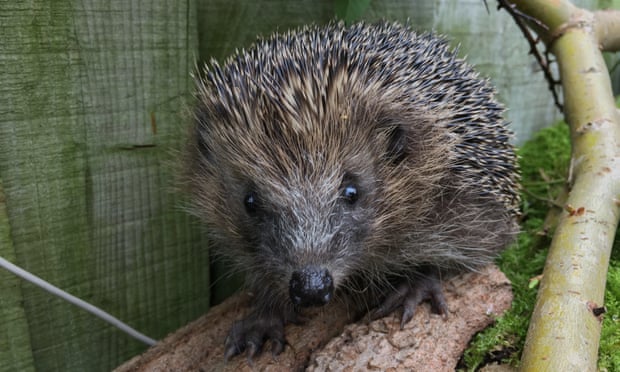
Hedgehogs are now listed as “near threatened” on the International Union for Conservation of Nature’s red list after a decline in numbers of at least 30% over the past decade across much of their range.
While hedgehogs were once common across Europe, and were until now listed as of “least concern” on the red list, they are being pushed towards extinction by urban development, intensive farming and roads, which have fragmented their habitat.
Their population has suffered from vehicle collisions, the use of pesticides and poorly managed domestic gardens. Pesticides kill the insects that hedgehogs eat and may also poison them directly.
Abi Gazzard, a programme officer at the IUCN, said: “Unfortunately, evidence points towards a worrying and widespread downward trend. The red list assessment also highlights data uncertainties – for example, the limits of this species’ distribution are not entirely clear, and there are gaps in knowledge of its populations. There is still a chance to halt the decline of the western European hedgehog, and we must aim to prevent any further worsening of status.”
The Mammal Society is calling for people to look after hedgehogs by gardening in a wildlife-friendly way. This includes leaving small gaps in fences to allow hedgehog movement between gardens, not using pesticides and creating shelter with log piles or hedgehog houses. One in four UK mammal species are threatened with extinction, and many others are in decline.
“In the quantum multiverse, every choice, every decision you've ever and never made exists in an unimaginably vast ensemble of parallel universes.”
-
Time_Traveller
- Posts: 3025
- Joined: Sun May 16, 2021 4:49 pm
- Location: New York City, USA, November 5th 2032 C.E.
Re: Rewilding & Conservation News and Discussions
Wildlife Trusts buy Rothbury estate in largest land sale in England in 30 years
https://www.theguardian.com/environment ... n-30-yearsTue 29 Oct 2024 18.02 GMT
The Wildlife Trusts have bought part of the Duke of Northumberland’s son’s estate in the largest land sale in England for 30 years.
Marketed by its estate agents as “a paradise for those with a penchant for sporting pursuits, from world-class fishing on the illustrious River Coquet to pheasant and grouse shooting”, Rothbury estate has now been bought by the federation of charities, which plans to restore it for nature.
The Wildlife Trusts are buying the land in an unusual two-phase deal: having already bought a “significant” chunk of the 3,850-hectare (9,500-acre) estate, they have been given two years to find the rest of the money, for which they are launching a fundraising appeal. The estate was previously used for intensive sheep farming and shooting.
It was put up for sale by the Duke of Northumberland’s youngest son, Max Percy, and has been in the family for 700 years.
Craig Bennett, the chief executive of the Wildlife Trusts, told the Guardian: “Our vision is to create an absolutely astonishing national flagship for nature recovery. It will be around two-and-a-half times the size of the [rewilded] Knepp estate and we are very excited to get ecosystems working again. If we get the whole site we will be looking at 9,500 acres.”
“In the quantum multiverse, every choice, every decision you've ever and never made exists in an unimaginably vast ensemble of parallel universes.”
-
Time_Traveller
- Posts: 3025
- Joined: Sun May 16, 2021 4:49 pm
- Location: New York City, USA, November 5th 2032 C.E.
Re: Rewilding & Conservation News and Discussions
‘You have to disguise your human form’: how sea eagles are being returned to Severn estuary after 150 years
https://www.theguardian.com/environment ... -150-yearsSat 2 Nov 2024 12.00 GMT
Sea eagles were last seen soaring over the shimmering mud flats and brackish tidal waters of the Severn estuary more than 150 years ago. Now wildlife charities have unveiled innovative plans to bring the raptor back to the estuary, which flows into the Bristol Channel between south-west England and south Wales, by 2026.
“Sea eagles used to be common in these regions. But they were wiped out through human persecution,” says Sophie-lee Williams, the founder of Eagle Reintroduction Wales, which is leading the project. “We strongly believe we have a moral duty to restore this lost native species to these landscapes.”
Britain’s sea eagles, which have a wing span of up to 2.4 metres, were shot and poisoned by landowners until the early 20th century, with the last known native eagle shot in Shetland in 1918. However, birds from Norway were brought to Scotland in the 1970s and 1980s and there are now estimated to be 152 pairs across the country. Some of the Scottish birds were released on the Isle of Wight in 2019, with three eaglets successfully reared by their parents so far.
The project team is testing the possibility of collecting younger birds from Norway so they can be released earlier, which they believe will help the adolescent eagles settle and survive in the wild.
However, rearing younger birds in captivity runs the risk of the eaglets imprinting on humans, which could lead to them seeking out people rather than avoiding them in the wild. To guard against this danger, the handlers will wear long robes and feed the young eagles chopped rabbit and other meat with bird hand-puppets.
“In the quantum multiverse, every choice, every decision you've ever and never made exists in an unimaginably vast ensemble of parallel universes.”

Re: Rewilding & Conservation News and Discussions
The Best Way to Restore a Rainforest Is Simply to Leave It Be
by Matt Simon
November 9, 2024
Introduction:
by Matt Simon
November 9, 2024
Introduction:
Read more here: https://www.motherjones.com/environmen ... ion-study(Mother Jones) Johnny Appleseed’s heart was in the right place when he walked all over the early United States planting fruit trees. Ecologically, though, he had room for improvement: To create truly dynamic ecosystems that host a lot of biodiversity, benefit local people, and produce lots of different foods, a forest needs a wide variety of species. Left on their own, some deforested areas can rebound surprisingly fast with minimal help from humans, sequestering loads of atmospheric carbon as they grow.
New research from an international team of scientists, recently published in the journal Nature, finds that 830,000 square miles of deforested land in humid tropical regions—an area larger than Mexico—could regrow naturally if left on its own. Five countries—Brazil, China, Colombia, Indonesia, and Mexico—account for 52 percent of the estimated potential regrowth. According to the researchers, that would boost biodiversity, improve water quality and availability, and suck up 23.4 gigatons of carbon over the next three decades.
“A rainforest can spring up in one to three years—it can be brushy and hard to walk through,” said Matthew Fagan, a conservation scientist and geographer at the University of Maryland, Baltimore County and a coauthor of the paper. “In five years, you can have a completely closed canopy that’s 20 feet high. I have walked in rainforests 80 feet high that are 10 to 15 years old. It just blows your mind.”
That sort of regrowth isn’t a given, though. First of all, humans would have to stop using the land for intensive agriculture—think big yields thanks to fertilizers and other chemicals—or raising hoards of cattle, the sheer weight of which compacts the soil and makes it hard for new plants to take root. Cows, of course, also tend to nosh on young plants.
Secondly, it helps for tropical soil to have a high carbon content to nourish plants. “Organic carbon, as any person who loves composting knows, really helps the soil to be nutritious and bulk itself up in terms of its ability to hold water,” Fagan said. “We found that places with soils like that are much more likely to have forests pop up.”
Don't mourn, organize.
-Joe Hill
-Joe Hill
-
Time_Traveller
- Posts: 3025
- Joined: Sun May 16, 2021 4:49 pm
- Location: New York City, USA, November 5th 2032 C.E.
Re: Rewilding & Conservation News and Discussions
Wild beavers could be reintroduced into Gloucestershire waterways
https://www.gloucestershirelive.co.uk/n ... re-970029711 NOV 2024
Wild beavers could be reintroduced to the waterways across Gloucestershire and people across the county are invited to have their say about the proposal. Over the past 12 months, Gloucestershire Wildlife Trust (GWT), which works to protect and enhance wildlife in the county, has been running a joint study with Forestry England (FE) to determine the feasibility of reintroducing this keystone species to the wild.
Beavers lived in Britain for two million years before they were hunted to extinction. GWT and FE are investigating the possibility of reintroducing the species in the hope of restoring natural processes lost in their absence.
Natural processes, such as tree coppicing and pond creation, can provide multiple benefits for nature and biodiversity while reducing flood risk downstream. Beaver wetlands are capable of storing hundreds of thousands of litres of water.
In the Forest of Dean, Forestry England have reintroduced beavers in several enclosures, helping reduce flood risk for people in Lydbrook. Elsewhere in the country, wild populations of beavers are well-established in some smaller river catchments in the South West of England.
These populations are spreading and sightings have been recorded very close to Gloucestershire’s borders. There is the real possibility they could establish within the county, through colonisation or translocation and GWT's feasibility study is assessing the potential benefits and risks that could occur if this were to happen.

“In the quantum multiverse, every choice, every decision you've ever and never made exists in an unimaginably vast ensemble of parallel universes.”
Re: Rewilding & Conservation News and Discussions
Removing Hydropower Dams Can Restore Ecosystems, Build Climate Resilience, and Restore Tribal Lands
by Katie Schmidt
November 8, 2024
Introduction:
caltrek’s comment: If you find the full article interesting and would like to read more about water policy and dam construction by federal agencies, I recommend the book Cadillac Desert, by Marc Reisner. The book was published in 1993, but it contains a fascinating historical review starting from the 1930s.
by Katie Schmidt
November 8, 2024
Introduction:
Further extract:(Wiki Observatory) A free-flowing river supports abundant fish and wildlife, provides drinking water, and other intangible recreational benefits. But humans have sought to block rivers with dams for millennia. While dams have provided benefits like hydroelectricity and water storage, they have also been ecologically disastrous. Besides blocking fish migrations, these human-made structures can destroy seasonal pulses of water that keep ecosystems in balance. Some dams—especially those used for power—can deplete water in streams, leaving entire stretches of river bone dry.
Dams are not built to last forever. Most have a lifespan of more than 50 years, and 70 percent of dams in the United States will be older than that by 2030, according to the American Society of Civil Engineers 2021 Infrastructure Report Card. The cost of repairing and maintaining these obsolete structures can be significant—even more expensive than removing them altogether.
“Dams are not like the pyramids of Egypt that stand for eternity,” said former Secretary of the Interior Bruce Babbitt in 1998. “They are instruments that should be judged by the health of the rivers to which they belong.”
Read more here: https://observatory.wiki/Removing_Hydr ... al_LandsRemoving dams is the fastest way to restore a river. The selective removal of outdated or unsafe dams offers an economical and effective way to eliminate liability for dam owners while improving river health. By restoring rivers to their natural state, dam removal can result in a wide range of long-term benefits, including enhancing public safety and quality of life and boosting economic development in communities nationwide. Dam removal can also protect Tribal lands, increase property values, protect against flooding, support wildlife and biodiversity, and enhance recreational opportunities.
caltrek’s comment: If you find the full article interesting and would like to read more about water policy and dam construction by federal agencies, I recommend the book Cadillac Desert, by Marc Reisner. The book was published in 1993, but it contains a fascinating historical review starting from the 1930s.
Don't mourn, organize.
-Joe Hill
-Joe Hill
-
firestar464
- Posts: 8408
- Joined: Wed Oct 12, 2022 7:45 am
Re: Rewilding & Conservation News and Discussions
Oldies but goodies: Study shows why elderly animals offer crucial scientific insights
https://phys.org/news/2024-11-oldies-go ... ucial.html
https://phys.org/news/2024-11-oldies-go ... ucial.html
Re: Rewilding & Conservation News and Discussions
Great wall of Taklamakan: China surrounds its largest desert with giant green belt
29 Nov 2024
China’s largest desert, and the world’s second-largest sand-shifting desert – is now surrounded by a green belt of various trees and shrubs, as well as a solar-based sand blocking technology.
The encirclement of the Taklamakan Desert in China’s northwestern Xinjiang Uygur autonomous region – an area about the size of Germany – is meant to prevent sandstorms and protect local infrastructure, as well as boost regional economic opportunities.
The green belt – which stretches 3,050km (1,900 miles) – was completed on Thursday after the final batch of several types of vegetation was planted in Yutian county at the desert’s southern edge, according to state media.
https://www.scmp.com/news/china/science ... pe=section

29 Nov 2024
China’s largest desert, and the world’s second-largest sand-shifting desert – is now surrounded by a green belt of various trees and shrubs, as well as a solar-based sand blocking technology.
The encirclement of the Taklamakan Desert in China’s northwestern Xinjiang Uygur autonomous region – an area about the size of Germany – is meant to prevent sandstorms and protect local infrastructure, as well as boost regional economic opportunities.
The green belt – which stretches 3,050km (1,900 miles) – was completed on Thursday after the final batch of several types of vegetation was planted in Yutian county at the desert’s southern edge, according to state media.
https://www.scmp.com/news/china/science ... pe=section
-
firestar464
- Posts: 8408
- Joined: Wed Oct 12, 2022 7:45 am
Re: Rewilding & Conservation News and Discussions
Also this (Reuters link may not last that long):
https://interestingengineering.com/ener ... ompleted
https://interestingengineering.com/ener ... ompleted
Don't mourn, organize.
-Joe Hill
-Joe Hill
Re: Rewilding & Conservation News and Discussions
Bumblebee population increases 116 times over in 'remarkable' Scotland rewilding project
26th Nov 2024
The bumblebee population has made an impressive comeback in a developed area by increasing to 116 times what it was two years ago thanks to a nature restoration group.
Rewilding Denmarkfield, a 90-acre project based just north of Perth, has been working to restore nature to green spaces in an increasingly built up area for the past two years.
[...]
Ecologist Ellie Corsie, who has been managing the project since it began in 2021, said: “Letting nature lead has had a massive positive impact for bumblebees. Within two years, the bare soil and barley stubble was naturally colonised by 84 different plant species.
“This superb variety of plants attracts thousands of pollinators. Many of these plants, such as spear thistle and smooth hawk’s-beard, are sometimes branded as ‘weeds’. But they are all native species that are benefiting native wildlife in different ways.
“Due to intensive arable farming, with decades of ploughing, herbicide and pesticide use, biodiversity was incredibly low when we started. Wildlife had largely been sanitised from the fields. Rewilding the site has had a remarkable benefit.”
https://www.scotsman.com/hays-way/bumbl ... ct-4882622

26th Nov 2024
The bumblebee population has made an impressive comeback in a developed area by increasing to 116 times what it was two years ago thanks to a nature restoration group.
Rewilding Denmarkfield, a 90-acre project based just north of Perth, has been working to restore nature to green spaces in an increasingly built up area for the past two years.
[...]
Ecologist Ellie Corsie, who has been managing the project since it began in 2021, said: “Letting nature lead has had a massive positive impact for bumblebees. Within two years, the bare soil and barley stubble was naturally colonised by 84 different plant species.
“This superb variety of plants attracts thousands of pollinators. Many of these plants, such as spear thistle and smooth hawk’s-beard, are sometimes branded as ‘weeds’. But they are all native species that are benefiting native wildlife in different ways.
“Due to intensive arable farming, with decades of ploughing, herbicide and pesticide use, biodiversity was incredibly low when we started. Wildlife had largely been sanitised from the fields. Rewilding the site has had a remarkable benefit.”
https://www.scotsman.com/hays-way/bumbl ... ct-4882622
Re: Rewilding & Conservation News and Discussions
California Tribes Celebrate Historic Dam Removal: ‘More Successful Than We Ever Imagined’
by Gabrielle Canon
January 3, 2025
Introduction:
by Gabrielle Canon
January 3, 2025
Introduction:
Read more here: https://www.msn.com/en-us/news/us/cali ... fa&ei=34(The Guardian) Explosions roared through the canyons lining the Klamath River earlier this year, signaling a new chapter for the region that hugs the Oregon-California border.
In October, the removal of four hydroelectric dams built on the river was completed – the largest project of its kind in US history.
The blast of the final dam was just the beginning. The work to restore the river, which winds 263 miles (423km) from the volcanic Cascade mountain range in Oregon to the Pacific coast in northern California, is now under way.
Already it’s been among the most hopeful environmental stories of past years. “It has been more successful than we ever imagined,” said Ren Brownell, the spokesperson for the Klamath River Renewal Corporation, a non-profit created to oversee and implement the removal, adding: “There’s an incredible amount of joy.”
A drastic alteration
The Klamath River was once an ecological powerhouse – the third-largest salmon-producing river in the American west. Its basin covered more than 9.4m acres (3.8m hectares) and its network of wetlands was the largest in the region. The ecosystem was home to millions of migrating birds. Tribes, including the Hoopa, Karuk, Klamath, Modoc and Yurok, thrived in this bountiful and beautiful watershed for thousands of years, with the river providing both sustenance and ritual.
Don't mourn, organize.
-Joe Hill
-Joe Hill
Re: Rewilding & Conservation News and Discussions
This Near-Extinct Bird Has Returned to the Rice Fields of Japan’s Sado Island
by Elena Valeriote
January 12, 2025
Introduction:
by Elena Valeriote
January 12, 2025
Introduction:
Conclusion:(Mother Jones) Sado Island perches like a butterfly with its wings outstretched just off the curved west coast of Japan. Yet this land mass is better known as the home of another winged creature: the crested ibis, called toki in Japanese.
Hop on a shinkansen (a high-speed train) from Tokyo to Niigata, then board a ferry, and you will arrive at the port of Ryotsu, where a Welcome to Sado sign awaits above a larger-than-life photo of a toki mid-flight. Wander through the souvenir shops adjacent to the ferry terminal and you will see this bird again and again—printed on postcards, stitched onto t-shirts, frosted onto elaborate pastries, and carved into hashioki (chopsticks rests). You might even bump into a huggable, human-sized plush mascot.
Once you have seen a toki, there’s no mistaking this bird for any other. With its expressive eyes, its bright red mask-like face framed by feathers that drape down its neck like a mane of wild hair, its white slender body, pink underwings, hooked black beak, and red lanky legs, it is almost easier to envision this bird strutting on a historic Noh theater stage than through a field.
It is actually unlikely that you will happen across a crested ibis in the wild. The native toki of Sado went extinct over four decades ago. But through a community-driven and internationally supported initiative, they have returned for an encore.
Read more here: https://www.motherjones.com/environmen ... d-japan/Today, over 500 crested ibises are at home in the rice fields of Sado. On a five-day visit to the island, just before the 2024 rice harvest, I observed the land closely, hoping to spot one, without any luck. But Hirashima, who first encountered a toki in 2009, now sees them almost daily. For Sado’s nearly 50,000 residents—and, perhaps, the occasional lucky visitor—this fantastical creature has resumed its place in reality, restoring a sense of harmony to this unique island, where people, birds, and rice are inextricably connected.
Don't mourn, organize.
-Joe Hill
-Joe Hill
-
weatheriscool
- Posts: 26094
- Joined: Sun May 16, 2021 6:16 pm
- Contact:
Re: Rewilding & Conservation News and Discussions
Thylacine De-Extinction Achieves Mid-Gestation Marsupial Embryo Development In Artificial Uterus
“This will enable us to generate thylacine young at scale for rewilding, without the need for surrogate mothers,” Colossal co-founder Ben Lamm told us.
“This will enable us to generate thylacine young at scale for rewilding, without the need for surrogate mothers,” Colossal co-founder Ben Lamm told us.
https://www.iflscience.com/thylacine-de ... erus-77640
The de-extinction company Colossal Biosciences has reached another big milestone in its mission to make extinction a thing of the past, securing a further $200 million in Series C funding from TWG Global. It brings their total funding to $435 million to date, capital they have used to pioneer a de-extinction toolkit that has already contributed to advancements in species preservation and human healthcare
Re: Rewilding & Conservation News and Discussions
Study Finds Reforestation Stands Out Among Plant-based Climate-mitigation Strategies as Most Beneficial for Wildlife Biodiversity
January 23, 2025
Introduction:
For study results as published in Science: https://www.science.org/doi/10.1126/science.adm9485
January 23, 2025
Introduction:
Read more of the Eurekalert article here: https://www.eurekalert.org/news-releases/1071554(Eurekalert) Bronx, NY—In the global effort to combat climate change, large-scale, plant-based strategies such as planting forests and cultivating biofuels are an increasingly important part of countries’ plans to reduce their overall carbon emissions, but a landmark new study in the journal Science finds that well-intended strategies could have unforeseen impacts on biodiversity and that, in general, restoring forests has the most beneficial effect on wildlife.
The authors, including New York Botanical Garden (NYBG) Assistant Curator Evelyn Beaury, Ph.D., argue that policy makers and conservation officials should consider impacts on biodiversity when evaluating the most effective tools to mitigate climate change.
“As efforts to address climate change accelerate, it is urgent to ensure that in deploying LBMS we do not inadvertently imperil biodiversity,” Dr. Beaury and her colleagues write, using the acronym for land-based mitigation strategies, which use plants to store carbon.
For study results as published in Science: https://www.science.org/doi/10.1126/science.adm9485
Don't mourn, organize.
-Joe Hill
-Joe Hill
Re: Rewilding & Conservation News and Discussions
Bison, Not Prison: Activists Buy a Prison Site to Rewild the Land
by Katie Myers
February 3, 2025
Introduction:
by Katie Myers
February 3, 2025
Introduction:
Read more here: https://grist.org/justice/bison-not-pr ... he-land/(The Grist) On a freezing cold Wednesday afternoon in eastern Kentucky, Taysha DeVaughan joined a small gathering at the foot of a reclaimed strip mine to celebrate a homecoming. “It’s a return of an ancestor,” DeVaughan said. “It’s a return of a relative.”
That relative was the land they stood on, part of a tract slated for a federal penitentiary that many in the crowd consider another injustice in a region riddled with them. The mine shut down years ago, but the site, near the town of Roxana, still bears the scars of extraction. DeVaughan, an enrolled member of the Comanche Nation, joined some two dozen people on January 22 to celebrate the Appalachian Rekindling Project buying 63 acres within the prison’s footprint.
‘What we’re here to do is to protect her and to give her a voice,” DeVaughan said. “She’s been through mountaintop removal. She’s been blown up, she’s been scraped up, she’s been hurt.”
The Appalachian Rekindling Project, which she helped found last year, wants to rewild the site with bison and native flora and fauna, open it to intertribal gatherings, and, it hopes, stop the prison. The environmental justice organization worked with a coalition of local nonprofits, including Build Community Not Prisons and the Institute to End Mass Incarceration, to raise $160,000 to buy the plot from a family who owned the land generationally. Retired truck driver Wayne Whitaker, who owns neighboring land and had considered purchasing it as a hunting ground, told Grist he was supportive. “There’s nothing positive we’ll get out of this prison,” he said
Don't mourn, organize.
-Joe Hill
-Joe Hill