
The Future of Food, Agriculture, and Aquaculture

User avatar
caltrek
Posts: 9280
Joined: Mon May 17, 2021 1:17 pm

Re: The Future of Food, Agriculture, and Aquaculture

Post by caltrek »

Tomato Triumph: Genetic Key to Chill-Proof Crops Unveiled
July 8, 2024

Introduction:
(Eurekalert) In a significant advancement for agricultural biotechnology, researchers have identified a genetic mechanism that enhances the cold tolerance of tomatoes. This breakthrough is pivotal for cultivating crops in cooler climates, ensuring stable yields and bolstering global food security. The study focuses on the SlGAD2 gene, which, when overexpressed, elevates the plant's γ-aminobutyric acid (GABA) levels, boosts antioxidant activities, and stimulates anthocyanin production, collectively improving cold resilience.

Tomatoes play a vital role in global agriculture but are susceptible to cold stress, which dramatically reduces yield and quality. Understanding the genetic underpinnings of cold tolerance is crucial for developing robust tomato varieties. The research hones in on the SlGAD2 gene, a crucial element in the plant’s defense system against cold, offering potential strategies for breeding tomatoes capable of thriving in colder environments.

A recent study (DOI: 10.1093/hr/uhae096) by Northwest A&F University, published in Horticulture Research in April 2024, investigates the SlGAD2 gene's role in enhancing tomato cold tolerance. Genetic modifications enabled researchers to increase the synthesis of γ-aminobutyric acid (GABA), significantly boosting the plant's resistance to cold stress. This study not only illuminates the genetic factors underlying cold tolerance but also proposes a viable approach to enhance tomato production under adverse climatic conditions.
Read more of the Eurekalert article here: https://www.eurekalert.org/news-releases/1050688

For a technical presentation of the research study results as published in Horticulture Research: https://academic.oup.com/hr/article/11 ... gin=false
Don't mourn, organize.

-Joe Hill
User avatar
caltrek
Posts: 9280
Joined: Mon May 17, 2021 1:17 pm

Re: The Future of Food, Agriculture, and Aquaculture

Post by caltrek »

Researchers Create Groundbreaking Cotton Quality Model to Aid Farmers
July12, 2024

Introduction:
(Eurekalert) STARKVILLE, Miss.—Does climate change have an impact on the quality of cotton? Mississippi State scientists hope to answer that question with a new way to monitor the environmental impacts on the cash crop throughout the growing season.

Researchers in the university’s Mississippi Agricultural and Forestry Experiment Station—in collaboration with the University of Nebraska-Lincoln’s Nebraska Water Center and the U.S. Department of Agriculture’s Agricultural Research Service—have produced the world’s first cotton quality module—a part of a larger forecasting tool—allowing cotton producers to better monitor crop quality under changing environmental conditions.
Details published earlier this month in Field Crops Research (see link below).

Cotton quality impacts how much—or little—money a farmer makes. Given its wide use in manufacturing, cotton is subjected to federal quality measurements. High-quality cotton fibers mean more income for the producer, while low-quality fibers could spell loss.

K. Raja Reddy, MSU Department of Plant and Soil Sciences research professor, working with Sahila Beegum, USDA Adaptive Cropping System Laboratory agricultural engineer in Beltsville, Maryland, developed a new cotton quality module that works with GOSSYM, a computer application that simulates the processes affecting cotton plant growth and yield. The acronym GOSSYM is derived from the scientific name of cotton, Gossypium. The application simulates cotton growth given selected weather, soil and management strategies. From there, it can predict crop growth, yield and now fiber quality.
Read more here: https://www.eurekalert.org/news-releases/1051213

For a brief presentation on this topic as published in Field Crops Research :https://www.sciencedirect.com/science/a ... 9024002363
Don't mourn, organize.

-Joe Hill
User avatar
caltrek
Posts: 9280
Joined: Mon May 17, 2021 1:17 pm

Re: The Future of Food, Agriculture, and Aquaculture

Post by caltrek »

Groundcherry Gets Genetic Upgrades: Turning a Garden Curiosity Into an Agricultural Powerhouse
July 18, 2024

Introduction:
(Eurekalert) Imagine a small fruit that tastes like a cross between a tomato and a pineapple, wrapped in its own natural paper lantern. That's the groundcherry (Physalis grisea) - a little-known relative of tomatoes that's been quietly growing in gardens and small farms across North America for centuries. Now, this humble fruit is getting a 21st-century upgrade thanks to some cutting-edge genetic research.

For over six years, a team of scientists led by Dr. Joyce Van Eck at the Boyce Thompson Institute has been running the "Physalis Improvement Project." The goal is to transform groundcherry from a garden novelty to a mainstream crop that could one day be a common sight alongside blueberries and blackberries in your local grocery store.

“Groundcherries have a lot going for them. They’re nutritious, have a uniquely delicious flavor, and can grow in a variety of climates. The problem is that they have some pesky traits that make them difficult to cultivate on a large scale,” noted Savanah Marie Dale, graduate student and co-first author of the team’s recent paper published in Plants, People, Planet.

Groundcherry plants have a sprawling growth habit that makes them hard to manage. They also drop their fruit to the ground when ripe (hence the name), a trait that makes harvesting difficult and increases the risk of contamination from soil-borne pathogens. Instead of spending decades selectively breeding groundcherries to overcome these issues, the team is using a gene-editing technique called CRISPR/Cas9 to make precise changes to the plant's DNA.

By tweaking specific genes, the researchers have already made some impressive progress. They've created groundcherry plants with a more compact growth habit, making them easier to cultivate. They've also increased fruit size and are working on ways to keep the fruit attached to the plant longer, making harvesting easier and safer because the fruit doesn’t have to be gathered up from the ground.
Read more here: https://www.eurekalert.org/news-releases/1051844

Extract from the study:
(Plants, People, Planet) Physalis pubescens var. grisea (P. grisea), commonly known as groundcherry, is a fruiting plant species that is related to other popular solanaceous crops including tomato (Solanum lycopersicum), potato (Solanum tuberosum), and pepper (Capsicum annuum) (Martínez et al., 2023a; Pretz & Deanna, 2020; Wilf et al., 2017).

The genus Physalis is native to the Americas and contains about 90 species, with 28 species found in the USA, 61 in Mexico, and 22 in Central America (Martínez et al., 2023b; Pretz & Deanna, 2020). P. grisea's native range includes Central and Eastern USA and parts of Mexico, and these regions are also considered its center of diversity (Martínez et al., 2023b). Several Physalis species have been cultivated under the name groundcherry in North America during the history of the USA, but it is difficult to fully identify those species, given the convoluted taxonomical history of the genus. North American species that have been commonly called groundcherry include, but are not limited to, P. grisea, Physalis pruinosa, Physalis angulate, and Physalis pubescens, Physalis hederifolia, and [/i]Physalis virginiana[/i] (Pretz & Deanna, 2020; Sastry et al., 2019; Thomson & Witt, 1987; Travlos, 2012; H. Wu et al., 2019).
Don't mourn, organize.

-Joe Hill
User avatar
caltrek
Posts: 9280
Joined: Mon May 17, 2021 1:17 pm

Re: The Future of Food, Agriculture, and Aquaculture

Post by caltrek »

FruitFlow: A New Citizen Science Initiative Unlocks Orchard Secrets
July 18, 2024

Introduction:
(Eurekalert) The "FruitWatch" initiative, a groundbreaking citizen science project, has significantly enhanced the accuracy of predicting flowering times for fruit trees across Great Britain. This improvement is vital for the agricultural sector, enabling better planning for pest management and pollinator support, which are crucial for maintaining optimal fruit yield and quality.

Accurate flowering predictions are essential for orchard management, impacting decisions related to pest control and pollination. Traditional data collection has been limited both geographically and botanically, often missing the broader variability of flowering across regions. Expanding research to incorporate a more diverse range of data is critical, improving the precision and relevance of predictive models for enhanced orchard management.

This study (DOI: 10.1093/hr/uhae122)*, published in Horticulture Research in April 2024 and conducted by the University of Reading and Oracle Corporation, introduces "FruitWatch." This innovative platform collects widespread data contributions from the public, improving the prediction of flowering onset times for various fruit trees in Great Britain, with a focus on real-time and geographically diverse data acquisition.

Analyzing data from 2024 for four main fruit tree cultivars, the study identified notable latitudinal delays in flowering times. "FruitWatch" has significantly refined phenological models by integrating extensive citizen-sourced data, which spans a wider geographical area than traditional methods. These enhanced models offer growers precise, location-specific predictions, essential for optimizing agricultural planning and interventions. This method not only addresses significant gaps in data but also boosts the precision and accuracy of predictions, facilitating superior orchard management based on robust, real-time data.
Read more here: https://www.eurekalert.org/news-releases/1051827

*For a presentation of the study as published in Horticulture Research: https://academic.oup.com/hr/article/11 ... gin=false
Don't mourn, organize.

-Joe Hill
User avatar
Time_Traveller
Posts: 3025
Joined: Sun May 16, 2021 4:49 pm
Location: New York City, USA, November 5th 2032 C.E.

Re: The Future of Food, Agriculture, and Aquaculture

Post by Time_Traveller »

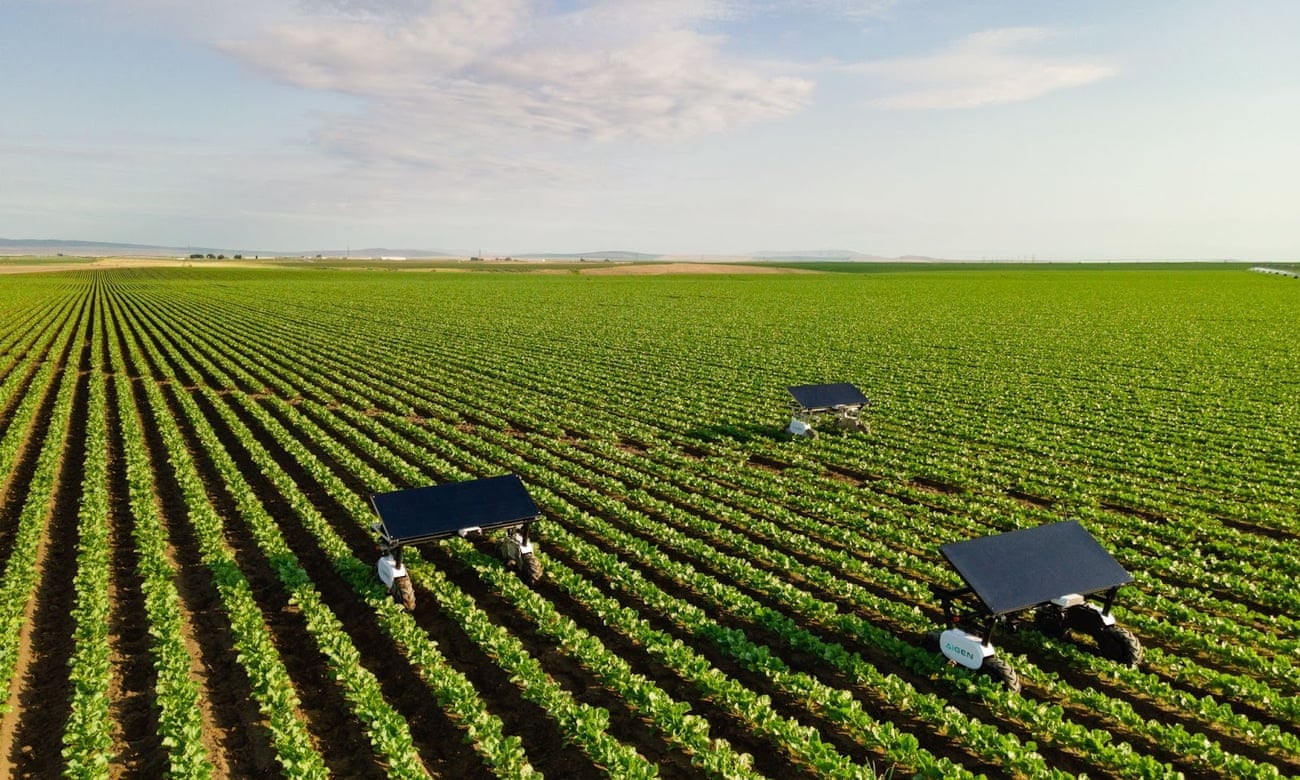
Could robot weedkillers replace the need for pesticides?
Sat 20 Jul 2024 15.00 BST

Image

On a sweltering summer day in central Kansas, farm fields shimmer in the heat as Clint Brauer watches a team of bright yellow robots churn up and down the rows, tirelessly slicing away any weeds that stand in their way while avoiding the growing crops.

The battery-powered machines, 4ft (1.2 metres) long and 2ft (0.6 metres) wide, pick their way through the fields with precision, without any human hand to guide them.

Brauer, a former California-based tech executive who moved back to his family farm in central Kansas after his father developed Parkinson’s disease, sees the robots as critical tools to help farmers reduce their reliance on chemicals and be more protective of their health and the environment.

His Greenfield agricultural technology company now builds and programs its robots in a shed behind an old farmhouse where his grandmother once lived. Twenty farmers are signed up for the robotic services this season, and the company hopes to weed 5,000 acres (2,023 hectares) this year.

“The answer is here,” he said. “This solves a lot of problems for farmers.”
https://www.theguardian.com/environment ... pesticides

Yes, this should replace pesticides now and in the near future. This is also quite a hard one to know which section to put it in as its both robotics and environment, so I put it here and hope its okay, if not feel free to move it over.
“In the quantum multiverse, every choice, every decision you've ever and never made exists in an unimaginably vast ensemble of parallel universes.”
User avatar
Time_Traveller
Posts: 3025
Joined: Sun May 16, 2021 4:49 pm
Location: New York City, USA, November 5th 2032 C.E.

Re: The Future of Food, Agriculture, and Aquaculture

Post by Time_Traveller »

Farming future is high-tech and diverse
2 minutes ago

The Welsh farm ten years from now probably has electric tractors ploughing drone monitored fields, a holiday let and solar array helping pay the bills, a young farmer has said.

Dominic Hampson-Smith, 25, from Usk in Monmouthshire, said the next generation will bring a "breathe of fresh air" to a sector where the average farmer's age is over 60.

But the high cost of land means nearly insurmountable "barriers" for people trying to get into farming for the first time.

One agricultural entrepreneur at this year's Royal Welsh Show said a tourism side-business is the only way she can continue a livestock farm in her family for generations.

"If you could have an electric tractor that does the work of a diesel of course you would change," said Mr Hampson-Smith from the Wales Federation of Young Farmers Clubs (WFYFC).
https://www.bbc.co.uk/news/articles/c4ngdlzd545o
“In the quantum multiverse, every choice, every decision you've ever and never made exists in an unimaginably vast ensemble of parallel universes.”
User avatar
caltrek
Posts: 9280
Joined: Mon May 17, 2021 1:17 pm

Re: The Future of Food, Agriculture, and Aquaculture

Post by caltrek »

New England Journal of Medicine Letter Shows Plant Protein Beats Animal Protein
August 1, 2024

Introduction:
(Eurekalert) BOSTON—Plant-based proteins have major health advantages over animal-based proteins, according to a New England Journal of Medicine letter to the editor by Neal D. Barnard, MD, published Aug. 1, 2024. New findings show that all plants contain all essential amino acids, in contrast to the common but mistaken belief that plants lack one or more amino acids. Of the 20 amino acids that are the building blocks of protein, nine cannot be produced by the human body. All are found in plant sources.

“In addition, plant-based proteins are associated with reduced mortality compared with animal proteins,” says Dr. Barnard, president of the Physicians Committee for Responsible Medicine, a nonprofit public health advocacy organization, and adjunct professor of medicine at the George Washington University School of Medicine and Health Sciences in Washington, D.C. “A major Harvard study showed that when plant-based proteins are consumed instead of protein from beef, poultry, fish, dairy products, or eggs, mortality is reduced.”

People drawing their nutrition from plant-based diets enjoy a reduced risk of diabetes, obesity, heart disease, and cancer. Even so, people on any diet should pay attention to their need for vitamin B12 and other nutrients.

The letter was published in response to a New England Journal of Medicine article introducing a new series on nutrition. “Many people are now shifting to plant-based diets, and their nutrition improves in the process,” Dr. Barnard says.
Read more of the Eurekalert article here: https://www.eurekalert.org/news-releases/1053341
Don't mourn, organize.

-Joe Hill
User avatar
caltrek
Posts: 9280
Joined: Mon May 17, 2021 1:17 pm

Re: The Future of Food, Agriculture, and Aquaculture

Post by caltrek »

How Factory Farming Ends
by Marina Bolotnikova

Introduction:
(Vox) What if we told you that there is a simple way for humanity to slash climate-warming emissions, help prevent the next pandemic, and simultaneously eradicate one of the most significant moral atrocities of our time — one that nearly all of us bear some responsibility for?

We’re talking, of course, about factory farming. In 2024, it’s hardly a secret that the billions of animals raised for food are treated abysmally. They are, to name just a few standard industry practices, caged, mutilated without pain relief, and intensively bred to the point that they live in chronic pain and even struggle to stand up, before being slaughtered, often painfully.

The sheer scale of this system defies comprehension. Every year, humans kill 80 billion land animals — 10 times more than there are people on Earth — and an even larger, poorly tracked number of fish.

If the cost to animals wasn’t bad enough, industrial animal agriculture also spells peril for us: It fuels antibiotic resistance and zoonotic disease threats that keep scientists up at night. It’s a massive environmental liability, emitting what researchers estimate is between 14 percent and 20 percent of global greenhouse gas emissions and devouring more than one-third of the planet’s habitable land.

Yet factory farming is only expanding its reach around the globe, despite decades of animal advocacy striving to stop it, because it’s the most efficient way to produce lots of meat for a world of 8 billion people.
Read more here: https://www.vox.com/future-perfect/364 ... te-ethics
Don't mourn, organize.

-Joe Hill
User avatar
caltrek
Posts: 9280
Joined: Mon May 17, 2021 1:17 pm

Re: The Future of Food, Agriculture, and Aquaculture

Post by caltrek »

Sugar Intake Decreasing in Germany but Still Too High
August 14, 2024

Introduction:
(Eurekalert) A high-sugar diet is seen as a risk factor for obesity and chronic illness. University of Bonn researchers have analyzed data on sugar intake among children and adolescents in a long-term study, finding that intake has been declining steadily since 2010—but is still above the level recommended by the World Health Organization (WHO). The results, to be published in the European Journal of Nutrition, is already available online.

“Our study concerns the intake of free sugars,” explains Dr. Ines Perrar, who is a research associate at the University of Bonn Institute of Nutritional and Food Science (IEL) and lead author of the study. “There is debate on whether sugar, like salt and fats, is linked to the development of chronic diseases.” The WHO defines “free” sugar as any form of sugar, including honey, syrup and fruit juice concentrates, added by a manufacturer or when preparing food and beverages at home. Free sugar also includes sugar naturally occurring in juices.

For their project, IEL researchers analyzed data from the “Dortmund Nutritional and Anthropometric Longitudinally Designed” cohort study (DONALD). The DONALD study has been ongoing since 1985, gathering detailed data on nutrition, metabolism, growth and health of children and adolescents. “Study participants weigh and document everything they eat and drink on three consecutive days every year,” relates Dr. Ute Nöthlings, Professor of Nutritional Epidemiology at the IEL. “Referring to our Institute’s in-house nutrient database, we are able to estimate intake of certain nutrients, including free sugars.”
Conclusion:
Actual sugar intake likely higher
The findings affirm the purpose of the ongoing federal government policy initiative to lower sugar content in breakfast cereals, sweetened dairy products, soft drinks and fruit drinks by 15% or more by the year 2025. The researchers point out that the actual sugar intake is likely higher than the study data suggests, due in part to potential under-reporting by the study participants self-reporting on what they eat. In addition, the study is not broadly representative of society, as the design of this large study favors participation by families of a rather higher socioeconomic status who are generally more aware regarding nutrition and health issues.
Read more of the Eurekalert article here: https://www.eurekalert.org/news-releases/1054543

For a presentation of study results as published in European Journal of Nutrition: https://link.springer.com/article/10.1 ... 4-03456-1
Don't mourn, organize.

-Joe Hill
User avatar
caltrek
Posts: 9280
Joined: Mon May 17, 2021 1:17 pm

Re: The Future of Food, Agriculture, and Aquaculture

Post by caltrek »

The Bananapocalypse, are We Facing a Banana-Free Future?
by Maddy Chapman
August 19, 2024

Introduction:
(IFL Science) You may have seen in the news recently that a banana apocalypse is nigh – scientists have heralded an uncertain future for the fruit as it continues to be plagued by a fungal pathogen. It sounds like devastating news for lovers of banoffee pie and banana bread (although maybe not for smoothie fans) – are things really as dark as they seem?

What is the bananapocalypse?

It is sadly true that the bananas gracing our grocery stores and fruit bowls are facing functional extinction at the hands of a fungus called Fusarium oxysporum f.sp.cubense (Foc) tropical race 4 (TR4). This not-so-catchily-named pathogen causes the disease Fusarium wilt of banana (FWB), which is one of the most damaging plant diseases we know of.

FWB, also known as Panama disease, occurs when the fungus enters the plant through the roots, occupies its vascular system, and blocks the flow of water and nutrients to the fruit. This causes the plant to wilt, and eventually die.

This isn’t the first Fusarium outbreak that has threatened our bananas.

“The kind of banana we eat today is not the same as the one your grandparents ate. Those old ones, the Gros Michel bananas, are functionally extinct, victims of the first Fusarium outbreak in the 1950s,” explained Li-Jun Ma, a professor of biochemistry and molecular biology at the University of Massachusetts Amherst and senior author of a recent study on Foc TR4, in a statement.
Read more of the Eurekalert article here: https://www.iflscience.com/what-the-he ... ure-75609

For a technical presentation of the study results as published in Nature Microbiology:
https://www.nature.com/articles/s41564 ... e.science
Don't mourn, organize.

-Joe Hill
User avatar
caltrek
Posts: 9280
Joined: Mon May 17, 2021 1:17 pm

Re: The Future of Food, Agriculture, and Aquaculture

Post by caltrek »

Can Fungi Turn Food Waste into the Next Culinary Sensation?
August 29, 2024

Introduction:
(Eurekalert) Chef-turned-chemist Vayu Hill-Maini has a passion: to turn food waste into culinary treats using fungi.

One of his collaborators is Rasmus Munk, head chef and co-owner of the Michelin two-star restaurant Alchemist in Copenhagen, who serves a dessert — orange-colored Neurospora mold grown on rice — inspired by Hill-Maini.

For the past two years, Hill-Maini has worked with a team of chefs at Blue Hill at Stone Barns, a Michelin two-star restaurant in Pocantico Hills, New York, to generate tasty morsels from Neurospora mold grown on grains and pulses, including the pulp left over from making oat milk. At Blue Hill, you may soon be served a patty of grain covered with orange Neurospora with a side of moldy bread — orange Neurospora grown on rice bread that, when fried, smells and tastes like a toasted cheese sandwich.

That's only the beginning for Hill-Maini, a Miller postdoctoral fellow at the University of California, Berkeley. Working in the lab of Jay Keasling, UC Berkeley professor of chemical and biomolecular engineering, he has devoted himself to learning everything there is to know about Neurospora intermedia — a widespread fungus that is traditionally used in Indonesia to make a food called oncom (pronounced ahn' cham) from soy pulp — so it can be adapted broadly to Western food waste and Western palates.

"Our food system is very inefficient. A third or so of all food that's produced in the U.S. alone is wasted, and it isn't just eggshells in your trash. It's on an industrial scale,” said Hill-Maini. “What happens to all the grain that was involved in the brewing process, all the oats that didn't make it into the oat milk, the soybeans that didn't make it into the soy milk? It's thrown out."
Read more here: https://www.eurekalert.org/news-releases/1055753
Don't mourn, organize.

-Joe Hill
User avatar
caltrek
Posts: 9280
Joined: Mon May 17, 2021 1:17 pm

Re: The Future of Food, Agriculture, and Aquaculture

Post by caltrek »

An Indigenous Restaurant’s Special Ingredient
by Mary Ladd
September October Issue, 2024

Introduction:
(Mother Jones) The world’s first Ohlone restaurant is nestled in a lush outdoor space at the edge of the University of California, Berkeley, campus. Cafe Ohlone/mak-’amham (“our food” in the Chochenyo Ohlone language) tempts customers with soft-boiled quail eggs, black oak acorn soup, and chia-seed flour brownies. Also, Cowgirl Creamery cheese with herb bread. “Some people ask why these foods are on the menu, even though our ancestors didn’t have that,” says co-founder Vincent Medina. “It’s because Ohlone people like it.”

Part of a growing movement of Indigenous restaurants dedicated to reclaiming cultural heritage and educating the public, Cafe Ohlone opened in 2018 with the goal of bringing oṭṭoy (repair) to a place where the Ohlone were long denied sovereignty. Kickapoo chef Crystal Wahpepah runs Wahpepah’s Kitchen in Oakland, and there’s Mitsitam Cafe at the Smithsonian’s National Museum of the American Indian in Washington, DC. “Indigenous foods are the original foods of this continent,” writes Sean Sherman, who helms Owamni in Minneapolis. “It’s important we recognize that and start celebrating those foods.”

Thousands of Ohlone once lived along California’s coast and inland in roughly 50 groups, but Spanish missionaries and 19th-century state-backed massacres fractured their communities and left some survivors in exile. Medina (East Bay Ohlone), who runs the cafe with his partner, Louis Trevino (Rumsen/Carmel Valley), notes that the Ohlone presence has endured despite the hardships: “Our culture is beautiful, and we have always been here.”
At Cafe Ohlone, traditional foods meet modern tastes, highlighting continuity and adaptation.
Read more here: https://www.motherjones.com/food/2024/ ... berkeley/
Don't mourn, organize.

-Joe Hill
User avatar
caltrek
Posts: 9280
Joined: Mon May 17, 2021 1:17 pm

Re: The Future of Food, Agriculture, and Aquaculture

Post by caltrek »

The Scientists Making Cocoa in a Laboratory to Meet World’s Demand for Chocolate
by Amy Taxin and Terry Chea
September 1, 2024

Introduction:
(The Independent) Scientists and entrepreneurs are working on ways to make more cocoa or develop cocoa substitutes as climate change affects the forests where cocoa beans grow – and puts chocolate at risk.

California Cultured, a plant cell culture company, is growing cocoa from cell cultures at a facility in West Sacramento, California, with plans to start selling its products next year. It puts cocoa bean cells in a vat with sugar water so they reproduce quickly and reach maturity in a week rather than the six to eight months a traditional harvest takes, said Alan Perlstein, the company's chief executive. The process also no longer requires as much water or arduous labor.

“We see just the demand of chocolate monstrously outstripping what is going to be available,” Perlstein said. “There's really no other way that we see that the world could significantly increase the supply of cocoa or still keep it at affordable levels without extensive either environmental degradation or some significant other cost.”

Cocoa trees grow about 20 degrees north and south of the equator in regions with warm weather and abundant rain, including West Africa and South America. Climate change is expected to dry out the land under the additional heat. So scientists, entrepreneurs and chocolate-lovers are coming up with ways to grow cocoa and make the crop more resilient and more resistant to pests — as well as craft chocolatey-tasting cocoa alternatives to meet demand.

The market for chocolate is massive with sales in the United States surpassing $25 billion in 2023, according to the National Confectioners Association. Many entrepreneurs are betting on demand growing faster than the supply of cocoa. Companies are looking at either bolstering the supply with cell-based cocoa or offering alternatives made from products ranging from oats to carob that are roasted and flavored to produce a chocolatey taste for chips or filling.
Read more here: https://www.msn.com/en-us/health/nutri ... gNewsSerp
Don't mourn, organize.

-Joe Hill
User avatar
caltrek
Posts: 9280
Joined: Mon May 17, 2021 1:17 pm

Re: The Future of Food, Agriculture, and Aquaculture

Post by caltrek »

From Wild Relatives to Super Tomatoes: Unearthing New Genetic Potential
September 2, 2024

Introduction:
(Eurealert) Advancing the frontiers of agricultural genetics, a newly developed eight-way tomato Multiparental advanced generation intercross (MAGIC) population serves as a rich genetic resource that unlocks diverse traits from wild tomato species. This innovative tool empowers researchers to identify and analyze genes tied to pivotal horticultural characteristics, enhancing tomato breeding strategies and addressing critical agricultural needs.

Tomato breeding has historically depended on a narrow genetic pool, leading to decreased diversity and loss of valuable traits. Traditional methods and biparental populations fall short in harnessing the full potential of wild relatives, posing challenges in improving traits like fruit size, disease resistance, and adaptability. Addressing these challenges, comprehensive genetic resources that integrate diverse alleles from wild and weedy tomatoes are essential for discovering novel genes and boosting breeding efficiency.

In collaboration with ENEA, researchers from the Universitat Politècnica de València developed an eight-way tomato Multiparental advanced generation intercross (MAGIC) population combining Solanum lycopersicum var. cerasiforme and Solanum pimpinellifolium. Published (DOI: 10.1093/hr/uhae154) in Horticulture Research on June 3, 2024, the study highlights how this population aids in identifying genes associated with key traits. By intercrossing eight founders with diverse genetic backgrounds, the team created 354 genotyped lines, bridging the gap between wild and cultivated tomatoes and providing breeders with a powerful tool for crop improvement.

The tomato MAGIC (ToMAGIC) population comprises 354 lines derived from eight diverse founder lines of wild and weedy tomatoes, revealing 6,488 high-quality SNPs. Phenotyping identified associations with traits such as fruit size, leaf morphology, and pigmentation. Notably, the WUSCHEL gene was linked to locule number, a crucial trait in domestication, while the FW2.2 gene was associated with fruit weight. Dominant wild alleles offer potential for enhancing cultivated varieties. A novel mutation in the SlMYB-ATV gene was also discovered, influencing anthocyanin production, particularly in cold-adapted founders. These findings underscore ToMAGIC's role in uncovering genetic variations crucial for developing resilient, productive tomatoes.
Read more of the Eurekalert article here: https://www.eurekalert.org/news-releases/1056454

For a technical presentation of the study as published in Horticultural Research: https://academic.oup.com/hr/article/11/ ... gin=false
Don't mourn, organize.

-Joe Hill
User avatar
caltrek
Posts: 9280
Joined: Mon May 17, 2021 1:17 pm

Re: The Future of Food, Agriculture, and Aquaculture

Post by caltrek »

Genomic Study Illuminates Mango's Heritage and Future
September 2, 2024

Introduction:
(Eurekalert) A new study has mapped the genetic makeup of mango, revealing its genomic diversity and population structure that influence key agronomic traits. The research identifies genetic differentiation among mango populations and discovers candidate genes linked to flowering, fruit weight, and aroma compounds, essential for advancing mango breeding through genomic-assisted methods.

Mango, a tropical fruit with a long cultivation history, faces significant challenges such as low genetic diversity and limited breeding improvements due to complex domestication and self-pollination. These issues hinder genetic advancements in traits like yield, size, and quality. To address these challenges, an in-depth exploration of mango’s genetic resources is crucial for enhancing key traits. This study provides a comprehensive analysis of mango genetic diversity, targeting breeding improvements.

Published on July 1, 2024, in Horticulture Research, the study (DOI: 10.1093/hr/uhae153) was conducted by an international research team, examining genetic diversity, population structure, and genome-wide associations in mango (Mangifera indica). By re-sequencing 224 accessions from 22 countries, the research reveals genetic differentiation and identifies loci associated with flowering, fruit weight, and aroma compounds, offering new insights for future breeding efforts.

The study used whole-genome re-sequencing to assess genetic variation in 224 mango accessions, spanning wild and cultivated varieties. Genome-wide association studies (GWAS) pinpointed loci linked to traits such as flowering capability, fruit weight, and volatile compounds. Unique genetic ecotypes within Chinese mango accessions were uncovered, reflecting distinct evolutionary pathways shaped by geography. Key findings include identifying genes involved in flower development and aroma biosynthesis, providing valuable markers for breeding programs focused on enhancing yield and quality, addressing low genetic diversity, and improving mango varieties' agronomic performance.

“This research marks a major advance in decoding the complex genetics of mango,” said Dr. Wentian Xu, a lead author of the study. “Identifying the genetic basis of key traits paves the way for new breeding strategies, enabling us to develop varieties with better yield and quality, tailored to consumer preferences.”
Read more of the Eurekalert article here: https://www.eurekalert.org/news-releases/1056453

For a technical presentation of study results as published in Horticulture Research: https://academic.oup.com/hr/article/11 ... gin=false
Don't mourn, organize.

-Joe Hill
User avatar
caltrek
Posts: 9280
Joined: Mon May 17, 2021 1:17 pm

Re: The Future of Food, Agriculture, and Aquaculture

Post by caltrek »

Designing Efficient Bioenergy Crops that Need Less Water to Grow
September 4, 2024

Introduction:
(Eurekalert) Drought stress has long been a limiting factor for crop production around the world, a challenge exacerbated by climate change.
For more than a century¬, scientists have targeted a key plant trait known as water use efficiency (WUE) to help crops grow with less water and avoid suffering from drought stress. Greater WUE can help plants avoid drought stress — but for most crops it’s also associated with lower productivity when water is plentiful.

In a pair of new studies published in the Journal of Experimental Botany, researchers at the Center for Advanced Bioenergy and Bioproducts Innovation (CABBI) used genetic engineering to advance improvement of WUE in climate-friendly C4 bioenergy crops without sacrificing yield, a significant advance for development of a sustainable bioeconomy. CABBI is a Department of Energy (DOE)-funded Bioenergy Research Center.

In the first study,* the CABBI team was able to reduce the amount of water escaping from sorghum plants by decreasing the number of stomata, or pores, on the leaf surface, improving WUE without limiting photosynthesis and biomass production. Researchers inserted a gene into the plants that altered their developmental pattern and reduced stomatal density.

“With C4 species, we think we can get a free lunch: We can have improved water use efficiency without having to compromise on how well the plant grows when it does have enough water. And that’s a special case,” said CABBI Director Andrew Leakey, team leader on the two studies.
Read more here: https://www.eurekalert.org/news-releases/1056841

*https://academic.oup.com/jxb/advance-ar ... ogin=false

To read more concerning a second study: https://academic.oup.com/jxb/advance-a ... gin=false
Don't mourn, organize.

-Joe Hill
User avatar
caltrek
Posts: 9280
Joined: Mon May 17, 2021 1:17 pm

Re: The Future of Food, Agriculture, and Aquaculture

Post by caltrek »

What are Ultra-processed Foods and Why are They Bad for You?
by Jess Craig
September 5, 2024

Introduction:
(Vox) These days, it seems like there is no end to things that can harm you: vaping, social media, sitting for long periods of time, too much sun, too little sun. Now, a growing body of research suggests that the majority of foods Americans eat every day may be linked to a huge range of diseases and disorders.

I’m talking about ultra-processed food.

We’ve known for a few decades that something about modern, prepackaged foods leads to negative health impacts. In the 1980s, as breakneck globalization ushered in a new world where mass production reached more people than ever before, diets around the world changed, too. In the early 2000s, nutritional epidemiologist Carlos Augusto Monteiro was studying dietary habits of fellow Brazilians. He and his team studied associations between breastfeeding and obesity and the impact of income and education on fruit and vegetable consumption. Importantly, Monteiro was also tracking changes in both the prevalence of chronic diseases and changes in Brazilian diets.

One study, in which Monteiro and his colleagues studied data on dietary habits from 1987 to 2003, found that the consumption of traditional foods such as rice and beans had declined while the consumption of processed food items such as store-bought cookies and soda had increased, in some cases by more than 200 percent. Monteiro and his team had captured, in real time, a trend that has taken place in nearly every developed country in the world: a huge increase in the consumption of what Monteiro later termed “ultra-processed foods” alongside a parallel rise in obesity and chronic diseases.

Ultra-processed foods, or UPFs for short, are those prepackaged foods that can be forgotten in your pantry seemingly forever and still taste great when you happen upon them. UPFs are your sodas, potato chips, granola bars, protein bars, protein powders, instant noodles, candy, and even most types of store-bought bread. These foods are already innately familiar to anyone who has ever stepped foot into a grocery store, a gas station mini-mart, or a fast food restaurant.
Read more here: https://www.vox.com/future-perfect/370 ... -anxiety
Don't mourn, organize.

-Joe Hill
User avatar
Powers
Posts: 1183
Joined: Fri Apr 07, 2023 7:32 pm
Location: a.k.a Lurking, Member, Lorem Ipsum, ..., --- and ººº.

Re: The Future of Food, Agriculture, and Aquaculture

Post by Powers »

The ecological Nuremberg trials are going to seem quite dwarfed by the end.
User avatar
caltrek
Posts: 9280
Joined: Mon May 17, 2021 1:17 pm

Re: The Future of Food, Agriculture, and Aquaculture

Post by caltrek »

Salix Fruits Identifies Trends Affecting Global Grape Demand
September 11, 2024

Introduction:
(The Produce News) Salix Fruits, a leading company in the import and export of fresh fruits, has observed several significant trends that are transforming the global grape market.

“One of the most notable changes is the growing preference for seedless varieties, driven by consumers’ desire for more convenient and easy-to-consume products,” said Ignacio Vidales, sales director of Salix Fruits.

Additionally, the demand for organic and sustainably grown grapes has significantly increased. This reflects a heightened awareness and concern for health and the environment among consumers.

"Sustainable farming practices and organic certifications are now key factors for accessing certain market segments, especially in Europe and North America,” Vidales said.

Vidales emphasized that "the ability to innovate and diversify the use of grapes is crucial for staying competitive in an ever-evolving global market."
Read more here: https://theproducenews.com/headlines/s ... e-demand
Don't mourn, organize.

-Joe Hill
User avatar
caltrek
Posts: 9280
Joined: Mon May 17, 2021 1:17 pm

Re: The Future of Food, Agriculture, and Aquaculture

Post by caltrek »

Sweet Potatoes Poised for Strong Growth Ahead
by Keith Loria
September 13, 2024

Introduction:
(The Produce News) The sweet potato market is witnessing significant growth, fueled by various factors such as heightened consumer awareness of their health advantages, their culinary versatility and their recognition as a sustainable and budget-friendly food choice.

According to Data Bridge Market Research, the global sweet potato market, valued at $34.98 billion in 2023, is projected to reach approximately $56.17 billion by 2031.

“Sweet potatoes are a popular item for some consumers due to their increased shelf life over other produce items, but most importantly, their immune contributing qualities and overall versatility in the kitchen,” said Robin Narron, sales support and marketing director for the Nashville, NC-based Nash Produce. “Many families have become more health conscious, and spending a lot more time cooking at home than in years past. Having a product that can be cooked in so many different ways make cooking much easier, and more pleasurable.”

Another contributing factor is the rising trend of incorporating sweet potato-based ingredients into processed foods and beverages. Sweet potato flour, puree and extracts are becoming increasingly popular in bakery items, snacks and drinks due to their nutritional benefits and distinctive flavor.

Retailers have been doing a strong job in promoting sweet potato sales in recent years by simply keeping ample stock of fresh product front and center in the produce section.
Read more here: https://theproducenews.com/sweet-potat ... th-ahead
Don't mourn, organize.

-Joe Hill
Post Reply