Nanobots and Nanoparticles

User avatar
wjfox
Site Admin
Posts: 13587
Joined: Sat May 15, 2021 6:09 pm
Location: Essex, UK
Contact:

Nanobots and Nanoparticles

Post by wjfox »

A thread for tiny devices typically used in medical research/applications within the body.

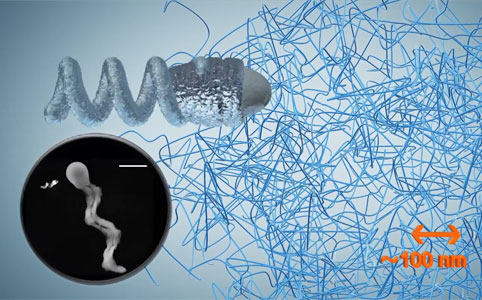
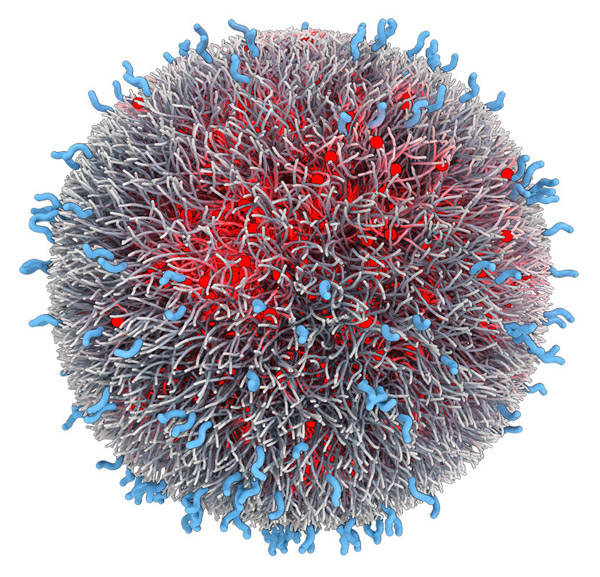
Let's define "nanobots" as machine-like devices that have some form of locomotion and/or limited functionality (e.g. sensing), while "nanoparticles" are generally static objects that carry a drug compound or other cargo.

Objects larger than 1,000 nanometres (nm) are probably considered microbots or microparticles.


Nanobot

Image


Nanoparticle

Image
User avatar
wjfox
Site Admin
Posts: 13587
Joined: Sat May 15, 2021 6:09 pm
Location: Essex, UK
Contact:

Re: Nanobots and Nanoparticles

Post by wjfox »

Maharashtra: MIMER develops nano robot for rapid cancer diagnosis

Updated: December 5, 2021 11:17:43 am

Maharashtra Institute of Medical Education and Research (MIMER), Pune has developed a nano robot that is programmed to capture and isolate circulating tumor cells. The tool is expected to lead to a new rapid and accurate diagnostic method for cancer, said Dr Shashwat Banerjee, Scientist at MIMER Medical College at Talegaon Dabhade in Pune.

“In search of better cancer diagnostics, scientists from MIMER, Pune, synthesized multifunctional nanorobot using magnesium-iron oxide Janus nanoparticles. The reported nano robot tested on blood containing a low number of cancer cells exhibited ~100% capture efficiency in less than five minutes. The nano robot was further clinically validated by testing it on a cancer patient’s blood samples and it exhibited rapid and efficient circulating tumour cells (CTC) capture ability,” Dr Banerjee said in a statement.

The findings were published recently in the peer-reviewed journal Communications Chemistry under the title ‘Water-Powered Self-Propelled Magnetic Nanobot for Rapid and Highly Efficient Capture of Circulating Tumor Cells’.

This new nano robot-based diagnostic tool may help in improving cancer treatments, allow for better treatment control, enable early interventions and change decision-making from reactive actions towards more predictive early interventions, he added.

https://indianexpress.com/article/citie ... s-7655710/

Link to paper: https://www.nature.com/articles/s42004-021-00598-9


Image
Credit: Wavhale, et al. / Nature (2021)
User avatar
wjfox
Site Admin
Posts: 13587
Joined: Sat May 15, 2021 6:09 pm
Location: Essex, UK
Contact:

Re: Nanobots and Nanoparticles

Post by wjfox »

TikTok Is Terrified Of These Cell-Sized Robots

March 1, 2022 12:38 pm EST

We've witnessed the potential perils of microscopic robots – or nanobots – in sci-fi stories for the past several decades at least. It is only recently that the technology has turned from science fiction into science fact as researchers at MIT have proven with projects that include cell-sized robots. Although the technology has been in real world development since 2018 (or before), a new viral TikTok video has just introduced these microscopic robots from MIT (and a few other research teams and sources) to a wider audience. This audience appears to have been thoroughly freaked out by what they have seen. The cell-sized robots are still in development and have yet to be deployed in any major way in the wild, but already the minds of conspiracy theorists are hard at work, brainstorming ways this technology could be abused.

[...]

Reading the comments section of the video makes for some entertaining reading, as is often the case. One particularly dystopian viewer suggests that nanobots could be injected into people to control them, citing a hypothetical example of an insurer using bots to remotely stop a customer's kidney from functioning due to a late payment. Others expressed concerns about what the government might do with this sort of tech. Most simply say that they wouldn't want to go anywhere near a nanobot or have them in their body. That view might change one day, however, if the technology fulfils its potential to treat previously untreatable illnesses.

https://www.slashgear.com/783976/tiktok ... ed-robots/


User avatar
wjfox
Site Admin
Posts: 13587
Joined: Sat May 15, 2021 6:09 pm
Location: Essex, UK
Contact:

Re: Nanobots and Nanoparticles

Post by wjfox »

weatheriscool
Posts: 24495
Joined: Sun May 16, 2021 6:16 pm
Contact:

Re: Nanobots and Nanoparticles

Post by weatheriscool »

Autonomous nanomachines inspired by nature
https://phys.org/news/2022-03-autonomou ... ature.html
by University of New South Wales
Inspired by the way molecules interact in nature, UNSW medical researchers engineer versatile nanoscale machines to enable greater functional range.

To withstand the challenging conditions within living organisms, molecular machines need to be durably constructed for continuous operation over long periods. At the same time, they need to adapt to different needs and to their changing environment by quickly swapping out molecular components to reconfigure the machinery.

A team, led by A/Prof. Lawrence Lee of UNSW Medicine & Health's EMBL Australia Node in Single Molecule Science, reports how they designed and built rapid exchange molecular machines with stability in the journal ACS Nano.
User avatar
Yuli Ban
Posts: 5194
Joined: Sun May 16, 2021 4:44 pm

Re: Nanobots and Nanoparticles

Post by Yuli Ban »

Blast from the past, a news story that triggered the first Yuli Banularity 8 years ago

[2014] Engineers build world's smallest, fastest nanomotor
Researchers at the Cockrell School of Engineering at The University of Texas at Austin have built the smallest, fastest and longest-running tiny synthetic motor to date. The team's nanomotor is an important step toward developing miniature machines that could one day move through the body to administer insulin for diabetics when needed, or target and treat cancer cells without harming good cells.

With the goal of powering these yet-to-be invented devices, UT Austin engineers focused on building a reliable, ultra-high-speed nanomotor that can convert electrical energy into mechanical motion on a scale 500 times smaller than a grain of salt.

With all its dimensions under 1 micrometer in size, the nanomotor could fit inside a human cell and is capable of rotating for 15 continuous hours at a speed of 18,000 RPMs, the speed of a motor in a jet airplane engine. Comparable nanomotors run significantly more slowly, from 14 RPMs to 500 RPMs, and have only rotated for a few seconds up to a few minutes.
Unfortunately, not much seems to have come of this in the time ever since. But here's to hoping!
And remember my friend, future events such as these will affect you in the future
weatheriscool
Posts: 24495
Joined: Sun May 16, 2021 6:16 pm
Contact:

Re: Nanobots and Nanoparticles

Post by weatheriscool »

Nanoparticle technology provides healthy trans, saturated fat alternative
https://phys.org/news/2022-06-nanoparti ... rated.html
by Anna Zarra Aldrich, University of Connecticut
The old adage that oil and water don't mix isn't entirely accurate. While it's true that the two compounds don't naturally combine, turning them into one final product can be done. You just need an emulsifier, an ingredient commonly used in the food industry.

Yangchao Luo, an associate professor in UConn's College of Agriculture, Health and Natural Resources, is using an innovative emulsification process for the development of a healthier shelf-stable fat for food manufacturing.

Luo is working with something known as high internal phase Pickering emulsions (HIPEs). High internal phase means the mixture is at least 75% oil. Pickering emulsions are those that are stabilized by solid particles.

Previous research in Pickering emulsions has focused on non-edible particles, but Luo is interested in bringing HIPEs to the food industry as an alternative to trans and saturated fats.

This new approach could have a major impact on how food is produced and could make it easier for food manufacturers to include healthier fats.

Many processed foods are loaded with saturated and trans fats for flavor and to extend a product's shelf life. Consuming these fats can increase the risk of cardiovascular disease, type 2 diabetes, and LDL cholesterol.
Nanotechandmorefuture
Posts: 478
Joined: Fri Sep 17, 2021 6:15 pm
Location: At the moment Miami, FL

Re: Nanobots and Nanoparticles

Post by Nanotechandmorefuture »

Researchers Provide New Insight into Binding Configuration and Mobility of Molecules on Nanoparticle Surfaces
Reviewed by Bethan Davies
Jun 16 2022

https://www.azonano.com/news.aspx?newsID=39276
The ability to analyze binding configurations in isolated nanosystems is of tremendous interest because how molecules attach to a surface is crucial in chemical processes. Dr. Lukas Bruder and Prof. Dr. Frank Stienkemeier from the University of Freiburg have succeeded in researching the binding configurations and mobility of organic molecules on ultracold noble gas particles.
weatheriscool
Posts: 24495
Joined: Sun May 16, 2021 6:16 pm
Contact:

Re: Nanobots and Nanoparticles

Post by weatheriscool »

Nanoparticle 'backpacks' restore damaged stem cells
https://phys.org/news/2022-07-nanoparti ... cells.html
by Brett Beasley, University of Notre Dame
Within a newborn's umbilical cord lie potentially life-saving stem cells that can be used to fight diseases like lymphoma and leukemia. That is why many new parents elect to store ("bank") their infant's stem cell-rich umbilical cord blood. But in the 6–15% of pregnancies affected by gestational diabetes, parents lack this option because the condition damages the stem cells and renders them useless.

Now, in a study forthcoming in Communications Biology, bioengineers at the University of Notre Dame have shown that a new strategy can restore the damaged stem cells and enable them to grow new tissues again.

At the heart of this new approach are specially engineered nanoparticles. At just 150 nanometers in diameter—about a quarter of the size of a red blood cell—each spherical nanoparticle is able to store medicine and deliver it just to the stem cells themselves by attaching directly onto the stem cells' surface. Due to their special formulation or "tuning," the particles release the medicine slowly, making it highly effective even at very low doses.

Donny Hanjaya-Putra, an assistant professor of aerospace and mechanical engineering in the bioengineering graduate program at Notre Dame who directs the lab where the study was conducted, described the process using an analogy. "Each stem cell is like a soldier. It is smart and effective; it knows where to go and what to do. But the 'soldiers' we are working with are injured and weak. By providing them with this nanoparticle 'backpack,' we are giving them what they need to work effectively again."
weatheriscool
Posts: 24495
Joined: Sun May 16, 2021 6:16 pm
Contact:

Re: Nanobots and Nanoparticles

Post by weatheriscool »

Microstructured fiber measures the size of nanoparticles
https://phys.org/news/2022-12-microstru ... icles.html
by Stefanie Miethbauer, Leibniz-Institut für Photonische Technologien e. V.


Researchers at Leibniz Institute of Photonic Technology (Leibniz IPHT) developed a new glass fiber design that enables exceptionally long observations of a large number of individual, freely moving nanoparticles in a liquid. This allows the size distribution of nano-objects in a sample to be determined with even higher precision. The scientists are thus laying the foundation for even better research into environmental and bioanalytical issues in the future.

Whether water analysis, vaccine production or the examination of biological samples—mixtures of minute particles occur in almost all areas of everyday life and are composed of a variety of different tiny objects in liquid environments.

The accurate determination of individual components of such a fine particle mixture within a liquid (dispersion) poses challenges to science—especially with regard to the width of their size distribution and the presence of various particle species that differ only slightly in size. A new microstructured glass fiber (single antiresonant element fiber) developed at Leibniz IPHT offers the potential to significantly enhance the measurement accuracy of nano-object size characterization.

New optical fiber for high-precision analysis

With the special optical fiber realized at the Jena institute, nano-objects in aqueous solution with a diameter smaller than 20 nanometers can be confined, individually tracked and their size precisely determined. This allows researchers to precisely analyze size distributions of nanoparticles in mixtures. For this purpose, the glass fiber has a thin-walled and therefore light-conducting microchannel that's 17 micrometers in diameter.

To examine a sample, the particle fluid is brought into contact with the hollow-core fiber, which fills with the fluid sample as a result of capillary force. The coupled light is guided along the fiber's integrated fluid channel. The glass wall, which is only 756 nanometers thick, allows intense and uniform illumination of the sample to be examined and the contained nano-objects.
weatheriscool
Posts: 24495
Joined: Sun May 16, 2021 6:16 pm
Contact:

Re: Nanobots and Nanoparticles

Post by weatheriscool »

Thinking Outside the (Nano)Box: Supersized Nanocages Revolutionize Drug Delivery
https://scitechdaily.com/thinking-outsi ... -delivery/

By University of Cambridge April 10, 2023
Gold Nanocages
Researchers at the University of Cambridge have developed a super-sized nanocage that can be used to deliver larger drug cargoes, according to an article published in Nature Synthesis. These nanocages, created using a simple building block process inspired by biological systems, have the largest ligand-enclosed inner cavity volume ever made. The larger nanocages have potential applications in drug delivery and biotechnology, and could be used to deliver larger therapeutic biomolecules to specific parts of the body. The research also suggests that the large internal cavities of the nanocages could serve as platforms for binding large biomolecules, which could be useful in drug discovery and development.

Cambridge researchers have developed a super-sized nanocage capable of delivering larger drug cargoes, with potential applications in drug delivery, biotechnology, and drug discovery.

Think about how frustrating it is to try to fit a gift into a box that is too small. Sometimes you just need a bigger box.
User avatar
wjfox
Site Admin
Posts: 13587
Joined: Sat May 15, 2021 6:09 pm
Location: Essex, UK
Contact:

Re: Nanobots and Nanoparticles

Post by wjfox »

These tiny, medical robots could one day travel through your body

By Daniel Strain • Published: May 24, 2023

A team of engineers at the CU Boulder has designed a new class of tiny, self-propelled robots that can zip through liquid at incredible speeds—and may one day even deliver prescription drugs to hard-to-reach places inside the human body.

The researchers describe their mini healthcare providers in a paper published last month in the journal Small.

“Imagine if microrobots could perform certain tasks in the body, such as non-invasive surgeries,” said Jin Lee, lead author of the study and a postdoctoral researcher in the Department of Chemical and Biological Engineering. “Instead of cutting into the patient, we can simply introduce the robots to the body through a pill or an injection, and they would perform the procedure themselves.”

Lee and his colleagues aren’t there yet, but the new research is big step forward for tiny robots.

The group’s microrobots are really small. Each one measures only 20 micrometers wide, several times smaller than the width of a human hair. They’re also really fast, capable of traveling at speeds of about 3 millimeters per second, or roughly 9,000 times their own length per minute. That’s many times faster than a cheetah in relative terms.

https://www.colorado.edu/today/2023/05/ ... -your-body


Image
weatheriscool
Posts: 24495
Joined: Sun May 16, 2021 6:16 pm
Contact:

Re: Nanobots and Nanoparticles

Post by weatheriscool »

Nanoparticle flu vaccine design shows promise in early tests

by The Scripps Research Institute
https://phys.org/news/2023-12-nanoparti ... early.html
Existing flu vaccines provide only limited, seasonal protection because they target highly changeable proteins on the virus. Scripps Research scientists have now designed a vaccine that should work broadly against influenza A strains—one of the two types of flu virus that normally circulate in humans.

The new vaccine design, described in a paper titled "Single-Component Multilayered Self-Assembling Protein Nanoparticles Displaying Extracellular Domains of Matrix Protein 2 as a Pan-influenza A Vaccine" in ACS Nano on November 21, uses a relatively unchanging influenza A protein fragment, M2e, and presents it on self-assembling nanoparticles to better engage the immune system.

The vaccine's strong results in initial animal tests point to the possibility of a universal flu vaccine that provides long-term protection against serious illness from both ordinary and novel flu strains.

"This experimental vaccine has the potential to protect against diverse seasonal influenza A strains as well as future emergent strains that could cause pandemics," says study senior author Jiang Zhu, Ph.D., an associate professor in the Department of Integrative Structural and Computational Biology at Scripps Research.
weatheriscool
Posts: 24495
Joined: Sun May 16, 2021 6:16 pm
Contact:

Re: Nanobots and Nanoparticles

Post by weatheriscool »

DNA-folding nanorobots can manufacture limitless copies of themselves
By Loz Blain
December 08, 2023
https://newatlas.com/robotics/dna-nanor ... plication/
Researchers have demonstrated a programmable nano-scale robot, made from a few strands of DNA, that's capable of grabbing other snippets of DNA, and positioning them together to manufacture new UV-welded nano-machines – including copies of itself.

The robots, according to New Scientist, are created using just four strands of DNA, and measure just 100 nanometers across, so about a thousand of them could squeeze up into a line the width of a human hair.

The team, from New York University, the Ningbo Cixi Institute of Biomechanical Engineering, and The Chinese Academy of Sciences, says the robots surpass previous efforts, which were only able to assemble pieces into two-dimensional shapes. The new bots are able to use "multiple-axis precise folding and positioning" to "access the third dimension and more degrees of freedom."

These nano-bots are often viewed as potential ways of manufacturing drugs, enzymes and other chemicals, potentially inside the cells of the body. But the researchers specifically call out the fact that these machines can "self-replicate its entire 3D structure and functions."
User avatar
wjfox
Site Admin
Posts: 13587
Joined: Sat May 15, 2021 6:09 pm
Location: Essex, UK
Contact:

Re: Nanobots and Nanoparticles

Post by wjfox »

Bottled water contains thousands of nanoplastics so small they can invade the body’s cells, study says

Updated 8:32 PM EST, Mon January 8, 2024

In a trailblazing new study, researchers have discovered bottled water sold in stores can contain 10 to 100 times more bits of plastic than previously estimated — nanoparticles so infinitesimally tiny they cannot be seen under a microscope.

At 1,000th the average width of a human hair, nanoplastics are so teeny they can migrate through the tissues of the digestive tract or lungs into the bloodstream, distributing potentially harmful synthetic chemicals throughout the body and into cells, experts say.

One liter of water — the equivalent of two standard-size bottled waters — contained an average of 240,000 plastic particles from seven types of plastics, of which 90% were identified as nanoplastics and the rest were microplastics, according to the new study.

Microplastics are polymer fragments that can range from less than 0.2 inch (5 millimeters) down to 1/25,000th of an inch (1 micrometer). Anything smaller is a nanoplastic that must be measured in billionths of a meter.

[...]

The new finding reinforces long-held expert advice to drink tap water from glass or stainless steel containers to reduce exposure, Mason said. That advice extends to other foods and drinks packaged in plastic as well, she added.

https://edition.cnn.com/2024/01/08/heal ... index.html

User avatar
raklian
Posts: 1981
Joined: Sun May 16, 2021 4:46 pm
Location: North Carolina

Re: Nanobots and Nanoparticles

Post by raklian »

wjfox wrote: Tue Jan 09, 2024 3:01 pm Bottled water contains thousands of nanoplastics so small they can invade the body’s cells, study says
Very problematic. :cry:

We need to transition to using biodegradable materials for all disposables quickly.
To know is essentially the same as not knowing. The only thing that occurs is the rearrangement of atoms in your brain.
TrueAnimationFan
Posts: 135
Joined: Wed May 19, 2021 8:00 pm

Re: Nanobots and Nanoparticles

Post by TrueAnimationFan »

This is why I'm glad we have a refrigerator in our apartment that can give you filtered water from ice. For this reason, I don't think we've ever had to use a plastic water bottle while at home.
weatheriscool
Posts: 24495
Joined: Sun May 16, 2021 6:16 pm
Contact:

Re: Nanobots and Nanoparticles

Post by weatheriscool »

Decorated nanoparticles prevent anaphylaxis without causing side effects in mouse study
https://phys.org/news/2024-01-nanoparti ... mouse.html
by Amanda Morris, Northwestern University
Northwestern University researchers have developed the first selective therapy to prevent allergic reactions, which can range in severity from itchy hives and watery eyes to trouble breathing and even death.

To develop the new therapy, researchers decorated nanoparticles with antibodies capable of shutting down specific immune cells (called mast cells) responsible for allergic responses. The nanoparticle also carries an allergen that corresponds to the patient's specific allergy. If a person is allergic to peanuts, for example, then the nanoparticle carries a peanut protein.

In this two-step approach, the allergen engages the precise mast cells responsible for the specific allergy, and then the antibodies shut down only those cells. This highly targeted approach enables the therapy to selectively prevent specific allergies without suppressing the entire immune system.

In a mouse study, the therapy demonstrated 100% success in preventing allergic responses without causing noticeable side effects.

The research is published today (Jan. 16) in the journal Nature Nanotechnology. It marks the first nanotherapy for inhibiting mast cells, thus preventing an allergic response to a specific allergen.
User avatar
wjfox
Site Admin
Posts: 13587
Joined: Sat May 15, 2021 6:09 pm
Location: Essex, UK
Contact:

Re: Nanobots and Nanoparticles

Post by wjfox »

A single dose of urea-powered nanorobots reduces bladder tumors by 90% in mouse study

January 15, 2024

Bladder cancer has one of the highest incidence rates in the world and ranks as the fourth most common tumor in men. Despite its relatively low mortality rate, nearly half of bladder tumors resurface within 5 years, requiring ongoing patient monitoring. Frequent hospital visits and the need for repeat treatments contribute to making this type of cancer one of the most expensive to cure.

While current treatments involving direct drug administration into the bladder show good survival rates, their therapeutic efficacy remains low. A promising alternative involves the use of nanoparticles capable of delivering therapeutic agents directly to the tumor. In particular, nanorobots—nanoparticles endowed with the ability to self-propel within the body—are noteworthy.

Now, a study published in the journal Nature Nanotechnology reveals how a research team successfully reduced the size of bladder tumors in mice by 90% through a single dose of urea-powered nanorobots.

These tiny nanomachines consist of a porous sphere made of silica. Their surfaces carry various components with specific functions. Among them is the enzyme urease, a protein that reacts with urea found in urine, enabling the nanoparticle to propel itself. Another crucial component is radioactive iodine, a radioisotope commonly used for the localized treatment of tumors.

https://phys.org/news/2024-01-dose-urea ... adder.html


Image
Accumulation of nanorobots in the tumor visualized by microscopy. Credit: IRB Barcelona
weatheriscool
Posts: 24495
Joined: Sun May 16, 2021 6:16 pm
Contact:

Re: Nanobots and Nanoparticles

Post by weatheriscool »

Gold nanoclusters offer sustainable solution for wastewater polluted by dyes used in many industries
https://phys.org/news/2024-03-gold-nano ... water.html
by Flinders University
Water pollution from dyes used in textile, food, cosmetic and other manufacturing is a major ecological concern with industry and scientists seeking biocompatible and more sustainable alternatives to protect the environment.

A new study led by Flinders University has discovered a novel way to degrade and potentially remove toxic organic chemicals including azo dyes from wastewater, using a chemical photocatalysis process powered by ultraviolet light.

Professor Gunther Andersson, from the Flinders Institute for NanoScale Science and Technology, says the process involves creating metallic 'clusters' of just nine gold (Au) atoms chemically 'anchored' to titanium dioxide which in turn drives the reaction by converting the energy of absorbed UV light.
Post Reply