by C. Huygelen, Leiden University
https://phys.org/news/2025-07-certify-g ... ubits.html
Can you prove whether a large quantum system truly behaves according to the weird and wonderful rules of quantum mechanics—or if it just looks like it does? In a new study, physicists from Leiden, Beijing and Hangzhou found the answer to this question.
You could call it a "quantum lie detector": Bell's test designed by famous physicist John Bell. This test shows whether a machine, like a quantum computer, is truly using quantum effects or just mimics them.
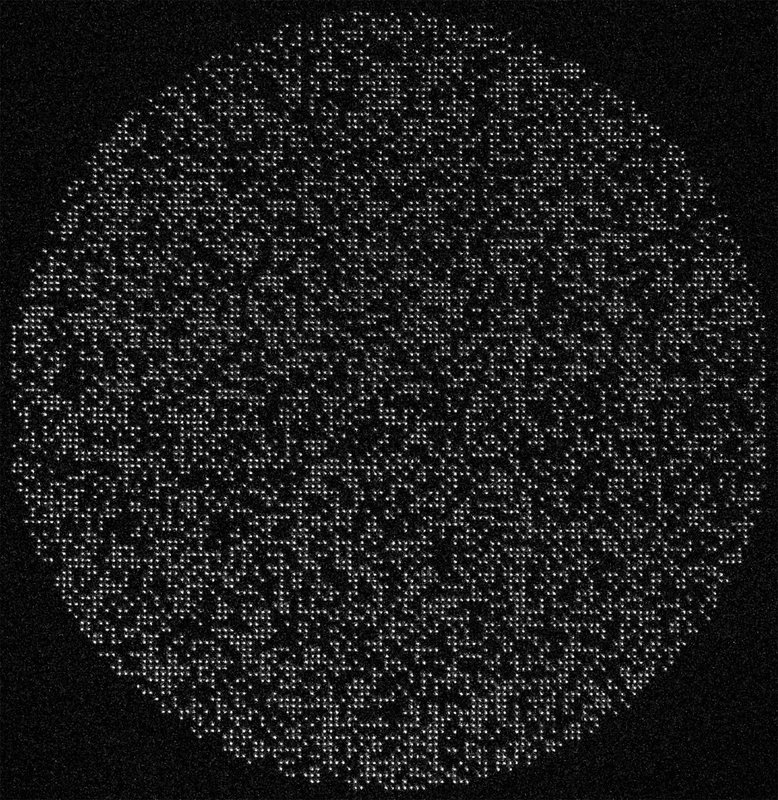
As quantum technologies become more mature, ever more stringent tests of quantumness become necessary. In this new study, the researchers took things to the next level, testing Bell correlations in systems with up to 73 qubits—the basic building blocks of a quantum computer.
The study involved a global team: theoretical physicists Jordi Tura, Patrick Emonts, Ph.D. candidate Mengyao Hu from Leiden University, together with colleagues from Tsinghua University (Beijing) and experimental physicists from Zhejiang University (Hangzhou). The work is published in the journal Physical Review X.