Human Prehistory (3.3 million years BC – 3500 BC)

Got something to say about the past? Say it here!
weatheriscool
Posts: 24482
Joined: Sun May 16, 2021 6:16 pm
Contact:

Re: Human Prehistory (3.3 million years BC – 3500 BC)

Post by weatheriscool »

Researchers find 43,000-year-old human fingerprint, from a Neanderthal
By Jay Kakade
June 15, 2025
https://newatlas.com/science/worlds-old ... anderthal/
Archaeologists have long debated the origin of human symbolic behavior. The dominant idea was that only modern humans (Homo sapiens) were capable of complex symbolic thought and behavior; such as creating art, jewelry, or engaging in rituals. However, growing evidence suggests Neanderthals also developed symbolic behavior independently, around the same time.

This evidence includes decorated ochre items and personal ornaments found at Neanderthal sites. Further backing this claim, researchers have now found the oldest Neanderthal fingerprint, impressed on a painted boulder, dating back to 43,000 years. This boulder contains a red ochre pigment, which is the oldest known symbolic object containing the most complete Neanderthal fingerprint.
Image
“This object contributes to our understanding of Neanderthals’ capacity for abstraction, suggesting that it could represent one of the earliest human facial symbolizations in Prehistory,” say the authors of the study, published in Archaeological and Anthropological Sciences.
weatheriscool
Posts: 24482
Joined: Sun May 16, 2021 6:16 pm
Contact:

Re: Human Prehistory (3.3 million years BC – 3500 BC)

Post by weatheriscool »

Australia's oldest occupied ice age cave found at high elevation in Blue Mountains
https://phys.org/news/2025-06-australia ... e-age.html
by Australian National University
Archaeologists from the Australian Museum, the University of Sydney and The Australian National University (ANU), in collaboration with First Nations community members who hold cultural connections with the Blue Mountains, have unearthed 693 stone artifacts dating from the last ice age to the recent past.

Found in an ancient Blue Mountains cave known as Dargan Shelter, this new evidence provides definitive proof of repeated occupation in this once frozen high-altitude landscape. The research is published in Nature Human Behaviour.
Image
weatheriscool
Posts: 24482
Joined: Sun May 16, 2021 6:16 pm
Contact:

Re: Human Prehistory (3.3 million years BC – 3500 BC)

Post by weatheriscool »

User avatar
caltrek
Posts: 9280
Joined: Mon May 17, 2021 1:17 pm

Re: Human Prehistory (3.3 million years BC – 3500 BC)

Post by caltrek »

1930s 'Dragon Man' Finally Gives Elusive Ancient Human Species a Face
by Jess Cockerill
June 19, 2025

Introduction:
(Science Alert) A 146,000-year-old skull known as the 'dragon man', thought to be the sole representative of an ancient human species, actually belongs to a larger group of our extinct relatives, the Denisovans, two new papers claim.

It's the first skull we have from that group, and it was right under our noses for years.

Paleontologist Qiaomei Fu, from the Chinese Academy of Sciences, specializes in early modern human settlement in Asia. She led two new studies that reveal the mistaken identity of this skull, using proteins and mitochondrial DNA her team found preserved in the fossil.

The 'dragon man' skull was discovered in the 1930s by a construction worker who was erecting a bridge over the Songhua River in Harbin, China, while the region was under Japanese occupation. The province is known as Longjiang, meaning 'dragon river', hence the skull's nickname.

The bridge builder kept the specimen to himself, hiding it at the bottom of a well. It was only when his family donated it to Hebei GEO University in 2018 that research on this unique find began.
Read more of the Science Alert article here: https://www.sciencealert.com/1930s-dra ... es-a-face

For presentation of one of the referenced studies’ results as published in Cell: https://www.cell.com/cell/fulltext/S009 ... all%3Dtrue
Don't mourn, organize.

-Joe Hill
User avatar
caltrek
Posts: 9280
Joined: Mon May 17, 2021 1:17 pm

Re: Human Prehistory (3.3 million years BC – 3500 BC)

Post by caltrek »

Team Confirms Earliest Evidence of Humans in Americas
By Kyle Mittan
June 20, 2025

Extract:
(Futurity) (University of Arizona archaeologist and geologist Vance) Holliday and a graduate student spent several days (in 2012) examining geologic layers in trenches, dug by previous researchers, to piece together a timeline for the (New Mexico’s White Sands) area. They had no idea that, about 100 yards away, were footprints, preserved in ancient clay and buried under gypsum, that would help spark a wholly new theory about when humans arrived in the Americas.

Researchers from Bournemouth University in the United Kingdom and the US National Park Service excavated those footprints in 2019 and published their paper in 2021. Holliday did not participate in the excavation but became a coauthor after some of his 2012 data helped date the footprints.

The tracks showed human activity in the area occurred between 23,000 and 21,000 years ago—a timeline that would upend anthropologists’ understanding of when cultures developed in North America. It would make the prints about 10,000 years older than remains found 90 years ago at a site near Clovis, New Mexico, which gave its name to an artifact assemblage long understood by archaeologists to represent the earliest known culture in North America. Critics have spent the last four years questioning the 2021 findings, largely arguing that the ancient seeds and pollen in the soil used to date the footprints were unreliable markers.

Now, Holliday leads a new study that supports the 2021 findings—this time relying on ancient mud to radiocarbon date the footprints, not seeds and pollen, and an independent lab to make the analysis.

Specifically, the new paper finds that the mud is between 20,700 and 22,400 years old—which correlates with the original finding that the footprints are between 21,000 and 23,000 years old. The new study now marks the third type of material—mud in addition to seeds and pollen—used to date the footprints, and by three different labs. Two separate research groups now have a total of 55 consistent radiocarbon dates.
Read more here: https://www.futurity.org/earliest-evid ... 284562/
Don't mourn, organize.

-Joe Hill
User avatar
caltrek
Posts: 9280
Joined: Mon May 17, 2021 1:17 pm

Re: Human Prehistory (3.3 million years BC – 3500 BC)

Post by caltrek »

Genomes from People Across Modern-day India Shed Light on 50,000 Years of Evolutionary History
June 26, 2025

Introduction:
(Eurekalert) India’s population is genetically one of the most diverse in the world, yet it remains underrepresented in global datasets. In a study publishing in the Cell Press journal Cell, researchers analyzed genomic data from more than 2,700 people from across India, capturing genetic variation from most geographic regions, linguistic groups, and communities. They found that most modern-day Indian people’s ancestry can be traced back to Neolithic Iranian farmers, Eurasian Steppe pastoralists, and South Asian hunter-gatherers.

“This study fills a critical gap and reshapes our understanding of how ancient migrations, archaic admixture, and social structures have shaped Indian genetic variation,” says senior author Priya Moorjani of the University of California, Berkeley. “Studying these subpopulations allows us to explore how ancient ancestry, geography, language, and social practices interacted to shape genetic variation. We hope our study will provide a deeper understanding of the origin of functional variation and inform precision health strategies in India.”

The researchers used data from the Longitudinal Aging Study in India, Diagnostic Assessment of Dementia (LASI-DAD) and generated whole-genome sequences from 2,762 individuals in India, including people who spoke a range of different languages. They used these data to reconstruct the evolutionary history of India over the past 50,000 years at fine scale, showing how history impacts adaptation and disease in present-day Indians. They showed that most Indians derive ancestry from populations related to three ancestral groups: Neolithic Iranian farmers, Eurasian Steppe pastoralists, and South Asian hunter-gatherers.

“In India, genetic and linguistic variation often go hand in hand, shaped by ancient migrations and social practices,” says lead author Elise Kerdoncuff of UC-Berkeley. “Ensuring linguistic variation among the people whose genomes we include helps prevent biased interpretations of genetic patterns and uncover functional variation related to all major communities to inform both evolutionary research and future biomedical surveys.”

One of the key goals of the study was to understand how India’s complex population history has shaped genetic variation related to disease. In India, many subpopulations have an increased risk of recessive genetic disorders, which is due largely to historical isolation and marrying within communities.
Read more of the Eurekalert article here: https://www.eurekalert.org/news-releases/1088214

For a presentation of study results as published in Cell: https://www.cell.com/cell/fulltext/S00 ... 5)00462-3
Don't mourn, organize.

-Joe Hill
firestar464
Posts: 7202
Joined: Wed Oct 12, 2022 7:45 am

Re: Human Prehistory (3.3 million years BC – 3500 BC)

Post by firestar464 »

DNA analysis suggests matriarchal society in Neolithic settlement at Çatalhöyük

https://phys.org/news/2025-06-dna-analy ... ithic.html
User avatar
wjfox
Site Admin
Posts: 13575
Joined: Sat May 15, 2021 6:09 pm
Location: Essex, UK
Contact:

Re: Human Prehistory (3.3 million years BC – 3500 BC)

Post by wjfox »

See the stunning reconstruction of a Stone Age woman who lived 10,500 years ago in Belgium

published 2 days ago

Researchers and artists have created a striking facial reconstruction of a Stone Age woman who lived roughly 10,500 years ago in what is now Belgium.

The detailed depiction of the prehistoric hunter-gatherer, known as the "Margaux woman," is based on various scientific data, including the remains of her skeleton and ancient DNA, according to a statement from Ghent University in Belgium.

The reconstruction — which was produced by the university's interdisciplinary Regional Outlook on Ancient Migration (ROAM) project, in collaboration with Dutch artists and twin brothers Adrie and Alfons Kennis — reveals an intriguing set of features.

ROAM research has indicated that the hunter-gatherer likely had blue or light eyes and a surprising "medium-toned" skin complexion, project leader Isabelle De Groote, a professor in the Department of Archaeology at Ghent University, told Live Science in an email. This skin tone appears to be slightly lighter than that of most other Western European individuals from the Mesolithic period (or Middle Stone Age) that scientists have studied so far.

Comparing her to other individuals who lived in roughly the same time period, such as the iconic Cheddar Man from England, reveals this "subtle but important" difference that highlights the variation already present in post-ice age Western Europe, De Groote said. "The skin pigmentation of the Margaux woman points to greater complexity of skin pigmentation within these populations and that it was more heterogenous than previously thought."

https://www.livescience.com/archaeology ... in-belgium


Image
Credit: Kennis en Kennis
weatheriscool
Posts: 24482
Joined: Sun May 16, 2021 6:16 pm
Contact:

Re: Human Prehistory (3.3 million years BC – 3500 BC)

Post by weatheriscool »

weatheriscool
Posts: 24482
Joined: Sun May 16, 2021 6:16 pm
Contact:

Re: Human Prehistory (3.3 million years BC – 3500 BC)

Post by weatheriscool »

weatheriscool
Posts: 24482
Joined: Sun May 16, 2021 6:16 pm
Contact:

Re: Human Prehistory (3.3 million years BC – 3500 BC)

Post by weatheriscool »

Prehistoric 'fat factory' reveals how Neanderthals mass-produced food
By Pranjal Malewar
July 12, 2025
What we eat helps shape who we are. That’s why paleoanthropologists are so fascinated by ancient diets; they hold clues to how early humans survived and evolved.

One key ingredient? Fat. For hunter-gatherers, especially those who relied heavily on meat, animal fats were a vital energy source. In fact, some foragers went to great lengths to get it, boiling bones for hours just to extract every last drop of bone grease.

This intense fat-harvesting method, known as resource intensification, was once thought to be unique to Upper Paleolithic humans (around 50,000 years ago). But new evidence suggests the practice might have been more widespread, hinting that our ancestors were not just hunters but clever fat-finders too.
https://newatlas.com/science/prehistori ... uced-food/
Image
weatheriscool
Posts: 24482
Joined: Sun May 16, 2021 6:16 pm
Contact:

Re: Human Prehistory (3.3 million years BC – 3500 BC)

Post by weatheriscool »

User avatar
caltrek
Posts: 9280
Joined: Mon May 17, 2021 1:17 pm

Re: Human Prehistory (3.3 million years BC – 3500 BC)

Post by caltrek »

A Massive Eruption 74,000 Years Ago Affected the Whole Planet
By Jayde Hirniak
September 11, 2025

Introduction:
(The Conversation) If you were lucky 74,000 years ago, you would have survived the Toba supereruption, one of the largest catastrophic events that Earth has seen in the past 2.5 million years.

While the volcano is located in what’s now Indonesia, living organisms across the entire globe were potentially affected. As an archaeologist who specializes in studying volcanic eruptions of the past, I often think about how incredible it is that humans survived this extinction-level event that was over 10,000 times larger than the 1980 Mount St. Helens eruption.

The Toba supereruption ejected 672 cubic miles (2,800 km³) of volcanic ash into the stratosphere, producing an enormous crater roughly 1,000 football fields in length (62 x 18 miles, or 100 x 30 kilometers). An eruption this size would have produced black skies blocking most of the sunlight, potentially causing years of global cooling. Closer to the volcano, acid rain would have contaminated water supplies, and thick layers of ash would have buried animals and vegetation.

With all those odds stacked against Homo sapiens as a species, how did we survive to piece together the story today?

Read more here: https://theconversation.com/a-massive- ... d-254782
Don't mourn, organize.

-Joe Hill
User avatar
caltrek
Posts: 9280
Joined: Mon May 17, 2021 1:17 pm

Re: Human Prehistory (3.3 million years BC – 3500 BC)

Post by caltrek »

New Evidence Says An Exploding Comet Wiped Out the Clovis Culture and Triggered the Younger Dryas
By Evan Gough
September 16, 2025

Introduction:
(Universe Today) We don't realize it, but Earth is subjected to a constant cosmic rain of material. The vast majority of it is tiny micrometeors that burn up in the atmosphere, up to 100 tons per day by some estimates. But sometimes, much larger objects strike Earth. The most notable is probably the Chicxulub impactor that wiped out the dinosaurs and left a massive crater, now buried.

There are many other large potential impactors that explode above the surface, called touchdown airbursts, and their effect on Earth is much harder to quantify. New research suggests that a swarm of debris from an exploding comet left its mark by triggering the Younger Dryas, a period of abrupt cooling around 12,000 years ago. The researchers say that the touchdown airburst and the resulting Younger Dryas led to the extinction of megafauna, and the disappearance of the Clovis culture.

Their findings support the Younger Dryas Impact Hypothesis (YDIH) which states that the impact of a disintegrating asteroid or comet is responsible for abruptly cooling the Earth. The YDIH isn't widely accepted in the science community. Critics tout the lack of an impact crater as evidence against the YDIH. They also say that other evidence supporting it can best be explained by other causes.

New research found evidence of comet debris impact at sites of the Clovis culture, a culture that came to an end at the same time as the Younger Dryas. Will this new research lead to wider acceptance of the YDIH?

The research appears in PLOS One. It's titled "Shocked quartz at the Younger Dryas onset (12.8 ka) supports cosmic airbursts/impacts contributing to North American megafaunal extinctions and collapse of the Clovis technocomplex," and the lead author is James Kennett. Kennett is the UC Santa Barbara Emeritus Professor of Earth Science.

Read more here: https://www.universetoday.com/articles ... er-dryas
Don't mourn, organize.

-Joe Hill
weatheriscool
Posts: 24482
Joined: Sun May 16, 2021 6:16 pm
Contact:

Re: Human Prehistory (3.3 million years BC – 3500 BC)

Post by weatheriscool »

weatheriscool
Posts: 24482
Joined: Sun May 16, 2021 6:16 pm
Contact:

Re: Human Prehistory (3.3 million years BC – 3500 BC)

Post by weatheriscool »

Ancient mammoth tooth reveals oldest known bacterial DNA
By Pranjal Malewar
September 30, 2025
Sequencing mammoth DNA has already helped scientists map out how these Ice Age giants evolved, migrated, and survived. But there's a hidden layer of history still waiting to be decoded – the microbes that lived inside them.

While mammoth genomes tell us who they were, their microbiomes might reveal how they lived. These ancient microbial hitchhikers could hold clues to how mammoths adapted to freezing climates, what they ate as the world warmed and cooled, how shrinking populations affected their ecosystems, and whether microbes played a role in their eventual extinction.

Ancient bones and teeth aren't just relics of extinct giants; they're microscopic archives. Alongside the host's DNA, they can preserve traces of the microbes that lived in and around the creature at the moment of death. These tiny passengers are now proving to be powerful storytellers, helping scientists decode ancient pandemics, dietary habits, and population dynamics
https://newatlas.com/biology/mammoth-to ... erial-dna/
User avatar
caltrek
Posts: 9280
Joined: Mon May 17, 2021 1:17 pm

Re: Human Prehistory (3.3 million years BC – 3500 BC)

Post by caltrek »

Researchers Conclude How the First People Reached America – And It Wasn’t On Foot
By Benjamin Taub
October 24, 2025

Introduction:
(IFL Science) The first people to enter the Americas may have sailed from Japan around 20,000 years ago, according to a new analysis of prehistoric stone tools from 10 sites across the US.

Until now, researchers had only uncovered a few tantalizing hints that humans had reached the American continent by this time, with ancient footprints in New Mexico representing the earliest evidence. However, with no widespread culture emerging in North America until the rise of the Clovis tradition some 13,000 years ago, scholars have remained divided on exactly when the first Americans appeared – and how they arrived.

According to the authors of the new study, though, there are now at least 10 known sites across the US bearing evidence of human occupation between 13,000 and 20,000 years ago. Five of these – located in Virginia, Idaho, Pennsylvania, and Texas – have even yielded enough stone tools to suggest that a technological industry – known as the American Upper Paleolithic – had spread across the region prior to the emergence of the Clovis culture.

To understand where this lithic tradition came from, the researchers turned to previous genetic studies, which suggest that the first people in the Americas probably descended from a group that lived in Northeast Asia around 25,000 years ago. Scanning the region’s archaeological record, they noted that Paleolithic hunting weapons – called bifaces – from the Japanese island of Hokkaido match those that characterize the American Upper Palaeolithic.

"The discovery of this archaeological connection rewrites the opening chapter of human history in the Americas," explained study author Loren Davis in a statement. "It shows that the First Americans were not cultural isolates, but participants in the same Paleolithic traditions that connected people across Eurasia and Asia."
Read more of the IFL Science article here: https://www.iflscience.com/we-now-know ... ot-81314

For a presentation of study results as published in Science Advances: https://www.science.org/doi/10.1126/sciadv.ady9545
Don't mourn, organize.

-Joe Hill
User avatar
wjfox
Site Admin
Posts: 13575
Joined: Sat May 15, 2021 6:09 pm
Location: Essex, UK
Contact:

Re: Human Prehistory (3.3 million years BC – 3500 BC)

Post by wjfox »

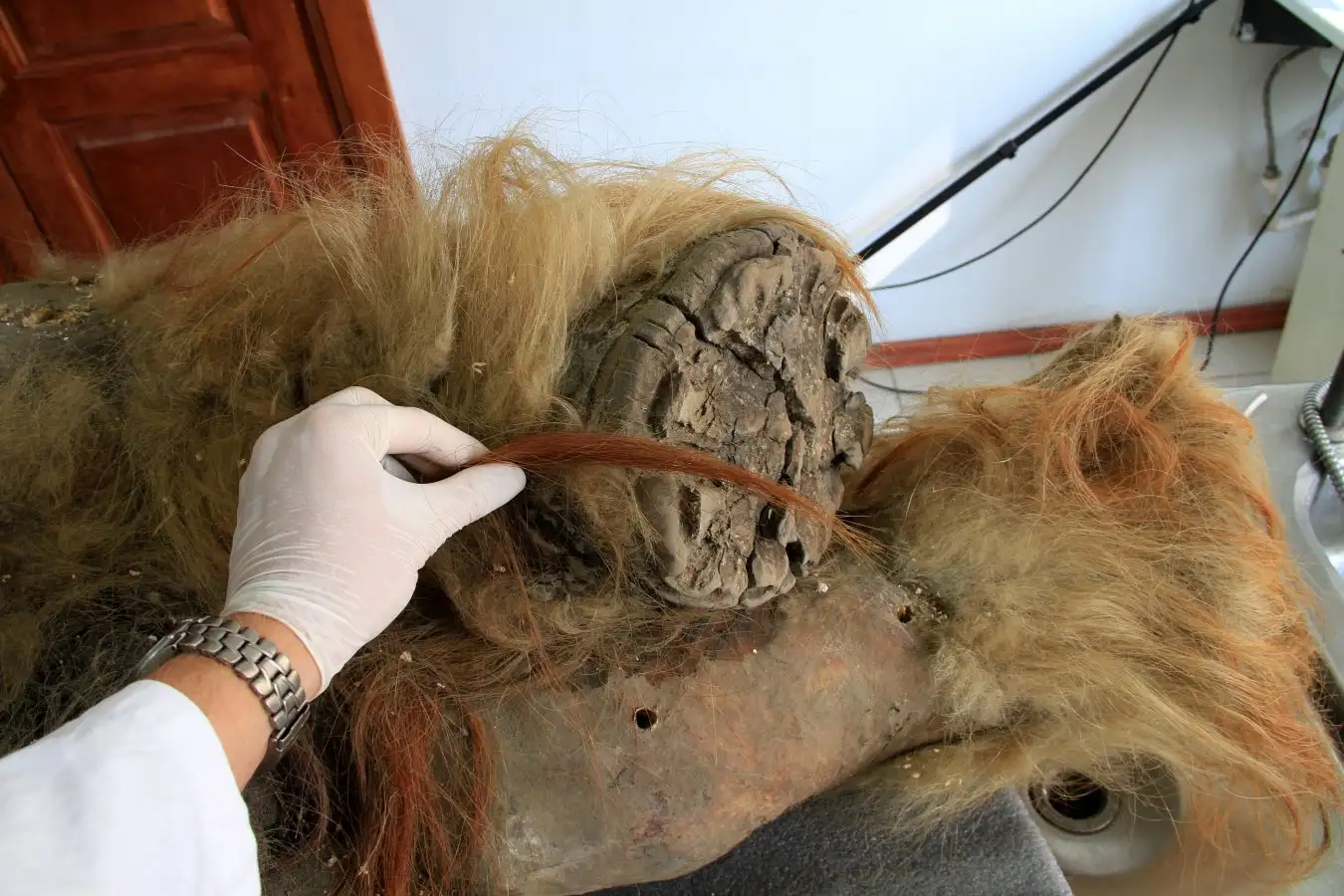
Oldest ever RNA sample recovered from woolly mammoth

14 November 2025

A woolly mammoth that was frozen in the Siberian permafrost for nearly 40,000 years has yielded the world’s oldest RNA.

The specimen, found in 2010 and nicknamed Yuka, is regarded as the best-preserved woolly mammoth (Mammuthus primigenius) ever found. Yuka was originally thought to be a juvenile female who died, possibly after being attacked by cave lions, at between 6 and 8 years of age.

Scientists have already been able to retrieve the DNA from many woolly mammoths, including some that are more than a million years old. The reconstruction of their genomes has raised hopes that one day the species – or genetically engineered animals that look like mammoths – could be brought back to life through genetic engineering.

DNA encodes the genetic instructions for making proteins in all animals. When a particular gene is turned on, the code in DNA is transcribed into another molecule called RNA. RNA is much less stable than DNA, and usually degrades within a few hours after death.

Until now, the oldest RNA ever recovered came from a wolf that was preserved in Siberian permafrost over 14,000 years ago. Now, Love Dalén at Stockholm University in Sweden and his colleagues have managed to extract RNA from one of Yuka’s legs – nearly tripling the previous record.

https://www.newscientist.com/article/25 ... y-mammoth/


Image
The skin and muscle of Yuka’s front left leg are exceptionally well preserved. Credit: Love Dalen
User avatar
wjfox
Site Admin
Posts: 13575
Joined: Sat May 15, 2021 6:09 pm
Location: Essex, UK
Contact:

Re: Human Prehistory (3.3 million years BC – 3500 BC)

Post by wjfox »

firestar464
Posts: 7202
Joined: Wed Oct 12, 2022 7:45 am

Re: Human Prehistory (3.3 million years BC – 3500 BC)

Post by firestar464 »

Dating a North American rock art tradition that lasted 175 generations

https://phys.org/news/2025-11-dating-no ... ition.html
Post Reply