https://phys.org/news/2025-05-europe-st ... eruel.html
by Pensoft Publishers
Paleontologists from the Fundación Conjunto Paleontológico de Teruel-Dinópolis have published new research in the journal Vertebrate Zoology. The article describes a partial stegosaurian skull discovered in the municipality of Riodeva (Teruel, Spain) and proposes a new hypothesis about the evolutionary history of plated dinosaurs.
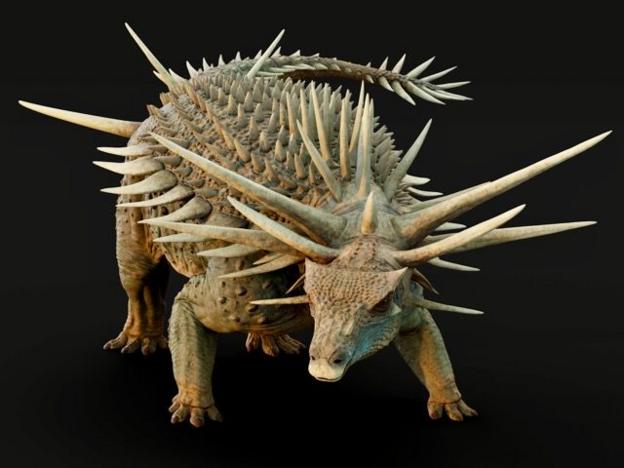
Stegosaurs were dinosaurs mainly characterized by being plant-eaters, moving on all fours, and displaying two rows of plates and/or spines from the neck to the end of the tail.
The specimen studied was recovered during the paleontological excavations led by the Fundación Dinópolis at the "Están de Colón" fossil site, located in sediments of the Villar del Arzobispo Formation, dating to the Late Jurassic epoch (around 150 million years ago). It is the best-preserved stegosaurian skull ever found in Europe and has been identified as belonging to the species Dacentrurus armatus.