
One of France's most impressive monuments turns 1,000
The historic Mont Saint-Michel Abbey, located in Normandy, north France, celebrates 1,000 years since construction first began.
https://edition.cnn.com/videos/travel/2023/06/07/mont-saint-michel-france-1000-years-cprog-lon-orig-cw.cnn
The Middle Ages (500 – 1499 AD)
-
weatheriscool
- Posts: 26094
- Joined: Sun May 16, 2021 6:16 pm
- Contact:
Re: The Middle Ages (500 – 1499 AD)
Maya civilisation: Archaeologists find ancient city in jungle
https://www.bbc.co.uk/news/world-latin-america-65974439Pottery unearthed at the site appears to indicate it was inhabited between 600 and 800 AD, a period known as Late Classic.
...
On that elevated terrain, they found several large buildings, including a number of pyramid-shaped ones measuring more than 15m.
...
The cylindrical stone columns which prompted the researchers to name the site Ocomtún were probably entrances to rooms in the upper parts of the buildings, he added.
According to Mr Sprajc the site probably underwent considerable changes between 800 and 1000 AD before falling victim to the collapse of the Lowland Maya civilisation in the 10th Century.

Re: The Middle Ages (500 – 1499 AD)
Climate Change Fostered Rise and Fall of the Tibetan Empire During 600-800 A.D.
July 17, 2023
Introduction:
For a presentation of the study on climate change and the Tibetan empire of the Middle Ages: https://www.sciencedirect.com/science/ ... ia%3Dihub
July 17, 2023
Introduction:
Read more of the Eurekalert article here: https://www.eurekalert.org/news-releases/995737(Eurekalert) This study is led by Dr. Juzhi Hou, Dr. Fahu Chen, and Dr. Kejia Ji (Group of Alpine Paleoecology and Human Adaptation (ALPHA), State Key Laboratory of Tibetan Plateau Earth System, Resources and Environment (TPESRE), Institute of Tibetan Plateau Research, Chinese Academy of Sciences). The research team obtained a high-resolution climate record of the past 2000 years using the varved sediments of Lake JiangCo on the central Tibetan Plateau. The warm and humid climate during the 7th-9th centuries AD and the subsequent cold and aridification are consistent with the rise and fall of the Tibetan Empire. Climate change is one of the possible reasons for the rise and fall of the Tibetan Empire.
During the preliminary field investigation, the researchers found that the varved sediment in JiangCo, a lake on the central Tibetan Plateau, was well-preserved. Through earlier varve counting and other radiometric dating methods, the time range of a gravity core of up to 1 meter covering the past 2000 years was determined. Subsequently, high-resolution XRF elements scanning and carbonate carbon/oxygen isotope analysis were performed on the sediment, and the temperature and precipitation records for the past 2000 years were reconstructed using biomarkers such as alkenones. The results showed that the 7th-9th centuries AD was an unusually warm and humid period. The researchers compared this period with historical literatures and found that it coincided with the only unified local regime, the Tibetan Empire, which existed on the Tibetan Plateau at that time. The changes in warm and humid climate and cold and dry climate were highly correlated with the foreign policy changes of the Tibetan Empire. Combined with the ecological niche model, the researchers simulated the area of highland barley cultivation during the warm and humid period of the 7th-9th centuries AD and the subsequent cold and dry period, which differed by about 10.88 million hectares.
On the ecologically fragile environment of the Tibetan Plateau, climate change is one of the factors that constrains human activities. This latest research results show that warm and humid climates promote the development of agriculture and animal husbandry on the plateau, while cold and arid conditions have negative effects on agriculture and animal husbandry.
For a presentation of the study on climate change and the Tibetan empire of the Middle Ages: https://www.sciencedirect.com/science/ ... ia%3Dihub
Don't mourn, organize.
-Joe Hill
-Joe Hill
Re: The Middle Ages (500 – 1499 AD)
Research Shows that Income Inequalities within the Aztec Empire Eased the Way of the Conquistadores
September 18, 2023
Introduction:
September 18, 2023
Introduction:
Additional extract:(Eurekalert) Spanish conquerors did not themselves bring inequality to the Aztec lands they invaded, they merely built on the socio-economic structure that was already in place, adapting it as it suited their plans. This is the subject of an article by Guido Alfani of Bocconi University, Milan, and Alfonso Carballo of NEOMA Business School in France. Their “Income and inequality in the Aztec Empire on the eve of the Spanish conquest”, has just been published on Nature Human Behaviour.
Income distribution in present-day Mexico is, as in other Latin American countries, rather unequal. Alfani and Carballo started out from this well-known fact and began to investigate whether the situation was any different before Spanish rule replaced the so-called Aztec Empire. This polity originated from an alliance of three city-states which over time came to rule over a range of provinces which were required to pay tributes, including in blood. Its agriculture was fairly advanced in terms of yield, but extremely labor-intensive as the wheel was unknown and no animals were employed.
The primary social distinctions in the Aztec Empire were between the nobility, the commoners and the slaves. The elite dominated the commoners by holding exclusive control over resources. The taxes established for each province were variable, depending on how the province had become part of the Aztec Empire. Those provinces that had militarily resisted the Aztec Empire were subjected to higher imperial tax rates once conquered.
Read more here: https://www.eurekalert.org/news-releases/1001807The highly centralized tax collection was so resented by vast regions of the Empire that their populations, whose living standards were only slightly above subsistence, actually took arms on the Spaniards’ side.
“The rapacious institutions characterizing the Aztec Empire paved the ground for subsequent colonial exploitation,” says Guido Alfani. “As we argue, the relatively high levels of income inequality that came to characterize Latin America could not be considered to have been the sole consequence of the initial conditions imposed by the Spaniards. Nor could they simply come from the predatory attitudes and institutions of the colonial elite. Instead, colonization further exacerbated the highly extractive conditions that had come into being before the conquest and ensured their continuation for centuries thereafter.”
Don't mourn, organize.
-Joe Hill
-Joe Hill
Re: The Middle Ages (500 – 1499 AD)
Legendary Ancient Temple Believed to Be Lost Has Been Found in Mexico
Dr. Russel Moul
October 6, 2023
Introduction:
Dr. Russel Moul
October 6, 2023
Introduction:
Read more here: https://www.iflscience.com/legendary-a ... o-71008(IFL Science) Archaeologists have found the remains of an ancient Mexican temple that was thought to be little more than a legend.
Within the city of Atlixco in central Mexico, there has long been a rumor of a lost temple, or teocalli, that was built centuries before the Spanish arrived in the early 16th century. According to the local people, the Atlixquenses, the temple was originally constructed on top of the San Miguel Hill where there is currently a Catholic chapel dedicated to the archangel Michael.
Despite these rumors, no archaeological evidence for this legendary temple had ever been found. However, recent work carried out by the Ministry of Culture of the Government of Mexico through the National Institute of Anthropology and History (INAH) has discovered vestiges that confirm its existence.
The first evidence that led to this discovery appeared during efforts to renew the chapel’s lighting and to reinforce the paths leading up the hill. A team of researchers, coordinated by INAH archaeologists Miguel Medina Jaen and Carlos Cedillo Ortego, along with Elvia Cristina Sánchez de la Barquera, found artifacts – stone tools, ornaments, and clay vessels – that were over 1,000 years old. These objects were created by the Mesoamerican Nahua, who lived in this region centuries before Europeans arrived.
The team carried out survey work inside and around the chapel’s atrium and found the remains of stone walls and floors that had belonged to an ancient temple that pre-dates the current structure. These remnants are buried around 90 centimeters (35 inches) below the foundations of the existing chapel.
Don't mourn, organize.
-Joe Hill
-Joe Hill
Re: The Middle Ages (500 – 1499 AD)
73 Pre-Incan Mummies Unearthed from Wari Empire in Peru
by J. Chyla
November 27, 2023
Introduction:
by J. Chyla
November 27, 2023
Introduction:
Read more here: https://archeowiesci.pl/en/seventy-thr ... hacamac/(Archeowiesci.Pl) Seventy-three intact burials in burial bundles, some with carved masks, have just been discovered at Pachacámac. The site of the find is an extensive complex of cemeteries from different periods at the foot of the Painted Temple. Nearby, wooden staff with images of dignitaries of the Wari Empire were also discovered.
The burials date from the second half of the Middle Horizon, that is, the time of the Wari Empire. The burial bundles were initially deposited individually and later also in groups. The state of preservation for most of them is spectacular.
73 intact burials below the Incan wall
These seventy-three intact burials in funerary bundles (fardos) date from the expansion period of the prehistoric Wari Empire, i.e. from around 800–1100 AD. Particularly noteworthy among them are the burials of individuals of both sexes wearing masks made of carved wood and ceramics, on so-called “false heads”. The discovery was made by a team of archaeologists from the Pontifical Catholic University of Peru, led by Professor Krzysztof Makowski at Pachacámac, south of Lima (Peru).
The site of Pachacámac is a famous Incan-period temple and oracle of a deity whose name, Pacha Kamaq (Pachakamak, in Quechua), means ‘one who gives life to the earth’. The exact site of the find is an extensive complex of cemeteries from different periods, at the foot of the Painted Temple. The complex of cemeteries was already discovered at the end of the 19th century by Max Uhle, considered a pioneer of scientific archaeology in the Andes. It was Uhle who attributed the worship of the temple to a deity named Pacha Kamaq. Uhle did not publish his findings, apart from general descriptions of the site plan, architecture, excavations and stratigraphy. The cemetery suffered systematic destruction both before and after Uhle’s fieldwork. The first was by the campaign to eradicate pagan beliefs carried out during colonial times (extirpación de idolatrías). Then afterwards, unfortunately, by grave robbers. It can be assumed that only a small percentage of the graves he excavated were well preserved. Hence the uniqueness of the current discovery.
Don't mourn, organize.
-Joe Hill
-Joe Hill
-
Time_Traveller

- Posts: 3025
- Joined: Sun May 16, 2021 4:49 pm
- Location: New York City, USA, November 5th 2032 C.E.
Re: The Middle Ages (500 – 1499 AD)
Leaning tower in Italy sealed off over fears it could collapse into nearby buildings
https://www.independent.co.uk/news/worl ... 57268.html2 hours ago
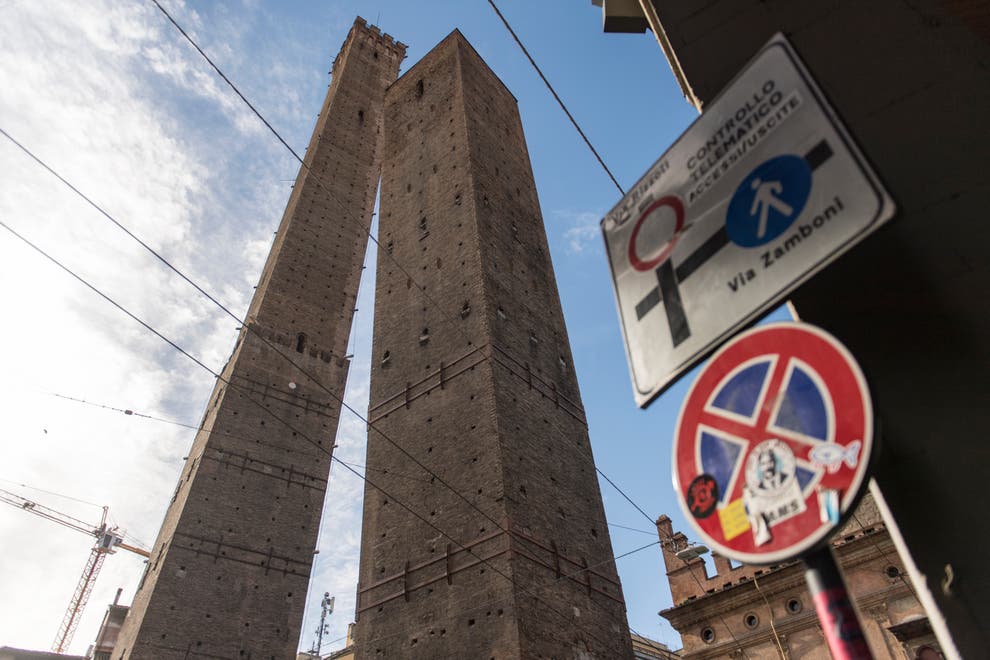
A 900-year-old leaning tower in the Italian city of Bologna has been sealed off over fears it will collapse into nearby buildings.
The 47m tall Garisenda Tower tilts at a four-degree angle and is likely to topple over due to disintegrating stonework and cracks in the brickwork, authorities said.
The city announced it would set up bright red 2.6m thick barriers around the base of the tower to contain any falling debris.
“A new report by experts states the tower is at great risk of falling, so we need to be ready for every eventuality,” a city spokesperson said.
The council has now launched what it calls a civil protection plan to preserve the 12th century tower and said the work now being started “represents the first phase of making it safe”.
“In the quantum multiverse, every choice, every decision you've ever and never made exists in an unimaginably vast ensemble of parallel universes.”
-
Time_Traveller
- Posts: 3025
- Joined: Sun May 16, 2021 4:49 pm
- Location: New York City, USA, November 5th 2032 C.E.
Re: The Middle Ages (500 – 1499 AD)
Medieval moat of 'high significance' excavated near Tewkesbury
https://www.bbc.co.uk/news/uk-england-g ... e-684888997 hours ago
Archaeologists made the discovery while exploring the site of Cowfield Farm, believed to date from the 12th or 13th centuries.
A newer brick farmhouse was damaged by fire in 2004, which enabled the team to start delving into its forgotten past.
"It's painstaking work picking apart all the deposits and coming up with a story about the site," said Jon Hart, from Cotswold Archaeology.
The excavation of the moat has provided archaeologists with an insight into the long-forgotten lives of medieval Gloucestershire farmers
Symbolism
The Cowfield farmers were on the middling rung of peasant society; legally free and holding land as tenants of Tewkesbury Abbey, two miles away.
“In the quantum multiverse, every choice, every decision you've ever and never made exists in an unimaginably vast ensemble of parallel universes.”
Re: The Middle Ages (500 – 1499 AD)
Early Settlers of Easter Island (Rapa Nui) Cultivated both Traditional Polynesian and South American Crops, Including Breadfruit, Yam, and Sweet Potato
March 20, 2024
Entire Article:
For a presentation of study results as presented in Plos One : https://journals.plos.org/plosone/arti ... e.0298896
caltrek’s comment: This partially vindicates at least one observation of Thor Heyerdahl, who argued decades ago that inhabitants of Easter Island, prior to European arrival, were of both Polynesian and South American descent. One indicator Heyerdahl pointed to was diet. At the time, the conventional wisdom was that all were of exclusively Polynesian descent. The Plos One article is a little unclear as to how the South American crops were introduced onto Easter Island. It seems to suggest that perhaps they were introduced by Polynesians who “were great navigators, and for several centuries…crossed the ocean in all directions, moving plants and other goods.”
March 20, 2024
Entire Article:
Source: https://www.eurekalert.org/news-releases/1037581(Eurekalert) Early settlers of Easter Island (Rapa Nui) cultivated both traditional Polynesian and South American crops, including breadfruit, yam, and sweet potato, according to starch analysis of their tools
For a presentation of study results as presented in Plos One : https://journals.plos.org/plosone/arti ... e.0298896
caltrek’s comment: This partially vindicates at least one observation of Thor Heyerdahl, who argued decades ago that inhabitants of Easter Island, prior to European arrival, were of both Polynesian and South American descent. One indicator Heyerdahl pointed to was diet. At the time, the conventional wisdom was that all were of exclusively Polynesian descent. The Plos One article is a little unclear as to how the South American crops were introduced onto Easter Island. It seems to suggest that perhaps they were introduced by Polynesians who “were great navigators, and for several centuries…crossed the ocean in all directions, moving plants and other goods.”
Don't mourn, organize.
-Joe Hill
-Joe Hill
-
Powers

- Posts: 1183
- Joined: Fri Apr 07, 2023 7:32 pm
- Location: a.k.a Lurking, Member, Lorem Ipsum, ..., --- and ººº.
Re: The Middle Ages (500 – 1499 AD)
Big news at least for me.caltrek wrote: ↑Fri Mar 22, 2024 4:28 pm Early Settlers of Easter Island (Rapa Nui) Cultivated both Traditional Polynesian and South American Crops, Including Breadfruit, Yam, and Sweet Potato
March 20, 2024
Entire Article:Source: https://www.eurekalert.org/news-releases/1037581(Eurekalert) Early settlers of Easter Island (Rapa Nui) cultivated both traditional Polynesian and South American crops, including breadfruit, yam, and sweet potato, according to starch analysis of their tools
For a presentation of study results as presented in Plos One : https://journals.plos.org/plosone/arti ... e.0298896
caltrek’s comment: This partially vindicates at least one observation of Thor Heyerdahl, who argued decades ago that inhabitants of Easter Island, prior to European arrival, were of both Polynesian and South American descent. One indicator Heyerdahl pointed to was diet. At the time, the conventional wisdom was that all were of exclusively Polynesian descent. The Plos One article is a little unclear as to how the South American crops were introduced onto Easter Island. It seems to suggest that perhaps they were introduced by Polynesians who “were great navigators, and for several centuries…crossed the ocean in all directions, moving plants and other goods.”
-
Time_Traveller
- Posts: 3025
- Joined: Sun May 16, 2021 4:49 pm
- Location: New York City, USA, November 5th 2032 C.E.
Re: The Middle Ages (500 – 1499 AD)
Chinese researchers use DNA to reconstruct Emperor Wu's face as study sheds light on his death
https://news.sky.com/story/chinese-rese ... h-13103770Friday 29 March 2024 12:44, UK
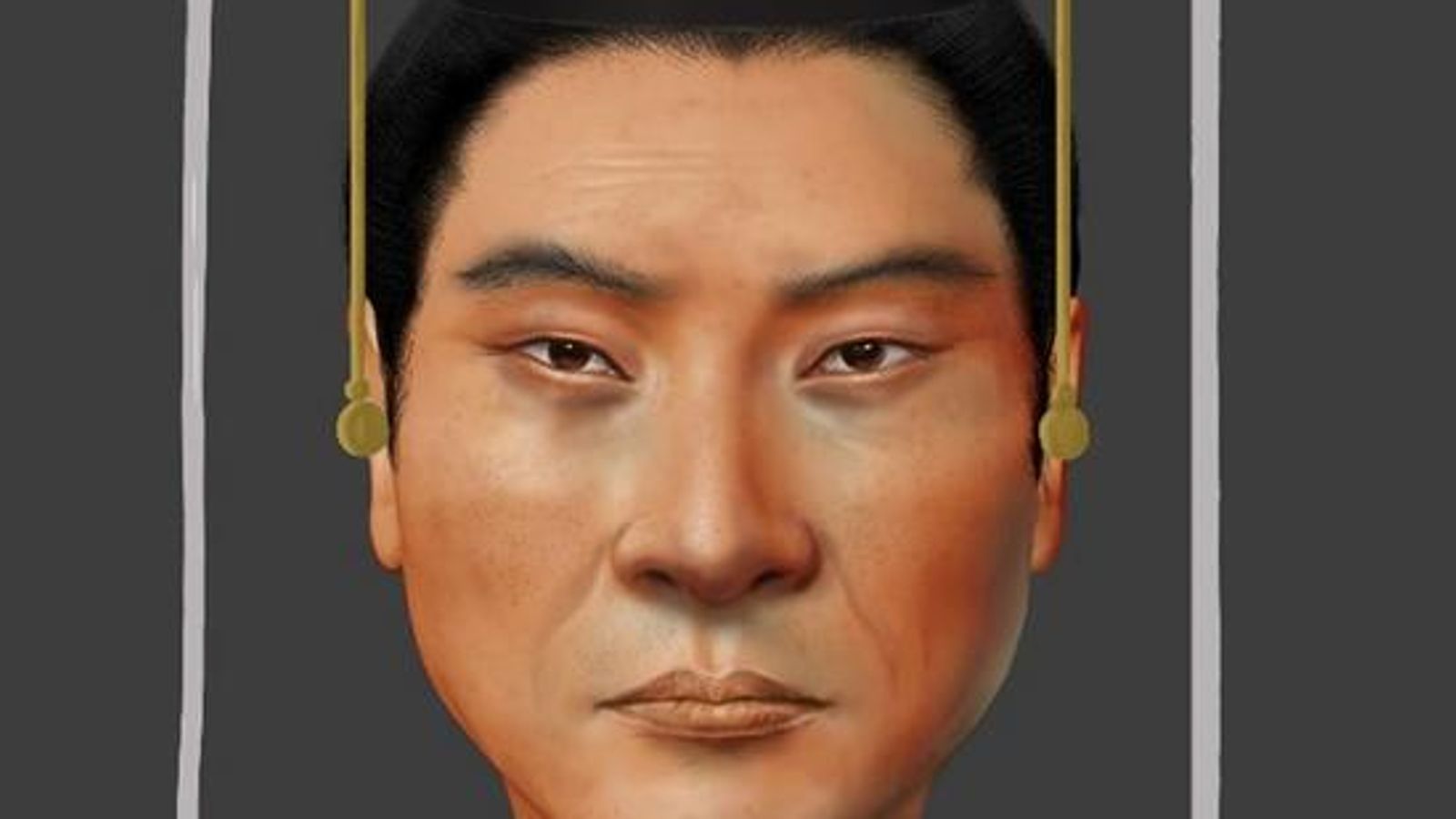
Researchers have used DNA to reconstruct the face of a Chinese emperor and shed light on what might have caused his death.
Emperor Wu was a ruler of the Northern Zhou dynasty in ancient China, reigning from 560 AD until 578, defeating the Northern Qi dynasty and unifying the northern part of the country.
The emperor belonged to a rarely-studied nomadic group called the Xianbei that lived in modern-day Mongolia and northern and northeastern China.
Almost 30 years after his tomb was discovered in northwestern China, researchers at Shanghai's Fudan University used DNA and his nearly-complete skull to reconstruct his face in 3D.
It shows the emperor had brown eyes, black hair and "dark to intermediate" skin. Researchers said the emperor "possessed a typical East or Northeast Asian appearance".
“In the quantum multiverse, every choice, every decision you've ever and never made exists in an unimaginably vast ensemble of parallel universes.”
-
weatheriscool
- Posts: 26094
- Joined: Sun May 16, 2021 6:16 pm
- Contact:
Re: The Middle Ages (500 – 1499 AD)
Prehistoric henge reveals centuries-old sacred site in Lincolnshire
https://phys.org/news/2024-04-prehistor ... acred.html
by Newcastle University
https://phys.org/news/2024-04-prehistor ... acred.html
by Newcastle University
Archaeologists from Newcastle University have unearthed evidence for an evolving sacred landscape spanning centuries in Crowland, Lincolnshire. The study is published in the Journal of Field Archaeology.
Crowland today is dominated by the ruins of its medieval abbey. However, local tradition holds that the area was the site of an Anglo-Saxon hermitage belonging to Saint Guthlac, who died in the year 714 and was famed for his life of solitude, having given up a life of riches as the son of a nobleman.
When his uncorrupted body was discovered 12 months after his death, Guthlac was venerated by a small monastic community dedicated to his memory. Guthlac's popularity while he was alive, and the success of this cult and the pilgrimage it inspired, were key factors in the establishment of Crowland Abbey in the 10th century to honor the saint.
Re: The Middle Ages (500 – 1499 AD)
Early Medieval Money Mystery Solved
April 8, 2024
Introduction:
From the Antiquity study:
April 8, 2024
Introduction:
Read more of the Eurekalert article here: https://www.eurekalert.org/news-releases/1039659(Eurekalert) Byzantine bullion fuelled Europe’s revolutionary adoption of silver coins in the mid-7th century, only to be overtaken by silver from a mine in Charlemagne’s Francia a century later, new tests reveal. The findings could transform our understanding of Europe’s economic and political development.
Between 660 and 750 AD, Anglo-Saxon England witnessed a profound revival in trade involving a dramatic surge in the use of silver coins, breaking from a reliance on gold. Around 7,000 of these silver ‘pennies’ have been recorded, a huge number, about as many as we have for the rest of the entire Anglo-Saxon period (5th century – 1066).
For decades, experts have agonised over where the silver in these coins came from. Now a team of researchers from the Universities of Cambridge, Oxford and Vrije Universiteit Amsterdam have solved that mystery by analysing the make-up of coins held by the Fitzwilliam Museum in Cambridge.
The journal Antiquity publishes their study today. Co-author Rory Naismith, Professor of Early Medieval English History at the University of Cambridge, said:
“There has been speculation that the silver came from Melle in France, or from an unknown mine, or that it could have been melted down church silver. But there wasn't any hard evidence to tell us one way or the other, so we set out to find it.”
From the Antiquity study:
Source: https://www.cambridge.org/core/journal ... 7755BF340The late seventh-century introduction of silver coinage marked a transformation in the economy of north-west Europe, yet the source(s) of the silver bullion behind this change remains uncertain. Here, the authors use combined lead isotope and trace element analysis of 49 coins from England, Frisia and Francia to provide new insights into north-European silver sources during the ‘long eighth century’ (c. AD 660–820). The results indicate an early reliance on recycled Byzantine silver plate, followed by a shift c. AD 750 to newly mined metal from Francia. This change indicates the strong role of the Carolingian state in the control of metal sources and economic structures across the North Sea zone.
Don't mourn, organize.
-Joe Hill
-Joe Hill
Re: The Middle Ages (500 – 1499 AD)
Medieval Europe Was far from Democratic, but that Didn’t Mean Tyrants Were Given a Free Pass
by Joelle Rollo-Koster
April 12, 2024
Introduction:
England’s Richard II
In Germany, King Wenceslaus of the house of Luxembourg
Pope Urban VI
Pope John XXIII
Pope Benedict XIII
Conclusion:
by Joelle Rollo-Koster
April 12, 2024
Introduction:
The article includes examples of popes and kings that were deposed on the grounds of providing poor and irresponsible leadership. Examples discussed include:(The Conversation) My students tend to imagine the Middle Ages as something like the “Kingdom Come” or “Total War” video games: an age of utter political chaos, when swords and daggers ruled, and masculinity and physical strength mattered more than governance.
As a historian of the Middle Ages, I believe this turbulent image has less to do with reality than with medievalism – a term for how modern people have reimagined life during Europe’s Middle Ages, from roughly 400-1400.
Medieval Europe may have been violent, and its standards for governance would not win praise today. But people could certainly recognize dysfunctional politics, whether in a royal court or in the church, and proposed solutions.
England’s Richard II
In Germany, King Wenceslaus of the house of Luxembourg
Pope Urban VI
Pope John XXIII
Pope Benedict XIII
Conclusion:
Read more here: https://theconversation.com/medieval-e ... s-227214Medieval bishops and kings are hardly role models for democracies today, but their political world was not so chaotic as we often imagine. Even a world ignorant of democracy attempted to define what bad leadership was and set limits on the authority of the ones they considered irresponsible. Rules of adequate political conduct were established, though the law did not always take precedence over violence.
But it’s worthwhile to remember the ways people have viewed bad leadership, hundreds of years before our own era’s fractured politics. Today, however, we have a big advantage: We vote our leaders in and out.
Don't mourn, organize.
-Joe Hill
-Joe Hill
-
firestar464
- Posts: 8408
- Joined: Wed Oct 12, 2022 7:45 am
Re: The Middle Ages (500 – 1499 AD)
Mysterious Labyrinth Found Hidden Under a Church in Mexico
https://www.msn.com/en-ca/news/technolo ... r-AA1dX1OT
https://www.msn.com/en-ca/news/technolo ... r-AA1dX1OT
Re: The Middle Ages (500 – 1499 AD)
It took 275 years for England's population to recover from the Black Death.
Source: https://ourworldindata.org/grapher/popu ... iest..1624

Source: https://ourworldindata.org/grapher/popu ... iest..1624
Re: The Middle Ages (500 – 1499 AD)
Early Interactions Between Europeans and Indigenous North Americans Revealed
September 28, 2024
Introduction:
Read more here: https://www.eurekalert.org/news-releases/1059638 and here: https://www.science.org/doi/10.1126/sciadv.adq4127
September 28, 2024
Introduction:
Conclusion:(Eurekalert) By examining ancient walrus DNA, an international research team led by Lund University in Sweden have retraced the walrus ivory trade routes of the Viking Age. They found that Norse Vikings and Arctic Indigenous peoples were probably meeting and trading ivory in remote parts of High Arctic Greenland, several centuries before Christopher Columbus “discovered” North America. The study is now published in Science Advances.
In Medieval Europe, there was an enormous demand for elite products, among them - walrus ivory. With the Vikings playing a vital part in the ivory trade, this drove the Norse expansion into the north Atlantic to Iceland and then Greenland; as they looked for new sources of ivory.
“What really surprised us was that much of the walrus ivory exported back to Europe was originating in very remote hunting grounds located deep into the High Arctic. Previously, it has always been assumed that the Norse simply hunted walrus close to their main settlements in southwest Greenland”, says Peter Jordan, Professor of Archaeology at Lund University.
The researchers used genetic “fingerprinting” to reconstruct precisely where traded walrus artefacts were coming from
“Of course, we will never know precisely, but on a more human level these remarkable encounters, framed within the vast and intimidating landscapes of the High Arctic, would probably have involved a degree of curiosity, fascination and excitement, all encouraging social interaction, sharing and possibly exchange. We need to do much more work to properly understand these interactions and motivations, especially from an Indigenous as well as more “Eurocentric” Norse perspective”, concludes Peter Jordan.
Read more here: https://www.eurekalert.org/news-releases/1059638 and here: https://www.science.org/doi/10.1126/sciadv.adq4127
Don't mourn, organize.
-Joe Hill
-Joe Hill
-
firestar464
- Posts: 8408
- Joined: Wed Oct 12, 2022 7:45 am
Re: The Middle Ages (500 – 1499 AD)
I guess it's a lot more complicated than the previous understanding of "the vikings met the indigenous people, fucked up the encounter, and got driven out"