Not a surprise and explains why Boomers act the way they do. It was banned here in the USA in the 1990's the latest so that is whole generations impacted.
Modern History (1800 – present)
-
Nanotechandmorefuture
- Posts: 478
- Joined: Fri Sep 17, 2021 6:15 pm
- Location: At the moment Miami, FL

Re: Modern History (1800 – present)
To Remedy Grievous Wrong: Happy Appomattox Day
by Amy Zimet
April 10, 2022
https://www.commondreams.org/further/20 ... mattox-day
Introduction:
by Amy Zimet
April 10, 2022
https://www.commondreams.org/further/20 ... mattox-day
Introduction:
(Common Dreams) This weekend marked the surrender of the Confederate Army under "that genteel butcher Bobby Lee" to Ulysses S. Grant, and the end of a Civil War that in the sordid name of Southern white supremacy cost four years and 630,000 lives. On Sunday April 9, 1865, General Robert E. Lee surrendered his Confederate Army of North Virginia, fighting for the unholy right to own other human beings as property, to General Ulysses S. Grant; the ceremony at the home of Wilmer and Virginia McLean in the town of Appomattox Court House, VA took an hour and a half. Days before, Grant had ridden west to ask Lee's cornered band to surrender, declaring any "further effusion of blood" would be solely on Lee's traitorous hands. Lee declined, but did ask about a possible peace agreement; the gentlemanly Grant offered a possible military surrender instead. On that Sunday, writes Heather Cox Richardson, admirably bringing the historic down to human scale, Grant woke with a migraine, having spent the night treating it with mustard plasters that didn't work: "In the morning, Grant pulled on his dirty clothes and rode out to the head of his column with his head throbbing." Lee, ever the brutal but elegant plantation owner, had dressed grandly in dress uniform, expecting to be taken prisoner; instead, under the surrender's generous terms, his military leaders were spared criminal trials, and handsomely fed. Notes Thomas Levenson, "Looking forward, not back, is no new trope in American politics."
Though the war dragged on for several months, Appomattox marked the inevitable victory of the Union. About 150 miles away, President Abraham Lincoln spent the day steaming up a peaceful Potomac River with a small family party. His guests recalled him sitting in the cabin, reading aloud from Macbeth and stopping to ponder a passage about the slain king Duncan:
"After life's fitful fever he sleeps well
Treason has done its worst
...Malice domestic, foreign levey, nothing
Can touch him further.
Five days later, Lincoln was killed. Appotomattox was lauded in one image with a noble eagle and the declaration, "Lee has surrendered! Slavery and treason buried in the same grave!"
Don't mourn, organize.
-Joe Hill
-Joe Hill
Re: Modern History (1800 – present)
The Modoc War
by caltrek
April 17, 2022
In 1852, Modoc were forced to relocate from their northern California homelands to the Klamath Reservation in Oregon. They were consigned there as a result of being falsely blamed for an attack on a wagon train. On April 25, 1870, Modoc chief Kientepoos, also known as “Captain Jack” and a band of followers left the Klamath reservation in Oregon. The band of Modocs crossed over the border into California without permission. Federal troops under General James Jackson were assigned by Ulysses S. Grant the task of persuading the Modocs to return the Klamath reservation. A parley in late 1872 between the Modocs and Jackson’s forces degenerated into a gun fight in which perhaps fifteen federal troops were killed or wounded and a Modoc was killed. The Modocs fled to a region between Tule Lake and Clear Lake in the extreme northern part of California near the Oregon border. Following a second skirmish, a peace commission composed of General Edward R. S. Canby, Alfred B. Meacham, Eleazar Thomas and Leroy S. Dyer met with Modoc leaders on April 11, 1873. This, despite the fact that interpreter Toby “Winema” Riddle had passed along a warning that she had received of a plot to kill the commissioners during the peace negotiation meeting. Unfortunately, her warning was ignored
During the parley, chief Kientepoos tried one last time to negotiate more favorable terms for the Modoc. Once it became clear that that the commissioners would be satisfied with nothing less than surrender, “Captain Jack” drew a pistol and shot General Canby. Other Modocs then stabbed Canby and shot him to death. Also killed at the scene was Eleazar Thomas. Alfred B. Meacham was wounded and left for dead. Meacham eventually recovered from his wounds, despite having been scalped. Leroy S. Byer managed to escape despite several shots aimed at him while escaping.
A detachment of troops under Colonel Jefferson C. Davis, who had served as a general in the Civil War, were tasked with dealing with the rebel Modocs. Another skirmish resulted in a loss of authority for Kientepoos, and the Modoc broke apart into several small groups. On June 1, 1873, Kientepoos himself was captured, accompanied by only two warriors, five squaws, and seven children. Other Modoc leaders were also soon captured. At a military tribunal at Fort Klamath, Toby “Winema” testified about the events and sought to explain why the Modocs had acted as they did. Her attempt to do so was unsuccessful and Kientepoos and five other Modoc chiefs were given the death sentences. Two of the Modoc had their sentences commuted to life in prison and were sent Alcatraz for confinement. Kientepoos and three others were hanged on October 3, 1873. The hostilities had resulted in the death of about seventy-five federal troops and agents, as well as seventeen Native Americans. The financial cost of the conflict was over a half a million dollars. This tragic loss of life and financial cost might have been averted had the Modoc simply been allowed to occupy a strip of land on what once had been Modoc territory.
Alfred B. Meacham published an account of Toby “Winema” Riddle’s life in 1876 entitled Winema. His dedication in the book acknowledged her role in trying to save the lives of the peace commission on which he had served. Meacham credited Riddle with saving his own life. Thanks to Meacham’s lobbying efforts, the U.S. Congress awarded Riddle a military pension, which she received until her death in 1920.
Patricia Nelson Limerick would later write about the Modoc War in her book Something in the Soil. She pointed to the war as one example of the imperial attitude of the times toward First Nation people:
Sources:
California – An Interpretive History, Walton Bean.
Everyman’s Eden, Ralph J. Roske.
Women Trailblazers of California, Gloria Harris and Hannah S. Cohen.
Sacagawea’s Nickname, Larry McMurty.
Edit: Correction in grammar.
by caltrek
April 17, 2022
In 1852, Modoc were forced to relocate from their northern California homelands to the Klamath Reservation in Oregon. They were consigned there as a result of being falsely blamed for an attack on a wagon train. On April 25, 1870, Modoc chief Kientepoos, also known as “Captain Jack” and a band of followers left the Klamath reservation in Oregon. The band of Modocs crossed over the border into California without permission. Federal troops under General James Jackson were assigned by Ulysses S. Grant the task of persuading the Modocs to return the Klamath reservation. A parley in late 1872 between the Modocs and Jackson’s forces degenerated into a gun fight in which perhaps fifteen federal troops were killed or wounded and a Modoc was killed. The Modocs fled to a region between Tule Lake and Clear Lake in the extreme northern part of California near the Oregon border. Following a second skirmish, a peace commission composed of General Edward R. S. Canby, Alfred B. Meacham, Eleazar Thomas and Leroy S. Dyer met with Modoc leaders on April 11, 1873. This, despite the fact that interpreter Toby “Winema” Riddle had passed along a warning that she had received of a plot to kill the commissioners during the peace negotiation meeting. Unfortunately, her warning was ignored
During the parley, chief Kientepoos tried one last time to negotiate more favorable terms for the Modoc. Once it became clear that that the commissioners would be satisfied with nothing less than surrender, “Captain Jack” drew a pistol and shot General Canby. Other Modocs then stabbed Canby and shot him to death. Also killed at the scene was Eleazar Thomas. Alfred B. Meacham was wounded and left for dead. Meacham eventually recovered from his wounds, despite having been scalped. Leroy S. Byer managed to escape despite several shots aimed at him while escaping.
A detachment of troops under Colonel Jefferson C. Davis, who had served as a general in the Civil War, were tasked with dealing with the rebel Modocs. Another skirmish resulted in a loss of authority for Kientepoos, and the Modoc broke apart into several small groups. On June 1, 1873, Kientepoos himself was captured, accompanied by only two warriors, five squaws, and seven children. Other Modoc leaders were also soon captured. At a military tribunal at Fort Klamath, Toby “Winema” testified about the events and sought to explain why the Modocs had acted as they did. Her attempt to do so was unsuccessful and Kientepoos and five other Modoc chiefs were given the death sentences. Two of the Modoc had their sentences commuted to life in prison and were sent Alcatraz for confinement. Kientepoos and three others were hanged on October 3, 1873. The hostilities had resulted in the death of about seventy-five federal troops and agents, as well as seventeen Native Americans. The financial cost of the conflict was over a half a million dollars. This tragic loss of life and financial cost might have been averted had the Modoc simply been allowed to occupy a strip of land on what once had been Modoc territory.
Alfred B. Meacham published an account of Toby “Winema” Riddle’s life in 1876 entitled Winema. His dedication in the book acknowledged her role in trying to save the lives of the peace commission on which he had served. Meacham credited Riddle with saving his own life. Thanks to Meacham’s lobbying efforts, the U.S. Congress awarded Riddle a military pension, which she received until her death in 1920.
Patricia Nelson Limerick would later write about the Modoc War in her book Something in the Soil. She pointed to the war as one example of the imperial attitude of the times toward First Nation people:
If you place yourself at a certain distance, there is no clearer fact in American history than the fact of conquest. In North America, just as in much of South America, Africa, Asia, and Australia, Europeans invaded a land fully occupied by natives. Sometimes, by negotiations and sometimes by warfare the natives lost ground and the invaders gained it. From the caves and lava beds of northern California, where the Modocs held off the United States Army for months, to the site along the Mystic River in Connecticut, where Puritans burned Pequots trapped in a stockade, the landscape bears witness to the violent subordination of Indian people. These haunted locations are not distant, exotic sights set apart from the turf of our normal lives.
And yet distance makes these facts deceptively clear. Immerse yourself in the story of the dispossession of any one group, and clarity dissolves. There is nothing linear or direct in these stories. Only in rare circumstances were the affairs that we call “white-Indian wars” only a matter of whites against Indians. More often, Indians took part in both sides, tribe against tribe of faction against faction.
Sources:
California – An Interpretive History, Walton Bean.
Everyman’s Eden, Ralph J. Roske.
Women Trailblazers of California, Gloria Harris and Hannah S. Cohen.
Sacagawea’s Nickname, Larry McMurty.
Edit: Correction in grammar.
Last edited by caltrek on Thu Jun 02, 2022 1:12 pm, edited 2 times in total.
Don't mourn, organize.
-Joe Hill
-Joe Hill
Re: Modern History (1800 – present)
Chernobyl is Still Changing: Four Enduring Stories and a Recent One
by Susan D’Agostino
April 25, 2022
https://thebulletin.org/2022/04/chernob ... st-heading
Inroduction:
by Susan D’Agostino
April 25, 2022
https://thebulletin.org/2022/04/chernob ... st-heading
Inroduction:
(Bulletin of Atomic Scientists) “One of the atomic reactors has been damaged,” a Radio Moscow broadcast announced about the Chernobyl Nuclear Power Plant on April 28, 1986—nearly three days after the accident. “Measures are being taken to eliminate the consequences of the accident. Aid is being given to those affected. A government commission has been set up.”
World citizens did not know then that the event would register as the world’s worst nuclear disaster. They did not know that two plant workers had died in the explosion at Chernobyl, that 28 more would die within weeks from acute radiation poisoning, or that thousands would be diagnosed with thyroid cancer over time. They also did not know then that thousands of workers would need to continue decommissioning work at the plant for decades. And they likely could not have imagined how Chernobyl’s legacy would continue to change in dramatic ways over time.
In the 36 years since that day, nuclear experts have learned and incorporated many lessons about nuclear safety. Tourists now frequent the desolate town of Pripyat; some are respectful, others are not. A sizable radius around the plant has transformed into an ecological reserve in which animals and plants thrive. Chernobyl also now boasts a new logo. Then, last month, the beleaguered site appeared in headlines again when Russian forces seized control of the plant just days after invading Ukraine.
Since 1986, much has been written about Chernobyl—both the disaster and the place that lived on after the disaster. Below (see link above the quote box for referenced citation) are four Chernobyl stories published in the Bulletin that have endured. The fifth story offers evidence that Chernobyl’s story may always be a work in progress.
Don't mourn, organize.
-Joe Hill
-Joe Hill
Re: Modern History (1800 – present)
Just thought I'd post this since MTV did make history in the music industry.
August 1, 1981:
[media] [/media]
August 1, 1981:
[media] [/media]
Indie singer/songwriter.
https://youtu.be/qTkjZIVE9SQ?si=Z7Xm3LVZ5sxfZ6LN
https://youtu.be/qTkjZIVE9SQ?si=Z7Xm3LVZ5sxfZ6LN
Re: Modern History (1800 – present)
Educate to Indoctrinate: Education Systems Were First Designed to Suppress Dissent
April 28, 2022
https://www.eurekalert.org/news-releases/951235
Introduction:
April 28, 2022
https://www.eurekalert.org/news-releases/951235
Introduction:
This is something long believed by radicals. I wonder if this means the idea is becoming more mainstream.(EurekAlert) Public primary schools were created by states to reinforce obedience among the masses and maintain social order, rather than serve as a tool for upward social mobility, suggests a study from the University of California San Diego.
The study in the journal American Political Science Review finds historical patterns from 1828 to 2015, across many countries, of education reforms, including the rise of mandatory primary schooling itself, being implemented after instances of social unrest. The research also sheds light on the current controversy in the U.S. over teaching critical race theory.
“The key prediction of the research is that when there are periods of internal conflict, states will introduce education reform that is designed to indoctrinate people to accept the status quo,” said the study’s author Agustina S. Paglayan, a UC San Diego assistant professor with a joint appointment in the Department of Political Science/School of Social Sciences and the School of Global Policy and Strategy.
Paglayan added that while some could interpret this as evidence that states were trying to solve people’s economic woes by investing in education after violent rebellions, historical documents tell a different story.
“My research reveals violence can heighten national elites’ anxiety about the masses’ moral character and the state’s ability to maintain social order. In this context, public education systems were created and expanded to teach obedience,” Paglayan said.
Don't mourn, organize.
-Joe Hill
-Joe Hill
Re: Modern History (1800 – present)
Hannah Arendt - The Philosopher Who Warned Us About Loneliness and Totalitarianism
by Sean Illing
May 8, 2022
https://www.vox.com/vox-conversations-p ... ilosophers
Introduction:
by Sean Illing
May 8, 2022
https://www.vox.com/vox-conversations-p ... ilosophers
Introduction:
(Vox) If you asked me to name the most important political theorist of the 20th century, my answer would be Hannah Arendt.
You could make arguments for other philosophers — John Rawls comes to mind — but I always come back to Arendt. She’s probably best known for her reporting on the 1961 trial of Nazi officer Adolf Eichmann, and for coining the phrase “the banality of evil,” a controversial claim about how ordinary people can commit extraordinarily evil acts.
Like all the great thinkers from the past, Arendt understood her world better than most, and she remains an invaluable voice today. Arendt was born into a German-Jewish family in 1906, and she lived in East Prussia until she was forced to flee the Nazis in 1933. She then lived in Paris for the next eight years until the Nazis invaded France, at which point she fled a second time to the United States, where she lived the rest of her life as a professor and a public intellectual.
Arendt’s life and thought were shaped by her refugee experiences and by the horrors of the Holocaust. In massively ambitious books like The Origins of Totalitarianism and The Human Condition, she tried to make sense of the political pathologies of the 20th century. Reading her today can be a little disorienting. On the one hand, the way she writes, the regimes she describes, the technologies she’s worried about — it all feels very distant, from a totally different world, and she does have blind spots, namely on identity and race, that are glaring today.
And yet, at the same time, the threats she identifies and her insights about our inner lives seem as relevant today as they were 70 years ago. After Donald Trump was elected in 2016, her 1951 book on totalitarianism was selling at 16 times its normal rate.
Don't mourn, organize.
-Joe Hill
-Joe Hill

Re: Modern History (1800 – present)
The Man Who Shot Reagan Has Been Granted Full Freedom
By Matt Stieb
June 1, 2022
John Hinckley, the would-be assassin who shot President Ronald Reagan two months after his inauguration in 1981, was deemed by a federal judge on Wednesday to no longer be a “danger to himself or others.” As a result, he will be free of all remaining restrictions by June 15.
“He’s been scrutinized, he’s passed every test,” said U.S. District Court Judge Paul L. Friedman at a hearing that Hinckley did not attend. At the hearing, Friedman confirmed his ruling last September that the 67-year-old could be unconditionally released by June if he maintained his good behavior in Williamsburg, Virginia, where he has been living since 2016. Restrictions included allowing law enforcement access to his electronic devices and email, a prohibition from being in the same vicinity of anyone protected by the Secret Service, and a three-day notice before traveling more than 75 miles from his house.
On March 30, 1981, Hinckley indirectly shot Reagan with a revolver outside the Hilton Hotel in Washington, D.C., when a bullet ricocheted off the presidential limo and punctured Reagan’s lung. A police officer, a Secret Service agent, and press secretary James Brady were also wounded. (Brady, who was partially paralyzed in the attack, later became an advocate for gun control; the 1994 law mandating federal background checks on firearm purchases was named after him.) In 1983, Hinckley was found not guilty of attempting to assassinate the president by reason of insanity and was confined to a psychiatric hospital for the next 32 years. At the time of the shooting, Hinckley, the son of a Denver oil executive, believed that killing the president would impress teenage actress Jodie Foster.
Judge Friedman determined that Hinckley no longer displays symptoms of mental illness or violent behavior. “If he hadn’t tried to kill the president, he would have been unconditionally released a long, long, long time ago,” he said in September.
https://nymag.com/intelligencer/2022/06 ... eedom.html

By Matt Stieb
June 1, 2022
John Hinckley, the would-be assassin who shot President Ronald Reagan two months after his inauguration in 1981, was deemed by a federal judge on Wednesday to no longer be a “danger to himself or others.” As a result, he will be free of all remaining restrictions by June 15.
“He’s been scrutinized, he’s passed every test,” said U.S. District Court Judge Paul L. Friedman at a hearing that Hinckley did not attend. At the hearing, Friedman confirmed his ruling last September that the 67-year-old could be unconditionally released by June if he maintained his good behavior in Williamsburg, Virginia, where he has been living since 2016. Restrictions included allowing law enforcement access to his electronic devices and email, a prohibition from being in the same vicinity of anyone protected by the Secret Service, and a three-day notice before traveling more than 75 miles from his house.
On March 30, 1981, Hinckley indirectly shot Reagan with a revolver outside the Hilton Hotel in Washington, D.C., when a bullet ricocheted off the presidential limo and punctured Reagan’s lung. A police officer, a Secret Service agent, and press secretary James Brady were also wounded. (Brady, who was partially paralyzed in the attack, later became an advocate for gun control; the 1994 law mandating federal background checks on firearm purchases was named after him.) In 1983, Hinckley was found not guilty of attempting to assassinate the president by reason of insanity and was confined to a psychiatric hospital for the next 32 years. At the time of the shooting, Hinckley, the son of a Denver oil executive, believed that killing the president would impress teenage actress Jodie Foster.
Judge Friedman determined that Hinckley no longer displays symptoms of mental illness or violent behavior. “If he hadn’t tried to kill the president, he would have been unconditionally released a long, long, long time ago,” he said in September.
https://nymag.com/intelligencer/2022/06 ... eedom.html
-
weatheriscool
- Posts: 26097
- Joined: Sun May 16, 2021 6:16 pm
- Contact:
Re: Modern History (1800 – present)
More digging needed to determine whether bones of fallen Waterloo soldiers were sold as fertilizer
https://phys.org/news/2022-06-bones-fal ... -sold.html
by Taylor & Francis
https://phys.org/news/2022-06-bones-fal ... -sold.html
by Taylor & Francis
As very few human remains have been found from what was such a bloodied affair, killing thousands, it's a conclusion that a new study suggests is most probable.
However, publishing his findings today—exactly 207 years since the historic conflict—in the peer-reviewed Journal of Conflict Archaeology, lead expert Professor Tony Pollard states it isn't quite a situation of "case closed."
The Director of the Center for Battlefield Archaeology at the University of Glasgow demonstrates original data comprising of newly found battlefield descriptions and drawings, made by people who visited in the days and weeks following Napoleon's defeat.
These included letters and personal memoirs from a Scottish merchant living in Brussels at the time of the battle, James Ker, who visited in the days following the battle and describes men dying in his arms. Together the visitor accounts describe the exact locations of three mass graves containing up to 13,000 bodies.
But will these new data lead to a mass grave discovery of the long-lost bones of those who gave their lives in this battle, which finally concluded a 23-year long war? It's unlikely states Professor Pollard.
Re: Modern History (1800 – present)
In His Undelivered Final Speech, President Kennedy Warned the World Against ‘Voices Preaching Doctrines Wholly Unrelated to Reality.’
by Jeff Nussbaum
June 10, 2022
Introduction:
by Jeff Nussbaum
June 10, 2022
Introduction:
Read more here: https://www.politico.com/news/magazin ... -00038627(Politico) Shortly before noon local time on Friday, November 22, 1963, John F. Kennedy landed at Dallas’s Love Field as he neared the end of a two-day, five-city tour of Texas.
Kennedy had much he hoped to accomplish on that trip: He hoped to lay the groundwork for his nascent 1964 reelection campaign; he hoped to heal a schism among party leaders in Texas that he feared might jeopardize his success in that key state, and he wanted to road test themes and refrains he felt would define his 1964 campaign, including national security and world peace.
But as he disembarked from his 13-minute flight from Fort Worth, there was something else on his mind: domestic extremism, disinformation, and the corrosive effect it could have on the United States.
In Dallas he was prepared to decry, “voices preaching doctrines wholly unrelated to reality,” which he feared could, “handicap this country’s security.”
He planned to say that “We cannot expect that everyone, to use the phrase of a decade ago, will ‘talk sense to the American people.’ But we can hope that fewer people will listen to nonsense.”
Don't mourn, organize.
-Joe Hill
-Joe Hill
-
Time_Traveller

- Posts: 3025
- Joined: Sun May 16, 2021 4:49 pm
- Location: New York City, USA, November 5th 2032 C.E.
Re: Modern History (1800 – present)
Sudanese museums seek return of artefacts taken by British colonisers
https://www.theguardian.com/world/2022/ ... colonisersMon 20 Jun 2022
Items include armour, banners, and two skulls taken from Omdurman battlefield
Museum officials in Sudan are hoping for the return of priceless artefacts and body parts taken by British soldiers, colonial administrators and travellers, saying they could help bring peace to the unstable east African country.
The items include valuable armour, weapons and clothing, and the banners of fighters who resisted the British force that invaded and colonised Sudan more than 120 years ago.
The most controversial items may be two skulls taken from the battlefield where Sudanese warriors tried to hold off the advancing British and Egyptian army. During the engagement at Omdurman in 1898, British commanders used early machine guns and artillery to inflict thousands of casualties on lightly armed enemies.
In Khartoum, the repatriation of the human remains of those who fought at the battle is seen as particularly significant.
“In the quantum multiverse, every choice, every decision you've ever and never made exists in an unimaginably vast ensemble of parallel universes.”
-
Time_Traveller
- Posts: 3025
- Joined: Sun May 16, 2021 4:49 pm
- Location: New York City, USA, November 5th 2032 C.E.
Re: Modern History (1800 – present)
US destroyer sunk during Second World War in 1944 off Philippines becomes deepest wreck ever discovered
https://news.sky.com/story/us-destroyer ... d-12640667Sunday 26 June 2022
Explorers have discovered the deepest shipwreck ever found - a US destroyer that sank during the largest sea battle of the Second World War.
The USS Samuel B Roberts was found, broken into two pieces, on a slope at a depth of 22,916ft (6,985m) off the Philippine island of Samar.
The battleship, popularly known as the "Sammy B", sunk during the final phase of the Battle of Leyte Gulf in October 1944, in which the Imperial Japanese Navy suffered its biggest loss of ships.
The US Navy destroyer USS Samuel B Roberts (DE-413) around June 1944, off Boston, Massachusetts. Pic: Wikicommons
The depth it was found at was 1,400ft (426m) deeper than the USS Johnson, the previous deepest wreck discovered last year.
Both were discovered by US explorer Victor Vescovo, founder of Dallas-based Caladan Oceanic Expeditions. He announced the latest find alongside UK-based marine travel specialists EYOS Expeditions.
Mr Vescovo, a former US navy commander, said: "It was an extraordinary honour to locate this incredibly famous ship, and by doing so have the chance to retell her story of heroism and duty to those who may not know of the ship and her crew's sacrifice."
“In the quantum multiverse, every choice, every decision you've ever and never made exists in an unimaginably vast ensemble of parallel universes.”
Re: Modern History (1800 – present)
American Gun Culture is Based on Frontier Mythology – but Ignores How Common Gun Restrictions Were in the Old West
by Pierre M. Atlas
June 29, 2022
Extract:
by Pierre M. Atlas
June 29, 2022
Extract:
Read more here: https://theconversation.com/american-g ... st-184932(The Conversation) My analysis finds that gun culture in the U.S. derives largely from its frontier past and the mythology of the “Wild West,” which romanticizes guns, outlaws, rugged individualism and the inevitability of gun violence. This culture ignores the fact that gun control was widespread and common in the Old West.
…
Gun ownership was commonplace in the post-Civil War Old West, but actual gunfights were rare. One reason was that, contrary to the mythology, many frontier towns had strict gun laws, especially against carrying concealed weapons.
As UCLA constitutional law professor Adam Winkler puts it, “Guns were widespread on the frontier, but so was gun regulation. … Wild West lawmen took gun control seriously and frequently arrested people who violated their town’s gun control laws.”
“Gunsmoke,” the iconic TV show that ran from the 1950s through the 1970s, would have seen far fewer gunfights had its fictional marshal, Matt Dillon, enforced Dodge City’s real laws banning the carrying of any firearms within city limits.
Don't mourn, organize.
-Joe Hill
-Joe Hill
Re: Modern History (1800 – present)
President Luis Echeverría Alvarez is Gone but Mexico is Still a Mess
by Erik Loomis
July 11, 2022
Introduction:
by Erik Loomis
July 11, 2022
Introduction:
Conclusion:(Alternet) Luis Echeverría Alvarez has died at the age of 100. You’d think that this former president of Mexico lived a good century. But you’d be wrong. If you want to consider what’s wrong with Mexico today, a lot of it is at least partially the responsibility of Echeverría.
Luis Echeverría was born in 1922 in Mexico City. Part of the post-revolutionary generation, Echeverría became an academic, teaching political theory at the Universidad Nacional Autónoma de México in 1947. He soon became a rising star in the one-party state, becoming personal secretary to PRI’s President Rodolfo Sánchez Taboada. From a young age, he was on the fast track to power.
There was a time when the Partido Revolucionario Institucional (PRI) was genuinely revolutionary. Originating at the end of the Mexican Revolution, the PRI quickly sought to institutionalize itself as the legitimate inheritor of the Revolution, quite successfully at least for awhile, with real benefits to the Mexican people.
When Lazaro Cardenas governed in the 1930s, Mexico was home to thousands of Spanish Civil War refugees, not to mention Leon Trotsky, which was a mistake given that there were so many Stalinists in Mexico ready to kill him. In any case, Cardenas went far to deliver the promises of the revolution to the nation’s poor.
Read more here: https://www.alternet.org/2022/07/luis- ... o-mess/Now he (Echeverría) is gone. But Mexico is still a mess. Decade after decade of ineffective government and violence have continued to undermine that nation. Each president since World War II deserves some level of blame for this situation. Few deserve more than Echeverría.
Don't mourn, organize.
-Joe Hill
-Joe Hill
Re: Modern History (1800 – present)
Haiti’s 1860 Jour de Pâques Earthquakes May Have Released Strain in Key Fault Zone
July 12, 2022
Introduction:
July 12, 2022
Introduction:
Read more here: https://www.eurekalert.org/news-releases/958566(EurekAlert) Using details from historical newspaper accounts and letters, seismologists have learned more about Haiti’s 1860 Jour de Pâques (Easter Sunday) earthquake sequence, and how it might have impacted the country’s most recent devastating earthquakes.
The new analysis published in the Bulletin of the Seismological Society of America suggests that the 1860 sequence may have released strain in an unusual gap between the 2010 magnitude 7.0 Léogâne earthquake and the 2021 magnitude 7.2 Nippes earthquake.
The 2010 and 2021 earthquakes, both of which caused significant deaths and damage, took place on the same fault systems in southern Haiti. Satellite observations collected after the 2021 earthquake showed that the rupture zones for the two earthquakes were separated by a roughly 50-kilometer gap.
Stacey Martin, a Ph.D. student at the Australian National University, noticed the gap while preparing for a presentation on the 2021 earthquake for the seismology group at the Research School of Earth Sciences at the ANU. Further discussions with U.S. Geological Survey seismologist Susan Hough led the two to look for more information on the 1860 event, which might have taken place in the gap.
Previous studies concluded that there was only one Jour de Pâques event. “However, after locating the first of the newspapers … it quickly became clear that there were two large events and it would be possible to say something more definitive about each,” said Martin. “Working together with Sue to track down accounts and then model the event, it gradually became clear to us that there was a lot more to the 1860 story.
Don't mourn, organize.
-Joe Hill
-Joe Hill
-
Time_Traveller
- Posts: 3025
- Joined: Sun May 16, 2021 4:49 pm
- Location: New York City, USA, November 5th 2032 C.E.
Re: Modern History (1800 – present)
Hidden Van Gogh self-portrait discovered behind earlier painting
https://www.theguardian.com/artanddesig ... r-paintingThu 14 Jul 2022 06.00 BST
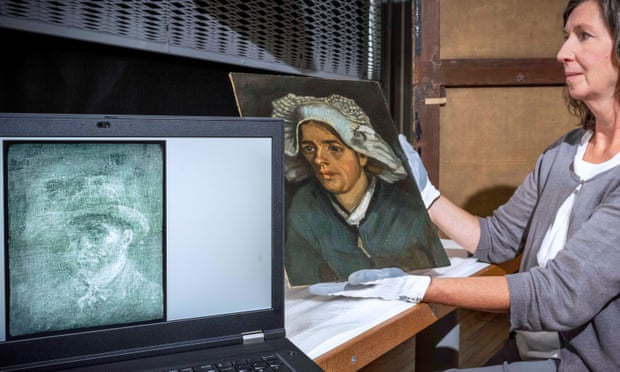
It was on a Friday afternoon that they found him, staring intently from the back of a canvas in a wide-brimmed hat and loose neckerchief: a previously undiscovered self-portrait of Vincent van Gogh, one of the most popular and influential figures in western art history, which had been hiding in plain sight in the collection of the National Galleries of Scotland for more than half a century.
“It was absolutely thrilling,” says Lesley Stevenson, senior paintings conservator at the National Galleries of Scotland, of the moment that a routine conservation X-ray of another Van Gogh painting, Head of a Peasant Woman, revealed this extraordinary find on the back of the canvas, hidden for more than 100 years beneath layers of glue and cardboard.
“We weren’t expecting much,” says Stevenson of the “modest little painting” that was donated in 1960 by an Edinburgh lawyer, Alexander Maitland. It was being X-rayed as part of a cataloguing exercise and in preparation for the Royal Scottish Academy’s summer exhibition of French impressionism – although Van Gogh was Dutch, he spent much of his artistic career in France.
The X-ray plates were processed in an old-fashioned darkroom, and when Stevenson looked at the images she realised she was staring at the face of Van Gogh himself.
“Lo and behold! We don’t see much of the peasant woman, but what we have is the lead white, the much heavier pigment he used for his face, showing up after the X-ray goes through the cardboard.”
“In the quantum multiverse, every choice, every decision you've ever and never made exists in an unimaginably vast ensemble of parallel universes.”
-
Tadasuke
Re: Modern History (1800 – present)
How has the average new U.S. house floor area changed over the decades?
1950s : 983 square feet, 3.37 people
1960s : 1200 square feet, 3.33 people
1970s : 1500 square feet, 3.14 people
1980s : 1740 square feet, 2.76 people
1990s : 2080 square feet, 2.63 people
2000s : 2266 square feet, 2.62 people
2010s : 2392 square feet (143.3% more than in the 1950s), 2.59 people (23.15% less than in the 1950s)
source: https://compasscaliforniablog.com/have- ... ke-a-look/
Although the differences in floor area per person used to be changing more rapidly up to the 1990s, new homes since the 1990s still have increases in floor space. An average 2010s U.S. home has 3.17x more space per person than an average 1950s U.S. home, which is a very significant improvement.
1950s : 983 square feet, 3.37 people
1960s : 1200 square feet, 3.33 people
1970s : 1500 square feet, 3.14 people
1980s : 1740 square feet, 2.76 people
1990s : 2080 square feet, 2.63 people
2000s : 2266 square feet, 2.62 people
2010s : 2392 square feet (143.3% more than in the 1950s), 2.59 people (23.15% less than in the 1950s)
source: https://compasscaliforniablog.com/have- ... ke-a-look/
Although the differences in floor area per person used to be changing more rapidly up to the 1990s, new homes since the 1990s still have increases in floor space. An average 2010s U.S. home has 3.17x more space per person than an average 1950s U.S. home, which is a very significant improvement.