Cancer News and Discussions

User avatar
caltrek
Posts: 9283
Joined: Mon May 17, 2021 1:17 pm

Re: Cancer News and Discussions

Post by caltrek »

New Insight Into Crosstalk Between Cancer Cells and Their Environment
September 19, 2023

Introduction:
(Eurekalert) Most solid tumors become stiff as the cancer progresses. Although researchers recognize that the environment around the cancer cells influences their behavior, it is unclear how it does so. In a new paper, published in Scientific Data, researchers from the University of Illinois Urbana-Champaign have collected gene expression data in response to mechanical stiffness in tumors. Their work can help guide our understanding of the crosstalk between cancer cells and their surroundings.

Historically, researchers have focused on how cancer cell genes change their expression over time. Based on this information, scientists have developed several therapeutic strategies, and yet over 600,000 people die every year in the US alone.

“We haven’t made as much progress as we would have liked against cancer,” said Bashar Emon, a postdoctoral researcher of mechanical science and engineering in the Saif (M-CELS/RBTE) lab. “Even with all the advances, the patient survival rate has not improved proportionately, when you consider how much research and funding has gone into studying cancer.”

As a result, there has been a recent push to understand the tumor environment holistically. Cancer cells are surrounded by non-cancerous stromal cells, the most abundant of which are the cancer-associated fibroblasts. Although researchers have recognized that CAFs play a role in metastasis, they do not understand which signals are involved in the process.

“In this paper we focused on the tumor microenvironment because it becomes stiffer with time and we know that CAFs can sense this change,” Emon said. “We wanted to understand how they convey this information to cancer cells.”
Read more of the Eurekalert article here: https://www.eurekalert.org/news-releases/1002003

For a technical presentation as published in Science: https://www.nature.com/articles/s41597-023-02233-9

Don't mourn, organize.

-Joe Hill
weatheriscool
Posts: 24510
Joined: Sun May 16, 2021 6:16 pm
Contact:

Re: Cancer News and Discussions

Post by weatheriscool »

weatheriscool
Posts: 24510
Joined: Sun May 16, 2021 6:16 pm
Contact:

Re: Cancer News and Discussions

Post by weatheriscool »

Liquid biopsy may help identify which patients with non-small cell lung cancer will benefit most from radiation
https://medicalxpress.com/news/2023-10- ... -cell.html
by American Society for Radiation Oncology
A novel liquid biopsy test may help determine which patients with non-small cell lung cancer that has spread beyond the lungs are most likely to benefit from targeted, high-dose radiation, rather than drug-based therapy, a new study suggests. Findings were presented at the American Society for Radiation Oncology (ASTRO) Annual Meeting and published in npj Precision Oncology.

The study found that a liquid biopsy test—which identifies tumor DNA circulating in the blood—can help distinguish if a patient's cancer has spread to just a few tumor sites or spread more widely. This indicator would help physicians determine which type of treatment would be most effective for each patient.
weatheriscool
Posts: 24510
Joined: Sun May 16, 2021 6:16 pm
Contact:

Re: Cancer News and Discussions

Post by weatheriscool »

Research breakthrough sparks new hope for bowel cancer patients
https://medicalxpress.com/news/2023-10- ... ients.html
by La Trobe University
Every year, over 15,500 Australians are diagnosed with bowel cancer, and it is the second leading cause of cancer deaths in the country. Over 1,700 (one in 10) of those diagnosed are young Australians aged under 50, and this incidence is increasing.

There is an urgent need to discover more effective treatments and improve bowel cancer screening, particularly for early-onset bowel cancer (those aged 25–49 years). Australians born in 1990 onwards have double the risk of developing bowel cancer compared with those born in 1950. These younger bowel cancer patients often have poorer outcomes as they typically present with late-stage disease.

Immunotherapy is one of the most promising new treatments for cancer, which involves boosting the ability of immune cells to recognize and remove cancer cells. However, less than 10% of bowel cancer patients respond to current immunotherapies.

The results of a study published on 6 October, 2023 in Science Immunology, was led by researchers at the Olivia Newton-John Cancer Research Institute. Principal Investigator and Head of the Mucosal Immunity and Cancer Laboratory at the Olivia Newton-John Cancer Research Institute, Dr. Lisa Mielke, explained the importance of this research breakthrough.
In a world first, scientists discover 'roadmap' to beating bowel cancer
By Bronwyn Thompson
October 09, 2023
https://newatlas.com/medical/roadmap-beat-bowel-cancer/
According to the American Cancer Society, around 150,000 new cases of rectal and colon cancer are diagnosed each year. And while the number is slowly trending downward, thanks to an increase in pre-emptive age-related screening, it’s still the third biggest cancer in the US, affecting around one in 23 men and one in 26 women.

It’s also difficult to treat, with just 10% of patients responding to current immunotherapies. This means that treatment is more often than not surgery, removing all the cancerous tissue. As such, while it might improve survival rate, it can have a huge impact on quality of life outcomes for patients.

Now, researchers at the Olivia Newton-John Cancer Research Institute at La Trobe University in Australia have found that how a patient responds to cancer comes down to how effective a group of immune cells in the large bowel are.

"Gamma delta T cells act as our frontline defenders in the bowel,” said lead researcher Dr Lisa Mielke, Head of the Mucosal Immunity and Cancer Laboratory at the Olivia Newton-John Cancer Research Institute. “What makes these immune cells extraordinary is that they constantly patrol and safeguard the epithelial cells lining the bowel, acting as warriors against potential cancer threats.

"When we analyzed bowel cancer patient samples, we found that when more gamma delta T cells were present in the tumors, these patients were reported to have better outcomes and improved survival."
weatheriscool
Posts: 24510
Joined: Sun May 16, 2021 6:16 pm
Contact:

Re: Cancer News and Discussions

Post by weatheriscool »

Researchers develop tiny nanoSABERs to aid battle against cancer
https://phys.org/news/2023-10-tiny-nano ... ancer.html
by Lisa Ercolano, Johns Hopkins University
When Jedi Knights need to vanquish an enemy, they whip out their trusty lightsabers. In the future, thanks to Johns Hopkins researchers, doctors seeking to crush cancer may wield minuscule molecular nanoSABERs that allow them to look at tumors in ways never before possible.

Inspired by the process cells use to assemble proteins, a team led by two researchers—Ishan Barman at the university's Whiting School of Engineering and Jeff W. Bulte, a professor of radiology and radiological science at the School of Medicine who is also affiliated with JHU's Institute for NanoBioTechnology—has created infinitesimal probes that light up when they encounter certain enzymes found in cancer cells. The ability to visualize tumors in their entirety—and early—could significantly enhance cancer imaging, inform treatment options, and improve patient outcomes.
weatheriscool
Posts: 24510
Joined: Sun May 16, 2021 6:16 pm
Contact:

Re: Cancer News and Discussions

Post by weatheriscool »

Experimental blood test for ovarian cancer appears 91% accurate

Ovarian cancer was the third most common gynecological cancer globally in 2020.
High-grade serous ovarian carcinoma is the most common type of ovarian cancer.
As there are currently no reliable screening tests for ovarian cancer, almost all cases are diagnosed at the advanced stage, lowering a woman’s survival rate.
Researchers from the Keck School of Medicine of USC have developed a new blood test for the detection of early-stage ovarian cancer.
The test can reportedly distinguish between cancerous and benign pelvic masses with up to 91% accuracy.
In 2020, ovarian cancer was the third most commonTrusted Source gynecological cancer in the world.

High-grade serous ovarian carcinomaTrusted Source is the most common type of ovarian cancer, accounting for about 75% of all cases.

If detected at an early stage, the 10-year survival rateTrusted Source for high-grade serous ovarian carcinoma is about 55%.

However, almost all cases of this type of ovarian cancer are diagnosed at an advanced stage, which lowers the 10-year survival rate to 15%. That is because there is currently no reliable screening testTrusted Source available for ovarian cancer.

Now, researchers from the Keck School of Medicine of the University of Southern California (USC) are trying to change that by developing a new blood test for the detection of early-stage ovarian cancer that can distinguish between cancerous and benign pelvic masses with up to 91% accuracy — a higher rate than that of other tests currently available.

This study recently appeared in the journal Clinical Cancer Research.
Why is ovarian cancer hard to diagnose?

Ovarian cancer begins in the ovariesTrusted Source, fallopian tubesTrusted Source, or peritoneumTrusted Source, all of which are part of the female reproductive system.

Early symptoms of ovarian cancer — such as bloating, abdominal pain, and frequent urination — are very similar to the types of symptoms a woman has during her menstrual cycle, urinary tract infection, or irritable bowel syndrome.
https://www.medicalnewstoday.com/articl ... o-diagnose?
User avatar
caltrek
Posts: 9283
Joined: Mon May 17, 2021 1:17 pm

Re: Cancer News and Discussions

Post by caltrek »

Introducing the New Journal AI in Precision Oncology
by Douglas B. Flora
Published online October 17, 2023

Introduction:
(AI Precision Oncology) Welcome to AI in Precision Oncology, a pioneering peer-reviewed research journal rooted in the transformative power of artificial intelligence (AI) in oncology. This journal will serve as a robust platform for disseminating rigorous, groundbreaking, high-quality peer-reviewed research, review articles, and captivating frontmatter to support the interests, needs, and innovation in the field and industry.

My foremost goal as editor-in-chief, along with the goals of the incredible team of editorial board members, is to inform, innovate, and inspire. With this journal serving as a main resource in the field, we will support clinicians, researchers, AI experts, patients, and industry leaders with up-to-date advancements in the field while fostering an environment conducive to further innovation and collaboration. The genesis of the journal is fundamentally linked to my personal commitment to improving cancer care across the field by supporting AI-enabled health care systems that are accessible, efficient, and, most importantly, effective for everyone.

Along with this, AI in Precision Oncology will serve as a catalyst between worlds. The fusion of both AI-enabled technologies and precision oncology is advancing at an unprecedented pace; however, a divide currently exists between these technological strides and their pragmatic integration into clinical settings. Clinicians, rightly so, require a trove of evidence-based research to acquaint themselves with AI tools and understand the methodologies to incorporate them into their practice. With this journal serving as a foremost resource, and the exceptional research-based content we will provide to the community, we aspire to bridge this divide.

Furthermore, AI in Precision Oncology will serve as an educational compass for health care professionals who might be unacquainted with AI. The journal will provide review articles, commentaries, tutorials, tools, protocols, and thought-leader profiles to inform health care professionals and allow a better understanding of the available tools and how to implement them and integrate them into their own clinical practices. AI can afford health care providers the luxury of time by automating time-consuming tasks that do not necessitate a human touch, such as data analysis or administrative chores.

Clinicians can then direct their time toward engaging more meaningfully with patients, improving patient satisfaction, and enhancing the quality of care by enabling more comprehensive and personalized consultations
Read more here: https://www.liebertpub.com/doi/10.1089 ... itorial
Don't mourn, organize.

-Joe Hill
weatheriscool
Posts: 24510
Joined: Sun May 16, 2021 6:16 pm
Contact:

Re: Cancer News and Discussions

Post by weatheriscool »

Study shows promise for iNKT cell platform to treat cancer
https://medicalxpress.com/news/2023-10- ... ancer.html
by Erica Moser, University of Pennsylvania
Allogeneic invariant natural killer T cells (allo-iNKTs) from a healthy donor have been shown to have therapeutic effects in treatment-resistant cancers and improve survival from COVID-19-related acute respiratory failure in previous studies.

Unlike T cells, allo-iNKTs can be transferred from one person to another without causing graft-versus-host disease. But allo-iNKT cells rapidly become undetectable in the body after infusion, raising concerns over their rejection and disease relapse. Their functioning also varies from person to person.

Researchers from the School of Veterinary Medicine and Perelman School of Medicine hypothesized that allo-iNKTs could combat their own rejection—without additional gene editing—if taken from donors with certain characteristics.
User avatar
wjfox
Site Admin
Posts: 13588
Joined: Sat May 15, 2021 6:09 pm
Location: Essex, UK
Contact:

Re: Cancer News and Discussions

Post by wjfox »

Biggest cervical cancer drug advance in 20 years hailed

2 hours ago

Scientists say they may have made the biggest breakthrough in treating cervical cancer in 20 years, using a course of existing, cheap drugs ahead of usual radiotherapy treatment.

Trial findings, revealed at the ESMO medical conference, show the approach cut the risk of women dying from the disease or the cancer returning by 35%.

Cancer Research UK, which funded the work, called the results "remarkable".

It hopes clinics will soon start doing the same for patients.

Cervical cancer affects thousands of women each year in the UK, many in their early 30s. Despite improvements in radiotherapy care, cancer returns in up to a third of cases, meaning new approaches are very much needed.

https://www.bbc.co.uk/news/health-67192441
weatheriscool
Posts: 24510
Joined: Sun May 16, 2021 6:16 pm
Contact:

Re: Cancer News and Discussions

Post by weatheriscool »

Lung cancer outcomes found to significantly improve with immunotherapy-based treatment given before and after surgery
https://medicalxpress.com/news/2023-10- ... based.html
by University of Texas M. D. Anderson Cancer Center
A regimen of pre-surgical immunotherapy and chemotherapy followed by post-surgical immunotherapy significantly improved event-free survival (EFS) and pathologic complete response (pCR) rates compared to chemotherapy alone for patients with operable non-small cell lung cancer (NSCLC), according to results of a Phase III trial reported by researchers at The University of Texas MD Anderson Cancer Center.

The findings, published in the New England Journal of Medicine, were first presented at the American Association for Cancer Research (AACR) Annual Meeting 2023.

The AEGEAN trial evaluated durvalumab given perioperatively, meaning therapy is given both before and after surgery. Participants on the trial received either pre-surgical (neoadjuvant) durvalumab and platinum-based chemotherapy followed by post-surgical (adjuvant) durvalumab or neoadjuvant placebo and chemotherapy followed by adjuvant placebo.

AEGEAN was the first Phase III trial investigating perioperative immunotherapy in patients with resectable NSCLC to report positive outcomes, and these data add to the growing evidence supporting the benefits of both neoadjuvant and adjuvant immunotherapy for these patients.

"Our goal is to increase cures for lung cancer. Throughout decades of research with adjuvant and neoadjuvant chemotherapy, we only succeeded in increasing cures by around 5%," said principal investigator John Heymach, M.D., Ph.D., chair of Thoracic/Head & Neck Medical Oncology at MD Anderson. "This one study alone has the potential to increase that percentage significantly, and we look forward to many more improvements going forward."
User avatar
wjfox
Site Admin
Posts: 13588
Joined: Sat May 15, 2021 6:09 pm
Location: Essex, UK
Contact:

Re: Cancer News and Discussions

Post by wjfox »

wjfox wrote: Mon Oct 23, 2023 12:07 pm Biggest cervical cancer drug advance in 20 years hailed

2 hours ago

Scientists say they may have made the biggest breakthrough in treating cervical cancer in 20 years, using a course of existing, cheap drugs ahead of usual radiotherapy treatment.

Trial findings, revealed at the ESMO medical conference, show the approach cut the risk of women dying from the disease or the cancer returning by 35%.

Cancer Research UK, which funded the work, called the results "remarkable".

It hopes clinics will soon start doing the same for patients.

Cervical cancer affects thousands of women each year in the UK, many in their early 30s. Despite improvements in radiotherapy care, cancer returns in up to a third of cases, meaning new approaches are very much needed.

https://www.bbc.co.uk/news/health-67192441

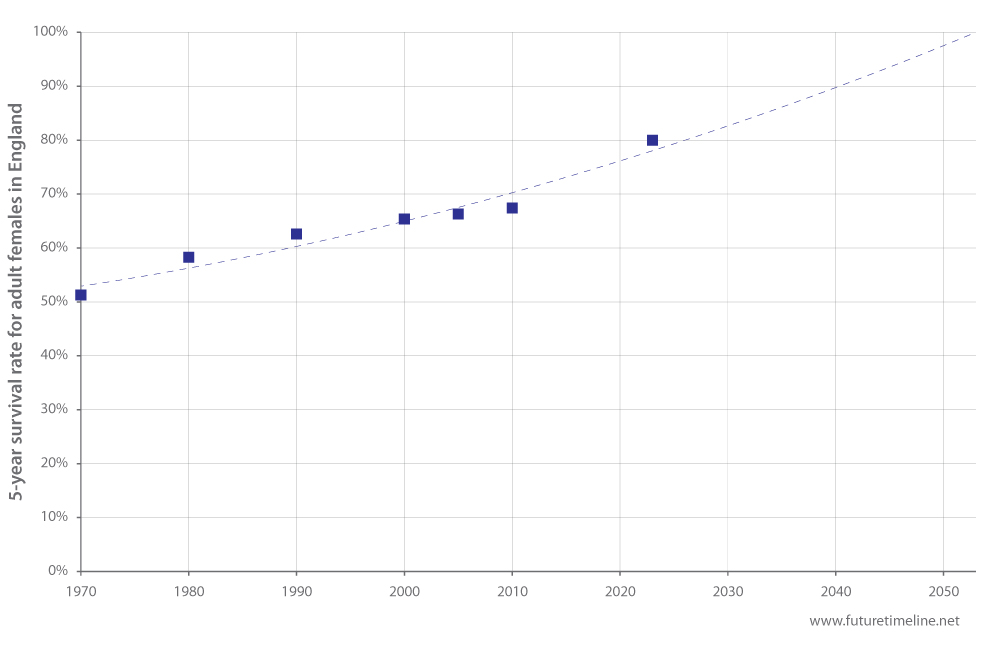
I made a graph, showing how this breakthrough affects the long-term trend in survival:

https://www.futuretimeline.net/blog/202 ... trends.htm


Image
weatheriscool
Posts: 24510
Joined: Sun May 16, 2021 6:16 pm
Contact:

Re: Cancer News and Discussions

Post by weatheriscool »

New quick, cheap blood test may detect cancer before symptoms appear
By Paul McClure
November 01, 2023
https://newatlas.com/medical/blood-test ... ms-appear/
Researchers have developed a quick, cheap, and highly sensitive blood test to detect a telltale protein produced by cancer cells. The test can pick up a range of cancers before symptoms appear and could be key to early diagnosis of the disease.

Many cancers aren’t diagnosed until symptoms start to appear, by which time the disease may be widespread and difficult to treat effectively. Biomarkers are a way of detecting cancer, but, again, some only appear when cancer becomes symptomatic or are related to a specific cancer type.

In a new study, researchers from Rockefeller University have developed a highly sensitive blood test that detects a key protein produced by cancer cells that shows promise for early detection of a number of cancers.
weatheriscool
Posts: 24510
Joined: Sun May 16, 2021 6:16 pm
Contact:

Re: Cancer News and Discussions

Post by weatheriscool »

Two-drug approach could overcome a common cancer mutation, make treatments more effective
https://medicalxpress.com/news/2023-11- ... ation.html
by Stephanie Dutchen, Harvard Medical School
Cancer cells are often a mess of mutations. About 20% to 25% of cancers involve mutations in a complex of molecules called SWI/SNF. Yet drugs designed to block SWI/SNF activity haven't always worked as expected. Researchers at Harvard Medical School have now figured out why.

As reported in an article published Nov. 2 in Cell, the team found that when drugs block SWI/SNF, a second molecule steps up to compensate.

Blocking this second molecule alongside SWI/SNF suppressed cancer cell growth in lab dishes, suggesting that a two-drug approach could make treatments more effective in people.

"I am excited about this work because it shows an alternative path forward for treating cancers in which the SWI/SNF complex is mutated," said senior author Karen Adelman, the Edward S. Harkness Professor of Biological Chemistry and Molecular Pharmacology in the Blavatnik Institute at HMS, whose lab conducted the work.
weatheriscool
Posts: 24510
Joined: Sun May 16, 2021 6:16 pm
Contact:

Re: Cancer News and Discussions

Post by weatheriscool »

Repurposed Parkinson’s drug found to be effective against brain cancer
By Paul McClure
November 05, 2023
https://newatlas.com/medical/repurposed ... in-cancer/
Researchers have found that a now-discontinued drug used to treat the symptoms of Parkinson’s disease may be effective at treating metastatic breast cancer and the brain metastases that can often result. The repurposed drug has the potential to be a novel therapeutic in the fight against cancer.

Breast cancer is one of the major causes of brain metastases and the most common cause of cancer-related death in women globally. Breast cancer brain metastases can be difficult to treat because the body’s protective blood-brain barrier (BBB) is often impermeable to drugs that will kill the cancer cells.

In a new study, researchers at Northwestern Medicine in the US went searching for a drug that could cross the BBB and was effective at killing cancer cells and appear to have struck gold.
weatheriscool
Posts: 24510
Joined: Sun May 16, 2021 6:16 pm
Contact:

Re: Cancer News and Discussions

Post by weatheriscool »

Hodgkin's lymphoma: Small changes in cells, big effect
https://medicalxpress.com/news/2023-11- ... s-big.html
by Catarina Pietschmann, Max Delbrück Center for Molecular Medicine
Hodgkin's lymphoma is one of the most common types of lymphoma in young adults. It is characterized by the presence of enlarged B lymphocytes, which are unusual in that they bear on their surface the identifying markers of many other immune cells—such as those found on phagocytes, dendritic cells, or T cells. Now, a team led by Stephan Mathas from the Experimental and Clinical Research Center (ECRC) has explained how these changes take place in the cells and what impact they have. The ECRC is a joint institution of the Max Delbrück Center and Charité—Universitätsmedizin Berlin.

"Many different molecular changes have been identified in classic Hodgkin's lymphoma, but we know little about the mutations that actively promote tumor cell development," says Stephan Mathas, last author of the study published in Nature Communications.

Together with colleagues at the Institutes of Human Genetics of the Ulm University Medical Center (Prof. Reiner Siebert) and of the Polish Academy of Sciences in Poznan (Dr. Maciej Giefing), Mathas's team trawled through vast amounts of gene sequencing and expression data in search of activating mutations. In cell lines and later in patient tumor cells, they repeatedly found the same mutation in the transcription factor IRF4 in about 15 percent of patients.
weatheriscool
Posts: 24510
Joined: Sun May 16, 2021 6:16 pm
Contact:

Re: Cancer News and Discussions

Post by weatheriscool »

Simple womb cancer test could reduce need for invasive diagnostic procedures
https://medicalxpress.com/news/2023-11- ... ostic.html
by University College London

A new test to detect womb cancer could prevent 87% of women who do not have cancer from needing invasive diagnostic procedures, finds a new study led by researchers at UCL and the University of Innsbruck.

The test, called WID-qEC, could simplify and speed up the pathway to a diagnosis of womb cancer or ruling the condition out as a cause of symptoms.

The research, published in The Lancet Oncology, shows that the WID-qEC test outperforms imaging at ruling out womb cancer and could save nearly 90% of peri- and post-menopausal women from needing invasive surgical biopsies when getting abnormal vaginal bleeding symptoms checked.
weatheriscool
Posts: 24510
Joined: Sun May 16, 2021 6:16 pm
Contact:

Re: Cancer News and Discussions

Post by weatheriscool »

New approach to pancreatic cancer treatment expands therapeutic possibilities, shows promise for increased survival
https://medicalxpress.com/news/2023-11- ... eutic.html
by Virginia Commonwealth University
Preclinical research published in the Journal for ImmunoTherapy of Cancer points to a promising new treatment option for people with pancreatic cancer. Researchers from VCU Massey Comprehensive Cancer Center and the VCU Institute of Molecular Medicine (VIMM) suggest that when used in a form that can be delivered directly into the tumor cell, polyinosine–polycytidylic acid (pIC) suppresses tumor growth, induces cancer cell death and enhances survival in animal models with the most common form of pancreatic cancer.

Researchers also concluded that when used alone or in combination with a standard-of-care medication such as gemcitabine, pIC—a double-stranded RNA which acts as an immunostimulant—is safe and non-toxic to normal pancreatic cells, indicating this approach may have translational potential to improve the survival of people with pancreatic ductal adenocarcinoma (PDAC).
weatheriscool
Posts: 24510
Joined: Sun May 16, 2021 6:16 pm
Contact:

Re: Cancer News and Discussions

Post by weatheriscool »

Researchers develop gel to deliver cancer drugs for solid tumors
https://medicalxpress.com/news/2023-11- ... umors.html
by Mass General Brigham
Intratumoral therapy—in which cancer drugs are injected directly into tumors—is a promising treatment option for solid cancers but has shown limited success in clinical trials due to an inability to precisely deliver the drug and because most immunotherapies quickly dissipate from the site of injection.

A team of researchers from Mass General Brigham, in collaboration with colleagues at the Koch Institute for Integrative Cancer Research, has developed a gel delivery system that overcomes these challenges. The gel is injectable but solidifies upon delivery; contains an imaging agent for visualization under CT scan; and can hold a high concentration of drug for slow, controlled release.
User avatar
wjfox
Site Admin
Posts: 13588
Joined: Sat May 15, 2021 6:09 pm
Location: Essex, UK
Contact:

Re: Cancer News and Discussions

Post by wjfox »

NHS England promises to eliminate cervical cancer by 2040

6 hours ago

Cervical cancer will be eliminated by 2040, the NHS in England is promising.

NHS England boss Amanda Pritchard will say later that with improved rates of vaccination and screening, the point where almost nobody gets the cancer could be achieved within two decades.

But she will tell a conference of health leaders later that more must be done to boost vaccination and screening rates to achieve the goal.

[...]

Eliminating cervical cancer - defined by the World Health Organization (WHO) as getting to a really low rate of four cases per 100,000 - is something globally many countries are working towards. In Australia a goal of 2035 has been set.

To achieve it the WHO says targets of 90% for vaccination and 70% for screening will need to be achieved.

https://www.bbc.co.uk/news/health-67420138
User avatar
wjfox
Site Admin
Posts: 13588
Joined: Sat May 15, 2021 6:09 pm
Location: Essex, UK
Contact:

Re: Cancer News and Discussions

Post by wjfox »

Hundreds of children could benefit from new approach to brain cancer treatment

Saturday 18 November 2023 05:21, UK

A ground-breaking clinical trial for treating cancerous brain tumours in children has published successful results - and could help hundreds of children every year.

The TADPOLE-G study compared outcomes for treating children with two specific cancer drugs as opposed to chemotherapy.

Researchers say the trial demonstrates the benefit of a combination of drugs for children with BRAF mutated low- and high-grade gliomas.

[...]

In the TADPOLE-G randomised trial, 73 children with low-grade gliomas were treated with the drugs Dabrafenib and Trametinib and their outcomes were compared to 37 patients treated with standard chemotherapy drugs.

As well as an improved side-effect profile to chemotherapy, the new treatment also improved overall response rate by more than 400% and increased median progression-free survival from 7.4 months with chemotherapy to 20.1 months with the new treatment.

https://news.sky.com/story/hundreds-of- ... t-13010685
Post Reply