
Researchers at the University of Toronto’s Faculty of Applied Science & Engineering have used machine learning to design nano-architected materials that have the strength of carbon steel but the lightness of Styrofoam.
In a new paper published in Advanced Materials (“Ultrahigh Specific Strength by Bayesian Optimization of Carbon Nanolattices”), a team led by Professor Tobin Filleter describes how they made nanomaterials with properties that offer a conflicting combination of exceptional strength, light weight and customizability. The approach could benefit a wide range of industries, from automotive to aerospace.
Nanotechnology News and Discussions
Re: Nanotechnology News and Discussions
Strong as steel, light as foam: Machine learning and nano-3D printing create breakthrough nano-architected materials
And remember my friend, future events such as these will affect you in the future

Re: Nanotechnology News and Discussions
Metals can be squeezed into sheets just a few atoms thick
12 March 2025
Sheets of metal just two atoms thick can be produced by squashing molten droplets at great pressure between two sapphires. The researchers who developed the process say the unusual materials could have applications in industrial chemistry, optics and computers.
Last year, scientists created a gold sheet that was a single atom thick, which they dubbed “goldene” after graphene, a material made of a single layer of carbon atoms. Such materials have been described as two-dimensional, as they are as thin as chemically possible.
But making other 2D metals hadn’t been possible until now. The new technique, developed by Luojun Du at the Chinese Academy of Sciences and his colleagues, can create 2D sheets of bismuth, gallium, indium, tin and lead that are as thin as their atomic bonds allow.
https://www.newscientist.com/article/24 ... oms-thick/

Credit: Luojun Du
12 March 2025
Sheets of metal just two atoms thick can be produced by squashing molten droplets at great pressure between two sapphires. The researchers who developed the process say the unusual materials could have applications in industrial chemistry, optics and computers.
Last year, scientists created a gold sheet that was a single atom thick, which they dubbed “goldene” after graphene, a material made of a single layer of carbon atoms. Such materials have been described as two-dimensional, as they are as thin as chemically possible.
But making other 2D metals hadn’t been possible until now. The new technique, developed by Luojun Du at the Chinese Academy of Sciences and his colleagues, can create 2D sheets of bismuth, gallium, indium, tin and lead that are as thin as their atomic bonds allow.
https://www.newscientist.com/article/24 ... oms-thick/
Credit: Luojun Du
-
weatheriscool
- Posts: 24482
- Joined: Sun May 16, 2021 6:16 pm
- Contact:
Re: Nanotechnology News and Discussions
Customizable fluorescent nanoclays offer diverse applications
https://phys.org/news/2025-04-customiza ... tions.html
by Eric Stann, University of Missouri
https://phys.org/news/2025-04-customiza ... tions.html
by Eric Stann, University of Missouri
Imagine tiny LEGO pieces that automatically snap together to form a strong, flat sheet. Then, scientists add special chemical "hooks" to these sheets to attach glowing molecules called fluorophores.
Associate Professor Gary Baker, Piyuni Ishtaweera, Ph.D., and their team have created these tiny, clay-based materials—called fluorescent polyionic nanoclays. They can be customized for many uses, including advancing energy and sensor technology, improving medical treatments and protecting the environment.
The work is published in the journal Chemistry of Materials.
-
weatheriscool
- Posts: 24482
- Joined: Sun May 16, 2021 6:16 pm
- Contact:
Re: Nanotechnology News and Discussions
Bringing superconducting nanostructures to 3D
https://phys.org/news/2025-05-supercond ... es-3d.html
by Max Planck Society
https://phys.org/news/2025-05-supercond ... es-3d.html
by Max Planck Society
The move from two to three dimensions can have a significant impact on how a system behaves, whether it is folding a sheet of paper into a paper airplane or twisting a wire into a helical spring. At the nanoscale, 1,000 times smaller than a human hair, one approaches the fundamental length scales of, for example, quantum materials.
At these length scales, the patterning of nanogeometries can lead to changes in the material properties itself—and when one moves to three dimensions, there come new ways to tailor functionalities, by breaking symmetries, introducing curvature, and creating interconnected channels.
Despite these exciting prospects, one of the main challenges remains: how to realize such complex 3D geometries, at the nanoscale, in quantum materials? In a new study, an international team led by researchers at the Max Planck Institute for Chemical Physics of Solids have created three-dimensional superconducting nanostructures using a technique similar to a nano-3D printer.
-
weatheriscool
- Posts: 24482
- Joined: Sun May 16, 2021 6:16 pm
- Contact:
Re: Nanotechnology News and Discussions
Light-as-a-feather nanomaterial extracts drinking water from air
by ARC Centre of Excellence for Carbon Science and Innovation
https://phys.org/news/2025-06-feather-n ... l-air.html
by ARC Centre of Excellence for Carbon Science and Innovation
https://phys.org/news/2025-06-feather-n ... l-air.html
An international scientific collaboration has developed a novel nanomaterial to efficiently harvest clean drinking water from water vapor in the air. The nanomaterial can hold more than three times its weight in water and can achieve this far quicker than existing commercial technologies, features that enable its potential in direct applications for producing potable water from the air.
The collaboration is led by the Australian Research Council Center of Excellence for Carbon Science and Innovation (ARC COE-CSI) UNSW Associate Professor Rakesh Joshi and Nobel Laureate Professor Sir Kostya Novoselov. Prof Joshi is based at the School of Materials Science and Engineering, University of New South Wales (UNSW). Prof Novoselov is based at the National University of Singapore.
-
weatheriscool
- Posts: 24482
- Joined: Sun May 16, 2021 6:16 pm
- Contact:
Re: Nanotechnology News and Discussions
A new quantum dot photoreductant uses 99% less light energy for organic reactions
https://phys.org/news/2025-07-quantum-d ... tions.html
by Hong Kong University of Science and Technology
https://phys.org/news/2025-07-quantum-d ... tions.html
by Hong Kong University of Science and Technology
Chemists at the School of Science of the Hong Kong University of Science and Technology (HKUST) have recently made significant progress in photocatalysis by unveiling a "super" photoreductant, marking a major advancement in organic synthesis.
Quantum dots (QDs) hold great promise as photocatalysts for promoting photoredox chemistry. However, their application in photocatalytic organic transformations has lagged behind that of small molecule photosensitizers due to the limited understanding of their photophysics.

-
weatheriscool
- Posts: 24482
- Joined: Sun May 16, 2021 6:16 pm
- Contact:
Re: Nanotechnology News and Discussions
Scientists find new way to control electricity at tiniest scale
https://phys.org/news/2025-07-scientist ... scale.html
by Jules Bernstein, University of California - Riverside
https://phys.org/news/2025-07-scientist ... scale.html
by Jules Bernstein, University of California - Riverside
Researchers at the University of California, Riverside, have uncovered how to manipulate electrical flow through crystalline silicon, a material at the heart of modern technology. The discovery could lead to smaller, faster, and more efficient devices by harnessing quantum electron behavior.
At the quantum scale, electrons behave more like waves than particles. And now, scientists have shown that the symmetrical structure of silicon molecules can be fine-tuned to create, or suppress, a phenomenon known as destructive interference. The effect can turn conductivity "on" or "off," functioning as a molecular-scale switch.
-
weatheriscool
- Posts: 24482
- Joined: Sun May 16, 2021 6:16 pm
- Contact:
Re: Nanotechnology News and Discussions
Thermal trigger: Scientists develop heat-activated protein control for targeted cell death
by Kanazawa University
by Kanazawa University
https://phys.org/news/2025-09-thermal-t ... -cell.htmlResearchers at the Nano Life Science Institute (WPI-NanoLSI), Kanazawa University, report in ACS Nano, how proteins in cells can be controllably activated through heating, an effect that can be used to initiate programmed cell death.
Cellular processes are governed by the activity of proteins. Being able to control the functioning of proteins is therefore highly relevant for the development of biotechnological tools. Doing so with high-enough spatial and temporal precision is hugely challenging, however. One approach for tackling this challenge, called thermogenetics, is based on the thermal response of certain proteins, with slight heating or cooling resulting in (de)activation.
Now, Cong Quang Vu and Satoshi Arai from Kanazawa University have developed a thermogenetic tool based on polypeptides that enables easy regulation of a protein's activation temperature and used it to achieve programmed cell death of human-derived cells.
-
weatheriscool
- Posts: 24482
- Joined: Sun May 16, 2021 6:16 pm
- Contact:
-
weatheriscool
- Posts: 24482
- Joined: Sun May 16, 2021 6:16 pm
- Contact:
Re: Nanotechnology News and Discussions
New nanogel technology destroys drug-resistant bacteria in hours
by Swansea University
https://phys.org/news/2025-11-nanogel-t ... stant.html
by Swansea University
https://phys.org/news/2025-11-nanogel-t ... stant.html
As the threat of antibiotic resistance grows, a Swansea University academic has led the development of a novel technology capable of killing some of the most dangerous bacteria known to medicine—with over 99.9% effectiveness against Pseudomonas aeruginosa (P. aeruginosa).
The innovation centers on a heteromultivalent nanogel: a flexible particle made by crosslinking polymers and adding sugar residues (galactose and fucose) alongside antimicrobial peptides. The research is published in the journal Angewandte Chemie International Edition.
-
weatheriscool
- Posts: 24482
- Joined: Sun May 16, 2021 6:16 pm
- Contact:
Re: Nanotechnology News and Discussions
Nanobody repairs misfolded CFTR inside cells, boosting function in cystic fibrosis
April 17, 2026
A tiny antibody component could fundamentally transform the treatment of cystic fibrosis: For the first time, researchers have succeeded in developing a so-called nanobody that penetrates directly into human cells and can repair the chloride channel most commonly affected in cystic fibrosis. The innovative therapeutic approach was developed in collaboration between teams from Charité—Universitätsmedizin Berlin and the Leibniz-Forschungsinstitut für Molekulare Pharmakologie (FMP). The results have now been published in the journal Nature Chemical Biology.
The clinical picture of cystic fibrosis—also known as CF—is caused by genetic defects in the so-called CFTR channel. This channel regulates water and salt transport in the lung mucosa and ensures the production of sufficiently fluid mucus. In about 90% of cystic fibrosis patients, a mutation known as F508del is present in the CFTR channel, meaning that a single amino acid is missing at position 508 in its protein chain. This change causes CFTR to fold incorrectly and break down prematurely inside the cell, rather than functioning as a channel in the cell membrane of the airways.
As a result, patients have thick mucus in their lungs, and pathogens can no longer be effectively cleared. The consequence is chronic infection and inflammation of the airways, leading to a progressive loss of lung function—in the worst-case scenario, this necessitates a lung transplant.
[...]
The researchers were able to demonstrate that the nanobody remained bound to the mutated CFTR channel in cells derived from cystic fibrosis patients for at least 24 hours. It did not damage the cells in the process. Functional studies also confirmed that the corrected channel once again transported chloride across the cell membrane.
In combination with the established ETI triple therapy, the nanobody demonstrates a pronounced synergistic effect in these cell cultures: While the ETI agents restored the function of the defective CFTR channel by about half on average, the channel activity could be increased to nearly 90% of normal levels through the additional administration of the nanobody.
https://phys.org/news/2026-04-nanobody- ... sting.html

Cell-permeable nanobody (green) binds to defect CFTR-chloride channel (structural simulation). Credit: FMP | Barth van Rossum
April 17, 2026
A tiny antibody component could fundamentally transform the treatment of cystic fibrosis: For the first time, researchers have succeeded in developing a so-called nanobody that penetrates directly into human cells and can repair the chloride channel most commonly affected in cystic fibrosis. The innovative therapeutic approach was developed in collaboration between teams from Charité—Universitätsmedizin Berlin and the Leibniz-Forschungsinstitut für Molekulare Pharmakologie (FMP). The results have now been published in the journal Nature Chemical Biology.
The clinical picture of cystic fibrosis—also known as CF—is caused by genetic defects in the so-called CFTR channel. This channel regulates water and salt transport in the lung mucosa and ensures the production of sufficiently fluid mucus. In about 90% of cystic fibrosis patients, a mutation known as F508del is present in the CFTR channel, meaning that a single amino acid is missing at position 508 in its protein chain. This change causes CFTR to fold incorrectly and break down prematurely inside the cell, rather than functioning as a channel in the cell membrane of the airways.
As a result, patients have thick mucus in their lungs, and pathogens can no longer be effectively cleared. The consequence is chronic infection and inflammation of the airways, leading to a progressive loss of lung function—in the worst-case scenario, this necessitates a lung transplant.
[...]
The researchers were able to demonstrate that the nanobody remained bound to the mutated CFTR channel in cells derived from cystic fibrosis patients for at least 24 hours. It did not damage the cells in the process. Functional studies also confirmed that the corrected channel once again transported chloride across the cell membrane.
In combination with the established ETI triple therapy, the nanobody demonstrates a pronounced synergistic effect in these cell cultures: While the ETI agents restored the function of the defective CFTR channel by about half on average, the channel activity could be increased to nearly 90% of normal levels through the additional administration of the nanobody.
https://phys.org/news/2026-04-nanobody- ... sting.html
Cell-permeable nanobody (green) binds to defect CFTR-chloride channel (structural simulation). Credit: FMP | Barth van Rossum
Re: Nanotechnology News and Discussions
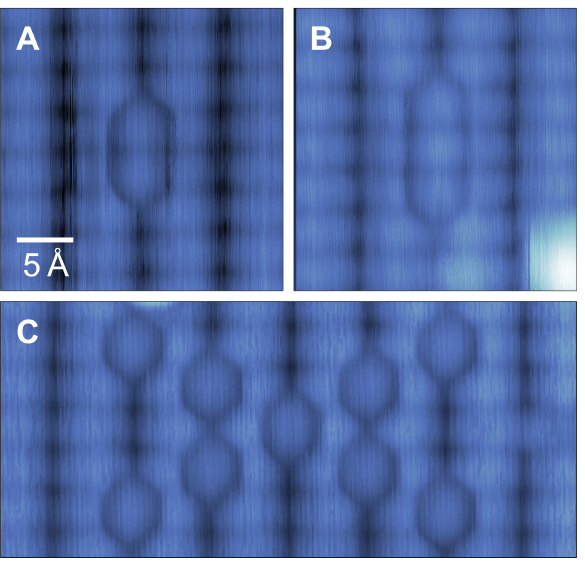
Atom-by-atom manufacturing takes a step forward
1st June 2026
Researchers have demonstrated a new way to place carbon atoms with extreme precision, offering a glimpse of future nanoscale manufacturing.
Read more: https://www.futuretimeline.net/blog/202 ... meline.htm
1st June 2026
Researchers have demonstrated a new way to place carbon atoms with extreme precision, offering a glimpse of future nanoscale manufacturing.
Read more: https://www.futuretimeline.net/blog/202 ... meline.htm