
Will technology ever revert to incremental progress?
Will technology ever revert to incremental progress?
For most of human history, progress has been fairly slow and incremental, but the last few centuries have seen exponential growth. Do you think technological progress will eventually return to this incremental pace, and if so when? It seems to me that there simply isn't enough room in the universe for new discoveries to be made at a faster and faster pace indefinitely, eventually all the low hanging fruit will be picked and massive breakthroughs will be few and far between. We're definitely not there yet but reaching this point within 500-1000 years seems quite likely. I honestly think a person from 3000 AD would have an easier time adapting to life in 10000 AD than a person from today would have to adapting to life in 3000 AD. Whereas listening to some wild Singulatarians, you'd think that it would be easier for a person from today to adapt to 3000 AD than for a person from 3000 AD to adapt to 3001 AD

Re: Will technology ever revert to incremental progress?
There might be some hard physical limits that lead to a slowdown or plateau. The speed of light, for example, could be a major barrier to our progress from Type 2 to Type 3 on the Kardashev Scale. Also, the absolute limit for miniaturisation in transistor-like devices could be reached by circa 2200 AD, based on the current trend. We might also learn everything there is to know about various subjects, potentially leading to a kind of stagnation.
-
funkervogt

- Posts: 1373
- Joined: Mon May 17, 2021 3:03 pm
Re: Will technology ever revert to incremental progress?
I think it will slow down at some point. We'll hit constraints due to limited resources, waste heat, and possibly limits on what is scientifically and technologically possible.
-
Tadasuke
Re: Will technology ever revert to incremental progress?
It's impossible for everything or anything to improve exponentially forever, but there is a lot of exponential improvement, change and growth in front of us. I think that quality of stuff will one day reach a maximum (in a different year for different kinds of things, aspects and features), but the overall quantity and the overall reach of human-machine civilisation originating from Earth will remain growing for a long time after that.
There may be exponentially more megastructures in space, even if those megastructures stop being improved upon (especially in an exponential way) after the year AD 3387 for example. Virtual reality will also stop improving in sophistication after some point. It may be, that there will never be any spaceships faster than ~90% of lightspeed in vacuum, or useful robots smaller than 33 nanometres. It may be, that there will never will a computer chip at the same size (in mm³) more than ~1 trillion times more efficient than the 2024 ones. Still, the quantity can remain growing and probably will remain growing.
I don't believe however, that in 2024 we are reaching physical limits in anything really yet. Literally everything can still be improved upon. That will remain true for a while, but it's likely to stop being true sometime during the 4th millenium.
(Technological) Singularity is a weird and questionable concept. I do believe that in the year 4000 a lot more will be happening, but not in technological advancement per se. Just overall, on the grand scale. For example, because there will simply be a lot more people in this galaxy. With 1000 fully inhabited planets a lot more will be happening than with only 1 fully inhabited planet.
Space Age Stasis can be very real, but certainly not in the exact way sci-fi shows show. Modern Stasis (or Y2K trap) is 100% fiction. It cannot possibly be real for long, it will never happen outside VR and fiction in general. Medieval Stasis (or Antiquity Stasis) seems more probable and possible in my opinion. But once you reach greater industrial developments and come up with how laws of physics work, the snowball keeps growing exponentially and it cannot be stopped without some planetary, solar system or galactic level disaster.
There may be exponentially more megastructures in space, even if those megastructures stop being improved upon (especially in an exponential way) after the year AD 3387 for example. Virtual reality will also stop improving in sophistication after some point. It may be, that there will never be any spaceships faster than ~90% of lightspeed in vacuum, or useful robots smaller than 33 nanometres. It may be, that there will never will a computer chip at the same size (in mm³) more than ~1 trillion times more efficient than the 2024 ones. Still, the quantity can remain growing and probably will remain growing.
I don't believe however, that in 2024 we are reaching physical limits in anything really yet. Literally everything can still be improved upon. That will remain true for a while, but it's likely to stop being true sometime during the 4th millenium.
(Technological) Singularity is a weird and questionable concept. I do believe that in the year 4000 a lot more will be happening, but not in technological advancement per se. Just overall, on the grand scale. For example, because there will simply be a lot more people in this galaxy. With 1000 fully inhabited planets a lot more will be happening than with only 1 fully inhabited planet.
Space Age Stasis can be very real, but certainly not in the exact way sci-fi shows show. Modern Stasis (or Y2K trap) is 100% fiction. It cannot possibly be real for long, it will never happen outside VR and fiction in general. Medieval Stasis (or Antiquity Stasis) seems more probable and possible in my opinion. But once you reach greater industrial developments and come up with how laws of physics work, the snowball keeps growing exponentially and it cannot be stopped without some planetary, solar system or galactic level disaster.
-
Tadasuke
maximum practical size and weight of ocean-going ships
How heavy or big could ships sailing through oceans get? Certainly not infinitely heavy and large.
You can't possibly exponentially increase the size of ocean-going ships in a practical way after a certain point, especially exponentially. I'm not sure what that exact point is, but I guess that practical ships will never be more than twice the overall size of the largest, heaviest ships today (and I could also argue that we've already achieved the maximum, but I think they still might get between 10% to 100% larger and heavier in the future, but no more than that, and they will be autonomous). It just wouldn't make any sense after that point in my personal opinion. Canals and ports would be too narrow and small for them, shores and harbours would be too shallow for them. They would get stuck very often, which would cause more harm than good for everyone. There will be artificial floating islands though, powered by the Sun, wind blowing above oceans and by ocean currents.
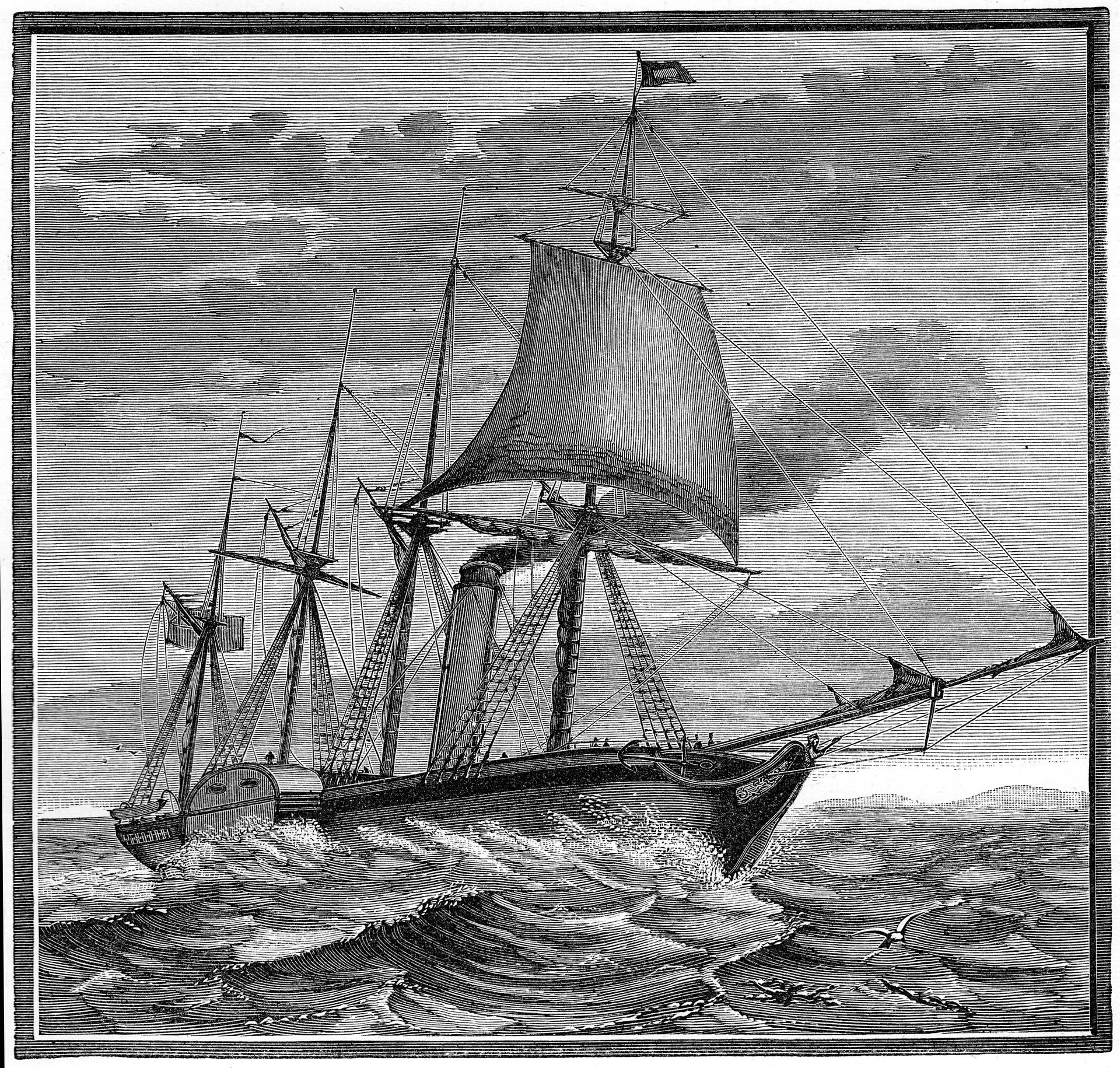
Wooden-hulled paddle-wheel steamship with four masts - SS Great Western (1838) was relatively light and small - only 1340 tons and 71.6 meters of length. Queen Mary (1934) was much, much heavier and larger - 80 774 tons (~60x more) and 310.7 meters (~4.3x longer). Icon of the Seas (2024) is very heavy and very large - 248 663 tons (~3x more) and 364.75 meters (54 meters longer). Passenger ships might be 340 000 tons and 400 meters in the future, but I don't really predict them any heavier or larger than that. Ship Singularity will never happen, or they would one day be as large as the Universe.
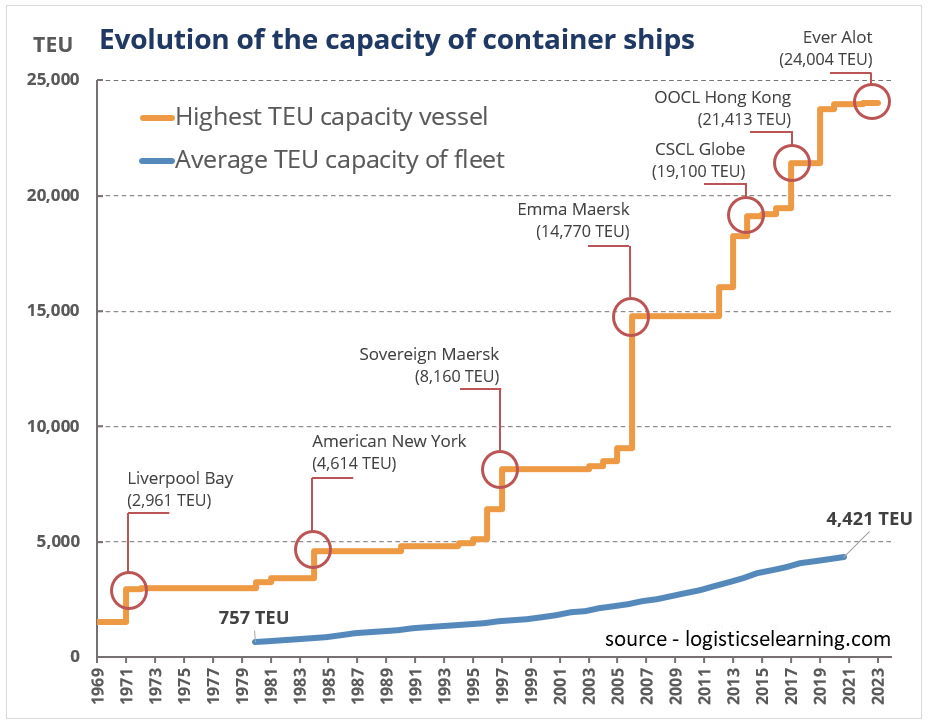


you can read more here about other kinds of ships and their sizes: https://aiimpacts.org/historic-trends-in-ship-size
You can't possibly exponentially increase the size of ocean-going ships in a practical way after a certain point, especially exponentially. I'm not sure what that exact point is, but I guess that practical ships will never be more than twice the overall size of the largest, heaviest ships today (and I could also argue that we've already achieved the maximum, but I think they still might get between 10% to 100% larger and heavier in the future, but no more than that, and they will be autonomous). It just wouldn't make any sense after that point in my personal opinion. Canals and ports would be too narrow and small for them, shores and harbours would be too shallow for them. They would get stuck very often, which would cause more harm than good for everyone. There will be artificial floating islands though, powered by the Sun, wind blowing above oceans and by ocean currents.
Wooden-hulled paddle-wheel steamship with four masts - SS Great Western (1838) was relatively light and small - only 1340 tons and 71.6 meters of length. Queen Mary (1934) was much, much heavier and larger - 80 774 tons (~60x more) and 310.7 meters (~4.3x longer). Icon of the Seas (2024) is very heavy and very large - 248 663 tons (~3x more) and 364.75 meters (54 meters longer). Passenger ships might be 340 000 tons and 400 meters in the future, but I don't really predict them any heavier or larger than that. Ship Singularity will never happen, or they would one day be as large as the Universe.
you can read more here about other kinds of ships and their sizes: https://aiimpacts.org/historic-trends-in-ship-size
-
Paradise_L0st
- Posts: 3
- Joined: Tue Feb 20, 2024 9:17 pm
Re: Will technology ever revert to incremental progress?
Hopefully the limits for what is technically feasible are much higher than what is presented in standard science fiction(s) like Star Trek or Star Wars. I feel like that's more a limit of our imaginations and what we've yet to achieve, which is why the artificial intelligences presented is oftentimes quite conservative compared to what we're seeing now. Same can be said of cybernetics and biological enhancement, as I now find it quite unrealistic that a galactic spanning empire is still working off baseline non-augmentations save for a few unique cases, even ST didn't have this aside from the Borg.
If there are hard limits in physics, we'll likely at least achieve a kind of "harmonic" state for humanity where our living standards are so incredible, it won't bother us too much. Let the higher dimensions be the plane for ASI to wander, while we stave off extinction and become a mature species.
If there are hard limits in physics, we'll likely at least achieve a kind of "harmonic" state for humanity where our living standards are so incredible, it won't bother us too much. Let the higher dimensions be the plane for ASI to wander, while we stave off extinction and become a mature species.
-
funkervogt
- Posts: 1373
- Joined: Mon May 17, 2021 3:03 pm
Re: Will technology ever revert to incremental progress?
What if the harbors are upgraded to make them deeper and wider?You can't possibly exponentially increase the size of ocean-going ships in a practical way after a certain point, especially exponentially. I'm not sure what that exact point is, but I guess that practical ships will never be more than twice the overall size of the largest, heaviest ships today (and I could also argue that we've already achieved the maximum, but I think they still might get between 10% to 100% larger and heavier in the future, but no more than that, and they will be autonomous). It just wouldn't make any sense after that point in my personal opinion. Canals and ports would be too narrow and small for them, shores and harbours would be too shallow for them. They would get stuck very often, which would cause more harm than good for everyone. There will be artificial floating islands though, powered by the Sun, wind blowing above oceans and by ocean currents.
-
firestar464
- Posts: 8408
- Joined: Wed Oct 12, 2022 7:45 am
Re: Will technology ever revert to incremental progress?
Certain types of technology have limits, upon which we either transition to more efficient types of technology or peak there. However, whether technology, as a whole, will ever plateau remains.
In my opinion, yes and no. Yes, we might keep progressing and ascending, but towards the extremes there's not much to see other than posthumans exponentially ascending *insert holy, glorious music.* Other than the self-evident glorious nature of that, not much really changes.
In my opinion, yes and no. Yes, we might keep progressing and ascending, but towards the extremes there's not much to see other than posthumans exponentially ascending *insert holy, glorious music.* Other than the self-evident glorious nature of that, not much really changes.
-
Tadasuke
Re: Will technology ever revert to incremental progress?
Is there a need for 1.5 km long and 350 m high ships on Earth though? Why would we need them? What for? Vanity?funkervogt wrote: ↑Sat Apr 06, 2024 10:51 pm What if the harbors are upgraded to make them deeper and wider?
Perhaps they could be useful on different planets somehow much larger than Earth that have much vaster oceans. Such planets could be homes to so many intelligent beings, that transport across vast distances would need to be different, often larger.
-
funkervogt
- Posts: 1373
- Joined: Mon May 17, 2021 3:03 pm
-
Tadasuke
road transport 🚚 size/length/volume/dimensions/tonnage
When oversimplifying, road transport went from this:

To this:

And it doesn't really get any bigger, because it tends to get totally impractical after this 50-wheeler truck.
Just like German Panzerkampfwagen VIII Maus (188 tons) from 1941 or German Panzerkampfwagen E-100 (123 tons) from 1943 were highly impractical. Panzer VIII Königstiger (68.5 tons) from 1943 was the practical maximum and Abrams or Merkava Mk 4 tanks weight about as much. It's not a coincidence that tanks haven't got heavier in the last 81 years.
Re: Will technology ever revert to incremental progress?
I mean, it feels like most technology that isn't related to AI is still very much trapped in the era of only incremental progress. Like every time I hear about some amazing progress, it's something to do with AI. Other things are progressing, but none of it feels any faster than it has been for the last decade or so. Everything seems to be moving at this glacial slow pace except for AI which is probably going to reach the AGI threshold within the next few years almost assuredly.
Re: Will technology ever revert to incremental progress?
The question arises: What can I do to improve the future of humanity? Digital platforms have empowered modern students to engage in self-directed learning, complementing their traditional education. By using platforms like https://chatgpt.com/g/g-a0ULgFcuZ-essay-helper - students develop essential skills such as information literacy, data analysis, and critical thinking. This active learning approach is more effective than passively consuming information
Last edited by JohnMeeks on Wed Aug 21, 2024 5:44 pm, edited 1 time in total.
-
Cyber_Rebel

- Posts: 573
- Joined: Sat Aug 14, 2021 10:59 pm
- Location: New Dystopios
Re: Will technology ever revert to incremental progress?
It's more noticeable because it's moving faster than the rest, which could ironically make our expectations of advances in other areas more scrutinous by comparison.Vakanai wrote: ↑Tue Jun 04, 2024 12:43 pm I mean, it feels like most technology that isn't related to AI is still very much trapped in the era of only incremental progress. Like every time I hear about some amazing progress, it's something to do with AI. Other things are progressing, but none of it feels any faster than it has been for the last decade or so. Everything seems to be moving at this glacial slow pace except for AI which is probably going to reach the AGI threshold within the next few years almost assuredly.
If there are hard physics limits, it's a question of just how much higher they are than society at current. Even 50-100 years could see this world become unrecognizable to our current day (exponentials stay on trajectory), yet alone more efficient utilization and understanding of what we have currently. Curing aging and eradicating diseases will certainly be possible within this century at least, and that on its face would make our civilization appear almost mythical to the perspective of past ones. If quality of life becomes dramatically quantifiably better in every metric, even a "medieval stasis" would not be so bad to most.
I'm a bit more uncertain when it pertains to space travel and the needed preparation for colonizing the solar system. This might already be more "incremental" due to space's very nature of being a hostile human frontier.
Re: Will technology ever revert to incremental progress?
I totally see what you mean. It feels like technology has been moving insanely fast in recent years, and sometimes I wonder if we'll eventually hit a point where things slow down again. I work with video editing and tech stuff, and even in my field, the improvements are rapid but more incremental now—better software updates, faster hardware, but not the kind of groundbreaking changes we saw with the shift to digital. I think we’ll still see progress, especially with things like AI, but I wouldn’t be surprised if in a few hundred years it starts to level out. There's only so much room for huge breakthroughs before we focus more on fine-tuning what we've already built.