Chemistry news and discussions

Post Reply
weatheriscool
Posts: 24486
Joined: Sun May 16, 2021 6:16 pm
Contact:

Chemistry news and discussions

Post by weatheriscool »

Scientists demonstrate a better, more eco-friendly method to produce hydrogen peroxide
https://phys.org/news/2021-06-scientist ... oxide.html
by University of Illinois at Urbana-Champaign
University of Illinois researchers demonstrate a more efficient and environmentally friendly method to produce hydrogen peroxide with palladium-gold nanoparticles, a catalyst that they found performs better when the palladium particles are surrounded by gold. Credit: Claire Benjamin/University of Illinois Urbana-Champaign

Hydrogen peroxide (H2O2) is used to disinfect minor cuts at home and for oxidative reactions in industrial manufacturing. Now, the pandemic has further fueled demand for this chemical and its antiseptic properties. While affordable at the grocery store, H2O2 is actually difficult and expensive to manufacture at scale.

A team led by the University of Illinois Urbana-Champaign has demonstrated a more efficient and environmentally friendly method to produce H2O2, according to a recent study published in the Journal of the American Chemical Society.

User avatar
caltrek
Posts: 9280
Joined: Mon May 17, 2021 1:17 pm

Re: Chemical news and discussions

Post by caltrek »

My Ph.D. Supervisor Just Won the Nobel Prize in Chemistry for Designing a Safer, Cheaper and Faster Way to Build Molecules and Make Medicine
David Nagib
October 6, 2021

https://theconversation.com/my-ph-d-sup ... ine-169427

Introduction:
(The Conversation) The reason that ibuprofen treats headaches and ice cream tastes sweet is that their chemical components fit perfectly into certain receptors in your body. The better a drug or flavor molecule fits with its matching receptor, the more effective the medicine or tastier the treat.

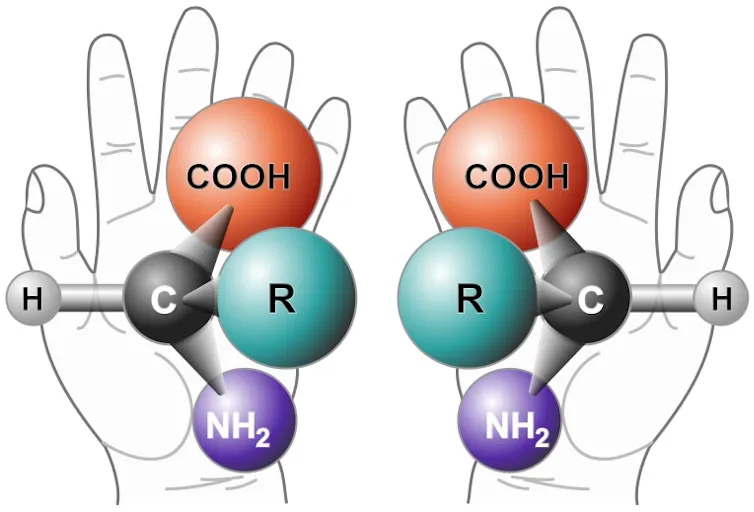
But an interesting quirk of nature is that many molecules can come in two versions – a right–handed version and left–handed version – and receptors in your body must match the handedness of a molecule to fit correctly. A left–handed glove won’t fit on your right hand.

So how do chemists make the correct version of a molecule so that drugs work as intended?

This is a question I as a chemist was deeply fascinated by when I started my Ph.D. studies with Dave MacMillan at Princeton. And he, along with Ben List of the Max Planck Institute, have together won the 2021 Nobel Prize in Chemistry for discovering entirely new ways to make molecules of one orientation or another.

They developed a new simple type of catalyst – called asymmetric organocatalysts. These catalysts are able to efficiently produce molecules with a particular 3-D orientation and have enabled chemists to discover and manufacture safe and effective drugs.

Image
All molecules can come in right–handed or left–handed versions that are mirror opposites of each other but not identical.
πϵρήλιο via WikimediaCommons
Don't mourn, organize.

-Joe Hill
weatheriscool
Posts: 24486
Joined: Sun May 16, 2021 6:16 pm
Contact:

Re: Chemical news and discussions

Post by weatheriscool »

Weak bonds are a strength in making borophene
https://phys.org/news/2021-11-weak-bond ... phene.html
by Rice University

Borophene may be done tantalizing materials scientists and start serving their ambitions, if a new approach by Rice University researchers can be turned into practice.

Materials theorist Boris Yakobson of Rice's George R. Brown School of Engineering and his group suggest a method to synthesize borophene, the 2D version of boron, in a way that could make it easier to free up or manipulate.

According to the group's paper in the American Chemical Society journal ACS Nano, that would involve growing the exotic material on hexagonal boron nitride (hBN), an insulator, rather than the more traditional metallic surfaces typically used in molecular beam epitaxy (MBE).

The weaker van der Waals forces between the growing borophene and relatively chemically inert hBN would make it easier to remove the material from the substrate to use in applications. It would also allow for simpler direct evaluation of borophene (without lifting it from the substrate) for its plasmonic and photonic—that is, light-handling—properties because there would be no metallic substrate to interfere. That would also aid experimentation on its electronic properties, which could be of interest to those who study superconductivity.
weatheriscool
Posts: 24486
Joined: Sun May 16, 2021 6:16 pm
Contact:

Re: Chemical news and discussions

Post by weatheriscool »

A way to conduct Birch reductions that does not involve ammonia
https://phys.org/news/2021-11-birch-red ... monia.html
by Bob Yirka , Phys.org
A team of chemists at the University of Pittsburgh has developed a new way to conduct Birch reductions that does not require the use of ammonia, thus avoiding a dangerous procedure. In their paper published in the journal Science, the group describes the new method and the ways it can be used.

In chemistry, Birch reductions are organic reactions that convert arenes (aromatic hydrocarbons) to cyclohexadienes (six-carbon alicyclic hydrocarbons). They are typically used to build other complex molecules. The traditional method involves dissolving alkali metals in liquid ammonia—doing so produces the solvated electrons that drive the reaction. Importantly, such chemicals are hazardous, as is combining them. Chemists have been looking for a better alternative for many years. To date, most such efforts have resulted in processes deemed too hard to control, too expensive, or that require cryogenic conditions. The researchers note that some have suggested the Benkeser reduction can be used as a suitable replacement, but not for producing 1,4-cyclohexadienes. In this new effort, the team has found a new way to conduct Birch reductions without using ammonia. The process does not suffer from the drawbacks of the other modified procedures.
weatheriscool
Posts: 24486
Joined: Sun May 16, 2021 6:16 pm
Contact:

Re: Chemical news and discussions

Post by weatheriscool »

Catalyst material exhibits baffling surface state
https://phys.org/news/2021-11-catalyst- ... state.html
by Vienna University of Technology

Sometimes chemical reactions in the lab work the way you imagine them to, and sometimes they don't. Neither is unusual. What is highly unusual, however, is what a research team at TU Wien has now observed when studying hydrogen oxidation on a rhodium catalyst: The surface of a rhodium foil can be highly chemically active in some surface regions, while in others, only a few micrometers away, it is completely inactive, and still in others oscillations between the active and inactive state occur. Such behavior was previously thought to be almost inconceivable. The results, which have now been published in the scientific journal Nature Communications, show that catalysis is more complicated than previously thought.

Basic principle of the fuel cell

"With the help of catalysts such as metallic rhodium, hydrogen can be oxidized—this is the basic reaction in fuel cells, with only water being produced as "waste gas," says Prof. Yuri Suchorski from the Institute of Materials Chemistry at TU Vienna. Hydrogen molecules are held on the rhodium surface and split into individual atoms, which then combine with oxygen to form water.
weatheriscool
Posts: 24486
Joined: Sun May 16, 2021 6:16 pm
Contact:

Re: Chemical news and discussions

Post by weatheriscool »

Borophenes made easy
https://phys.org/news/2021-11-borophenes-easy.html
by Thamarasee Jeewandara , Phys.org
Synthetic organic chemists still aim to understand the scalable synthesis of elemental, two-dimensional (2D) materials beyond graphene. In a new report, Marc G. Cuxart and a team of researchers in physics, chemistry and electrical and computer engineering in France and Germany, introduced a versatile method of chemical vapor deposition (CVD) to grow borophenes and borophene heterostructures via the selective use of diborane originating from traceable byproducts of borazine. The team successfully synthesized metallic borophene polymorphs on Iridium (IR) (III) and Copper (Cu) (III) single-crystal substrates alongside insulating hexagonal boron nitride (hBN) to form atomically precise lateral borophene—hBN interfaces also known as vertical van der Waals heterostructures. This structure protected borophene from immediate oxidation due to the presence of a single insulating hBN overlayer. This direct approach and ability to synthesize high-quality borophenes with large single-crystalline domains via chemical vapor deposition can open a range of opportunities to study their fundamental properties. The work is now published in Science Advances.
weatheriscool
Posts: 24486
Joined: Sun May 16, 2021 6:16 pm
Contact:

Re: Chemical news and discussions

Post by weatheriscool »

Experiment finds evidence for a long-sought particle comprising four neutrons

by Technical University Munich
https://phys.org/news/2021-12-evidence- ... trons.html
While all atomic nuclei except hydrogen are composed of protons and neutrons, physicists have been searching for a particle consisting of two, three or four neutrons for over half a century. Experiments by a team of physicists of the Technical University of Munich (TUM) at the accelerator laboratory on the Garching research campus now indicate that a particle comprising four bound neutrons may well exist.

While nuclear physicists agree that there are no systems in the universe made of only protons, they have been searching for particles comprising two, three or four neutrons for more than 50 years.

Should such a particle exist, parts of the theory of the strong interaction would need to be rethought. In addition, studying these particles in more detail could help us better understand the properties of neutron stars.

"The strong interaction is literally the force that holds the world together at its core. Atoms heavier than hydrogen would be unthinkable without it," says Dr. Thomas Faestermann, who directed the experiments.
weatheriscool
Posts: 24486
Joined: Sun May 16, 2021 6:16 pm
Contact:

Re: Chemical news and discussions

Post by weatheriscool »

A bonding experience: Study reveals potential new family of compounds
https://phys.org/news/2021-12-bonding-r ... ounds.html
by Kathleen Haughney, Florida State University
On the Periodic Table of Elements, there are elements that most people remember from school—oxygen, hydrogen, gold and silver. But there are also the ones that you might not immediately recognize, such as berkelium and einsteinium. These exotic elements are typically only used in specialized laboratories to understand how chemistry and physics change at the extremes of the table.

Those heavy elements, particularly radioactive ones, are exceptionally difficult to modify and control for specific purposes. But a Florida State University research team has found that they could design a ligand —a functional group of molecules used to build complex compounds—out of molecules typically used in solar cell technologies and create a completely unexpected effect when bonding them with a radioactive element. When they paired that ligand with the element berkelium, it caused a significant shift in the electron density of the compound.
weatheriscool
Posts: 24486
Joined: Sun May 16, 2021 6:16 pm
Contact:

Re: Chemical news and discussions

Post by weatheriscool »

Research team creates the world's lightest isotope of magnesium to date
https://phys.org/news/2021-12-team-worl ... esium.html
by Michigan State University
In collaboration with an international team of researchers, Michigan State University (MSU) has helped create the world's lightest version—or isotope—of magnesium to date.

Forged at the National Superconducting Cyclotron Laboratory at MSU, or NSCL, this isotope is so unstable that it falls apart before scientists can measure it directly. Yet this isotope that isn't keen on existing can help researchers better understand how the atoms that define our existence are made.

Led by researchers from Peking University in China, the team included scientists from Washington University in St. Louis, MSU, and other institutions.

"One of the big questions I'm interested in is where do the universe's elements come from," said Kyle Brown, an assistant professor of chemistry at the Facility for Rare Isotope Beams, or FRIB. Brown was one of the leaders of the new study, published online Dec. 22 by the journal Physical Review Letters.

"How are these elements made? How do these processes happen?" asked Brown.

The new isotope won't answer those questions by itself, but it can help refine the theories and models scientists develop to account for such mysteries.

Earth is full of natural magnesium, forged long ago in the stars, that has since become a key component of our diets and minerals in the planet's crust. But this magnesium is stable. Its atomic core, or nucleus, doesn't fall apart.
weatheriscool
Posts: 24486
Joined: Sun May 16, 2021 6:16 pm
Contact:

Re: Chemical news and discussions

Post by weatheriscool »

Elusive atmospheric molecule produced in a lab for the 1st time
https://phys.org/news/2021-12-elusive-a ... b-1st.html
by University of Hawaii

The previously elusive methanediol molecule of importance to the organic, atmospheric science and astrochemistry communities has been synthetically produced for the first time by University of Hawaiʻi at Mānoa researchers. Their discovery and methods were published in Proceedings of the National Academy of Sciences on December 30.

Methanediol is also known as formaldehyde monohydrate or methylene glycol. With the chemical formula CH2(OH)2, it is the simplest geminal diol, a molecule which carries two hydroxyl groups (OH) at a single carbon atom. These organic molecules are suggested as key intermediates in the formation of aerosols and reactions in the ozone layer of the atmosphere.

The research team—consisting of Department of Chemistry Professor Ralf Kaiser, postdoctoral researchers Cheng Zhu, N. Fabian Kleimeier and Santosh Singh, and W.M. Keck Laboratory in Astrochemistry Assistant Director Andrew Turner—prepared methanediol via energetic processing of extremely low temperature ices and observed the molecule through a high-tech mass spectrometry tool exploiting tunable vacuum photoionization (the process in which an ion is formed from the interaction of a photon with an atom or molecule) in the W.M. Keck Laboratory in Astrochemistry. Electronic structure calculations by University of Mississippi Associate Professor Ryan Fortenberry confirmed the gas phase stability of this molecule and demonstrated a pathway via reaction of electronically excited oxygen atoms with methanol.
weatheriscool
Posts: 24486
Joined: Sun May 16, 2021 6:16 pm
Contact:

Re: Chemical news and discussions

Post by weatheriscool »

Using ice to boil water: Researcher makes heat transfer discovery that expands on 18th century principle
https://phys.org/news/2022-01-ice-disco ... ciple.html
by Virginia Tech
Associate Professor Jonathan Boreyko and graduate fellow Mojtaba Edalatpour have made a discovery about the properties of water that could provide an exciting addendum to a phenomenon established over two centuries ago. The discovery also holds interesting possibilities for cooling devices and processes in industrial applications using only the basic properties of water. Their work was published on Jan. 21 in the journal Physical Review Fluids.

Water can exist in three phases: a frozen solid, a liquid, and a gas. When heat is applied to a frozen solid, it becomes a liquid. When applied to the liquid, it becomes vapor. This elementary principle is familiar to anyone who has observed a glass of iced tea on a hot day, or boiled a pot of water to make spaghetti.

When the heat source is hot enough, the water's behavior changes dramatically. According to Boreyko, a water droplet deposited onto an aluminum plate heated to 150 degrees Celsius (302 degrees Fahrenheit) or above will no longer boil. Instead, the vapor that forms when the droplet approaches the surface will become trapped beneath the droplet, creating a cushion that prevents the liquid from making direct contact with the surface. The trapped vapor causes the liquid to levitate, sliding around the heated surface like an air hockey puck. This phenomenon is known as the Leidenfrost effect, named for the German doctor and theologian who first described it in a 1751 publication.
weatheriscool
Posts: 24486
Joined: Sun May 16, 2021 6:16 pm
Contact:

Re: Chemical news and discussions

Post by weatheriscool »

A new way to shape a material's atomic structure with ultrafast laser light
https://phys.org/news/2022-02-material- ... laser.html
by Glennda Chui, SLAC National Accelerator Laboratory
Thermoelectric materials convert heat to electricity and vice versa, and their atomic structures are closely related to how well they perform.

Now researchers have discovered how to change the atomic structure of a highly efficient thermoelectric material, tin selenide, with intense pulses of laser light. This result opens a new way to improve thermoelectrics and a host of other materials by controlling their structure, creating materials with dramatic new properties that may not exist in nature.

"For this class of materials that's extremely important, because their functional properties are associated with their structure," said Yijing Huang, a Stanford University graduate student who played an important role in the experiments at the Department of Energy's SLAC National Accelerator Laboratory. "By changing the nature of the light you put in, you can tailor the nature of the material you create."

The experiments took place at SLAC's X-ray free-electron laser, the Linac Coherent Light Source (LCLS). The results were reported today in Physical Review X and will be highlighted in a special collection devoted to ultrafast science.

Heat versus light

Because thermoelectrics convert waste heat to electricity, they're considered a form of green energy. Thermoelectric generators provided electricity for the Apollo moon landing project, and researchers have been pursuing ways to use them to convert human body heat into electricity for charging gadgets, among other things. Run in reverse, they create a heat gradient that can be used to chill wine in refrigerators with no moving parts.
weatheriscool
Posts: 24486
Joined: Sun May 16, 2021 6:16 pm
Contact:

Re: Chemical news and discussions

Post by weatheriscool »

A new, inexpensive catalyst speeds the production of oxygen from water

by David L. Chandler, Massachusetts Institute of Technology
https://phys.org/news/2022-02-inexpensi ... xygen.html
An electrochemical reaction that splits apart water molecules to produce oxygen is at the heart of multiple approaches aiming to produce alternative fuels for transportation. But this reaction has to be facilitated by a catalyst material, and today's versions require the use of rare and expensive elements such as iridium, limiting the potential of such fuel production.

Now, researchers at MIT and elsewhere have developed an entirely new type of catalyst material, called a metal hydroxide-organic framework (MHOF), which is made of inexpensive and abundant components. The family of materials allows engineers to precisely tune the catalyst's structure and composition to the needs of a particular chemical process, and it can then match or exceed the performance of conventional, more expensive catalysts.

The findings are described today in the journal Nature Materials, in a paper by MIT postdoc Shuai Yuan, graduate student Jiayu Peng, Professor Yang Shao-Horn, Professor Yuriy Román-Leshkov, and nine others.
weatheriscool
Posts: 24486
Joined: Sun May 16, 2021 6:16 pm
Contact:

Re: Chemical news and discussions

Post by weatheriscool »

Researchers design a flexible system that sidesteps copper-protein binding
https://phys.org/news/2022-03-flexible- ... otein.html
by Michelle Franklin, University of California - San Diego
It may seem counterintuitive to many, but metal ions play a critical role in life, carrying out some of the most important biological processes. Think of hemoglobin—a metalloprotein responsible for carrying oxygen to the body's organs via red blood cells. Metalloproteins are proteins bound by at least one metal ion. In the case of hemoglobin, that metal is iron.

For metalloproteins to work properly, they must be paired with the correct metal ion—hemoglobin can only function with iron Yet, protein-metal binding is normally governed by a strict order, called the Irving-Williams Series, which dictates that copper ions should bind to proteins over other metals.

In other words, if a cell contained equal amounts of different metal ions, most cellular proteins and other components would bind to copper, clogging up cellular machinery in the process. This is why organisms spend considerable energy keeping very strict controls over how much free copper is present in cells.

Now researchers in the University of California San Diego's Division of Physical Sciences have reported a new protein-design strategy to sidestep the Irving-Williams Series. The findings were published earlier this week in the journal Nature.
weatheriscool
Posts: 24486
Joined: Sun May 16, 2021 6:16 pm
Contact:

Re: Chemical news and discussions

Post by weatheriscool »

Research chemists find a quick way to synthesize novel neuroactive compounds found in rainforest tree
https://phys.org/news/2022-03-chemists- ... orest.html
by The Scripps Research Institute
A potential cornucopia of neuroactive compounds, which might yield clues to the design of future psychiatric and neurological drugs, has become more accessible to synthetic chemists, thanks to new work from Scripps Research.

The discovery, reported March 17, 2022, in Science, concerns compounds contained in the rainforest tree Galbulimima belgraveana and its close cousin Galbulimima baccata, which are native to Papua New Guinea, tropical northern Australia, and Malaysia.

Potions made from the bark of these trees have long been known to have hallucinogenic and other neuroactive effects, but the precise compounds involved, and their biological targets, have largely been a mystery. The Scripps Research chemists found what is essentially the first streamlined, practical method for synthesizing many of these compounds.
weatheriscool
Posts: 24486
Joined: Sun May 16, 2021 6:16 pm
Contact:

Re: Chemical news and discussions

Post by weatheriscool »

New method purifies hydrogen from heavy carbon monoxide mixtures
https://techxplore.com/news/2022-03-met ... arbon.html
by Mariah Chuprinski, Pennsylvania State University
Refining metals, manufacturing fertilizers and powering fuel cells for heavy vehicles are all processes that require purified hydrogen. But purifying, or separating, that hydrogen from a mix of other gases can be difficult, with several steps. A research team led by Chris Arges, Penn State associate professor of chemical engineering, demonstrated that the process can be simplified using a pump outfitted with newly developed membrane materials.

The researchers used an electrochemical hydrogen pump to both separate and compress hydrogen with an 85% recovery rate from fuel gas mixtures known as syngas and 98.8% recovery rate from conventional water gas shift reactor exit stream—the highest value recorded. The team detailed their approach in ACS Energy Letters.

Traditional methods for hydrogen separations employ a water gas shift reactor, which involves an extra step, according to Arges. The water gas shift reactor first converts carbon monoxide into carbon dioxide, which is then sent through an absorption process to separate the hydrogen from it. Then, the purified hydrogen is pressurized using a compressor for immediate use or for storage.

The key, Arges said, is to use high-temperature, proton-selective polymer electrolyte membranes, or PEMs, which can separate hydrogen from carbon dioxide and carbon monoxide and other gas molecules quickly and cost-effectively. The electrochemical pump, equipped with the PEM and other new materials Arges developed, is more efficient than conventional methods because it simultaneously separates and compresses hydrogen from gas mixtures. It also can operate at temperatures of 200 to 250 degrees Celsius—20 to 70 degrees higher than other high-temperature-PEM-type electrochemical pumps—which improves its ability to separate hydrogen from the unwanted gasses.
weatheriscool
Posts: 24486
Joined: Sun May 16, 2021 6:16 pm
Contact:

Re: Chemical news and discussions

Post by weatheriscool »

Using quantum vibration properties between molecules to speed up reactions between compounds
https://phys.org/news/2022-04-quantum-v ... tions.html
by Bob Yirka , Phys.org
A pair of researchers, one with the Southern University of Science and Technology, the other the Institute of Atomic and Molecular Sciences, has developed a means for using quantum vibration properties between molecules to speed up reactions between compounds. In their paper published in the journal Nature Chemistry, Huilin Pan and Kopin Liu describe how they used vibrations in certain types of methane molecules to speed up a reaction during mixing with chlorine using "quantum phase control."

Prior research has shown that vibrations in molecules can control how they react when mixed with one another. In this new effort, the researchers found a way to extend this principle by using some of the properties of vibrations at the quantum level—specifically, Fermi-coupled vibrations. Their goal was to learn more about how a wave function's phase would affect the reactivity between molecules when Fermi-coupled vibrations were involved. They are described as the resonance that occurs when there is a shift of intensities and energies during the absorption of bands in a Raman spectrum. They arise due to wavefunction mixing.
weatheriscool
Posts: 24486
Joined: Sun May 16, 2021 6:16 pm
Contact:

Re: Chemical news and discussions

Post by weatheriscool »

Scientists synthesize novel nitride and stabilize its hexazine rings at high pressure
https://phys.org/news/2022-04-scientist ... -high.html
by Chinese Academy of Sciences

In a recent study published in Nature Chemistry, scientists reported the synthesis of a novel nitride with metallic luster and hexazine rings—the result of a six-year effort in high-pressure science.

This is the first time that a planar N62-, a dianionic hexazine nitride, has been obtained in a laboratory experiment. Furthermore, the structure remained relatively stable at pressures down to 20 GPa.

Nitrogen-rich compounds have attracted wide attention because of their great potential as high-energy density materials (HEDMs) that can store and release huge amounts of energy. However, very few nitrogen compounds have been synthesized so far in comparison with the number predicted theoretically through calculation and modeling.

"Low-order N-N bonds are hard to keep stable at low pressure," said Dr. Wang Yu, lead author of the study and a researcher at the Hefei Institutes of Physical Science of the Chinese Academy of Sciences. According to Wang, that is why synthesizing nitrogen compounds in the laboratory is so difficult.

In previous studies, Wang and her colleagues learned that molecular diatomic nitrogen can be converted into an atomic solid with a single-bond crystalline cubic gauche (cg-N) structure in a diamond anvil at extreme pressures up to 110 GPa and 2,500 K. The result inspired the synthesis of polynitride materials at high pressure and high temperature, including the results in their experiments.
weatheriscool
Posts: 24486
Joined: Sun May 16, 2021 6:16 pm
Contact:

Re: Chemical news and discussions

Post by weatheriscool »

Supercomputing and neutrons crack code to uranium compound's signature vibes
https://phys.org/news/2022-05-supercomp ... pound.html
by Oak Ridge National Laboratory
Oak Ridge National Laboratory researchers used the nation's fastest supercomputer to map the molecular vibrations of an important but little-studied uranium compound produced during the nuclear fuel cycle for results that could lead to a cleaner, safer world.

The study by researchers from ORNL, Savannah River National Laboratory and the Colorado School of Mines used simulations conducted on ORNL's Summit supercomputer and state-of-the-art neutron spectroscopy experiments conducted at the Spallation Neutron Source to identify key spectral features of uranium tetrafluoride hydrate, or UFH, a little-studied byproduct of the nuclear fuel cycle. The findings may enable better detection of this environmental pollutant and better understanding of how environmental conditions influence the chemical behavior of fuel cycle materials.

"In this kind of work, we don't have the luxury of choosing what kinds of materials we work with," said Andrew Miskowiec, an ORNL physicist and lead author of the study, published in The Journal of Physical Chemistry C. "We're often dealing with small quantities or even just particles of byproducts and degraded material that no one intended to make of compounds that we don't know much about. We need to know: If we found this material in the field, how would we recognize it?"
weatheriscool
Posts: 24486
Joined: Sun May 16, 2021 6:16 pm
Contact:

Re: Chemical news and discussions

Post by weatheriscool »

Researchers unravel the active phase in catalytic carbon dioxide reduction to methanol
https://phys.org/news/2022-05-unravel-p ... oxide.html
by Stockholm University
Researchers at Stockholm University have for the first time been able to study the surface of a copper-zinc catalyst when carbon dioxide is reduced to methanol. The results are published in the scientific journal Science. A better knowledge of the catalytic process and the possibility of finding even more efficient materials opens the door for a green transition in the chemical industry.

Methanol is currently one of the most important petrochemical basic chemicals, with an annual production of 110 million metric tons, and can be converted into tens of thousands of different products and used for the manufacture of, for example, plastics, detergents, pharmaceuticals and fuels. Methanol also has the potential to become a future energy carrier where, for example, aviation fuel can be produced using captured carbon dioxide and hydrogen from electrolysis of water instead of using natural gas. A future green transformation of the chemical industry, similar to the one with green steel, where wind or solar energy drives electrolytic cells is therefore a possibility.

"The challenge has been to experimentally investigate the catalyst surface with surface-sensitive methods under real reaction conditions at relatively high pressures and temperatures. Those conditions have for many years not been achievable and different hypotheses about zinc being available as oxide, metallic or in alloy with copper arose but could not be unambiguously verified," says Anders Nilsson, professor of chemical physics at Stockholm University.
Post Reply