Natural History (13.8 billion years BC – 3.3 million BC)

Got something to say about the past? Say it here!
User avatar
caltrek
Posts: 9280
Joined: Mon May 17, 2021 1:17 pm

Re: Natural History (13.8 billion years BC – 3.3 million BC)

Post by caltrek »

School Kids in New Zealand Discovered a Giant Penguin Fossil With Long Legs
by Tessa Koumoundouros
September 16, 2021

https://www.sciencealert.com/school-kid ... -long-legs

Introduction:
(Science Alert) Ancient New Zealand has been home to an incredible array of absurdly large birds. This has included a waist-high parrot, nicknamed Squawk-zilla (Heracles inexpectatus) – the largest parrot ever known on Earth, possibly hunting for flesh around 20 million years ago.

Two-meter-high flightless Moa also made their home there, along with their predator, Haast's Eagles (Hieraaetus moorei), with a monstrous 3-meter wingspan, around 2 million years ago.

Now researchers have added a new giant penguin to this gloriously super-sized menagerie – one discovered by a lucky group of school kids back in 2006.

"It's sort of surreal to know that a discovery we made as kids so many years ago is contributing to academia today. And it's a new species, even!" said Steffan Safey, who was one of the children on the Hamilton Junior Naturalist Club's field trip at the time. "Clearly the day spent cutting it out of the sandstone was well spent!"

Within a now solidified layer of what once was muddy siltstone, the students discovered the fossilized remains of the towering penguin's torso, leg, and arm bones.

Don't mourn, organize.

-Joe Hill
weatheriscool
Posts: 24486
Joined: Sun May 16, 2021 6:16 pm
Contact:

Re: Natural History (13.8 billion years BC – 3.3 million BC)

Post by weatheriscool »

Plants evolved complexity in two bursts—with a 250-million-year hiatus
https://phys.org/news/2021-09-evolved-c ... iatus.html
by Stanford University
A Stanford-led study reveals that rather than evolving gradually over hundreds of millions of years, land plants underwent major diversification in two dramatic bursts, 250 million years apart. The first occurred early in plant history, giving rise to the development of seeds, and the second took place during the diversification of flowering plants.

The research uses a novel but simple metric to classify plant complexity based on the arrangement and number of basic parts in their reproductive structures. While scientists have long assumed that plants became more complex with the advent of seeds and flowers, the new findings, published Sept. 17 in Science, offer insight to the timing and magnitude of those changes.

"The most surprising thing is this kind of stasis, this plateau in complexity after the initial evolution of seeds and then the total change that happened when flowering plants started diversifying," said lead study author Andrew Leslie, an assistant professor of geological sciences at Stanford's School of Earth, Energy & Environmental Sciences (Stanford Earth). "The reproductive structures look different in all these plants, but they all have about the same number of parts during that stasis."
User avatar
wjfox
Site Admin
Posts: 13583
Joined: Sat May 15, 2021 6:09 pm
Location: Essex, UK
Contact:

Re: Natural History (13.8 billion years BC – 3.3 million BC)

Post by wjfox »

User avatar
wjfox
Site Admin
Posts: 13583
Joined: Sat May 15, 2021 6:09 pm
Location: Essex, UK
Contact:

Re: Natural History (13.8 billion years BC – 3.3 million BC)

Post by wjfox »

New Models Show That Venus Was Likely Habitable Four Billion Years Ago

Sep 24, 2021

Venus, our vexing sister planet, was likely habitable up to 900 million years after its formation, all without the need for plate tectonics (the global geological recycling of a planet’s carbon). Or so says a new paper just submitted to the Journal of Geophysical Research: Planets.

With hellish surface temperatures, extreme pressures, and no water, today’s Venus has long been a cautionary tale for a planet gone wrong. But with this new paper, there’s fresh fodder for the idea ever so fleetingly Venus could have had liquid water on its surface and temperatures that were for a time, at least, clement. Whether microbial life might have had time to form there during this brief epoch remains wholly speculative, however.

It remains unclear whether plate tectonics existed on early Venus, Dennis Hoening, the paper’s lead author and a planetary physicist at Germany’s Potsdam-Institute for Climate Impact Research, told me. Instead, there is an insulating, immobile lid on top of its mantle (or “stagnant-lid”), he says.

Hoening and colleagues’ paper is the first that models the combined atmosphere-interior evolution of Venus with a modified carbon cycle that also works if plate tectonics were absent.

“We find an extensive early habitable period of some 900 million years, indicating that liquid water on early Venus is much more likely than previously thought,” said Hoening.

https://www.forbes.com/sites/brucedormi ... years-ago/
User avatar
caltrek
Posts: 9280
Joined: Mon May 17, 2021 1:17 pm

Re: Natural History (13.8 billion years BC – 3.3 million BC)

Post by caltrek »

Twenty-five Million-year-old Eagle Fossil Discovered in Australia
by Sabrina Canfield
September 27, 2021

https://www.courthousenews.com/25-milli ... australia/

Introduction:
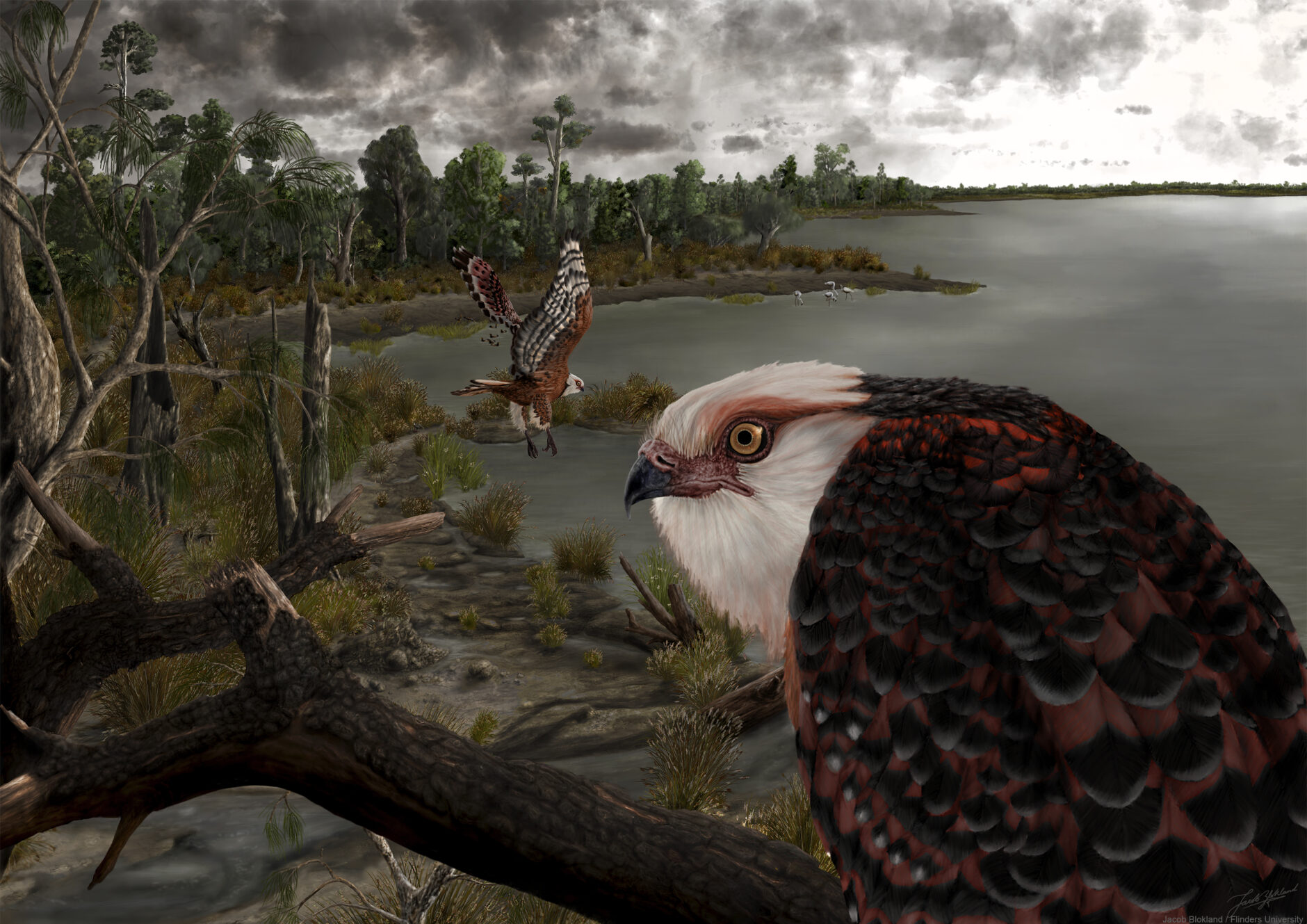
(Courthouse News) — A recently discovered 25 million-year-old eagle fossil found in South Australia appears to be unique to the continent and adds raptors’ long evolutionary history in Australia.

Paleontologists from Flinders University in Adelaide, Australia, have unearthed Australia’s oldest eagle fossils from a remote outback cattle station and in it have found a new fossil species from the late Oligocene era, which ended 23 million years ago.

Named Archaehierax sylvestris, this species of raptor is among the oldest known eagles in the world.

“‘Raptors’ is a more encompassing word than ‘eagles’ — really a raptor is a bird of prey with a hooked bill and large talons, so the word ‘raptor’ also includes the nocturnal raptors: owls. Put another way, not all raptors are eagles, but all eagles are raptors,” said study co-author Travis Worthy, a Flinders University paleontologist, in an email to Courthouse News.

“Our new Archaehierax (pron. ah-kay-hi-rax) does not group with other eagles in the family tree of eagles and hawks — it has primitive characteristics that set it apart and as one of the first branches on the family tree. This is not unexpected given its age. It however is clearly quite different to all the eagles etc. from the Northern Hemisphere, suggesting it was part of a group evolving along its separate line in Australia. Not unexpected given Australia is nearly the same size as the USA,” Worthy continued.
Image
Archaehierax sylvestris, a newly described raptor fossil species which lived during the late Oligocene in Australia’s interior.
J. Blokland/Flinders University
Don't mourn, organize.

-Joe Hill
User avatar
caltrek
Posts: 9280
Joined: Mon May 17, 2021 1:17 pm

Re: Natural History (13.8 billion years BC – 3.3 million BC)

Post by caltrek »

^^^Unfortunately, I do not have any information on when or where this may be available for public review.

What I came here to post:

We Just Got Closer to Pinpointing a Major Moment in Earth's Evolutionary History

https://www.sciencealert.com/we-re-gett ... ing-oxygen

Introduction:
(Science Alert) For the vast majority of animals on Earth, breath is synonymous with life. Yet for the first 2 billion years of our planet's existence, oxygen was in scarce supply.

That doesn't mean Earth was lifeless for all that time, but that life was rarer, and vastly different from what we know today.

It was only when more complex bacteria that could photosynthesize stepped onto the scene that everything began to change, triggering what scientists call a Great Oxidation Event. But when did all this happen? And how did it all shake out?

A new gene-analyzing technique has provided the hints of a new timeline. The estimates suggest it took bacteria 400 million years of gobbling sunlight and puffing out oxygen before life could really thrive.

In other words, there were likely organisms on our planet capable of photosynthesizing long before the Great Oxidation Event.
Don't mourn, organize.

-Joe Hill
User avatar
caltrek
Posts: 9280
Joined: Mon May 17, 2021 1:17 pm

Re: Natural History (13.8 billion years BC – 3.3 million BC)

Post by caltrek »

A Scary Mass Extinction Happened 30 Million Years Ago, And We Only Just Noticed
by Mike McCrae
October 8, 2021

https://www.sciencealert.com/a-mass-ext ... st-noticed

Introduction:
(Science Alert) The close of the Eocene roughly 33 million years ago marks a time of great change on Earth. In a slow reversal of what we're seeing today, temperatures dropped and glaciers stretched their icy fingers towards the equator.

The loss of life across the Asian continent was profound. But Africa's biodiversity, sheltered by the warmth of the tropics, appeared to go unscathed by the colossal changes. Or so we thought.

According to a recently published study by a team of researchers from across the US, we just weren't looking at the fossil record the right way.

The research suggests that far from thriving through this cold change, mammals on the Arabian Peninsula and across the African continent experienced significant declines, with nearly two thirds of their peak diversity disappearing 30 million years ago.

Exactly what precipitated each loss isn't clear, though with widespread temperature fluctuations and intense volcanic activity rocking the region, there's no shortage of possibilities.
Don't mourn, organize.

-Joe Hill
weatheriscool
Posts: 24486
Joined: Sun May 16, 2021 6:16 pm
Contact:

Re: Natural History (13.8 billion years BC – 3.3 million BC)

Post by weatheriscool »

Researchers discover first dinosaur era crab fully preserved in amber
https://cozy.tv/vince/replays/2021-10-20
by Harvard University
Fossils trapped in amber provide a unique snapshot of the anatomy, biology, and ecology of extinct organisms. The most common fossils found in amber, which is formed from resin exuded from tree bark, are land-dwelling animals, mainly insects. But on very rare occasions scientists discover amber housing an aquatic organism.

In a study published October 20 in Science Advances an international team of researchers describe the first crab from the Cretaceous dinosaur era preserved in amber. The study used micro CT to examine and describe Cretapsara athanata, the oldest modern-looking crab (approximately 100 million years old) and the most complete fossil crab ever discovered. It is rivalled in completeness by the mysterious Callichimaera perplexa, a very distant relative nicknamed the platypus of the crab world. Callichimaera's stunning preservation included soft tissues and delicate parts that rarely fossilize. Both Cretapsara and Callichimaera are new branches in the crab tree of life that lived during the Cretaceous Crab Revolution, a period when crabs diversified worldwide and the first modern groups originated while many others disappeared.

True crabs, or Brachyura, are an iconic group of crustaceans whose remarkable diversity of forms, species richness, and economic importance have inspired celebrations and festivals worldwide. They've even earned a special role in the pantheon of social media. True crabs are found all around the world, from the depths of the oceans, to coral reefs, beaches, rivers, caves, and even in trees as true crabs are among the few animal groups that have conquered land and freshwater multiple times.
weatheriscool
Posts: 24486
Joined: Sun May 16, 2021 6:16 pm
Contact:

Re: Natural History (13.8 billion years BC – 3.3 million BC)

Post by weatheriscool »

Early dinosaurs may have lived in social herds as early as 193 million years ago
https://phys.org/news/2021-10-early-din ... llion.html
by Jennifer Chu, Massachusetts Institute of Technology
To borrow a line from the movie "Jurassic Park:" Dinosaurs do move in herds. And a new study shows that the prehistoric creatures lived in herds much earlier than previously thought.

In a paper appearing in Scientific Reports, researchers from MIT, Argentina, and South Africa detail their discovery of an exceptionally preserved group of early dinosaurs that shows signs of complex herd behavior as early as 193 million years ago—40 million years earlier than other records of dinosaur herding.

Since 2013, members of the team have excavated more than 100 dinosaur eggs (about the size of chicken eggs) and the partial skeletons of 80 juvenile and adult dinosaurs from a rich fossil bed in southern Patagonia.

Using X-ray imaging, they were able to examine the eggs' contents without breaking them apart, and discovered preserved embryos within, which they used to confirm that the fossils were all members of Mussaurus patagonicus—a plant-eating dinosaur that lived in the early Jurassic period and is classified as a sauropodomorph, a predecessor of the massive, long-necked sauropods that later roamed the Earth.

Surprisingly, the researchers observed that the fossils were grouped by age: Dinosaur eggs and hatchlings were found in one area, while skeletons of juveniles were grouped in a nearby location. Meanwhile, remains of adult dinosaurs were found alone or in pairs throughout the field site.
User avatar
caltrek
Posts: 9280
Joined: Mon May 17, 2021 1:17 pm

Re: Natural History (13.8 billion years BC – 3.3 million BC)

Post by caltrek »

Ancient Embers Reveal Wild Fires in Antarctica That Occurred 75 Million Years Ago
by Laura Geggel
October 27, 2021

https://www.sciencealert.com/scientists ... -years-ago

Introduction:
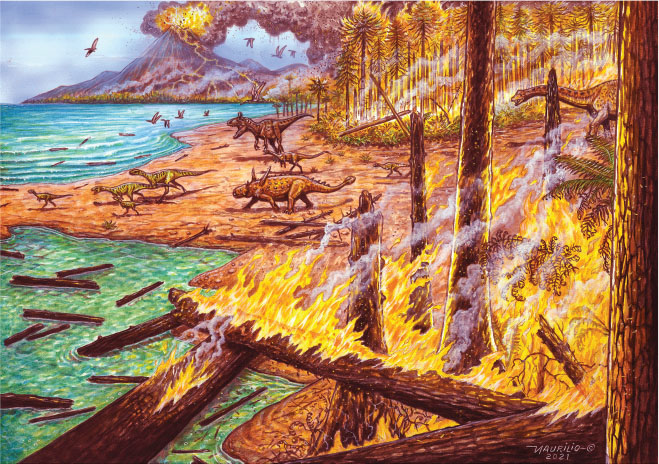
(Science Alert) Raging wildfires tore through Antarctica 75 million years ago, back when dinosaurs still roamed the Earth, a new study finds.
During the late Cretaceous period (100 million to 66 million years ago), one of the warmest periods on Earth, Antarctica's James Ross Island was home to a temperate forest of conifers, ferns, and flowering plants known as angiosperms, as well as to a slew of dinosaurs.

But it wasn't a total paradise; ancient paleo-fires burned parts of those forests to a crisp, leaving behind charcoal remnants that scientists have now scooped up and studied.

"This discovery expands the knowledge about the occurrence of vegetation fires during the Cretaceous, showing that such episodes were more common than previously imagined," study lead researcher Flaviana Jorge de Lima, a paleobiologist at Federal University of Pernambuco in Recife, Brazil, said in a statement.

The finding marks the first evidence on record of a paleo-fire on James Ross Island, a part of the Antarctic Peninsula that now sits below South America.
Image
Reconstruction of paleo-wildfires in Antarctica during the Cretaceous.
Maurilio Oliveira
Don't mourn, organize.

-Joe Hill
User avatar
caltrek
Posts: 9280
Joined: Mon May 17, 2021 1:17 pm

Re: Natural History (13.8 billion years BC – 3.3 million BC)

Post by caltrek »

Early Earth was Pummeled 10x More Than Previously Estimated
by Andy Tomaswick
October 28, 2021

https://www.universetoday.com/153118/ea ... ore-153118

Introduction:
(Universe Today) It’s no secret that Earth was bombarded with plenty of meteors for billions of years during the solar system’s early formation. Estimates vary on how much material impacted the planet, but it had a considerable effect on the planet’s atmosphere and the evolution of life. Now, a new study from a team led by researchers at the Southwest Research Institute puts the number at almost ten times the number of previously estimated impacts. That much of a difference could dramatically change how geologists and planetary scientists view the early Earth.

Early on, the solar system was much more populated with space rocks. Those space rocks were known to hit Earth, and speculation abounds about what happened when they did so. Earth eventually partially cleaned out its orbital path, culminating in the period called the Late Heavy Bombardment.

While the destructive power of that time period has been well documented, large asteroids continued to impact the Earth consistently for billions of years. When they did so, they formed “impact spherules” of molten rock that were thrown into the air, solidified, and then landed back on the Earth’s surface. They became distinct sand-grain-sized spherical components of the geological layers laid down when their impact happened.

There are multiple spherule layers in the geologic record, showing that impacts large enough to create sky-bound ejecta were common. More have been found recently, leading researchers to examine whether the newfound abundance of these spherule layers was accounted for in simulations of early asteroid bombardment.

It turns out they weren’t – current bombardment models resulted in about ten times fewer spherule layers that have been found in the geological record. Consequently, that implies up to ten times more major asteroid impacts in that time period than models had predicted
Don't mourn, organize.

-Joe Hill
weatheriscool
Posts: 24486
Joined: Sun May 16, 2021 6:16 pm
Contact:

Re: Natural History (13.8 billion years BC – 3.3 million BC)

Post by weatheriscool »

The oldest mineralized sponges in the world found in Ciudad Real
https://phys.org/news/2021-11-oldest-mi ... iudad.html
by Universidad Complutense de Madrid

An international and multidisciplinary piece of research involving the participation of Universidad Complutense de Madrid (UCM) concludes with the discovery of the mineralised fossil remains of the oldest sponges in the world—530 million years old—in phosphate deposits in Fontanarejo (Ciudad Real).

These deposits were described for the first time some 50 years ago, but had not been studied in detail until now. Spicules were discovered among the fossil remains—units of silicon that make up the skeleton—of two types of sponges: hexactinillida and demosponges.

"It should be noted that some of the spicules are structured; in other words, connected to others, practically conserving the same position as the original organism", highlights Pablo Suárez, a researcher at the Department of Geodynamics, Stratigraphy and Paleontology at UCM, and one of the authors of the study published in Geological Magazine.

The sponges can have two types of skeleton: mineralised (as in the case of the sponges in Castile-La Mancha), composed of structured spicules or non-mineralised (formed of organic molecules that degrade).
User avatar
wjfox
Site Admin
Posts: 13583
Joined: Sat May 15, 2021 6:09 pm
Location: Essex, UK
Contact:

Re: Natural History (13.8 billion years BC – 3.3 million BC)

Post by wjfox »

User avatar
caltrek
Posts: 9280
Joined: Mon May 17, 2021 1:17 pm

Re: Natural History (13.8 billion years BC – 3.3 million BC)

Post by caltrek »

^^^We used to have so-called "Dragonflies" that were fairly common to our local area. They were not all that much smaller than a bird, but not as large as the comparison shown above to a human.
Don't mourn, organize.

-Joe Hill
User avatar
wjfox
Site Admin
Posts: 13583
Joined: Sat May 15, 2021 6:09 pm
Location: Essex, UK
Contact:

Re: Natural History (13.8 billion years BC – 3.3 million BC)

Post by wjfox »

weatheriscool
Posts: 24486
Joined: Sun May 16, 2021 6:16 pm
Contact:

Re: Natural History (13.8 billion years BC – 3.3 million BC)

Post by weatheriscool »

New dinosaur species from Chile had a unique slashing tail
https://phys.org/news/2021-12-dinosaur- ... shing.html
by Seth Borenstein
Fossils found in Chile are from a strange-looking dog-sized dinosaur species that had a unique slashing tail weapon, scientists reported Wednesday.

Some dinosaurs had spiked tails they could use as stabbing weapons and others had tails with clubs. The new species, described in a study in the journal Nature, has something never seen before on any animal: seven pairs of "blades" laid out sideways like a slicing weapon used by ancient Aztec warriors, said lead author Alex Vargas.

"It's a really unusual weapon," said Vargas, a University of Chile paleontologist. "Books on prehistoric animals for kids need to update and put this weird tail in there. ... It just looks crazy."

The plant-eating critter had a combination of traits from different species that initially sent paleontologists down the wrong path. The back end, including its tail weapon, seemed similar to a stegosaurus, so the researchers named it stegouros elengassen.
User avatar
wjfox
Site Admin
Posts: 13583
Joined: Sat May 15, 2021 6:09 pm
Location: Essex, UK
Contact:

Re: Natural History (13.8 billion years BC – 3.3 million BC)

Post by wjfox »

weatheriscool
Posts: 24486
Joined: Sun May 16, 2021 6:16 pm
Contact:

Re: Natural History (13.8 billion years BC – 3.3 million BC)

Post by weatheriscool »

Study pinpoints timing of Chicxulub asteroid impact
https://phys.org/news/2021-12-chicxulub ... mpact.html
by Florida Atlantic University
A groundbreaking study led by researchers at Florida Atlantic University and an international team of scientists conclusively confirms the time year of the catastrophic Chicxulub asteroid, responsible for the extinction of dinosaurs and 75 percent of life on Earth 66 million years ago. Springtime, the season of new beginnings, ended the 165-million-year reign of dinosaurs and changed the course of evolution on Earth.

Results of the study, published in the journal Scientific Reports, greatly enhances the ability to trace the first stages of damage to life on Earth. FAU's Robert DePalma, senior author and an adjunct professor in the Department of Geosciences, Charles E. Schmidt College of Science, and a doctoral student at the University of Manchester; and Anton Oleinik, Ph.D., second author and an associate professor, FAU's Department of Geosciences, contribute to a major scientific advancement in the ability to understand the massive impact that brought an end to the dinosaurs.

"Time of year plays an important role in many biological functions such as reproduction, feeding strategies, host-parasite interactions, seasonal dormancy, and breeding patterns," said DePalma. "Hence, it is no surprise that the time of year for a global-scale hazard can play a big role in how harshly it impacts life. The seasonal timing of the Chicxulub impact has therefore been a critical question for the story of the end-Cretaceous extinction. Until now, the answer to that question has remained unclear."
weatheriscool
Posts: 24486
Joined: Sun May 16, 2021 6:16 pm
Contact:

Re: Natural History (13.8 billion years BC – 3.3 million BC)

Post by weatheriscool »

Sauropod dinosaurs were restricted to warmer regions of Earth
https://phys.org/news/2021-12-sauropod- ... gions.html
by University College London

Giant, long-necked sauropods, thought to include the largest land animals ever to have existed, preferred to live in warmer, more tropical regions on Earth, suggesting they may have had a different physiology from other dinosaurs, according to a new study led by researchers at UCL and the University of Vigo.

The study, published in the journal Current Biology, investigated the enigma of why sauropod fossils are only found at lower latitudes, while fossils of other main dinosaur types seem ubiquitously present, with many located in the polar regions.

The researchers analyzed the fossil record across the Mesozoic era (the time of the dinosaurs), lasting from around 230 to 66 million years ago, looking at occurrences of fossils of the three main dinosaur types: sauropods, which include the Brontosaurus and the Diplodocus, theropods ("lizard-hipped"), which include velociraptors and Tyrannosaurus rex, and ornithischians ("bird-hipped") such as the Triceratops.
User avatar
caltrek
Posts: 9280
Joined: Mon May 17, 2021 1:17 pm

Re: Natural History (13.8 billion years BC – 3.3 million BC)

Post by caltrek »

How Did Life Arise?
by Tara Yarlagadda
December 14, 2021

https://www.inverse.com/science/hydrogen-powered-life
(Inverse) WHAT IF... you discovered the origins of all life on Earth, including humans?

It’s a mystery that’s puzzled, frustrated, and fascinated generations of scientists, philosophers, and spiritualists, from Plato to Charles Darwin.

Today’s scientists believe the answer may lie with LUCA — the last universal common ancestor of all life on our planet. This single-cell microorganism, which likely resembled bacteria, is theorized to have lived 4 billion years ago, arising from chemical processes inside Earth’s ancient hydrothermal vents. But scientists have long struggled to understand the biochemical processes — the energy itself — that gave rise to LUCA. Until now.

THE DISCOVERY — In a study published Monday in the journal Frontiers in Microbiology, researchers present what they describe as the fuel driving the metabolic processes that gave rise to LUCA
Don't mourn, organize.

-Joe Hill
Post Reply