The Future of Food, Agriculture, and Aquaculture

User avatar
caltrek
Posts: 9280
Joined: Mon May 17, 2021 1:17 pm

Re: The Future of Food, Agriculture, and Aquaculture

Post by caltrek »

Hog Farming Has a Massive Poop Problem
by Laura Bult
January 4, 2022

https://www.vox.com/videos/2022/1/4/228 ... ed-farming

Introduction:
(Vox) When large-scale farms confine thousands of animals, it creates a problem that doesn’t exist for farms where animals graze: managing all the animal waste produced in confined spaces. This problem is especially acute for pigs. They produce so much manure that farmers end up using what’s known as a “lagoon and sprayfield system” to manage it.

For this third episode (see below) of our video series with Vox’s Future Perfect team, we went to North Carolina, a state that’s been battling the public health and environmental impact of hog lagoons for decades. The issue is especially grave in this state due to the vulnerable populations who bear the brunt of this pollution, and because hog facilities are so concentrated in such a small area.

Another feature of North Carolina that makes it more vulnerable to water contamination is its permeable, sandy soil in hog farming areas. Experts told me this area used to be swampland and was drained to make way for agriculture. This was a common land management practice in the US and is covered in this Vox video about Lake Erie, produced by my colleague Liz Scheltens.

The location of hog farms in North Carolina is related to the history of tobacco farming in the state. North Carolina is still the biggest tobacco-producing state in the US, but it used to be a much more common cash crop in eastern North Carolina. When the public health effects of smoking became clear and government programs stopped supporting it, many North Carolina farmers started to diversify their practices, including raising hogs. That’s how one of the people we interviewed for this piece, farmer Tom Butler, got into raising pigs — he used to be a tobacco farmer.
Don't mourn, organize.

-Joe Hill
User avatar
caltrek
Posts: 9280
Joined: Mon May 17, 2021 1:17 pm

Re: The Future of Food, Agriculture, and Aquaculture

Post by caltrek »

FarmSense Uses Sensors and Machine Learning to Bug-proof Crops
by Matt Marcure
January 7, 2022

https://techcrunch.com/2022/01/07/farms ... ing-crops/

Introduction:
(TechCrunch) Gnawing, burrowing, infecting: The damages caused to agriculture by insect pests like the Japanese beetle (pictured in linked article) exceed $100 billion every year, according to the Agricultural Research Service of the USDA. And along with plant diseases, which the exoskeleton buggers can also transmit, arthropods account for the annual 40% loss of agricultural production worldwide.

Enter FarmSense, a Riverside, California-based agtech startup attempting to solve the insect pest problem. The company creates optical sensors and novel classification systems based on machine learning algorithms to identify and track insects in real time. The key here: real-time information.

They claim real-time information provided by their sensors allows for early detection and thus the timely deployment of pest-management tools, such as insecticide or biocontrols. The current mechanical traps used for monitoring may only yield important intel 10 to 14 days after the bugs’ arrival.
Conclusion:
Looking at how non-native insect invasions are expected to increase by 36% by 2050 and how growing population numbers are going to put greater pressure on food production, innovative tech like the FlightSensor that advances our capacity to understand and thoughtfully respond to threats is more than welcome.

As Carter said about all of the possible ways in which agtech still stands to benefit agriculture, “we need to be creative at those margins.”
Don't mourn, organize.

-Joe Hill
User avatar
caltrek
Posts: 9280
Joined: Mon May 17, 2021 1:17 pm

Re: The Future of Food, Agriculture, and Aquaculture

Post by caltrek »

Veganuary is a Tough Sell
by Jennifer A. Kingson
January 8, 2022

https://www.axios.com/veganuary-is-a-to ... ed9bf.html

Introduction:
(Axios) Veganuary, a campaign that started in the U.K. to get people to give up meat and dairy for the month, is in its third year in the U.S., where it's catching on slowly.
  • About 500,000 people have enrolled globally so far, and a trickle of restaurant chains and food brands in the U.S. are signing on. (More people sign up over time, as the campaign progresses, which brought the number to 582,000 last year.)
Why it matters: While food and drink companies are racing to introduce plant-based products, most people want to pare back their consumption of animal-based foods rather than eliminate them altogether.
  • People like the idea of eschewing animal products, but tend to find the diet inconvenient, expensive and hard to stick to.
  • Veganism is particularly hard to swallow for men, with survey after survey showing that about 80% of people who adopt the diet are female.
Don't mourn, organize.

-Joe Hill
User avatar
caltrek
Posts: 9280
Joined: Mon May 17, 2021 1:17 pm

Re: The Future of Food, Agriculture, and Aquaculture

Post by caltrek »

Can Synthetic Palm Oil Help Save the World’s Tropical Forests?
by James Dineen
January 5, 2022

https://e360.yale.edu/features/can-synt ... al-forests

Introduction:
(Yale Environment 360) Tom Jeffries and Tom Kelleher met at Rutgers University in the 1970s while studying industrially useful microbes. Jeffries went on to run a yeast genomics program at the U.S. Department of Agriculture; Kelleher spent decades in the biomedical industry, working with biologics like insulin, which are produced by genetically modified microbes in giant, fermenting vats. In 2007, the two reunited to build a company on the back of a grant from the National Science Foundation. Called Xylome, the Wisconsin-based startup aimed to find better methods to produce low-carbon fuel by feeding yeast agricultural waste.

Yet it was by accident that Jeffries and Kelleher turned their efforts a few years later to a different global environmental problem: palm oil.

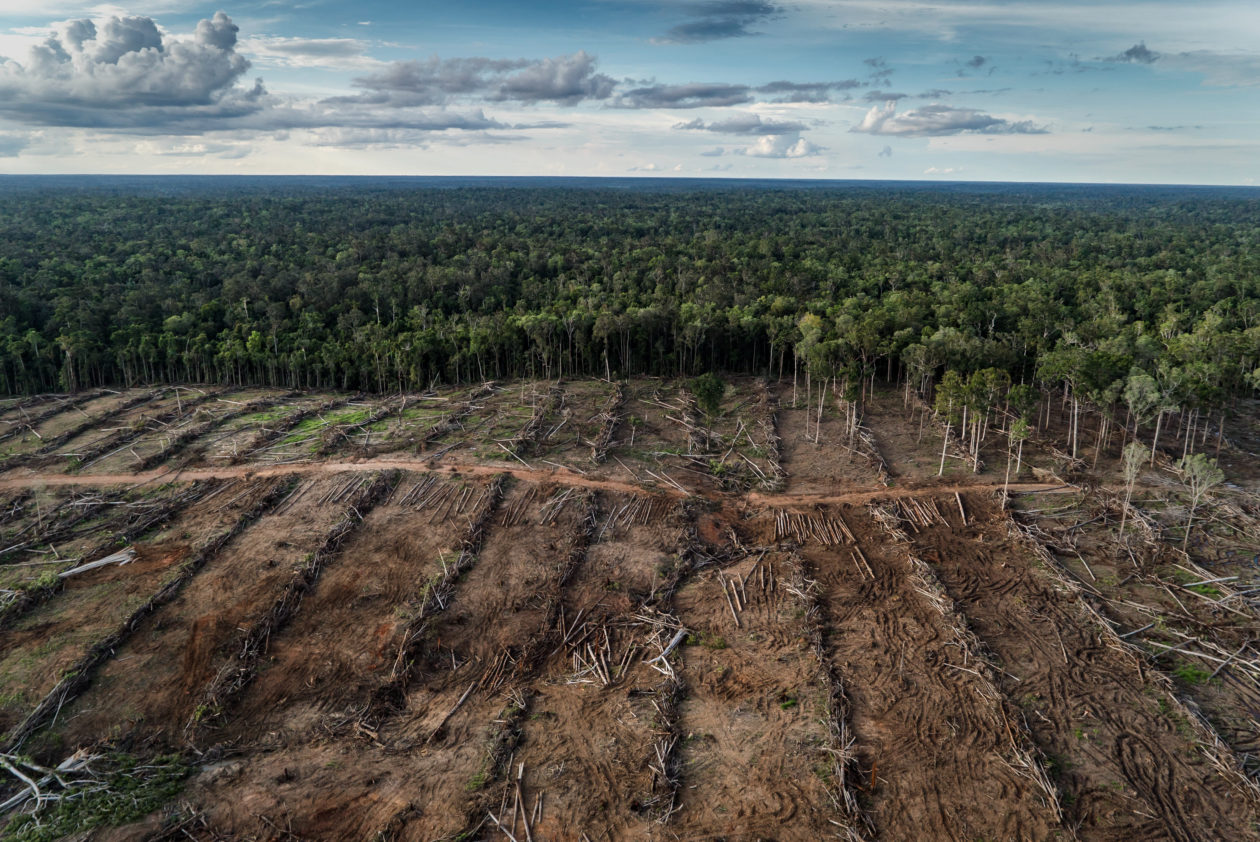
The world’s cheapest and most widely used vegetable oil, palm oil production is a primary driver of deforestation and biodiversity loss in the tropics. These and other problems with the palm oil industry, such as exploitative labor practices, have for years driven interest in more sustainable options. But good alternatives have proven difficult to come by: Other vegetable oils have similar drawbacks to palm oil, and sustainable forestry practices are not always effective in the face of rising demand. Today, the world consumes nearly 70 million metric tons of palm oil each year, used in everything from toothpaste and oat milk to biodiesel and laundry detergent. Demand is expected to more than double by 2050.

But with advances in bioengineering and increasing concerns about sustainability, a number of companies like Xylome have developed microbial oils they say could offer an alternative to palm oil while avoiding its most destructive impacts. They join numerous other synthetic biology companies — from ventures hawking new biofuels and fertilizer to lab-grown meat — that aspire to solve environmental problems but share similar challenges scaling up production and demonstrating their approach is in fact more sustainable than the problem they’re trying to solve.
Image
Forest cleared for a palm oil plantation in Papua, Indonesia.
Greenpeace
Don't mourn, organize.

-Joe Hill
User avatar
caltrek
Posts: 9280
Joined: Mon May 17, 2021 1:17 pm

Re: The Future of Food, Agriculture, and Aquaculture

Post by caltrek »

Nearly Half of Countries' Shared Fish Stocks are on the Move Due to Climate Change, Prompting Dispute Concerns
January 18, 2022

https://www.eurekalert.org/news-releases/940298

Introduction:
(EurekAlert) Climate change will force 45 per cent of the fish stocks that cross through two or more exclusive economic zones to shift significantly from their historical habitats and migration paths by 2100, a challenge that may lead to international conflict, according to a new UBC study.

By 2030, when United Nations Sustainable Development Goals should be met, 23 per cent of these ‘transboundary’ fish stocks will have changed their historical habitat range. The modeling study also projected 78 per cent of exclusive economic zones (EEZs)—where most fishing occurs—will see at least one shifting fish stock. By 2100, this climbs to 45 per cent of stocks, with 81 per cent of EEZs seeing at least one stock shift if nothing is done to halt greenhouse gas emissions.

“This is not only an issue of stocks leaving or arriving to new EEZs, but of stocks that are shared between countries, completely changing their dynamics,” said lead author Dr. Juliano Palacios-Abrantes, who conducted the study while at UBC’s Institute for the Oceans and Fisheries (IOF). Now a postdoctoral researcher at the University of Wisconsin-Madison, he said the study provides a timeline suggesting these shifts had already been underway since the beginning of the 21st century. “We will see even more dramatic changes by 2030 and onwards, given current emissions rates. Many of the fisheries management agreements made to regulate shared stocks were established in past decades, with rules that apply to a world situation that is not the same as today.”

The study tracked the shifting ranges of 9,132 transboundary fish stocks, which account for 80 per cent of catch taken from the world’s EEZs, starting in 2006 and projecting to the year 2100.

Changes in stocks’ distribution will affect catches. By 2030, 85 per cent of the world’s EEZs will have seen a change in the amount of their transboundary catch that exceeds normal yearly variation. It is a shift that Dr. Palacios-Abrantes expects will raise tensions over which countries can claim majority ownership of certain stocks, particularly given that between 2005 and 2010, fishing of transboundary species in total netted an estimated US$76 billion in revenue.
Here is a link to published results of the study: https://onlinelibrary.wiley.com/doi/epd ... /gcb.16058
Don't mourn, organize.

-Joe Hill
User avatar
caltrek
Posts: 9280
Joined: Mon May 17, 2021 1:17 pm

Re: The Future of Food, Agriculture, and Aquaculture

Post by caltrek »

Gassy Cows are Warming the Planet, and Scientists are Turning to the Sea for Answers
January 20, 2022

https://caseagrant.ucsd.edu/news/gassy- ... or-answers

Introduction:
(Sea Grant California) California might be able to meet ambitious methane reduction goals by making cows less gassy.

Luke Gardner is a California Sea Grant aquaculture extension specialist at the Moss Landing Marine Lab with a creative solution to the growing problem of cow burps, which release the potent greenhouse gas, methane. Previous research has shown that certain seaweeds can alter cow digestion in lab experiments and reduce the production of methane gas by 99%, but will native California seaweeds have the same effect?

Gardner seems well suited to lead the Ocean Protection Council funded research project, which is administered by California Sea Grant. He spends his weekends raising beef cattle in the rolling hills of Carmel Valley, just east of Monterey Bay. This status as scientist-who-moonlights-as-rancher gives him perspective on the issue from multiple angles. As a scientist, he recognizes the importance of reducing greenhouse gasses, but as a cattle rancher, he sees the gassy digestion as lost energy which leads to lower productivity for the rancher. Soothing a cow’s digestion could not only reduce methane emissions, but also help them metabolize their food more efficiently.

“There might be an opportunity here where we can stop the release of the methane but also improve the bottom line of the actual dairy and beef producers,” says Gardner.

Although methane is short-lived in the atmosphere, it’s a greenhouse gas 25 times stronger than carbon dioxide. This is a problem worldwide, but the issue is acute in California, which aims to reduce methane 40% by 2030. The majority of this methane now comes from the more than 1.4 million dairy cows and 1 million beef cattle in the state.
Don't mourn, organize.

-Joe Hill
User avatar
wjfox
Site Admin
Posts: 13586
Joined: Sat May 15, 2021 6:09 pm
Location: Essex, UK
Contact:

Re: The Future of Food, Agriculture, and Aquaculture

Post by wjfox »

UK could grow up to 40% of its own fruit and vegetables by using urban green spaces

Mon 24 Jan 2022 10.52 GMT

Britain could grow up to eight times its current production of fruit and vegetables if all available urban and under-used green space were turned to cultivation, new research has shown.

Only about 1% of urban green space is made up of allotments, but if gardens were used, along with parks, playing fields, watersides and other overlooked open spaces, the area would add up to enough to grow nearly 40% of the UK’s fresh fruit and vegetable consumption, most of which comes from overseas, according to the study.

While researchers were not seriously suggesting ploughing up parks and recreation areas, the first nationwide study of urban growing potential, by Lancaster University, demonstrated how much potential lies in areas that are often undervalued and overlooked. Using just a fraction of the nation’s scraps of urban green land for communal growing could provide a useful amount of fresh fruit and vegetables that would improve people’s diets, help vulnerable people and reduce carbon dioxide emissions.

https://www.theguardian.com/food/2022/j ... een-spaces
User avatar
caltrek
Posts: 9280
Joined: Mon May 17, 2021 1:17 pm

Re: The Future of Food, Agriculture, and Aquaculture

Post by caltrek »

A Bioelectronic Tongue ‘Tastes’ Sweetness

https://www.eurekalert.org/news-releases/941256

Introduction:
(American Chemical Society via EurekAlert) Candy, cookies, juices. Just about everyone likes sweet treats, but what one person thinks tastes too sugary, another might think is just right. This variability makes it challenging to develop new foods and beverages, so companies have sought a more objective method. Now, researchers reporting in ACS Applied Materials & Interfaces have developed an ultrasensitive bioelectronic tongue that measures sweetness by mimicking human taste buds.

Although human sensory panels are the most common way to analyze a substance’s taste, there can be a lot of differences in how people perceive flavors. To get more objective data, researchers have made bioelectronic tongues in the lab, but they either are complicated to manufacture or can’t fully replicate the way the human tongue works. Human tongues have sweet taste receptors with two large, complex structures that bind to compounds such as sugars. The outermost portion of one of these structures is called the Venus flytrap domain because its hinged, two-lobed molecular structure resembles the leaves of the insectivorous plant that close around its prey. This domain interacts with most of the sweet substances a person consumes. In a previous study, Tai Hyun Park, Seunghun Hong and colleagues made an umami sensor with human-like performance by using just the protein at the end of the umami taste receptor. So, these researchers wanted to apply the same concept to make a sweet-sensing bioelectronic tongue, using the Venus flytrap domain as electronic taste buds.

The researchers attached copies of the Venus flytrap domain that were made by bacteria in a thin layer on a gold electrode. They then connected multiple gold electrodes together with carbon nanotubes, making a field-effect transistor device. When solutions of naturally sweet sucrose or of the artificial sweetener saccharin were applied to the device, the current decreased. The sensor responded to these solutions down to the 0.1 femtomolar level, which is 10 million times more sensitive than previous bioelectronic sweet sensors, the researchers say. The device could also consistently measure the sweetness of real drinks, such as apple juice and sucrose-sweetened chamomile tea, but it did not show a response when cellobiose (a tasteless sugar) or monosodium glutamate (a salt known as MSG) were introduced. Because the bioelectronic tongue was both sensitive and selective for sweet-tasting compounds, the researchers say this could be a powerful tool for the health care, pharmaceutical, and food and drink industries.
Don't mourn, organize.

-Joe Hill
User avatar
caltrek
Posts: 9280
Joined: Mon May 17, 2021 1:17 pm

Re: The Future of Food, Agriculture, and Aquaculture

Post by caltrek »

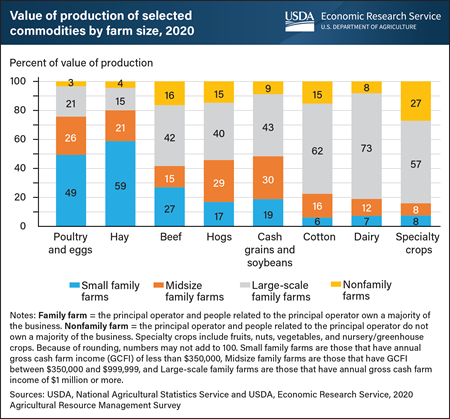
To better understand the future of agriculture in the United States, perhaps an economic snapshot of the industry as it currently stands is in order.

Image
In 2020, most of the values of cotton (62 percent), dairy (73 percent), and specialty crops (57 percent) were produced on large-scale family farms. USDA defines a family farm as one in which the principal operator and related family own the majority of the assets used in the operation. Large-scale family farms are those with an annual gross cash farm income of $1 million or more. However, small family farms produced the bulk of hay production (59 percent) and poultry and egg output (49 percent) in 2020. Poultry operations are often classified as “small” because most output is under a production contract arrangement, with a contractor paying a fee to a farmer who raises poultry to maturity. Additionally, more than one-quarter of beef production occurred on small family farms that generally have cow/calf operations. Another 42 percent of beef production occurred on large-scale family farms, which are more likely to operate feedlots. Midsize family farms production ranges from 8 to almost 30 percent of value of production. Nonfamily farms produce the smallest share of the value of production for most commodities. Of all the commodities, nonfamily farms contribute the most to specialty crop production at 27 percent. This chart is found in the Economic Research Service report, America’s Diverse Family Farms: 2021 Edition, released December 2021.
Source: https://www.ers.usda.gov/data-products/ ... tId=102991
Don't mourn, organize.

-Joe Hill
User avatar
caltrek
Posts: 9280
Joined: Mon May 17, 2021 1:17 pm

Re: The Future of Food, Agriculture, and Aquaculture

Post by caltrek »

Billions of Animals are Slaughtered Every Year — Just to be Wasted
by Kenny Torrella
January 30, 2022

https://www.vox.com/future-perfect/2289 ... al-welfare

Introduction:
(Vox) You may have heard the grim statistic by now: Around one-third of food produced in the US is never consumed, ending up in landfills as waste.

The biggest benefit of reducing food waste is self-evident — over 10 percent of US households experience food insecurity, and diverting food that’s safe and edible but destined for those landfills to those in need could help millions lead healthier, better lives.

But there’s another benefit of reducing food waste that’s starting to get more attention, and the EPA recently shined a spotlight on it in a new report: “Farm to Kitchen: The Environmental Impacts of U.S. Food Waste.”

“This uneaten food results in a ‘waste’ of resources—including agricultural land, water, pesticides, fertilizers, and energy—and the generation of environmental impacts—including greenhouse gas emissions and climate change,” the authors write in the report.

According to the EPA, food waste accounts for 2 percent of US greenhouse gas emissions — about half that of aviation. While meat, dairy, and eggs compose just a little over a quarter of US food waste by weight, the EPA report authors argue that there are disproportionate environmental benefits to reducing animal product waste. That’s because animal products typically require much more land, water, and energy — and emit more of the greenhouse gases carbon and methane — than plant-based foods
Don't mourn, organize.

-Joe Hill
User avatar
caltrek
Posts: 9280
Joined: Mon May 17, 2021 1:17 pm

Re: The Future of Food, Agriculture, and Aquaculture

Post by caltrek »

New Capital Fuels Purely Elizabeth's Next Natural Food Phase
by Christine Hall
January 31, 2022

https://techcrunch.com/2022/01/31/new-c ... ood-phase/

Introduction:
(TechCrunch) It’s been a 12-year journey for Purely Elizabeth founder Elizabeth Stein, and based on her plans for the company’s next phase, she is just getting started.

Stein, who began her career as a holistic nutrition counselor, started the company in 2009 after going back to school and learning about superfood ingredients and food as medicine, a concept that wasn’t as popular then as it is now.

“It felt like an opportunity in the market for products to help people,” she told TechCrunch. “What we put in our mouths is one of the most important things we can do.”

As Stein, CEO, worked with clients, she saw the need for specialized foods, like gluten-free, and what started as a side project — a blueberry muffin mix — was the catalyst for Purely Elizabeth and became her first product before moving into granola, which is what the company is known for today.

Fast-forward to today, and Purely Elizabeth, which has since added pancake/waffle mix and oatmeal, is one of the top brands in the breakfast category. Products are non-GMO and include ingredients like ancient grains, coconut sugar, probiotics and MCT oil.
Don't mourn, organize.

-Joe Hill
User avatar
funkervogt
Posts: 1365
Joined: Mon May 17, 2021 3:03 pm

Re: The Future of Food, Agriculture, and Aquaculture

Post by funkervogt »

wjfox wrote: Mon Jan 24, 2022 1:19 pm UK could grow up to 40% of its own fruit and vegetables by using urban green spaces

Mon 24 Jan 2022 10.52 GMT

Britain could grow up to eight times its current production of fruit and vegetables if all available urban and under-used green space were turned to cultivation, new research has shown.

Only about 1% of urban green space is made up of allotments, but if gardens were used, along with parks, playing fields, watersides and other overlooked open spaces, the area would add up to enough to grow nearly 40% of the UK’s fresh fruit and vegetable consumption, most of which comes from overseas, according to the study.

While researchers were not seriously suggesting ploughing up parks and recreation areas, the first nationwide study of urban growing potential, by Lancaster University, demonstrated how much potential lies in areas that are often undervalued and overlooked. Using just a fraction of the nation’s scraps of urban green land for communal growing could provide a useful amount of fresh fruit and vegetables that would improve people’s diets, help vulnerable people and reduce carbon dioxide emissions.

https://www.theguardian.com/food/2022/j ... een-spaces
Smaller versions of the robots used on automated farms will be available at low cost to average people, letting them effortlessly create backyard gardens. This will boost global food production and let people have greater control over where their food comes from and what it contains.
https://www.militantfuturist.com/my-fut ... iteration/
User avatar
caltrek
Posts: 9280
Joined: Mon May 17, 2021 1:17 pm

Re: The Future of Food, Agriculture, and Aquaculture

Post by caltrek »

Cover Crops Help Squash Squash their Pathogens
February 1, 2022

https://www.eurekalert.org/news-releases/942015

Introduction:
(EurekAlert) When most of us think about crops, we think of our favorite grains and produce such as corn, tomatoes, and squash. However, after these “cash crops” are harvested, many farmers are encouraged to avoid leaving their fields bare. Instead, they plant “cover crops” to reduce erosion and help the soil retain nutrients, among other benefits. While cover crops ultimately improve the yields of cash crops through improved soil health, new research suggests that they might also protect them from disease.

Pseudomonas syringae is a common bacterial pathogen that affects an array of important agricultural crops. Infections start on the leaf surface and spread through openings such as exposed wounds and pores. Farmers typically treat diseased plants with copper solutions, but some studies suggest that recruiting beneficial microbes may prevent P. syringae infection. Thus, creating reservoirs of helpful microbes in agricultural fields could be an important strategy for preventing disease.

In a paper recently published in the Phytobiomes Journal, Rémi Maglione, Marie Ciotola, Mélanie Cadieux, Vicky Toussaint, Martin Laforest, and Steven Kembel explored cover cropping as a potential tool for cultivating a healthier, disease-suppressive “phyllosphere,” or aboveground plant microbiome. To do so, they grew P. syringae-inoculated squash in fields that were over-wintered under four different conditions: winter rye cover crop, chemically-terminated winter rye cover crop, plastic cover, and bare soil. They compared the pathogen loads on the squash plants by culturing P. syringae from their leaves. The team also characterized the microbiomes of over 2,200 leaf samples to examine how cover cropping affects phyllosphere assembly. They found that cover cropping reduced populations of P. syringae and increased the abundance of genera such as Sphingomonas and Methylobacterium, which have been used as biocontrol agents against pathogens.

"To our knowledge, our study is the first to explore the importance of the phyllosphere microbiome in the context of cover cropping practices," states Dr. Laforest. "Our results suggest that cover cropping treatments can be used to manipulate biological interactions to protect plants against pathogens." Cover crops might not only promote a healthy microbiome by providing a reservoir of helpful microbes but could also minimize the colonization of soil-dwelling pathogens by creating a physical barrier. They could also affect microbial colonization by altering local soil conditions (e.g. soil moisture and temperature).
Don't mourn, organize.

-Joe Hill
User avatar
caltrek
Posts: 9280
Joined: Mon May 17, 2021 1:17 pm

Re: The Future of Food, Agriculture, and Aquaculture

Post by caltrek »

Ancient Corn Ancestor Genes Could Make Future Crops Better
by Fred Love
February 3, 2022

https://www.futurity.org/corn-teosinte- ... 2691252-2/

Introduction:
(Futurity) Researchers are figuring out how to look back through millennia of domestication to learn how a wild grassy plant known as teosinte developed into corn, the modern cash crop grown across the globe.

The work allows the researchers to compare genes in corn against its wild ancestor. That could help plant breeders identify advantageous traits that may have been bred out of teosinte over the centuries.

The findings in Frontiers of Plant Science detail a new biotech tool that harnesses cutting-edge techniques to produce fertile transgenic teosinte plants for the first time.

Humans began domesticating teosinte, a wild grass native to Mexico, roughly 10,000 years ago. Each teosinte plant yields only up to a dozen kernels, which are tough and contain less nutrients than modern corn. So people selected individual teosinte plants for higher yields, eventually developing new varieties with their own unique traits.

But some of the original genetic material from teosinte got lost along the way. Identifying this genetic material could help breed better corn today, or at least offer scientists clues about how to better harness the genetic diversity of corn, says first author Jacob Zobrist, a graduate student in agronomy at Iowa State University.
Don't mourn, organize.

-Joe Hill
User avatar
caltrek
Posts: 9280
Joined: Mon May 17, 2021 1:17 pm

Re: The Future of Food, Agriculture, and Aquaculture

Post by caltrek »

UN Report: The World’s Farms Stretched to ‘a Breaking Point’
by Dana Nuccitelli
January 19, 2022

https://yaleclimateconnections.org/2022 ... ing-point/

Introduction:
(Common Dreams) Almost 10% of the 8 billion people on earth are already undernourished with 3 billion lacking healthy diets, and the land and water resources farmers rely on stressed to “a breaking point.” And by 2050 there will be 2 billion more mouths to feed, warns a new report from the United Nations Food and Agriculture Organization (FAO).

For now, farmers have been able to boost agricultural productivity by irrigating more land and applying heavier doses of fertilizer and pesticides. But the report says these practices are not sustainable: They have eroded and degraded soil while polluting and depleting water supplies and shrinking the world’s forests. The FAO report discusses some important climate change impacts, such as changing distribution of rainfall, the suitability of land for certain crops, the spread of insects and other pests, and shorter growing seasons in regions affected by more intense droughts. While not the sole source of obstacles facing global agriculture, the report makes clear that climate change is further stressing agricultural systems and amplifying global food production challenges.

The report also offers hope that the problems are solvable: Water degradation can be reversed by turning to smart planning and coordination of sustainable farming practices and by deploying new innovative technologies. More sustainable agriculture can also help fight climate change: For instance, the report notes that wiser use of soils can help sequester some of the greenhouse gasses currently emitted by agricultural activities.

Drastic changes in climate will require regions to adjust the crops they grow. For example, the report predicts that much cereal production will probably have to move north, to Canada and northern Eurasia. Brazil and northern Africa may have a harder time growing coffee, but it may get easier in eastern Africa. A changing climate “may bring opportunities for multiple rainfed cropping, particularly in the tropics and subtropics.” And for areas “where the climate becomes marginal for current staple and niche crops, there are alternative annual and perennial tree crops, livestock, and soil and water management options available.”

The report recommends seed and germoplasm exchanges globally and among regions, and investments to develop crops that can withstand changes in temperature, salinity, wind, and evaporation.
Don't mourn, organize.

-Joe Hill
User avatar
caltrek
Posts: 9280
Joined: Mon May 17, 2021 1:17 pm

Re: The Future of Food, Agriculture, and Aquaculture

Post by caltrek »

Being a Difference-maker is a Goal of Ocean Mist Farms’ CEO Chris Drew
by Tom Linden
January 13, 2022

https://theproducenews.com/people/being ... chris-drew

Introduction:
Chris Drew, who was named president and CEO of Ocean Mist Farms in October, joined the company in the early 2000s with high ambitions.
...
Conclusion:
Drew said consumers are looking for new ways to prepare and eat artichokes, such as grilling them, and Ocean Mist wants to help facilitate those trends. “I expect our value-added footprint will expand,” he said.

Responding to questions about an even bigger picture, Drew said California as a production area does present challenges in the regulatory arena that can make it more difficult to succeed. On the other hand, the state is unique in that it is situated like none other in which to succeed culturally with its many microclimates and other advantages. “I see California continuing to play a major role in our business. There is no other place where you can grow year-round.”

He is also aware of trends such as local farming in indoor environments. Drew said the rising cost of transportation is making producing crops on the East Coast an intriguing idea. “We need to be creative. We are certainly keeping our eye on the local produce movement.”

Drew is aware that a successful business must adapt. “Adapting to change is how we survive,” he said. For Drew, this daily adaptation is the impact he expects to make to company and industry that he has dedicated his professional life to.
Don't mourn, organize.

-Joe Hill
User avatar
caltrek
Posts: 9280
Joined: Mon May 17, 2021 1:17 pm

Re: The Future of Food, Agriculture, and Aquaculture

Post by caltrek »

Forest, Land and Agriculture - Guidance for Land-intensive Sectors

https://sciencebasedtargets.org/sectors ... griculture

Introduction:
(Science Based Targets) Nearly 25% of global annual greenhouse gas emissions come from agriculture, forestry and other land use. Moreover, agricultural production is expected to double by 2050, to meet the demand of the world’s growing population.

In order for companies in land-intensive sectors to have a fighting chance of avoiding catastrophic climate breakdown, we are developing guidance to have a standard method to account and set science-based targets that include land-related emissions and removals.

Download the draft Forest, Land and Agriculture Science Based Target Setting Guidance: https://sciencebasedtargets.org/resourc ... tation.pdf

If your company is in the food, agriculture and forest sectors, or you are an expert on any of these, we invite you to share feedback on the draft guidance and send it to [email protected].

The public consultation period closes on February 18, 2022.
Don't mourn, organize.

-Joe Hill
User avatar
caltrek
Posts: 9280
Joined: Mon May 17, 2021 1:17 pm

Re: The Future of Food, Agriculture, and Aquaculture

Post by caltrek »

3D Printed Foods Enter the Kitchen
by Alla Katsnelson
February 2, 2022

https://cen.acs.org/food/food-science/3 ... hen/100/i5

Introduction:
(Chemical and Engineering News) Standard military rations are made in bulk, formulated to provide a complete packaged meal during field operations. But sometimes, soldiers need a specific nutritional fix to maintain peak performance—say, a jolt of caffeine for alertness on a mission during which sleep is scant, or a bolus of creatine to help with muscle recovery after an especially physically demanding assignment. To achieve that level of culinary nimbleness, researchers at the US Department of Defense’s Combat Feeding Directorate, which develops military rations for the US Armed Forces, are turning to an unusual appliance: a 3D printer.

In the directorate’s Food Engineering and Analysis Lab, located at a US Army facility in Natick, Massachusetts, Lauren Oleksyk and her colleagues are creating 3D-printed bars tailored to optimize performance in specific scenarios or to address the needs of individual soldiers. Printers that create such supplementary rations could one day be synced with wearable sensors that detect a person’s physiological profile and nutritional needs in real time, she says.

Three-dimensional printers deposit bits of materials—usually plastics—through a nozzle onto a surface to build preprogrammed shapes layer by layer. Manufacturers and home hobbyists alike are using them to make customized machine parts, medical implants, furniture, and even guns.

Although 3D printing has touched many industries since its invention in the mid-1980s, the devices are in their infancy when it comes to printing food. In the past decade, researchers in academia and industry have been recasting the software and hardware for sculpting plastic to printing concoctions of peanut butter and other ingredients. At the same time, they have been wrestling with how to make food that can flow through the tubes of a 3D printer be as palatable as the traditional stuff.

In a sense, 3D printing isn’t that different from other types of food manufacturing. “If you buy any packaged food at the supermarket, then you’re practically eating 3D-printed food already,” says Lynette Kucsma, cofounder and chief marketing officer at Natural Machines, which makes a food printer called Foodini. In many cases, food manufacturers already push food through machines and shape it. But what’s different about 3D printing is that the end users maintain full control of what comes out of the machine, she says.
Don't mourn, organize.

-Joe Hill
User avatar
caltrek
Posts: 9280
Joined: Mon May 17, 2021 1:17 pm

Re: The Future of Food, Agriculture, and Aquaculture

Post by caltrek »

Agot AI gives Restaurants Computer Assist to Track Where Food Orders Go Wrong
by Christine Hall
February 11, 2022

https://techcrunch.com/2022/02/11/agot- ... -go-wrong/

Intoroduction:
(TechCrunch) Artificial intelligence has infiltrated a number of industries, and the restaurant industry was one of the latest to embrace this technology, driven in main part by the global pandemic and the need to shift to online orders.

That need continues to grow. In 2021, some 60% of Americans ordered takeout or delivery at least once a week, and 31% used a third-party delivery service. Market Study Report predicts the global restaurant management software market to grow nearly 15% annually to reach $6.95 billion by 2025.

However, we’ve all had that experience where you receive your food delivery only to find the order is wrong. Agot AI is using machine learning to develop computer vision technology, initially targeting the quick-serve restaurant (QSR) industry, so those types of errors can be avoided.

The company was founded three years ago by Evan DeSantola and Alex Litzenberger to solve that operations perspective in restaurant technology, reward employee success and improve a restaurant’s customer satisfaction.

Its product confirms order accuracy in real-time for online ordering and notifies employees if an order needs a correction; for example, they forgot to add cheese or ketchup.
Image
Credit: Agot AI
Don't mourn, organize.

-Joe Hill
User avatar
caltrek
Posts: 9280
Joined: Mon May 17, 2021 1:17 pm

Re: The Future of Food, Agriculture, and Aquaculture

Post by caltrek »

What Makes a Fruit Flavorful? Artificial Intelligence Can Help Optimize Cultivars to Match Consumer Preferences
by Marcio Resende and Harry J. Klee

https://theconversation.com/what-makes- ... ces-176491

Introduction:
(The Conversation) Which flavors and chemical compounds make a particular variety of fruit more appealing to consumers can be identified and predicted using artificial intelligence, according to our recently published study.

Flavor, defined by scientists as the interaction between aroma and taste, is chemically complex. The sugars, acids and bitter compounds in food interact with the taste receptors on our tongues to invoke taste, while volatile compounds that interact with olfactory receptors in our noses are responsible for aroma.

Breeding for flavor is a difficult task for many different reasons. For one, fruit and vegetable plant breeding programs need to improve several different traits that appeal to both producers and consumers. Creating the optimal genetic combination that covers all these traits is difficult, so breeding programs often deprioritize flavor to focus on improving disease resistance and increasing yield. Plant breeders must also evaluate hundreds to thousands of potential varieties. Testing a single sample in an objective way requires consumer panels of up to 100 people, which can be expensive and impractical to arrange.

To streamline this process, we developed an algorithm to predict how consumers will rank flavor in tomatoes and blueberries. We created a database containing all known compounds associated with flavor in all varieties of these fruits. Then, we compared this database with existing consumer panel ratings on sweetness, sourness, umami and overall flavor and preference of different varieties. By modeling how consumer ratings varied with the chemical makeup of different varieties of these fruits, this allowed us to determine which compounds most influence flavor perception.

We found that the volatile organic compounds, or chemicals that form a gas, responsible for aroma are a big part of why people like a given variety. Specifically, we estimated that 42% and 56% of the overall preference score of a variety of tomato or blueberry, respectively, was associated with aroma.
Don't mourn, organize.

-Joe Hill
Post Reply