BCIs & Neurotechnology News and Discussions

User avatar
caltrek
Posts: 9280
Joined: Mon May 17, 2021 1:17 pm

Re: BCIs & Neurotechnology News and Discussions

Post by caltrek »

Experimental Verification on Steering Flight of Honeybee by Electrical Stimulation
August 13, 2022

Introduction:
(EurekAlert) A research paper by scientists at the Beijing Institute of Technology verified the steering control effect of honeybee by applying electrical stimulation on the unilateral optic lobe.

The new research paper, published on Jul. 21 in the journal Cyborg and Bionic Systems, validated the effectiveness of unilateral optic lobe electrical stimulation for steering locomotion control of honeybees, and explored the motion control parameters with the highest successful rate.

As an emerging field, the cyborg insect encompasses an insect carrier and manual control modules, and realizes the dynamic pre-setting of its behavior by disturbing the insects’ motion through the manual control module. Comparing to the microaircrafts, cyborg insects exhibit exceptional superiority of high stealth appearance, adaption in unstructured environment, low power consumption, and affluent sensing system, due to inheriting the biological appearance, athletic ability, and sensory organs of the insects. “Except for the applicability in military reconnaissance, cyborg insects have incomparable application potential in biodiversity protection,” said study author Jieliang Zhao, a professor at the Beijing Institute of Technology.

“A highly efficient and reliable locomotion control strategy is a prerequisite for cyborg insects to complete the preset assignments,” explained study authors.
Read more here: https://www.eurekalert.org/news-releases/961683
Don't mourn, organize.

-Joe Hill
Nanotechandmorefuture
Posts: 478
Joined: Fri Sep 17, 2021 6:15 pm
Location: At the moment Miami, FL

Re: BCIs & Neurotechnology News and Discussions

Post by Nanotechandmorefuture »

Real life telepathy is on the way with these BCIs though I'm sure I, like many others, will wait after the 1st gen ones have been perfected and gotten the kinks out of. In the mean time there should be great advances in this field.
User avatar
caltrek
Posts: 9280
Joined: Mon May 17, 2021 1:17 pm

Re: BCIs & Neurotechnology News and Discussions

Post by caltrek »

Researchers Have Decoded Visual Images from a Dog’s Brain.
by Carol Clark-Emory
September 16, 2022

Introduction:
(Futurity) The work offers a first look at how the canine mind reconstructs what it sees.

The results suggest that dogs are more attuned to actions in their environment rather than to who or what is doing the action.

The researchers recorded the fMRI neural data for two awake, unrestrained dogs as they watched videos in three 30-minute sessions, for a total of 90 minutes. They then used a machine-learning algorithm to analyze the patterns in the neural data.

“We showed that we can monitor the activity in a dog’s brain while it is watching a video and, to at least a limited degree, reconstruct what it is looking at,” says Gregory Berns, professor of psychology at Emory University and corresponding author of the paper. “The fact that we are able to do that is remarkable.”

The project was inspired by recent advancements in machine learning and fMRI to decode visual stimuli from the human brain, providing new insights into the nature of perception. Beyond humans, the technique has been applied to only a handful of other species, including some primates.
Read more here: https://www.futurity.org/dogs-see-mach ... -2800992/

Edit: IFL Science also had an article on this same topic which is largely duplicative of what is in the Futurity article: https://www.jove.com/t/64442/through-do ... s-from-dog

Edit: For a lengthier discussion, here is an article in Jove: https://www.jove.com/t/64442/through-do ... -from-dog
Don't mourn, organize.

-Joe Hill
weatheriscool
Posts: 24486
Joined: Sun May 16, 2021 6:16 pm
Contact:

Re: BCIs & Neurotechnology News and Discussions

Post by weatheriscool »

Reverse-engineering the brain to decode input signals from output neuron firing
https://phys.org/news/2022-09-reverse-e ... euron.html
by Tokyo University of Science
The brain is an extremely complex organ whose exact functioning remains difficult to understand. On average, the human brain contains 100 billion neurons that fire upon receiving input signals from multiple sensory organs. But, what is truly remarkable about our brain is the synchronization of this neural firing when triggered by a common input. Put simply, common inputs can generate a collective response in neurons that are not only spatially separated but also have different firing characteristics.

The neural synchronization has been observed before in experiments, and is commonly demonstrated during rest and activities involving tasks. However, the common inputs which produce this are typically unknown in real-world situations. This raises an interesting question: is it possible to reconstruct this input by looking at the output of the neurons?

In a new study published in Physical Review E on September 12, 2022, a team of researchers from Japan, led by Professor Tohru Ikeguchi from Tokyo University of Science (TUS), set out to answer this question. The team, including Associate Professor Ryota Nomura of Waseda University (formerly TUS), and Associate Professor Kantaro Fujiwara of The University of Tokyo, looked at the firing rates of neurons and managed to reconstruct the input signal using a method called "superposed recurrence plot" (SRP).
weatheriscool
Posts: 24486
Joined: Sun May 16, 2021 6:16 pm
Contact:

Re: BCIs & Neurotechnology News and Discussions

Post by weatheriscool »

Research team shines light on how the brain stores positive and negative memories
https://medicalxpress.com/news/2022-10- ... ories.html
by Jessica Colarossi, Boston University
You may not realize it, but each time you recall a memory—like your first time riding a bike or walking into your high school prom—your brain changes the memory ever so slightly. It's almost like adding an Instagram filter, with details being filled in and information being updated or lost with each recall.

"We're inadvertently applying filters to our past experiences," says Steve Ramirez, a Boston University neuroscientist. Even though a filtered memory is different from the original, you can tell what that basic picture is, for the most part, he says.

"Memory is less of a video recording of the past, and more reconstructive," says Ramirez, a BU College of Arts & Sciences assistant professor of psychological and brain sciences. The malleable nature of memory is both a blessing and curse: It's bad if we remember false details, but it's good that our brains have the natural ability to mold and update memories to make them less potent, especially if it is something scary or traumatic.

So, what if it's possible to use the malleable nature of our memories to our advantage, as a way to cure mental health disorders like depression and post-traumatic stress disorder (PTSD)? That is exactly what Ramirez and his research team are working to do. And after years of studying memory in mice, they've found not only where the brain stores positive and negative memories, but also how to turn the volume down on negative memories by artificially stimulating other, happier ones. The team's research is published in Communications Biology.
User avatar
caltrek
Posts: 9280
Joined: Mon May 17, 2021 1:17 pm

Re: BCIs & Neurotechnology News and Discussions

Post by caltrek »

A Dish of Brain Cells Figured Out How to Play Pong in Five Minutes
by Michele Starr
October 13, 2022

Introduction:
(Science Alert) How many brain cells does it take to play a video game?

No, really. That's not a joke, and there isn't a punchline. Instead, there's a real actual answer, thanks to a neural network system called DishBrain.
If that game is Pong, the number of brain cells is around 800,000.

While their slow-moving, one-sided strategy for digital table tennis won't see them win any e-sports championships in the near future, it does reflect the potential in fusing living tissues with silicon technology.

This is the first synthetic biological intelligence experiment that shows neurons can adjust their activity to perform a specific task – and, when provided with feedback, can learn to perform that task better. It's pretty amazing stuff, with potential applications in computing, as well as studying all sorts of brain stuff, from how drugs and medication impact brain activity to how intelligence develops in the first place.
Read more here: https://www.sciencealert.com/watch-a-d ... 5-minutes

caltrek’s comment: To me, this sort of thing raises all sorts of ethical questions, none of which seem to be discussed in the cited article.

Don't mourn, organize.

-Joe Hill
weatheriscool
Posts: 24486
Joined: Sun May 16, 2021 6:16 pm
Contact:

Re: BCIs & Neurotechnology News and Discussions

Post by weatheriscool »

New MRI technique could allow for noninvasively tracking propagation of brain signals on millisecond timescales
https://medicalxpress.com/news/2022-10- ... ation.html
by Bob Yirka , Medical Xpress
A team of researchers affiliated with multiple institutions in the Republic of Korea has developed a new way to use magnetic resonance imaging (MRI) for noninvasive tracking of the propagation of brain signals on millisecond timescales. In their paper published in the journal Science, the group describes how they developed the new technology, its features and how well it worked when tested on mice. Timo van Kerkoerle and Martijn Cloos with Université Paris-Saclay and the University of Queensland, respectively, have published a Perspectives piece in the same journal issue outlining the work done by the team on this new effort.

MRI works by sending a magnetic field along with radio waves through tissue to produce images of the tissue under study. It works because different types of tissue have different properties. MRI is also used in different ways depending on the part of the body under study. Blood-oxygen-level-dependent functional MRI is used to obtain images of the brain of a living person—the technique allows for observing changes in blood flow in the brain that serve as a stand-in for an increase in neuronal activity. In practice, blood-oxygen-level-dependent functional MRI produces multiple images over time, generally over several seconds. In this new effort, the researchers have modified the way an MRI brain scan is performed.
weatheriscool
Posts: 24486
Joined: Sun May 16, 2021 6:16 pm
Contact:

Re: BCIs & Neurotechnology News and Discussions

Post by weatheriscool »

New research paves way for innovative theory of cognitive processing
https://medicalxpress.com/news/2022-10- ... itive.html
by University Health Network

A team of scientists from the Krembil Brain Institute, part of the University Health Network in Toronto, and Duke University in Durham, North Carolina, has developed the first computer model predicting the role of cortical glial cells in cognition.

The paper was published today in Proceedings of the National Academy of Sciences (PNAS).

"The role of neurons is well documented, but neurons are interspersed with glial cells and many synapses in the brain have glia nearby," says Dr. Maurizio De Pittà, a scientist at the Krembil Brain Institute and the first author of the study. "We currently do not understand how neurons and glia work together, or how glial dysfunction contributes to cognitive deficits."

Glial cells are abundant throughout the brain and play several important roles. These cells have long been thought to be passive bystanders—physically supporting neurons and synapses, bringing nutrients to neurons, and removing toxins and waste products. However, scientists have recently discovered that glia interact with neurons in a fashion similar to the way that neurons communicate with one another through chemical signals.
User avatar
caltrek
Posts: 9280
Joined: Mon May 17, 2021 1:17 pm

Re: BCIs & Neurotechnology News and Discussions

Post by caltrek »

Fighting Brain Disorders With AI and Microelectronics
October 31, 2022

Introduction:
(EurekAlert) Neural implants can help treat brain disorders such as Parkinson’s disease and epilepsy by directly modulating abnormal activities – and the University of Toronto’s Xilin Liu is working with microelectronics and artificial intelligence to make this emerging technology both safer and smarter.

“Neurons talk to each other in part via electrical signals, and a therapeutic neural implant produces electrical stimulation – like a pacemaker for the brain,” says Liu, an assistant professor in the Faculty of Applied Science & Engineering. “In cases of tremors or seizures, the stimulation attempts to restore the neurons to a normal condition.

“It’s as if the stimulus turns the neural networks off and on – almost like restarting a computer, though it’s definitely not that simple. Scientists don’t fully understand how it works yet.”

Liu’s team integrates neural implants into miniature silicon chips via the same process for fabricating chips used in today’s computers and smartphones. This technology, referred to as CMOS for complementary metal-oxide semiconductor, allows them to reduce the device’s physical dimensions and power consumption, thus minimizing the risks associated with the implant’s initial surgical procedure and long-term use.
Read more here: https://www.eurekalert.org/news-releases/969385
Don't mourn, organize.

-Joe Hill
User avatar
Yuli Ban
Posts: 5194
Joined: Sun May 16, 2021 4:44 pm

Re: BCIs & Neurotechnology News and Discussions

Post by Yuli Ban »

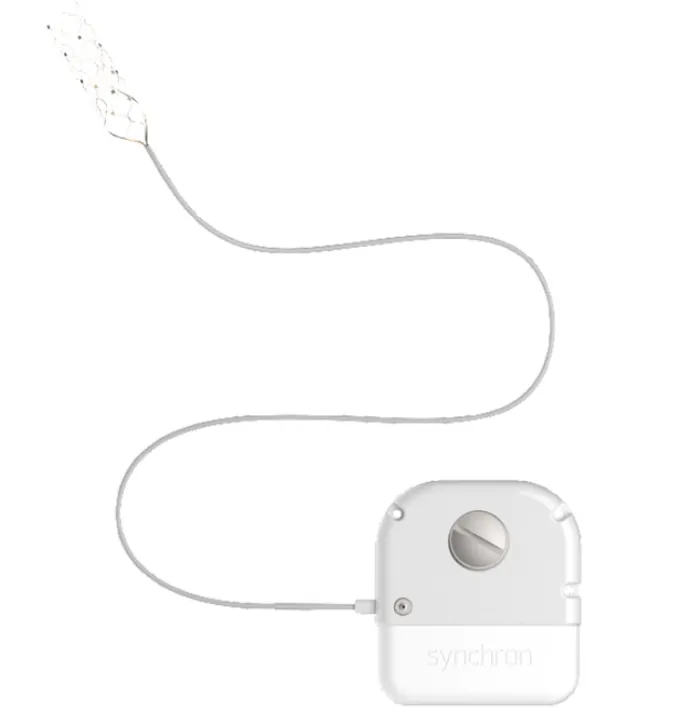
A novel brain-computer interface developed by a New York-based company called Synchron was just used to help a paralyzed patient send messages using their Apple device for the very first time. It’s a massive step up in an industry that has increasingly reported progress, which suggests that interfacing our minds with consumer devices could happen a lot sooner than some of us bargained for.
Image
The Synchron endovascular BCI. Credit: Synchron.
And remember my friend, future events such as these will affect you in the future
User avatar
Yuli Ban
Posts: 5194
Joined: Sun May 16, 2021 4:44 pm

Re: BCIs & Neurotechnology News and Discussions

Post by Yuli Ban »

And remember my friend, future events such as these will affect you in the future
weatheriscool
Posts: 24486
Joined: Sun May 16, 2021 6:16 pm
Contact:

Re: BCIs & Neurotechnology News and Discussions

Post by weatheriscool »

Scientists identify neurons that restore walking after paralysis

by Emmanuel Barraud, Ecole Polytechnique Federale de Lausanne
https://medicalxpress.com/news/2022-11- ... lysis.html
In a multi-year research program coordinated by the two directors of .NeuroRestore—Grégoire Courtine, a neuroscience professor at EPFL, and Jocelyne Bloch, a neurosurgeon at Lausanne University Hospital (CHUV)—patients who had been paralyzed by a spinal cord injury and who underwent targeted epidural electrical stimulation of the area that controls leg movement were able to regain some motor function.

In the new study by .NeuroRestore scientists, appearing today in Nature, not only was the efficacy of this therapy demonstrated in nine patients, but the improved motor function was shown to last in patients after the neurorehabilitation process was completed and when the electrical stimulation was turned off. This suggested that the nerve fibers used for walking had reorganized. The scientists believe it was crucial to understand exactly how this neuronal reorganization occurs in order to develop more effective treatments and improve the lives of as many patients as possible.
User avatar
caltrek
Posts: 9280
Joined: Mon May 17, 2021 1:17 pm

Re: BCIs & Neurotechnology News and Discussions

Post by caltrek »

Brain-machine Interface Device Predicts Internal Speech
November 14, 2022

Introduction:
(EurekAlert) New Caltech research is showing how devices implanted into people’s brains, called brain-machine interfaces (BMIs), could one day help patients who have lost their ability to speak. In a new study presented at the 2022 Society for Neuroscience conference in San Diego, the researchers demonstrated that they could use a BMI to accurately predict which words a tetraplegic participant was simply thinking and not speaking or miming.

“You may already have seen videos of people with tetraplegia using BMIs to control robotic arms and hands, for example to grab a bottle and to drink from it or to eat a piece of chocolate,” says Sarah Wandelt, a Caltech graduate student in the lab of Richard Andersen, James G. Boswell Professor of Neuroscience and director of the Tianqiao and Chrissy Chen Brain-Machine Interface Center at Caltech.

“These new results are promising in the areas of language and communication. We used a BMI to reconstruct speech,” says Wandelt, who presented the results at the conference on November 13.

Previous studies have had some success at predicting participants’ speech by analyzing brain signals recorded from motor areas when a participant whispered or mimed words. But predicting what somebody is thinking, internal dialogue, is much more difficult, as it does not involve any movement, explains Wandelt. “In the past, algorithms that tried to predict internal speech have only been able to predict three or four words and with low accuracy or not in real time,” Wandelt says.

The new research is the most accurate yet at predicting internal words. In this case, brain signals were recorded from single neurons in a brain area called the supramarginal gyrus, located in the posterior parietal cortex. The researchers had found in a previous study that this brain area represents spoken words.
Read more here: https://www.eurekalert.org/news-releases/971279
Don't mourn, organize.

-Joe Hill
User avatar
caltrek
Posts: 9280
Joined: Mon May 17, 2021 1:17 pm

Re: BCIs & Neurotechnology News and Discussions

Post by caltrek »

With Training, People in Mind-controlled Wheelchairs Can Navigate Normal, Cluttered Spaces
November 18, 2022

Introduction:
(EurekAlert) A mind-controlled wheelchair can help a paralyzed person gain new mobility by translating users’ thoughts into mechanical commands. On November 18 in the journal iScience, researchers demonstrate that tetraplegic users can operate mind-controlled wheelchairs in a natural, cluttered environment after training for an extended period.

“We show that mutual learning of both the user and the brain-machine interface algorithm are both important for users to successfully operate such wheelchairs,” says José del R. Millán, the study’s corresponding author at The University of Texas at Austin. “Our research highlights a potential pathway for improved clinical translation of non-invasive brain-machine interface technology.”

Millán and his colleagues recruited three tetraplegic people for the longitudinal study. Each of the participants underwent training sessions three times per week for 2 to 5 months. The participants wore a skullcap that detected their brain activities through electroencephalography (EEG), which would be converted to mechanical commands for the wheelchairs via a brain-machine interface device. The participants were asked to control the direction of the wheelchair by thinking about moving their body parts. Specifically, they needed to think about moving both hands to turn left and both feet to turn right.

In the first training session, three participants had similar levels of accuracy—when the device’s responses aligned with users’ thoughts—of around 43% to 55%. Over the course of training, the brain-machine interface device team saw significant improvement in accuracy in participant 1, who reached an accuracy of over 95% by the end of his training. The team also observed an increase in accuracy in participant 3 to 98% halfway through his training before the team updated his device with a new algorithm.

The improvement seen in participants 1 and 3 is correlated with improvement in feature discriminancy, which is the algorithm’s ability to discriminate the brain activity pattern encoded for “go left” thoughts from that for “go right.” The team found that the better feature discrimnancy is not only a result of machine learning of the device but also learning in the brain of the participants. The EEG of participants 1 and 3 showed clear shifts in brainwave patterns as they improved accuracy in mind-controlling the device.
Read more of the EurekAlert article here: https://www.eurekalert.org/news-releases/970833

Read the iScience article here: https://www.cell.com/iscience/fulltext ... 2)01690-X
Don't mourn, organize.

-Joe Hill
User avatar
wjfox
Site Admin
Posts: 13576
Joined: Sat May 15, 2021 6:09 pm
Location: Essex, UK
Contact:

Re: BCIs & Neurotechnology News and Discussions

Post by wjfox »

User avatar
raklian
Posts: 1981
Joined: Sun May 16, 2021 4:46 pm
Location: North Carolina

Re: BCIs & Neurotechnology News and Discussions

Post by raklian »


To know is essentially the same as not knowing. The only thing that occurs is the rearrangement of atoms in your brain.
User avatar
Time_Traveller
Posts: 3025
Joined: Sun May 16, 2021 4:49 pm
Location: New York City, USA, November 5th 2032 C.E.

Re: BCIs & Neurotechnology News and Discussions

Post by Time_Traveller »

Image Image

Via Mastodon
“In the quantum multiverse, every choice, every decision you've ever and never made exists in an unimaginably vast ensemble of parallel universes.”
User avatar
Yuli Ban
Posts: 5194
Joined: Sun May 16, 2021 4:44 pm

Re: BCIs & Neurotechnology News and Discussions

Post by Yuli Ban »

Neuralink owner Elon Musk said paperwork for human trials has been submitted to the U.S. Food and Drug Administration (FDA), which he claimed could lead to human trials of the company’s brain-implant technology “in about six months.”

Neuralink, which Musk helped to set up in 2016, is developing a system that directly links the human brain to a computer interface. It believes the technology, part of which is implanted directly into the brain, will one day allow the human mind to control gadgets and programs merely through thought, potentially opening up a whole new world for people with brain disorders and conditions such as paralysis.

In April 2021, Neuralink demonstrated early trials of the technology by showing a monkey playing a game of Pong just by thinking about it.
And remember my friend, future events such as these will affect you in the future
User avatar
wjfox
Site Admin
Posts: 13576
Joined: Sat May 15, 2021 6:09 pm
Location: Essex, UK
Contact:

Re: BCIs & Neurotechnology News and Discussions

Post by wjfox »

User avatar
wjfox
Site Admin
Posts: 13576
Joined: Sat May 15, 2021 6:09 pm
Location: Essex, UK
Contact:

Re: BCIs & Neurotechnology News and Discussions

Post by wjfox »

Neuralink Co-Founder Unveils Rival Company That Won't Require Patients to Drill Holes in Their Skull

ByMack DeGeurin
Published November 21, 2022

Elon Musk’s displayed willingness to quickly burn bridges with anyone who opposes him at his assortment of companies might be biting him in the ass. In the most recent case, Neuralink’s former president, who parted ways with the company last year, now has his own rival brain company with $160 million in total funding. In the BCI world, according to Bloomberg, that’s second only to Neuralink.

Neuralink’s co-founder and former president Max Hodak emerged from the shadows this month with a new brain computer interface startup called Science Corp. Though the companies seem similar, the secretive startup has one potentially major advantage over Musk’s brain company. Unlike Neuralink, Science Corp’s interface won’t force users to drill holes into their heads or, presumably, the heads of unwilling test subjects.

Science’s BCI approach, detailed in a Bloomberg report, relies on the science of photonics which uses light sent through a patient’s optic nerve to transmit information. In theory, Hodak believes this method could yield similar types of applications as those pursued by Neuralink, which include treating patients with extreme disabilities before one day enhancing humans’ cognition and computation abilities. Hodak says his company has already developed a prototype device called “Science Eye” capable of treating vision loss in test rabbits. That prototype uses a 2-millimeter wide thin LED film implanted on top of a rabbit’s retina capable of processing patterns sent to it wirelessly.

https://gizmodo.com/neuralink-science-c ... 1849808151


Image
Post Reply