Quantum Computing News and Discussions

weatheriscool
Posts: 24486
Joined: Sun May 16, 2021 6:16 pm
Contact:

Re: Quantum Computing News and Discussions

Post by weatheriscool »

Quantum computer works with more than zero and one
https://phys.org/news/2022-07-quantum.html
by University of Innsbruck
We all learn from early on that computers work with zeros and ones, also known as binary information. This approach has been so successful that computers now power everything from coffee machines to self-driving cars and it is hard to imagine a life without them.

Building on this success, today's quantum computers are also designed with binary information processing in mind. "The building blocks of quantum computers, however, are more than just zeros and ones," explains Martin Ringbauer, an experimental physicist from Innsbruck, Austria. "Restricting them to binary systems prevents these devices from living up to their true potential."

The team led by Thomas Monz at the Department of Experimental Physics at the University of Innsbruck, now succeeded in developing a quantum computer that can perform arbitrary calculations with so-called quantum digits (qubits), thereby unlocking more computational power with fewer quantum particles. Their study is published in Nature Physics.
weatheriscool
Posts: 24486
Joined: Sun May 16, 2021 6:16 pm
Contact:

Re: Quantum Computing News and Discussions

Post by weatheriscool »

New method of controlling qubits could advance quantum computers
https://phys.org/news/2022-07-method-qu ... antum.html
by Yokohama National University

Quantum computing, a field that relies on the principles of quantum mechanics to calculate outcomes, has the potential to perform tasks too complex for traditional computers and to do so at high speeds, making it in some ways the new frontier for science and engineering. To get to the point where quantum computers can meet their expected performance potential, the development of large-scale quantum processors and quantum memories is needed. Precise control of qubits—or quantum bits, the basic building blocks of quantum computers—is critical to do this, but methods of controlling qubits have limitations for massive high-density wiring with high precision.

Now, researchers from Yokohama National University in Japan have found a way to precisely control qubits without the previous limitations. Their results were published in Nature Photonics on July 26, 2022.
weatheriscool
Posts: 24486
Joined: Sun May 16, 2021 6:16 pm
Contact:

Re: Quantum Computing News and Discussions

Post by weatheriscool »

Developing a new approach for building quantum computers
https://phys.org/news/2022-08-approach-quantum.html
by Wayne Lewis, University of California, Los Angeles

Quantum computing, though still in its early days, has the potential to dramatically increase processing power by harnessing the strange behavior of particles at the smallest scales. Some research groups have already reported performing calculations that would take a traditional supercomputer thousands of years. In the long term, quantum computers could provide unbreakable encryption and simulations of nature beyond today's capabilities.

A UCLA-led interdisciplinary research team including collaborators at Harvard University has now developed a fundamentally new strategy for building these computers. While the current state of the art employs circuits, semiconductors and other tools of electrical engineering, the team has produced a game plan based in chemists' ability to custom-design atomic building blocks that control the properties of larger molecular structures when they're put together.

The findings, published last week in Nature Chemistry, could ultimately lead to a leap in quantum processing powe
User avatar
funkervogt
Posts: 1365
Joined: Mon May 17, 2021 3:03 pm

Re: Quantum Computing News and Discussions

Post by funkervogt »

Quantum supremacy has been lost...for now.
If the quantum computing era dawned 3 years ago, its rising sun may have ducked behind a cloud. In 2019, Google researchers claimed they had passed a milestone known as quantum supremacy when their quantum computer Sycamore performed in 200 seconds an abstruse calculation they said would tie up a supercomputer for 10,000 years. Now, scientists in China have done the computation in a few hours with ordinary processors. A supercomputer, they say, could beat Sycamore outright.

“I think they’re right that if they had access to a big enough supercomputer, they could have simulated the … task in a matter of seconds,” says Scott Aaronson, a computer scientist at the University of Texas, Austin. The advance takes a bit of the shine off Google’s claim, says Greg Kuperberg, a mathematician at the University of California, Davis. “Getting to 300 feet from the summit is less exciting than getting to the summit.”

Still, the promise of quantum computing remains undimmed, Kuperberg and others say. And Sergio Boixo, principal scientist for Google Quantum AI, said in an email the Google team knew its edge might not hold for very long. “In our 2019 paper, we said that classical algorithms would improve,” he said. But, “we don’t think this classical approach can keep up with quantum circuits in 2022 and beyond.”
https://www.science.org/content/article ... -after-all
weatheriscool
Posts: 24486
Joined: Sun May 16, 2021 6:16 pm
Contact:

Re: Quantum Computing News and Discussions

Post by weatheriscool »

A neural network–based strategy to enhance near-term quantum simulations
https://techxplore.com/news/2022-08-neu ... antum.html
by Ingrid Fadelli , Tech Xplore

Near-term quantum computers, quantum computers developed today or in the near future, could help to tackle some problems more effectively than classical computers. One potential application for these computers could be in physics, chemistry and materials science, to perform quantum simulations and determine the ground states of quantum systems.

Some quantum computers developed over the past few years have proved to be fairly effective at running quantum simulations. However, near-term quantum computing approaches are still limited by existing hardware components and by the adverse effects of background noise.

Researchers at 1QB Information Technologies (1QBit), University of Waterloo and the Perimeter Institute for Theoretical Physics have recently developed neural error mitigation, a new strategy that could improve ground state estimates attained using quantum simulations. This strategy, introduced in a paper published in Nature Machine Intelligence, is based on machine-learning algorithms.

"We introduce neural error mitigation, which uses neural networks to improve estimates of ground states and ground-state observables obtained using near-term quantum simulations," Elizabeth R. Bennewitz and her colleagues wrote in their paper.
User avatar
caltrek
Posts: 9280
Joined: Mon May 17, 2021 1:17 pm

Re: Quantum Computing News and Discussions

Post by caltrek »

Researchers Demonstrate Error Correction in a Silicon Qubit System
August 22, 2022

Extract:
(EurekAlert) Researchers from RIKEN in Japan have achieved a major step toward large-scale quantum computing by demonstrating error correction in a three-qubit silicon-based quantum computing system. This work, published in Nature, could pave the way toward the achievement of practical quantum computers.

One important challenge today is choosing what systems can best act as “qubits”--the basic units used to make quantum calculations. Different candidate systems have their own strengths and weaknesses. Some of the popular systems today include superconducting circuits and ions, which have the advantage that some form of error correction has been demonstrated, allowing them to be put into actual use albeit on a small scale.
Silicon-based quantum technology, which has only begun to be developed over the past decade, is known to have an advantage in that it utilizes a semiconductor nanostructure similar to what is commonly used to integrate billions of transistors in a small chip, and therefore could take advantage of current production technology.

However, one major problem with the silicon-based technology is that there is a lack of technology for error connection. Researchers have previously demonstrated control of two qubits, but that is not enough for error correction, which requires a three-qubit system.

In the current research, conducted by researchers at the RIKEN Center for Emergent Matter Science and the RIKEN Center for Quantum Computing, the group achieved this feat, demonstrating full control of a three-qubit system (one of the largest qubit systems in silicon), thus providing a prototype for the first time of quantum error correction in silicon. They achieved this by implementing a three-qubit Toffoli-type quantum gate.

According to Kenta Takeda, the first author of the paper, “The idea of implementing a quantum error-correcting code in quantum dots was proposed about a decade ago, so it is not an entirely new concept, but a series of improvements in materials, device fabrication, and measurement techniques allowed us to succeed in this endeavor. We are very happy to have achieved this.”
Read more here: https://www.eurekalert.org/news-releases/962676
Last edited by caltrek on Mon Nov 14, 2022 12:53 pm, edited 1 time in total.
Don't mourn, organize.

-Joe Hill
weatheriscool
Posts: 24486
Joined: Sun May 16, 2021 6:16 pm
Contact:

Re: Quantum Computing News and Discussions

Post by weatheriscool »

Single-phonon readout and ground-state cooling with trapped electron brings quantum computing one step closer
https://phys.org/news/2022-10-single-ph ... ctron.html
by University of Tokyo

Quantum computers are powerful computational devices that rely on quantum mechanics, or the science of how particles like electrons and atoms interact with the world around them. These devices could potentially be used to solve certain kinds of computational problems in a much shorter amount of time.

Scientists have long hoped that quantum computing could be the next great advance in computing; however, existing limitations have prevented the technology from hitting its true potential. For these computers to work, the basic unit of information integral to their operation, known as quantum bits, or qubits, need to be stable and fast.

Qubits are represented both by simple binary quantum states and by various physical implementations. One promising candidate is a trapped electron that levitates in a vacuum. However, controlling the quantum states, especially the vibrational motions, of trapped electrons can be difficult.
weatheriscool
Posts: 24486
Joined: Sun May 16, 2021 6:16 pm
Contact:

Re: Quantum Computing News and Discussions

Post by weatheriscool »

Universal parity quantum computing, a new architecture that overcomes performance limitations
https://phys.org/news/2022-10-universal ... tions.html
by Christian Flatz, University of Innsbruck

The computing power of quantum machines is currently still very low. Increasing performance is a major challenge. Physicists at the University of Innsbruck, Austria, now present a new architecture for a universal quantum computer that overcomes such limitations and could be the basis of the next generation of quantum computers soon.

Quantum bits (qubits) in a quantum computer serve as a computing unit and memory at the same time. Because quantum information cannot be copied, it cannot be stored in memory as in a classical computer. Due to this limitation, all qubits in a quantum computer must be able to interact with each other.

This is currently still a major challenge for building powerful quantum computers. In 2015, theoretical physicist Wolfgang Lechner, together with Philipp Hauke and Peter Zoller, addressed this difficulty and proposed a new architecture for a quantum computer, now named LHZ architecture after the authors.

"This architecture was originally designed for optimization problems," says Wolfgang Lechner of the Department of Theoretical Physics at the University of Innsbruck, Austria. "In the process, we reduced the architecture to a minimum in order to solve these optimization problems as efficiently as possible."

The physical qubits in this architecture do not represent individual bits, but encode the relative coordination between the bits. "This means that not all qubits have to interact with each other anymore," explains Wolfgang Lechner. With his team, he has now shown that this parity concept is also suitable for a universal quantum computer.
weatheriscool
Posts: 24486
Joined: Sun May 16, 2021 6:16 pm
Contact:

Re: Quantum Computing News and Discussions

Post by weatheriscool »

On-demand storage of photonic qubits at telecom wavelengths
https://phys.org/news/2022-12-on-demand ... lecom.html
by Liu Jia, Chinese Academy of Sciences

In a recent study published in Physical Review Letters, a research team led by Prof. Guo Guangcan from the University of Science and Technology of China (USTC) of the Chinese Academy of Sciences (CAS) achieved on-demand storage of photonic qubits at telecom wavelengths using a laser-written waveguide fabricated in an erbium-doped crystal.

Quantum memories are crucial devices in quantum networks. In order to construct quantum networks using current optical fiber networks, such devices ought to function at telecom wavelengths. However, due to their fixed read-out time, preexisting quantum memory systems at telecom wavelengths were unable to realize on-demand storage.

In this study, researchers processed a fiber-integrated quantum memory at telecom wavelengths based on a laser-written waveguide fabricated in an erbium-doped yttrium silicate (167Er3+:Y2SiO5) crystal.
User avatar
raklian
Posts: 1981
Joined: Sun May 16, 2021 4:46 pm
Location: North Carolina

Re: Quantum Computing News and Discussions

Post by raklian »

To know is essentially the same as not knowing. The only thing that occurs is the rearrangement of atoms in your brain.
weatheriscool
Posts: 24486
Joined: Sun May 16, 2021 6:16 pm
Contact:

Re: Quantum Computing News and Discussions

Post by weatheriscool »

Microscopy images could lead to new ways to control excitons for quantum computing
https://phys.org/news/2023-02-microscop ... antum.html
by Alison Hatt, Lawrence Berkeley National Laboratory
Excitons are drawing attention as possible quantum bits (qubits) in tomorrow's quantum computers and are central to optoelectronics and energy-harvesting processes. However, these charge-neutral quasiparticles, which exist in semiconductors and other materials, are notoriously difficult to confine and manipulate.

Now, for the first time, researchers have created and directly observed highly localized excitons confined in simple stacks of atomically thin materials. The work confirms theoretical predictions and opens new avenues for controlling excitons with custom-built materials.

"The idea that you can localize excitons on specific lattice sites by simply stacking these 2D materials is exciting because it has a variety of applications, from designer optoelectronic devices to materials for quantum information science," said Archana Raja, co-lead of the project and a staff scientist at Lawrence Berkeley National Laboratory's (Berkeley Lab) Molecular Foundry, whose group led the device fabrication and optical spectroscopy characterization.
weatheriscool
Posts: 24486
Joined: Sun May 16, 2021 6:16 pm
Contact:

Re: Quantum Computing News and Discussions

Post by weatheriscool »

Quantum breakthrough could revolutionise computing

Scientists have come a step closer to making multi-tasking 'quantum' computers, far more powerful than even today's most advanced supercomputers.

Quantum computers make use of the weird qualities of sub-atomic particles.

So-called quantum particles can be in two places at the same time and also strangely connected even though they are millions of miles apart.

A Sussex University team transferred quantum information between computer chips at record speeds and accuracy.
https://www.bbc.com/news/science-environment-64492456
User avatar
lechwall
Posts: 79
Joined: Mon Jan 02, 2023 3:39 pm

Re: Quantum Computing News and Discussions

Post by lechwall »

weatheriscool wrote: Wed Feb 08, 2023 7:11 pm Quantum breakthrough could revolutionise computing

Scientists have come a step closer to making multi-tasking 'quantum' computers, far more powerful than even today's most advanced supercomputers.

Quantum computers make use of the weird qualities of sub-atomic particles.

So-called quantum particles can be in two places at the same time and also strangely connected even though they are millions of miles apart.

A Sussex University team transferred quantum information between computer chips at record speeds and accuracy.
https://www.bbc.com/news/science-environment-64492456
AI & Quantum Computing are the two pillars on which we will reach longevity escape velocity.
When we're able to simulate chemical reactions more accurately using quantum computers hopefully this will lead to an explosion in successful drug discovery as opposed to todays incredibly hit and miss trial and error processes.
User avatar
wjfox
Site Admin
Posts: 13579
Joined: Sat May 15, 2021 6:09 pm
Location: Essex, UK
Contact:

Re: Quantum Computing News and Discussions

Post by wjfox »

weatheriscool
Posts: 24486
Joined: Sun May 16, 2021 6:16 pm
Contact:

Re: Quantum Computing News and Discussions

Post by weatheriscool »

New material may offer key to solving quantum computing issue
https://phys.org/news/2023-02-material- ... issue.html
by Pennsylvania State University

A new form of heterostructure of layered two-dimensional (2D) materials may enable quantum computing to overcome key barriers to its widespread application, according to an international team of researchers.

The researchers were led by a team that is part of the Penn State Center for Nanoscale Science (CNS), one of 19 Materials Research Science and Engineering Centers (MRSEC) in the United States funded by the National Science Foundation. Their work was published Feb. 13 in Nature Materials.

A regular computer consists of billions of transistors, known as bits, and are governed by binary code ("0" = off and "1" = on). A quantum bit, also known as a qubit, is based on quantum mechanics and can be both a "0" and a "1" at the same time. This is known as superposition and can enable quantum computers to be more powerful than the regular, classical computers.

There is, however, an issue with building a quantum computer.

"IBM, Google, and others are trying to make and scale up quantum computers based upon superconducting qubits," said Jun Zhu, Penn State professor of physics and corresponding author of the study. "How to minimize the negative effect of a classical environment, which causes error in the operation of a quantum computer, is a key problem in quantum computing."
User avatar
wjfox
Site Admin
Posts: 13579
Joined: Sat May 15, 2021 6:09 pm
Location: Essex, UK
Contact:

Re: Quantum Computing News and Discussions

Post by wjfox »

weatheriscool
Posts: 24486
Joined: Sun May 16, 2021 6:16 pm
Contact:

Re: Quantum Computing News and Discussions

Post by weatheriscool »

https://phys.org/news/2023-03-robust-qu ... twork.html

"We are building a network of quantum computers, which use trapped ions to store and process quantum information," Peter Drmota, one of the researchers who carried out the study, told Phys.org. "To connect quantum processing devices, we use single photons emitted from a single atomic ion and utilize quantum entanglement between this ion and the photons."
weatheriscool
Posts: 24486
Joined: Sun May 16, 2021 6:16 pm
Contact:

Re: Quantum Computing News and Discussions

Post by weatheriscool »

Connecting distant silicon qubits for scaling up quantum computers
https://phys.org/news/2023-03-distant-s ... antum.html
by RIKEN
In a demonstration that promises to help scale up quantum computers based on tiny dots of silicon, RIKEN physicists have succeeded in connecting two qubits—the basic unit for quantum information—that are physically distant from one another.

Many big IT players—including the likes of IBM, Google and Microsoft—are racing to develop quantum computers, some of which have already demonstrated the ability to greatly outperform conventional computers for certain types of calculations. But one of the greatest challenges to developing commercially viable quantum computers is the ability to scale them up from a hundred or so qubits to millions of qubits.

In terms of technologies, one of the front-runners to achieve large-scale quantum computing is silicon quantum dots that are a few tens of nanometers in diameter. A key advantage is that they can be fabricated using existing silicon fabrication technology. But one hurdle is that, while it is straightforward to connect two quantum dots that are next to each other, it has proved difficult to link quantum dots that are far from each other.
weatheriscool
Posts: 24486
Joined: Sun May 16, 2021 6:16 pm
Contact:

Re: Quantum Computing News and Discussions

Post by weatheriscool »

IBM unveils its 433 qubit Osprey quantum computer
Frederic Lardinois@fredericl / 6:00 AM PST•November 9, 2022

https://techcrunch.com/2022/11/09/ibm-u ... -computer/
IBM wants to scale up its quantum computers to over 4,000 qubits by 2025 — but we’re not quite there yet. For now, we have to make do with significantly smaller systems and today, IBM announced the launch of its Osprey quantum processor, which features 433 qubits, up from the 127 qubits of its 2021 Eagle processor. And with that, the slow but steady march toward a quantum processor with real-world applications continues.

“The new 433 qubit ‘Osprey’ processor brings us a step closer to the point where quantum computers will be used to tackle previously unsolvable problems,” said Darío Gil, senior vice president, IBM and director of Research. “We are continuously scaling up and advancing our quantum technology across hardware, software and classical integration to meet the biggest challenges of our time, in conjunction with our partners and clients worldwide. This work will prove foundational for the coming era of quantum-centric supercomputing.”
weatheriscool
Posts: 24486
Joined: Sun May 16, 2021 6:16 pm
Contact:

Re: Quantum Computing News and Discussions

Post by weatheriscool »

India's first quantum computing-based telecom network link now operational: Ashwini Vaishnaw
https://m.economictimes.com/industry/te ... 026697.cms
By PTI
Last Updated: Mar 27, 2023, 12:00 PM IST
Telecom minister Ashwini Vaishnaw on Monday said the country's first quantum computing-based telecom network link is now operational in the national capital. While speaking at the first international quantum enclave, Vaishnaw said that the quantum communication link is now operational between Sanchar Bhawan and National Informatics Centre office located in CGO Complex in the national capital.

"The first quantum secure communication link between Sanchar Bhawan and NIC, CGO complex is now operational," Vaishnaw said and announced a Rs 10 lakh prize money for ethical hackers who can break the encryption of the system.

"We are also launching a hackathon, a challenge round, for anybody who breaks this system and system developed by C-DoT, we will be giving Rs 10 lakh per break," Vaishnaw said.

The minister inaugurated a small exhibition of quantum computing firms and invited them to run pilot projects for communications networks and Indian Railways.
====
Delivering a quantum future

https://www.technologyreview.com/2023/0 ... um-future/
Innovations require engineering breakthroughs and focus on real computational problems.
By
Image
April 7, 2023
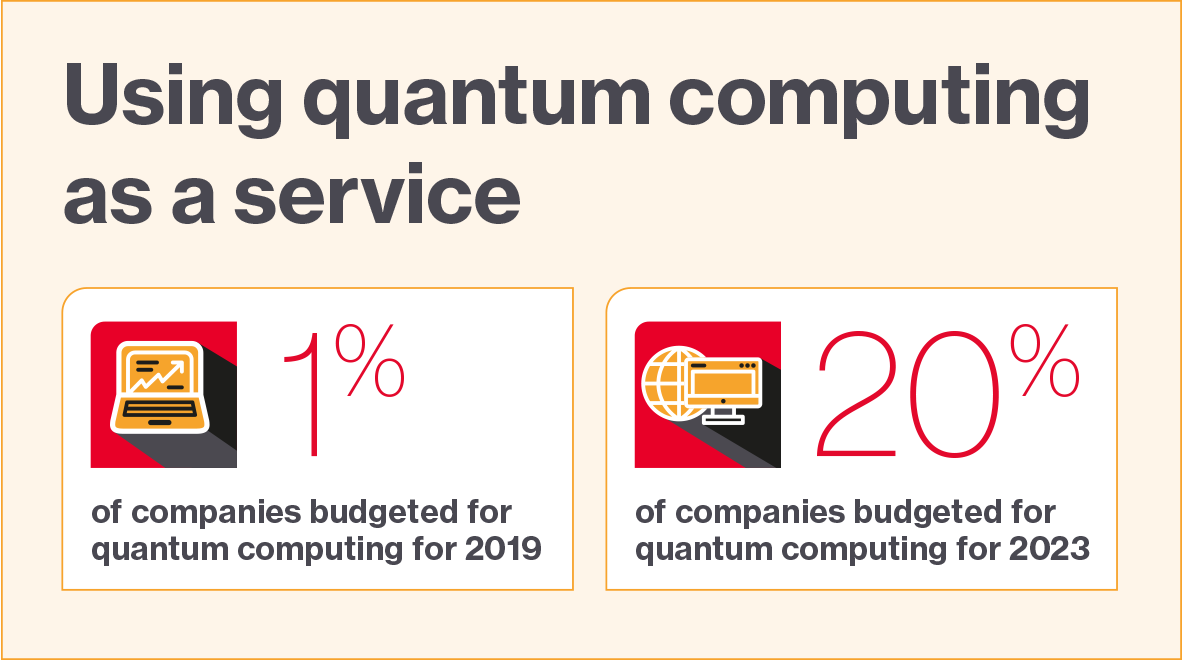
More companies are starting to consider the impact that quantum computing will have on their business in the coming years. According to a survey by Deloitte, about half of all companies believe that they are vulnerable to a “harvest now, decrypt later” attack, where encrypted information is stored until a future quantum computer can decrypt the data. No wonder, then, that 61% of firms have either conducted an assessment of their readiness or plan to analyze the issue within five years.

In 2022, the National Institute of Standards and Technology (NIST) made a significant decision to help companies prepare for a world where quantum computing is commonplace. The decision was also an effort to help protect today’s data from tomorrow’s quantum computers. The U.S. technology agency selected four algorithms for encryption methods to replace public key infrastructure (PKI) algorithms currently in use as a way of protecting data encrypted today against quantum computers developed in the future.

Post Reply