CRISPR & Genetic Engineering News and Discussions

weatheriscool
Posts: 24486
Joined: Sun May 16, 2021 6:16 pm
Contact:

Re: CRISPR & Genetic Engineering News and Discussions

Post by weatheriscool »

weatheriscool
Posts: 24486
Joined: Sun May 16, 2021 6:16 pm
Contact:

Re: CRISPR & Genetic Engineering News and Discussions

Post by weatheriscool »

Microbiome studies help explore treatments for genetic disorders
https://phys.org/news/2024-05-microbiom ... rders.html
by University of Trento
A collaboration has led to the identification, in a bacterium of the intestine, of new CRISPR-Cas9 molecules that could have a clinical potential to treat genetic diseases such as retinitis pigmentosa, through sub-retinal injections. Anna Cereseto and Nicola Segata of the Department of Cellular, Computational and Integrative Biology of the University of Trento have joined forces and combined their expertise to develop new therapies for the treatment of genetic diseases.

A study, with Anna Cereseto and Nicola Segata as corresponding and senior authors, has been published in Nature Communications.

User avatar
wjfox
Site Admin
Posts: 13580
Joined: Sat May 15, 2021 6:09 pm
Location: Essex, UK
Contact:

Re: CRISPR & Genetic Engineering News and Discussions

Post by wjfox »

Pioneering gene therapy restores UK girl's hearing

7 hours ago

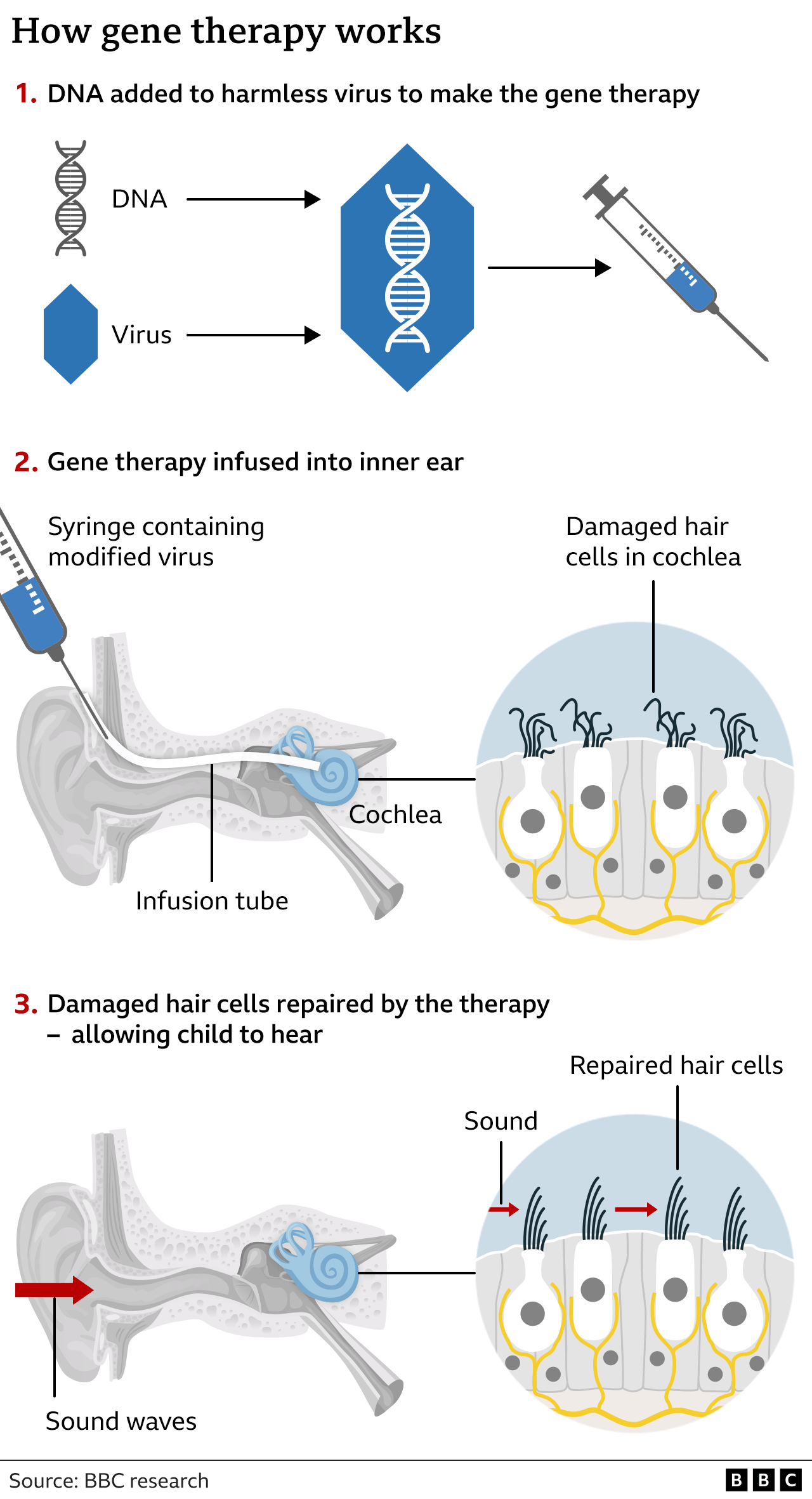
A UK girl born deaf can now hear unaided, after a groundbreaking gene-therapy treatment.

Opal Sandy was treated shortly before her first birthday - and six months on, can hear sounds as soft as a whisper and is starting to talk, saying words such as "Mama", "Dada" and "uh-oh".

Given as an infusion into the ear, the therapy replaces faulty DNA causing her type of inherited deafness.

Opal is part of a trial recruiting patients in the UK, US and Spain.

Doctors in other countries, including China, are also exploring very similar treatments for the Otof gene mutation Opal has.

https://www.bbc.co.uk/news/health-68921561


Image
weatheriscool
Posts: 24486
Joined: Sun May 16, 2021 6:16 pm
Contact:

Re: CRISPR & Genetic Engineering News and Discussions

Post by weatheriscool »

CRISPR restores some vision to blind patients in clinical trial
By Michael Irving
May 13, 2024
CRISPR gene-editing has improved the vision of patients with an inherited form of blindness, according to results of a Phase 1/2 clinical trial. The results not only give new hope to patients with the condition, but show that CRISPR could be put to use in humans to treat a range of conditions.

Leber Congenital Amaurosis (LCA) is a rare condition that affects about one in every 40,000 newborns. Those affected have a genetic mutation that results in severely reduced vision, leading to complete blindness in about a third of patients. Currently, there are no FDA-approved treatment options at all.

But that might be about to change. The BRILLIANCE trial has been investigating using CRISPR to edit the CEP290 gene, one of the main culprits behind LCA, in 14 patients. The gene-editing treatment is delivered directly to the light-sensitive cells behind the retina, making this the first time CRISPR had been put to work directly in the human body.

https://newatlas.com/medical/crispr-res ... cal-trial/
weatheriscool
Posts: 24486
Joined: Sun May 16, 2021 6:16 pm
Contact:

Re: CRISPR & Genetic Engineering News and Discussions

Post by weatheriscool »

Gene therapy repairs spinal discs to relieve back pain
By Michael Irving
May 19, 2024
https://newatlas.com/medical/back-pain- ... inal-disc/
It feels like back pain comes for many of us at some point in our lives, and it’s tricky to treat. A new gene therapy, which repairs damaged discs and reduces pain, has shown promise in mouse tests.

The vertebrae segments that make up your spine provide support, but between each one is a rubbery disc full of fluid that cushions them, absorbing shocks and helping the spine be more flexible. Unfortunately, over time or through injury these discs can degenerate or even rupture, causing back pain that’s nigh on impossible to reverse. Pain management becomes the priority, and it can leave patients with limited mobility.

“Once you take a piece away, the tissue decompresses like a flat tire,” said Devina Purmessur Walter, senior author of the new study. “The disease process continues, and impacts the other discs on either side because you’re losing that pressure that is critical for spinal function. Clinicians don’t have a good way of addressing that.”
weatheriscool
Posts: 24486
Joined: Sun May 16, 2021 6:16 pm
Contact:

Re: CRISPR & Genetic Engineering News and Discussions

Post by weatheriscool »

Researchers discover potential mole reversal therapy in rare condition
https://medicalxpress.com/news/2024-06- ... -rare.html
by The Francis Crick Institute
Researchers at the Francis Crick Institute, UCL Great Ormond Street Institute for Child Health and Great Ormond Street Hospital for Children (GOSH) have designed a new genetic therapy that could alleviate debilitating giant moles in a rare skin condition.

In the future, the treatment could potentially be used to reverse the giant moles, and therefore reduce the risk of affected children and adults from developing cancer. It could also potentially reverse other more common types of at-risk moles as an alternative to surgery.
weatheriscool
Posts: 24486
Joined: Sun May 16, 2021 6:16 pm
Contact:

Re: CRISPR & Genetic Engineering News and Discussions

Post by weatheriscool »

Lung-targeting lipid nanoparticles with CRISPR components successfully treat cystic fibrosis mouse models
https://phys.org/news/2024-06-lung-lipi ... nents.html
by Bob Yirka , Phys.org

A team of medical researchers from the University of Texas Southwestern Medical Center, Case Western Reserve University School of Medicine and ReCode Therapeutics has developed a way to send gene-editing tools to the lungs to repair the faulty gene associated with cystic fibrosis.

In their study, published in the journal Science, the group overcame problems that have hampered previous therapies, and believe that their method will soon be used to treat human patients.

Mattijs Bulcaen and Marianne Carlon with KU Leuven, in Belgium, have published a Perspective piece in the same journal issue outlining the work by the team on this new effort.

Cystic fibrosis is a genetic disease that impacts the lungs and GI tract—a faulty gene results in a sticky mucous buildup in the lungs and throughout the digestive system. Many therapies have been developed to treat symptoms of the disease, but there is still no cure.
weatheriscool
Posts: 24486
Joined: Sun May 16, 2021 6:16 pm
Contact:

Re: CRISPR & Genetic Engineering News and Discussions

Post by weatheriscool »

Beyond CRISPR: seekRNA delivers a new pathway for accurate gene editing
https://phys.org/news/2024-06-crispr-se ... -gene.html
by University of Sydney
Scientists at the University of Sydney have developed a gene-editing tool with greater accuracy and flexibility than the industry standard, CRISPR, which has revolutionized genetic engineering in medicine, agriculture and biotechnology.

SeekRNA uses a programmable ribonucleic acid (RNA) strand that can directly identify sites for insertion in genetic sequences, simplifying the editing process and reducing errors.

The new gene-editing tool is being developed by a team led by Dr. Sandro Ataide in the School of Life and Environmental Sciences. Their findings have been published in Nature Communications.
weatheriscool
Posts: 24486
Joined: Sun May 16, 2021 6:16 pm
Contact:

Re: CRISPR & Genetic Engineering News and Discussions

Post by weatheriscool »

Scientists discover next-generation system for programmable genome design
https://phys.org/news/2024-06-scientist ... enome.html
by Arc Institute

In a leap forward for genetic engineering, a team of researchers from the Arc Institute have discovered the bridge recombinase mechanism, a precise and powerful tool to recombine and rearrange DNA in a programmable way.

The study published today in Nature reports their discovery of the first DNA recombinase that uses a non-coding RNA for sequence-specific selection of target and donor DNA molecules. This bridge RNA is programmable, allowing the user to specify any desired genomic target sequence and any donor DNA molecule to be inserted.
weatheriscool
Posts: 24486
Joined: Sun May 16, 2021 6:16 pm
Contact:

Re: CRISPR & Genetic Engineering News and Discussions

Post by weatheriscool »

Better-than-normal hearing unlocked by gene tweak
By Paul McClure
July 01, 2024
https://newatlas.com/medical/supranorma ... rocessing/
Increasing the expression of a protein responsible for maintaining neuron health led to better-than-normal processing of auditory information, according to a new study. The findings open the door to new treatments for some forms of hearing loss.

Age-related hearing loss was primarily thought to be caused by damage to or destruction of hair cells. A row of inner hair cells in the snail-like cochlea converts sound vibrations into electrical signals that are transmitted to the brain via the auditory nerve. However, recent research suggests that damage to the synapses that connect these hair cells to auditory nerve fibers may be the first step in the process of hearing loss.

A new study by researchers at Michigan Medicine’s Kresge Hearing Research Institute found that tweaking the expression of a particular protein to increase the number of synapses improved auditory processing to better-than-normal levels in otherwise healthy mice.

Auditory processing is different to hearing. Whereas hearing is the conversion of sound waves to auditory signals that are sent to the brain, auditory processing is what the brain does with the auditory information it receives from the ears.
firestar464
Posts: 7202
Joined: Wed Oct 12, 2022 7:45 am

Re: CRISPR & Genetic Engineering News and Discussions

Post by firestar464 »

superpowers time
Vakanai
Posts: 534
Joined: Thu Apr 28, 2022 10:23 pm

Re: CRISPR & Genetic Engineering News and Discussions

Post by Vakanai »

weatheriscool wrote: Tue Jul 02, 2024 4:07 pm Better-than-normal hearing unlocked by gene tweak
By Paul McClure
July 01, 2024
https://newatlas.com/medical/supranorma ... rocessing/
Increasing the expression of a protein responsible for maintaining neuron health led to better-than-normal processing of auditory information, according to a new study. The findings open the door to new treatments for some forms of hearing loss.

Age-related hearing loss was primarily thought to be caused by damage to or destruction of hair cells. A row of inner hair cells in the snail-like cochlea converts sound vibrations into electrical signals that are transmitted to the brain via the auditory nerve. However, recent research suggests that damage to the synapses that connect these hair cells to auditory nerve fibers may be the first step in the process of hearing loss.

A new study by researchers at Michigan Medicine’s Kresge Hearing Research Institute found that tweaking the expression of a particular protein to increase the number of synapses improved auditory processing to better-than-normal levels in otherwise healthy mice.

Auditory processing is different to hearing. Whereas hearing is the conversion of sound waves to auditory signals that are sent to the brain, auditory processing is what the brain does with the auditory information it receives from the ears.
Is this one of those genetic therapies that can work on already existing and grown individuals, or one of those "only for test tube babies" deals? Because if it can be applied universally to everyone, that's amazing! I know of course modern medicine and culture would make it a point of "only for those hard of hearing" at first, but eventually no matter how they might whine such shall trickle down to the healthy to improve themselves above average.
weatheriscool
Posts: 24486
Joined: Sun May 16, 2021 6:16 pm
Contact:

Re: CRISPR & Genetic Engineering News and Discussions

Post by weatheriscool »

'Super-humanized' mice with 100% human immune systems are a big deal
By Bronwyn Thompson
July 08, 2024
https://newatlas.com/medical/humanized- ... ne-system/
For the first time, scientists have successfully created a type of mouse with a 100% functional human immune system and human-like gut microbiome. This 'humanized' mouse takes the guesswork out of medical research and has the potential to revolutionize how we test new drugs and unlock disease mechanisms.

Researchers at The University of Texas Health Science Center at San Antonio have succeeded where many before them have failed, in engineering a type of mouse that has an immune response identical to humans. While mice are commonplace in research and considered one of the best animals to work with, they're far from a perfect human substitute. A major challenge is the many genes in mice that diverge from human equivalents, so their immune system responds very differently to ours.
weatheriscool
Posts: 24486
Joined: Sun May 16, 2021 6:16 pm
Contact:

Re: CRISPR & Genetic Engineering News and Discussions

Post by weatheriscool »

Team develops new one-step method to make multiple edits to a cell's genome
https://phys.org/news/2024-07-team-meth ... enome.html
by Julie Langelier, Gladstone Institutes
Genome editing has become a widely adopted technology to modify DNA in cells, allowing scientists to study diseases in the lab and develop therapies that repair disease-causing mutations. However, with current approaches, it's only possible to edit cells in one location at a time.

Now, a team of scientists at Gladstone Institutes has developed a new method that enables them to make precise edits in multiple locations within a cell—all at once. Using molecules called retrons, they created a tool that can efficiently modify DNA in bacteria, yeast, and human cells.

"We wanted to push the boundaries of genomic technologies by engineering tools to help us study the true complexity of biology and disease," says Associate Investigator Seth Shipman, Ph.D., senior author of a new study published in Nature Chemical Biology.
weatheriscool
Posts: 24486
Joined: Sun May 16, 2021 6:16 pm
Contact:

Re: CRISPR & Genetic Engineering News and Discussions

Post by weatheriscool »

Prime editing efficiently corrects cystic fibrosis mutation in human lung cells, study shows
https://medicalxpress.com/news/2024-07- ... ation.html
by Allessandra DiCorato, Broad Institute of MIT and Harvard
Cystic fibrosis is one of the most common genetic disorders, causing thick mucus build-up in the lungs and other parts of the body, breathing problems, and infection. A three-drug cocktail known as Trikafta has greatly improved patient quality of life since its development in 2019, but it can cause cataracts and liver damage and must be taken daily at a cost of about $300,000 per year.

Now, researchers at the Broad Institute of MIT and Harvard and the University of Iowa have developed a gene-editing approach that efficiently corrects the most common mutation that causes cystic fibrosis, found in 85% of patients. With further development, it could pave the way for treatments that are administered only once and have fewer side effects.

The new method, published today (July 10) in Nature Biomedical Engineering, precisely and durably corrects the mutation in human lung cells, restoring cell function to levels similar to that of Trikafta.
Gene editing if developed and allowed to spread very well could be the biggest advancement in medical science of this century. Want to live longer? Want to cure cancer? Want that womb, men?
weatheriscool
Posts: 24486
Joined: Sun May 16, 2021 6:16 pm
Contact:

Re: CRISPR & Genetic Engineering News and Discussions

Post by weatheriscool »

Novel gene writing technology enables all-RNA-mediated targeted gene integration in human cells
https://phys.org/news/2024-07-gene-tech ... human.html
by Zhang Nannan, Chinese Academy of Sciences
In a recent study published in Cell, a research team led by Li Wei and Zhou Qi from the Institute of Zoology of the Chinese Academy of Sciences has developed an innovative gene-writing technology based on retrotransposons. This achievement enables all-RNA-mediated targeted gene integration in human cells.

Efficient and precise integration of gene-sized DNA remains a major challenge in genome engineering. Current technologies rely primarily on DNA templates as donors for gene integration. However, DNA donors face numerous challenges in practical biomedical applications, such as high immunogenicity, difficulty in in vivo delivery, and the risk of random integration into the genome.

On the other hand, RNA donors have lower immunogenicity compared to exogenous DNA donors, which can be effectively delivered using non-viral vectors, and are rapidly degraded in cells without the risk of random integration—thus addressing many of the challenges associated with DNA donors. However, there are currently very few technologies that can use RNA donors to achieve targeted gene-sized DNA integration in human cells.
weatheriscool
Posts: 24486
Joined: Sun May 16, 2021 6:16 pm
Contact:

Re: CRISPR & Genetic Engineering News and Discussions

Post by weatheriscool »

Researchers discover potential therapeutic target for degenerative eye disease
https://medicalxpress.com/news/2024-07- ... sease.html
by National Institutes of Health
Researchers from the National Institutes of Health (NIH) have discovered the source of dysfunction in the process whereby cells in the eye's retina remove waste.

A report by scientists at NIH and Johns Hopkins University, Baltimore, details how alterations in a factor called AKT2 affect the function of organelles called lysosomes and results in the production of deposits in the retina called drusen, a hallmark sign of dry age-related macular degeneration (AMD). According to the researchers, the findings suggest drusen formation is a downstream effect of AKT2-related lysosome dysfunction and points to a new target for therapeutic intervention.
weatheriscool
Posts: 24486
Joined: Sun May 16, 2021 6:16 pm
Contact:

Re: CRISPR & Genetic Engineering News and Discussions

Post by weatheriscool »

Novel nanosensing technique for quality control of viral vectors in gene therapy
https://phys.org/news/2024-08-nanosensi ... ctors.html
by University of Tokyo

Viral vectors hold much potential for gene editing and gene therapy, but there is a pressing need to develop quality control methods to minimize potential side effects on patients. Addressing this, researchers from Japan developed a nanosensing-based approach that can differentiate between functional and faulty viral vectors at the single-particle level. This convenient and inexpensive technique will hopefully get us one step closer to advancing treatments for genetic disorders.

Over the past few decades, there has been remarkable progress in genetic manipulation technologies, bringing us closer to the point where genes can be modified in vivo. Such tools would open up the way to gene therapy, ushering in a new era in medicine. Thus far, the most promising strategies for gene therapy involve leveraging the existing molecular machinery found in viruses.
firestar464
Posts: 7202
Joined: Wed Oct 12, 2022 7:45 am

Re: CRISPR & Genetic Engineering News and Discussions

Post by firestar464 »

Beyond gene-edited babies: the possible paths for tinkering with human evolution

https://www.technologyreview.com/2024/0 ... evolution/
weatheriscool
Posts: 24486
Joined: Sun May 16, 2021 6:16 pm
Contact:

Re: CRISPR & Genetic Engineering News and Discussions

Post by weatheriscool »

firestar464 wrote: Fri Aug 30, 2024 7:24 pm Beyond gene-edited babies: the possible paths for tinkering with human evolution

https://www.technologyreview.com/2024/0 ... evolution/
There's so many ways.
1. Increase iq in the entire population....This would probably end up greatly increasing our species quality of life on this planet.
2. Wombs for males so they could just have as many as children as they please
3. Only the best genes for max life span and health...Nothing but a positive.

It would be retarded not to do this and do this fast!
Post Reply