Cancer News and Discussions
Re: Cancer News and Discussions
What is nano particles? I keep seeing it here in this thread the use of nano particles.
-
weatheriscool
- Posts: 25761
- Joined: Sun May 16, 2021 6:16 pm
- Contact:
-
firestar464
- Posts: 8359
- Joined: Wed Oct 12, 2022 7:45 am
-
weatheriscool
- Posts: 25761
- Joined: Sun May 16, 2021 6:16 pm
- Contact:
-
firestar464
- Posts: 8359
- Joined: Wed Oct 12, 2022 7:45 am
Re: Cancer News and Discussions
15-year-old who created soap that could treat skin cancer named Time's 2024 Kid of the Year
https://www.yahoo.com/news/15-old-creat ... 13415.html
https://www.yahoo.com/news/15-old-creat ... 13415.html
-
Time_Traveller

- Posts: 3025
- Joined: Sun May 16, 2021 4:49 pm
- Location: New York City, USA, November 5th 2032 C.E.
Re: Cancer News and Discussions
Promising lung cancer vaccine trial begins in UK
https://www.bbc.co.uk/news/articles/ce806ndv8neo3 hours ago
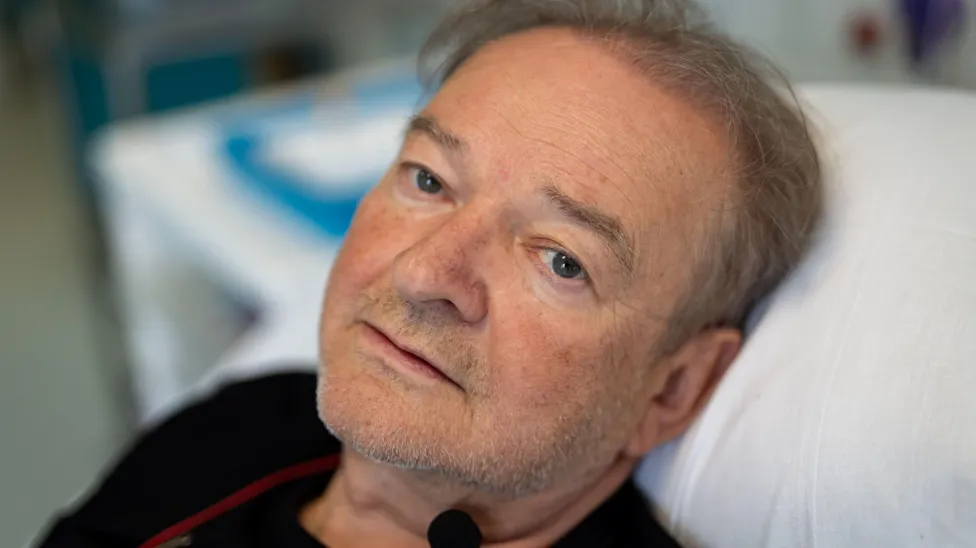
A 67-year-old man has become the first person in the UK to try what doctors hope will be a revolutionary new treatment for lung cancer - a vaccine that tells the body how to fight and kill the disease.
It uses the same mRNA technology as some Covid jabs to give instructions to the immune system.
The early-stage trial in which Janusz Racz is taking part will check the shot is safe.
Some 34 research sites in seven countries, including University College London in the UK, will recruit 130 patients to try it.
The treatment should specifically target cancer cells for destruction rather than healthy ones, hopefully meaning fewer side effects.
“In the quantum multiverse, every choice, every decision you've ever and never made exists in an unimaginably vast ensemble of parallel universes.”
-
weatheriscool
- Posts: 25761
- Joined: Sun May 16, 2021 6:16 pm
- Contact:
Re: Cancer News and Discussions
Man Receives World's First Lung Cancer Vaccine
https://www.extremetech.com/science/man ... er-vaccine
This 67-year-old cancer patient is the first human to receive BioNTech's experimental mRNA immunotherapy.
https://www.extremetech.com/science/man ... er-vaccine
This 67-year-old cancer patient is the first human to receive BioNTech's experimental mRNA immunotherapy.
A man from London has become the first human to receive an experimental vaccine aimed at preventing lung cancer. At the United Kingdom's National Institute for Health Research (NIHR) on Tuesday, doctors delivered the 67-year-old's introductory dose of BNT116. The messenger RNA (mRNA) immunotherapy will hopefully "train" the man's body to fight non-small cell lung cancer, which makes up roughly 85% of lung cancer diagnoses worldwide.
Though chemotherapy can help patients with localized or regional non-small cell lung cancer (NSCLC), it comes with two major caveats. The first is that it's often used in tandem with other strategies, such as surgery or radiotherapy, making for a time-consuming, expensive, and exhausting treatment plan. Chemotherapy also targets living cells indiscriminately, often leading to organ damage, bone loss, nausea, and other worrisome side effects.
-
weatheriscool
- Posts: 25761
- Joined: Sun May 16, 2021 6:16 pm
- Contact:
Re: Cancer News and Discussions
Key discovery advances fight to reduce breast cancer recurrence
https://medicalxpress.com/news/2024-08- ... ancer.html
by Duke-NUS Medical School
https://medicalxpress.com/news/2024-08- ... ancer.html
by Duke-NUS Medical School
In looking for new ways to fight breast cancer, scientists from Duke-NUS Medical School have unmasked a surprising role of a protein generally associated with cancer growth. They have discovered that in estrogen receptor-positive (ER+) breast cancer, this protein acts as a tumor suppressor instead.
ER+ breast cancer constitutes about 80% of all breast cancer diagnoses, yet nearly 50% of women diagnosed with it experience a relapse after initial treatment.
The unexpected finding counters long-held views that the protein, known as Gα13, acts as an accelerator of cancer cell growth, as seen with similar G-proteins. This latest discovery, published in the journal Breast Cancer Research, is the first study to identify Gα13 as a tumor suppressor in solid tumors. This could lead to new personalized approaches to breast cancer treatment involving examining levels of Gα13 and other proteins.
-
weatheriscool
- Posts: 25761
- Joined: Sun May 16, 2021 6:16 pm
- Contact:
Re: Cancer News and Discussions
Dual protein analysis approach provides potential way to slow cancer growth
https://phys.org/news/2024-08-dual-prot ... ntial.html
by The Scripps Research Institute
https://phys.org/news/2024-08-dual-prot ... ntial.html
by The Scripps Research Institute
Fighting cancer effectively often involves stopping cancer cells from multiplying, which requires understanding proteins that the cells rely on to survive. Protein profiling plays a critical role in this process by helping researchers identify proteins—and their specific parts—that future drugs should target. But when used on their own, past approaches haven't been detailed enough to spotlight all potential protein targets, leading to some being missed.
Now, by combining two methods of protein analysis, a team of chemists at Scripps Research has mapped more than 300 small molecule-reactive cancer proteins, as well as their small molecule binding sites. Revealing key protein targets that—when disrupted with certain chemical compounds (or small molecules)—halt cancer cell growth may eventually enable the development of more effective and precise cancer treatments. The findings appear in Nature Chemistry.
-
firestar464
- Posts: 8359
- Joined: Wed Oct 12, 2022 7:45 am
Re: Cancer News and Discussions
This 'Holy Grail' Protein Repairs DNA And Could Lead to a Cancer Vaccine
https://www.sciencealert.com/this-holy- ... er-vaccine
https://www.sciencealert.com/this-holy- ... er-vaccine

Re: Cancer News and Discussions
Scientists Discover How the Body's Killer Cells Attack Cancer
August 28, 2024
Introduction:
For a technical presentation of the results of the study as presented in Science Advances: https://www.science.org/doi/10.1126/sciadv.ado6566
August 28, 2024
Introduction:
Read more of the Eurekalert article here: https://www.eurekalert.org/news-releases/1055950(Eurekalert) Scientists are on the verge of a cancer breakthrough after working out how the body’s immune system targets cells devastated by the disease.
A new study has discovered that our natural killer cells, from the immune system which protect against disease and infections, instinctively recognise and attack a protein that drives cancer growth.
The experts say that by hijacking this protein, known as XPO1, they may be able to activate more killer cells to destroy the disease.
Scientists from the University of Southampton, working with experts worldwide, led the study and now believe it could offer new and less invasive forms of treatments.
The findings have been published in the Science Advances journal.
For a technical presentation of the results of the study as presented in Science Advances: https://www.science.org/doi/10.1126/sciadv.ado6566
Don't mourn, organize.
-Joe Hill
-Joe Hill
-
weatheriscool
- Posts: 25761
- Joined: Sun May 16, 2021 6:16 pm
- Contact:
Re: Cancer News and Discussions
Novel light-based technique shows 90% accuracy in early prostate cancer detection
https://medicalxpress.com/news/2024-09- ... state.html
by Aston University
https://medicalxpress.com/news/2024-09- ... state.html
by Aston University
An Aston University researcher has used light to develop the first step towards a quicker, cheaper and less painful technique to detect cancer.
Professor Igor Meglinski from the University's Aston Institute of Photonic Technologies led the team that has developed a new method of analyzing the crystals in dehydrated blood. Their paper "Insights into polycrystalline microstructure of blood films with 3D Mueller matrix imaging approach" has been published in the journal Scientific Reports.
Professor Meglinski used a new polarization-based image reconstruction technique to analyze polycrystalline structures in dried blood samples. The proteins in blood change their shape and how they fit together during the early stages of diseases like cancer. Professor Meglinski and his team used changes in the proteins' tertiary structure or unique 3D shape together with its quaternary structure—which is how multiple proteins join together—to detect and classify cells.
-
weatheriscool
- Posts: 25761
- Joined: Sun May 16, 2021 6:16 pm
- Contact:
Re: Cancer News and Discussions
Promising drug-like compounds found to have strong action against blood cancers
by Lorena Infante Lara, Vanderbilt University School of Medicine Basic Sciences
https://medicalxpress.com/news/2024-09- ... blood.html
by Lorena Infante Lara, Vanderbilt University School of Medicine Basic Sciences
https://medicalxpress.com/news/2024-09- ... blood.html
For researchers, projects can sometimes feel like babies, and there is nothing more satisfying than seeing your baby grow up. For William Tansey, professor of cell and developmental biology, this baby started 10 years ago when he and Stephen Fesik, Orrin H. Ingram II, Professor of Cancer Research and professor of biochemistry, discovered that a protein called WDR5 is a "partner in crime" to MYC, a transcription factor and oncogene that is often mutated in cancers. In fact, dysregulation of MYC is estimated to be responsible for about a third of all cancer deaths annually.
This research baby is growing up fast. Tansey, Fesik, and other researchers around the world have produced hundreds of papers on WDR5 in the last five years alone. Among the findings: WDR5 recruits MYC to chromatin to control the expression of genes that cancer cells use to make the proteins they need to thrive. Thus, WDR5 is an excellent drug target candidate to treat MYC-related cancers.
-
weatheriscool
- Posts: 25761
- Joined: Sun May 16, 2021 6:16 pm
- Contact:
Re: Cancer News and Discussions
Pfizer says its experimental drug for deadly condition that causes appetite and weight loss in cancer patients shows positive trial results
PUBLISHED SAT, SEP 14 2024 8:45 AM EDT
Annika Kim Constantino
@ANNIKAKIMC
Read more: https://www.cnbc.com/amp/2024/09/14/pfi ... sults.html
PUBLISHED SAT, SEP 14 2024 8:45 AM EDT
Annika Kim Constantino
@ANNIKAKIMC
{snip}KEY POINTS
• Pfizer said its experimental drug for a common, life-threatening condition that causes cancer patients to lose their appetite and weight showed positive results in a midstage trial.
• Patients with the condition, called cancer cachexia, who took Pfizer's treatment saw improvements in body weight, muscle mass, quality of life and physical function.
• The results could pave the way for the drug, a monoclonal antibody called ponsegromab, to become the first treatment approved specifically for cancer cachexia.
Pfizer's experimental drug for a common, life-threatening condition that causes cancer patients to lose their appetite and weight showed positive results in a midstage trial, the drugmaker said Saturday.
Patients with the condition, called cancer cachexia, who took Pfizer's treatment saw improvements in body weight, muscle mass, quality of life and physical function, according to the drugmaker. The results could pave the way for the drug, a monoclonal antibody called ponsegromab, to become the first treatment approved in the U.S. specifically for cancer cachexia.
Read more: https://www.cnbc.com/amp/2024/09/14/pfi ... sults.html
-
weatheriscool
- Posts: 25761
- Joined: Sun May 16, 2021 6:16 pm
- Contact:
Re: Cancer News and Discussions
A new way to reprogram immune cells and direct them toward anti-tumor immunity
by Danielle Randall Doughty, Massachusetts Institute of Technology
https://medicalxpress.com/news/2024-09- ... tumor.html
Immunotherapy after surgery helps people with high-risk bladder cancer live cancer-free longer, clinical trial finds
https://medicalxpress.com/news/2024-09- ... adder.html
by National Institutes of Health
by Danielle Randall Doughty, Massachusetts Institute of Technology
https://medicalxpress.com/news/2024-09- ... tumor.html
A collaboration between four MIT groups, led by principal investigators Laura L. Kiessling, Jeremiah A. Johnson, Alex K. Shalek, and Darrell J. Irvine, in conjunction with a group at Georgia Tech led by M.G. Finn, has revealed a new strategy for enabling immune system mobilization against cancer cells. The work, which appears today in ACS Nano, produces exactly the type of anti-tumor immunity needed to function as a tumor vaccine—both prophylactically and therapeutically.
Cancer cells can look very similar to the human cells from which they are derived. In contrast, viruses, bacteria, and fungi carry carbohydrates on their surfaces that are markedly different from those of human carbohydrates. Dendritic cells—the immune system's best antigen-presenting cells—carry proteins on their surfaces that help them recognize these atypical carbohydrates and bring those antigens inside of them. The antigens are then processed into smaller peptides and presented to the immune system for a response.
Immunotherapy after surgery helps people with high-risk bladder cancer live cancer-free longer, clinical trial finds
https://medicalxpress.com/news/2024-09- ... adder.html
by National Institutes of Health
Results from a large clinical trial show that treatment with an immunotherapy drug may nearly double the length of time people with high-risk, muscle-invasive bladder cancer are cancer-free following surgical removal of the bladder. Researchers found that postsurgical treatment with pembrolizumab (Keytruda), which is approved by the Food and Drug Administration (FDA) for treating at least 18 different cancers, was superior compared with observation.
The study, led by researchers at the National Institutes of Health (NIH), is published in the New England Journal of Medicine.
"This study shows that pembrolizumab can offer patients another treatment option to help keep their disease from coming back," said lead investigator Andrea B. Apolo, M.D., of NIH's National Cancer Institute (NCI) Center for Cancer Research. "Extending the time that these patients are cancer-free makes a big difference in their quality of life."
-
weatheriscool
- Posts: 25761
- Joined: Sun May 16, 2021 6:16 pm
- Contact:
Re: Cancer News and Discussions
First-ever mRNA vaccine shows promise in halting pancreatic cancer! Dr. Vinod Balachandran's team at
/?xmt=AQGzrdjQ0JbbI_dgejuGnBb2LVe979GPIQzEBXYYwRG25A
_dangerdaze_
/?xmt=AQGzrdjQ0JbbI_dgejuGnBb2LVe979GPIQzEBXYYwRG25A
_dangerdaze_
https://www.thebrighterside.news/post/f ... acks/?s=09Good News: First-ever mRNA vaccine shows promise in halting pancreatic cancer!
Dr. Vinod Balachandran’s team at Memorial Sloan Kettering developed a personalized mRNA vaccine that teaches the immune system to fight pancreatic tumors. In a clinical trial, 50% of patients saw delayed recurrence, offering new hope for long-term remission!
Could mRNA vaccines revolutionize cancer treatment?
-
weatheriscool
- Posts: 25761
- Joined: Sun May 16, 2021 6:16 pm
- Contact:
Re: Cancer News and Discussions
Toxic glass kills 99% of bone cancer without harming healthy cells
By Michael Irving
September 18, 2024
https://newatlas.com/medical/toxic-glas ... ne-cancer/
By Michael Irving
September 18, 2024
https://newatlas.com/medical/toxic-glas ... ne-cancer/
Scientists have demonstrated a new potential treatment for bone cancer. A bioactive glass laced with a toxic metal was able to kill up to 99% of the cancer without harming healthy cells, and could even help regrow healthy bone after.
Osteosarcoma is the most common form of bone cancer, and treatment normally involves surgery to remove the tumor, followed by chemotherapy or radiation therapy to kill off any remaining cancer cells. Even so, it often recurs at the same site, and when it does the prognosis is usually grim.
Now, scientists at Aston University have demonstrated a new method of treating osteosarcoma. It’s based on a material called bioactive glass, which is made up of nanoparticles of glass mixed with metals, and has shown promise in strong, antibacterial dental fillings and bone implants.
This time the metal in question was gallium, which is toxic to cells. Putting that in your bones might sound like a bad idea, but gallium ions are known to enter cells through a particular receptor, which is extremely elevated in cancer. That means the “greedy” cancer cells gobble it up before the healthy bone cells can get to it.
-
weatheriscool
- Posts: 25761
- Joined: Sun May 16, 2021 6:16 pm
- Contact:
Re: Cancer News and Discussions
Biden rolls out global Cancer Moonshot effort, targeting cervical cancer
Source: The Hill
09/21/24 8:10 PM ET
Source: The Hill
09/21/24 8:10 PM ET
Read more: https://thehill.com/policy/healthcare/4 ... al-cancer/
President Biden announced Saturday a new program and funding for research on cancer surgeries as part of his administration’s Cancer Moonshot initiative, aimed at reducing cancer deaths.
“So I’m proud to announce that our four countries, the leaders behind me, and many organizations here today are committing over $150 million for HPV, HPV screening and therapeutics, and next year, doctors and nurses in the US Navy will begin a program to train Indo-Pacific counterparts in conducting cervical cancer screening and vaccination so we could reach every woman in the region and it matters, folks,” Biden said in a joint meeting and dinner with the leaders of Australia, Japan and India.
Biden had invited the Quadrilateral Security Dialogue (Quad) members to his home state of Delaware.
The president’s son, Beau Biden, died from brain cancer in 2015. Biden began his remarks with a story about how he had promised Beau, whom the president noted was dying at the time, that he would stay involved with cancer research.
-
weatheriscool
- Posts: 25761
- Joined: Sun May 16, 2021 6:16 pm
- Contact:
Re: Cancer News and Discussions
Researchers identify new therapeutic approach to preventing cancer from spreading to the brain
https://medicalxpress.com/news/2024-10- ... brain.html
by McMaster University
https://medicalxpress.com/news/2024-10- ... brain.html
by McMaster University
In a study published in the journal Cell Reports Medicine, researchers Sheila Singh and Jakob Magolan discovered a critical vulnerability in metastatic brain cancer, which they say can be exploited with new drugs to prevent spread.
Singh, a professor in McMaster's Department of Surgery and director of the Center for Discovery in Cancer Research, says brain metastases are becoming increasingly prevalent and are extremely fatal, with 90% of patients dying within one year of diagnosis. She notes that lung cancer, breast cancer, and melanoma most often result in brain metastases.
"We're getting much better at curing these primary cancers, but even when we do, a tiny percentage of cancer cells can escape and circulate to other parts of the body, including the brain," she explains. "When this happens, it's often an end-stage cancer—treatment-resistant and highly evasive."
-
weatheriscool
- Posts: 25761
- Joined: Sun May 16, 2021 6:16 pm
- Contact:
Re: Cancer News and Discussions
Precision breast cancer trial shows improved treatment by tumor subtype
https://medicalxpress.com/news/2024-10- ... tment.html
by University of California, San Francisco
https://medicalxpress.com/news/2024-10- ... tment.html
by University of California, San Francisco
Despite recent advances in the treatment of breast cancer, it remains the second leading cause of cancer death in the U.S. and worldwide. There is a continued need to improve treatment strategies and therapies that not only improve patient survival, and also reduce long-term treatment-related toxicities.
This is particularly true for aggressive breast cancer subtypes in which many patients are cured of their disease, but at the expense of long-lasting, serious complications, including peripheral neuropathy, adrenal insufficiency, therapy-related leukemia, and long-term heart damage.
For over a decade, the UCSF-led I-SPY trial consortium has worked to accelerate the development of new therapeutics for early-stage breast cancer, focusing on rapid identification of targeted treatment regimens for Phase III trials. I-SPY2 has focused on patients with stage II and III molecularly high-risk breast cancer, with the early endpoint of pathologic complete response (pCR)—the elimination of all signs of cancer in response to treatment—which correlates strongly with fewer complications and prediction of good long-term outcomes.