Biology & Medicine News and Discussions
-
firestar464
- Posts: 8408
- Joined: Wed Oct 12, 2022 7:45 am
Re: Biology & Medicine News and Discussions
Holy shit. This is fucking evil
-
weatheriscool
- Posts: 26101
- Joined: Sun May 16, 2021 6:16 pm
- Contact:
Re: Biology & Medicine News and Discussions
One pill, multiple doses: New capsule stages delivery of your meds
By Michael Franco
May 02, 2025
By Michael Franco
May 02, 2025
https://newatlas.com/medical/capsule-me ... -delivery/For some common medical conditions, timing is everything when it comes to taking medications. Now, a customizable capsule engineered at UC San Diego could simplify complicated dosing schedules thanks to a unique staged release system.
In recent years, research has emerged that analyzes the intake of certain substances based on our bodies' biological clocks, also known as circadian rhythms. For example, last year, a study showed that morning people who took their blood pressure medicines in the early hours of the day and night owls who took them before bed had lower risks of non-fatal heart attacks. An earlier study showed that taking anti-inflammatory drugs at night versus in the morning could hamper healing. Even the timing of adding sugar to your daily coffee has been shown to impact the drink's caffeine effects.
-
firestar464
- Posts: 8408
- Joined: Wed Oct 12, 2022 7:45 am
Re: Biology & Medicine News and Discussions
New Scientist- Humans evolved to survive mild burns at the expense of severe ones
https://archive.ph/UU4Zs
https://archive.ph/UU4Zs
-
firestar464
- Posts: 8408
- Joined: Wed Oct 12, 2022 7:45 am
Re: Biology & Medicine News and Discussions
New Scientist- Bitter argument breaks out over controversial theory of consciousness
https://archive.ph/06mUq
https://archive.ph/06mUq
-
weatheriscool
- Posts: 26101
- Joined: Sun May 16, 2021 6:16 pm
- Contact:
Re: Biology & Medicine News and Discussions
Single hair-like electrode outperforms traditional 21-lead EEG
By Paul McClure
May 05, 2025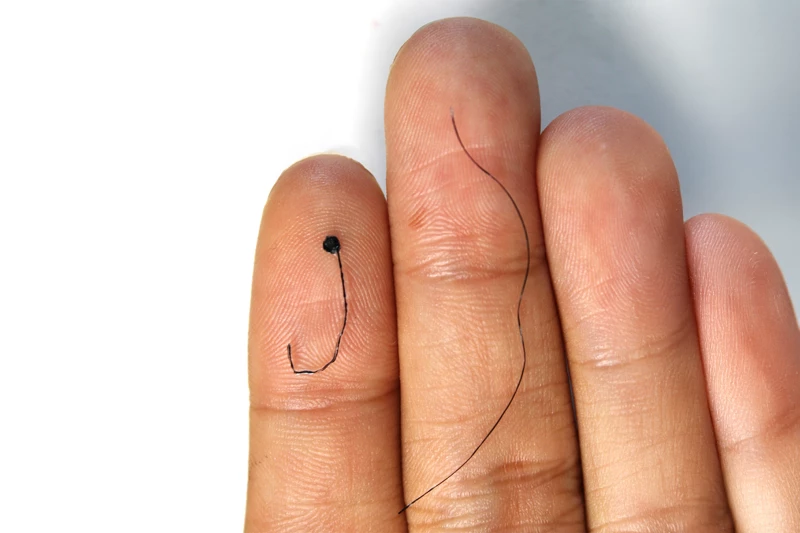
https://newatlas.com/medical-devices/3d ... electrode/
By Paul McClure
May 05, 2025
Researchers have developed a 3D-printable electrode that looks like a single strand of human hair and measures brain activity more reliably than the current method used to diagnose things like epilepsy and sleep disorders.
When you imagine someone having an electroencephalogram (EEG) to diagnose a condition such as epilepsy, for example, you probably picture them with a head covered in electrodes. That’s because the standard EEG typically uses 21 of them, affixed to the scalp in strategic positions to capture activity from various brain regions.
However, a team of researchers from Pennsylvania State University (Penn State) has ushered in the future of EEG, developing a single electrode that looks just like a strand of hair and is more reliable than the standard, multi-electrode version.
“This electrode allows for more consistent and reliable monitoring of EEG signals and can be worn without being noticeable, which enhances both functionality and patient comfort,” said Tao Zhou, a professor of engineering science and mechanics at Penn State and the study’s co-corresponding author.
https://newatlas.com/medical-devices/3d ... electrode/
-
weatheriscool
- Posts: 26101
- Joined: Sun May 16, 2021 6:16 pm
- Contact:
Re: Biology & Medicine News and Discussions
Accelerating drug discovery with a single carbon atom
https://phys.org/news/2025-05-drug-disc ... -atom.html
by University of Oklahoma
https://phys.org/news/2025-05-drug-disc ... -atom.html
by University of Oklahoma
A research team from the University of Oklahoma has pioneered a method that could accelerate drug discovery and reduce pharmaceutical development costs. Their work, published in the Journal of the American Chemical Society, introduces a safe, sustainable way to insert a single carbon atom into drug molecules at room temperature. These atoms have versatile diversification handles for further modifications that allow researchers to enhance chemical diversity without compromising sensitive structures.
Nitrogen atoms and nitrogen-containing rings, known as heterocycles, play crucial roles in the development of medicines. A research team led by OU Presidential Professor Indrajeet Sharma has found a way to change these rings by adding just one carbon atom using a fast-reacting chemical called sulfenylcarbene. This method, called skeletal editing, transforms existing molecules into new drug candidates.
-
firestar464
- Posts: 8408
- Joined: Wed Oct 12, 2022 7:45 am
-
weatheriscool
- Posts: 26101
- Joined: Sun May 16, 2021 6:16 pm
- Contact:
Re: Biology & Medicine News and Discussions
New B meningococcus vaccine shows promise in early-stage trial
posting.php?mode=reply&f=17&t=11
by University of Surrey
posting.php?mode=reply&f=17&t=11
by University of Surrey
The outcome of a trial published in Science Translational Medicine, shows encouraging results for a new vaccine targeting group B meningococcus (MenB), a significant cause of meningococcal disease worldwide, and establishes proof-of-concept in humans that a gene-based vaccine platform can induce protective antibody responses against bacteria.
The investigational vaccine, ChAdOx1 MenB.1, developed by researchers at the University of Oxford, was shown to be safe and to elicit a significant immune response in healthy adults aged 18 to 50 in this Phase I/IIa trial.

Re: Biology & Medicine News and Discussions
RFK Jr. Insists He Hasn't Fired 'Any Working Scientists' ― After Firing Hundreds Of Them
by Jennifer Bendery
May 15, 2025
Introduction:
caltrek's comment: One wonders if Kennedy even knows what is going on inside his own department. Perhaps DOGE has more authority than he realizes, and he simply is indulging in willful ignorance.
by Jennifer Bendery
May 15, 2025
Introduction:
Additional extract:(Huffington Post) WASHINGTON ― During a Senate committee hearing on Wednesday, Sen. Angela Alsobrooks (D-Md.) had a strange clash with Health and Human Services Secretary Robert F. Kennedy Jr. over the massive cuts he’s overseen at his agency, including to personnel.
“You made it very clear here today you have no knowledge whatsoever of the absolutely amazing scientists and researchers who you have callously fired,” said Alsobrooks.
“I didn’t fire any working scientists,” Kennedy said.
Read more here: https://www.huffpost.com/entry/rfk-fir ... 35c73dc8The Maryland senator should know. NIH is based in her state, and she’s been hearing from scientists ― constituents ― for months who have lost their jobs or grants at various HHS agencies. She heard from some of those fired scientists after Wednesday’s hearing, when Kennedy insisted he hadn’t fired them.
caltrek's comment: One wonders if Kennedy even knows what is going on inside his own department. Perhaps DOGE has more authority than he realizes, and he simply is indulging in willful ignorance.
Don't mourn, organize.
-Joe Hill
-Joe Hill
Re: Biology & Medicine News and Discussions
A Surprising New Study Indicates We Emit a Visible Light That Vanishes When We Die
by Mike McRae
May 13, 2025
Introduction:
caltrek’s comment: Shamans of various cultures have long argued that there is an aura around humans that, among other things, indicates relative health. Either this study partially vindicates those beliefs, or the quoted scientists have been fooled into looking for and finding something that is not actually there.
by Mike McRae
May 13, 2025
Introduction:
Read more here: https://www.sciencealert.com/we-emit-a ... ew-study(Science Alert) Life truly is radiant, according to an experiment conducted by researchers from the University of Calgary and the National Research Council of Canada.
An extraordinary experiment on mice and leaves from two different plant species has uncovered direct physical evidence of an eerie 'biophoton' phenomenon ceasing on death, suggesting all living things – including humans – could literally glow with health, until we don't.
The findings might seem a little fringe at first glance. It's hard not to associate scientific investigations into biological electromagnetic emissions with debunked and paranormal claims of auras and discharges surrounding living organisms.
What's more, even in theory, visible wavelengths of light emitted by biological processes ought to be so faint that it's easily swamped by the intense shine of ambient electromagnetic waves in the environment and radiant heat generated by our metabolism, making it a challenge to accurately track across an entire body.
Still, University of Calgary physicist Vahid Salari and his team have claimed to observe just that – an ultraweak photon emission (UPE) produced by several living animals in strong contrast with their non-living bodies, as well as in a handful of plant leaves.
caltrek’s comment: Shamans of various cultures have long argued that there is an aura around humans that, among other things, indicates relative health. Either this study partially vindicates those beliefs, or the quoted scientists have been fooled into looking for and finding something that is not actually there.
Don't mourn, organize.
-Joe Hill
-Joe Hill
-
firestar464
- Posts: 8408
- Joined: Wed Oct 12, 2022 7:45 am
-
weatheriscool
- Posts: 26101
- Joined: Sun May 16, 2021 6:16 pm
- Contact:
Re: Biology & Medicine News and Discussions
Having An “Aha!” Moment When Solving a Puzzle “Almost Doubles” Your Memory
by Laura Simmons
May 20, 2025
Introduction:
by Laura Simmons
May 20, 2025
Introduction:
Read more here: https://www.iflscience.com/having-an-a ... y-79284(IFL Science) You know how sometimes you can spend ages thinking about a problem, and then suddenly, the answer just clicks? These moments of insight are super-satisfying, but it turns out they can also reveal really important things about how our brains hold onto memories, as a new study from scientists in the US and Germany has uncovered.
There’s a reason why the story of Archimedes, the ancient Greek master mathematician and bath enthusiast, resonates with so many people. The possibly apocryphal tale of the great thinker running naked through the streets yelling “Eureka!” is, if not exactly relatable, at least understandable. It feels really great to solve a puzzle that’s been bugging you, especially when it comes with a satisfying flash of insight – an “aha!” moment.
“I’ve always found those sudden moments of insight – those ‘Aha!’ experiences – deeply fascinating,” study first author Maxi Becker, a postdoctoral fellow at Humboldt University in Berlin, told IFLScience. “They’re powerful emotionally, giving you a rush of pleasure, and they’re also striking cognitively, because once the answer clicks into place, it suddenly feels obvious and perfectly fitting with what you already know.”
“Since my PhD, I’ve been curious about how the brain produces these moments – what’s going on under the hood, so to speak.”
Teaming up with co-author Tobias Sommer and senior author Roberto Cabeza, Becker conducted a study with 31 volunteers aged between 19 and 33. The participants were asked to solve visual puzzles while lying in an MRI scanner, and functional MRI data was collected to try to capture the moment the answers came to them.
Don't mourn, organize.
-Joe Hill
-Joe Hill
-
firestar464
- Posts: 8408
- Joined: Wed Oct 12, 2022 7:45 am
Re: Biology & Medicine News and Discussions
Gemini 2.5 explanation:
Okay, let's break down this scientific paper into simpler terms.
Imagine neurons (brain cells) have tiny branches called dendrites, and on these dendrites are even smaller bumps called spines. These spines are like little listening posts where one neuron receives signals from another. For these listening posts to work well, they need to "mature" or grow up properly, and they need the right internal equipment.
The Problem:
One piece of internal equipment is called the Spine Apparatus (SA). Think of it as a specialized internal structure or mini-organ within the spine. It's important for the spine to develop and function correctly. But scientists didn't fully understand how neurons decide which spines get an SA and how much SA they get.
What the Scientists Found:
Two Key Players: They discovered a team of two proteins working together at the "listening post" (postsynaptic side):
GPR158: This is a receptor protein, like an antenna on the surface of the spine.
PLCXD2: This is an enzyme. Enzymes are molecules that make specific chemical reactions happen. This particular one is usually "on" and active.
How They Interact (The Main Story):
PLCXD2's Normal Job (if left alone): PLCXD2, when active, seems to hinder or prevent the SA from being properly incorporated into the spines. It does this by breaking down a specific fatty molecule (called PIP2) in the cell membrane, which is important for SA formation. If PLCXD2 is too active, the spines don't get enough SA, and they don't mature well.
GPR158's Role: GPR158 acts like a control switch for PLCXD2. When GPR158 binds to PLCXD2, it inhibits PLCXD2 – essentially telling it to "take a break."
The Result: When GPR158 stops PLCXD2, PLCXD2 can't prevent SA formation as much. This allows the SA to be properly built into the spine. With the right amount of SA, the dendritic spines can mature correctly, both in their structure and how well they function (e.g., how many signal-receiving molecules, like AMPARs, they have).
An Outside Influence:
Molecules outside the cell called heparan sulfate proteoglycans (HSPGs) can interact with GPR158. This interaction can change how GPR158 and PLCXD2 team up, adding another layer of control.
Why is this important?
Understanding Brain Development: This discovery helps us understand the precise molecular machinery that controls how synapses (the connections between neurons) develop and mature.
Proper Brain Function: Well-matured spines with the right equipment (like SA) are crucial for learning, memory, and overall brain function.
Neurological Disorders: Problems with SA or spine maturation have been linked to various neurological disorders. Understanding this GPR158-PLCXD2 system could offer clues about what goes wrong in these conditions.
New Signaling Pathway: This is an interesting way for a receptor (GPR158) to control an enzyme (PLCXD2) directly, rather than through a more common, multi-step process.
In a Nutshell:
Scientists found a duo of proteins, GPR158 and PLCXD2, that act like a control system for installing a key piece of equipment (the Spine Apparatus or SA) inside the brain's "listening posts" (dendritic spines). PLCXD2 normally tries to stop SA installation, but GPR158 steps in to put the brakes on PLCXD2. This ensures the listening posts get the right equipment and can grow up properly, which is vital for healthy brain function.
-
weatheriscool
- Posts: 26101
- Joined: Sun May 16, 2021 6:16 pm
- Contact:
-
weatheriscool
- Posts: 26101
- Joined: Sun May 16, 2021 6:16 pm
- Contact:
Re: Biology & Medicine News and Discussions
100% of bacteria bounce off surfaces coated with “flea-jumping protein”
By Paul McClure
June 02, 2025
By Paul McClure
June 02, 2025
https://newatlas.com/medical-tech/resil ... bacterial/Researchers have developed a new method for preventing bacteria from adhering to surfaces, such as medical devices. It relies on the unique properties of resilin, a natural insect protein that enables fleas to jump hundreds of times their body length.
Resilin is a super-elastic protein produced by many insects, which enables them to jump and stretch their wings. It’s what enables some species of fleas, for example, to jump up to 200 times their body length.
Led by researchers from RMIT University in Melbourne, Australia, a new study examining the applicability of a resilin-mimicking compound in healthcare found that it can be used to form an antibacterial coating that fully blocks bacteria from attaching to a surface.
“This work shows how these coatings can be adjusted to effectively fight bacteria – not just in the short term, but possibly over a long period,” said the study’s corresponding author, Professor Namita Roy Choudhury, from RMIT’s School of Engineering.
Resilin-mimetic polypeptides (RMPs) are engineered proteins designed to mimic the properties of natural resilin, namely, its remarkable elasticity and biocompatibility. Because they’re engineered, they can be tailored to fit a specific purpose. In the present study, the researchers set out to utilize these properties to create a new, unique class of antibacterial surface coating.
-
weatheriscool
- Posts: 26101
- Joined: Sun May 16, 2021 6:16 pm
- Contact:
Re: Biology & Medicine News and Discussions
Drug-free pain relief game progresses to the next level in clinical trial
By Bronwyn Thompson
June 05, 2025
By Bronwyn Thompson
June 05, 2025
https://newatlas.com/chronic-pain/drug- ... lief-game/In the ongoing search to find a pain intervention that does away with the need for opioids – and bypasses drugs altogether – a new game-based system has shown huge promise in tackling chronic neuropathic pain. Using a game and a headset, it "trains" patients to rewire brain signals in order to relieve pain.
Researchers at UNSW Sydney have tested their brainwave-monitoring neural feedback game system on participants with corneal neuropathic pain (CNP), a condition in which dysfunctional eye nerves cause a suite of discomfort including light sensitivity, burning sensations, stabbing pain and broader discomfort around the face and skull.
-
weatheriscool
- Posts: 26101
- Joined: Sun May 16, 2021 6:16 pm
- Contact:
Re: Biology & Medicine News and Discussions
Statins may reduce risk of death by 39% for patients with life-threatening sepsis, large study finds
https://medicalxpress.com/news/2025-06- ... ening.html
by Frontiers
https://medicalxpress.com/news/2025-06- ... ening.html
by Frontiers
Sepsis is when the immune system overshoots its inflammatory reaction to an infection, so strongly that the vital organs begin to shut down. It is life-threatening: each year in the US alone, approximately 750,000 patients are hospitalized for sepsis, of which approximately 27% die.
In about 15% of cases, sepsis worsens into septic shock, characterized by dangerously low blood pressure and reduced blood flow to tissues. The risk of death from septic shock is even higher, between 30% and 40%.
The earlier patients with sepsis are treated, the better their prospects. Typically, they receive antibiotics, intravenous fluids, and vasopressors to raise blood pressure. But now, a large cohort study in Frontiers in Immunology has shown for the first time that supplementary treatment with statins could boost their chances of survival.
-
weatheriscool
- Posts: 26101
- Joined: Sun May 16, 2021 6:16 pm
- Contact:
Re: Biology & Medicine News and Discussions
One dose of liposome-laden gel eradicates ear infections in 24 hours
By Ben Coxworth
June 06, 2025
By Ben Coxworth
June 06, 2025
https://newatlas.com/medical-tech/lipos ... nfections/Babies and small children are prone to middle ear infections, which typically have to be treated with orally administered antibiotics. A new fast-acting topical gel could soon replace such drugs, however, potentially reducing unpleasant side effects.
One of the challenges with middle ear infections lies in the fact that the infected area is located behind the ear-canal-spanning tympanic membrane (aka the eardrum). This means that medicated ointments can't be applied directly to the area, due to the fact that they can't reach it.
Instead, children have to take the required antibiotics orally. Because those drugs end up getting distributed throughout the body, the dosage has to be relatively high in order for enough of the medication to make its way to the ear. Such high doses not only cause negative side effects such as upset stomachs, they also contribute to the development of antibiotic-resistant bacteria.