Manipulating RNA can allow plants to yield dramatically more crops, as well as increasing drought tolerance, announced a group of scientists from the University of Chicago, Peking University and Guizhou University.
In initial tests, adding a gene encoding for a protein called FTO to both rice and potato plants increased their yield by 50% in field tests. The plants grew significantly larger, produced longer root systems and were better able to tolerate drought stress. Analysis also showed that the plants had increased their rate of photosynthesis.
"The change really is dramatic," said University of Chicago Prof. Chuan He, who together with Prof. Guifang Jia at Peking University, led the research. "What's more, it worked with almost every type of plant we tried it with so far, and it's a very simple modification to make."
In the latest of ongoing efforts to expand technologies for modifying genes and their expression, researchers in the lab of Neville Sanjana at New York University (NYU) and the New York Genome Center (NYGC) have developed chemically modified guide RNAs for a CRISPR system that targets RNA instead of DNA. These chemically modified guide RNAs significantly enhance the ability to target—trace, edit, and/or knockdown—RNA in human cells.
In a study published today in Cell Chemical Biology, the team explores a range of different RNA modifications and details how the modified guides increase efficiencies of CRISPR activity from two- to five-fold over unmodified guides. They also show that the optimized chemical modifications extend CRISPR targeting activity from 48 hours to four days. The researchers worked in collaboration with scientists at Synthego Corporation and New England BioLabs, bringing together a diverse team with expertise in enzyme purification and RNA chemistry. To apply these optimized chemical modifications, the research team targeted cell surface receptors in human T cells from healthy donors and a "universal" segment of the genetic sequence shared by all known variants of the RNA virus SARS-CoV-2, which is responsible for the COVID-19 pandemic.
Researchers from the group of Hans Clevers (Hubrecht Institute) corrected mutations that cause cystic fibrosis in cultured human stem cells. In collaboration with the UMC Utrecht and Oncode Institute, they used a technique called prime editing to replace the 'faulty' piece of DNA with a healthy piece. The study, published in Life Science Alliance on August 9, shows that prime editing is safer than the conventional CRISPR/Cas9 technique. "We have for the first time demonstrated that this technique really works and can be safely applied in human stem cells to correct cystic fibrosis."
Cystic fibrosis (CF) is one of the most prevalent genetic diseases worldwide and has grave consequences for the patient. The mucus in the lungs, throat and intestines is sticky and thick, which causes blockages in organs. Although treatments are available to dilute the mucus and prevent inflammations, CF is not yet curable. However, a new study from the group of Hans Clevers (Hubrecht Institute) in collaboration with the UMC Utrecht and Oncode Institute offers new hope.
The common analogy for CRISPR gene editing is that it works like molecular scissors, cutting out select sections of DNA. Stanley Qi, assistant professor of bioengineering at Stanford University, likes that analogy, but he thinks it's time to reimagine CRISPR as a Swiss Army knife.
"CRISPR can be as simple as a cutter, or more advanced as a regulator, an editor, a labeler or imager. Many applications are emerging from this exciting field," said Qi, who is also an assistant professor of chemical and systems biology in the Stanford School of Medicine and a Stanford ChEM-H institute scholar.
The many different CRISPR systems in use or being clinically tested for gene therapy of diseases in the eye, liver and brain, however, remain limited in their scope because they all suffer from the same flaw: they're too large and, therefore, too hard to deliver into cells, tissues or living organisms.
Xyls wrote: ↑Fri Jul 23, 2021 3:46 am
The anti-GMO crowd are gonna lose their shit.
They make certain good points about the questionable nature of the companies behind GMOs, but it's true that the LCDs are programmed to kneejerk hate anything genetically modified.
And remember my friend, future events such as these will affect you in the future
Within the last decade, scientists have adapted CRISPR systems from microbes into gene editing technology, a precise and programmable system for modifying DNA. Now, scientists at MIT's McGovern Institute and the Broad Institute of MIT and Harvard have discovered a new class of programmable DNA modifying systems called OMEGAs (Obligate Mobile Element Guided Activity), which may naturally be involved in shuffling small bits of DNA throughout bacterial genomes.
These ancient DNA-cutting enzymes are guided to their targets by small pieces of RNA. While they originated in bacteria, they have now been engineered to work in human cells, suggesting they could be useful in the development of gene editing therapies, particularly as they are small (~30% the size of Cas9), making them easier to deliver to cells than bulkier enzymes. The discovery, reported in the journal Science, provides evidence that natural RNA-guided enzymes are among the most abundant proteins on earth, pointing toward a vast new area of biology that is poised to drive the next revolution in genome editing technology.
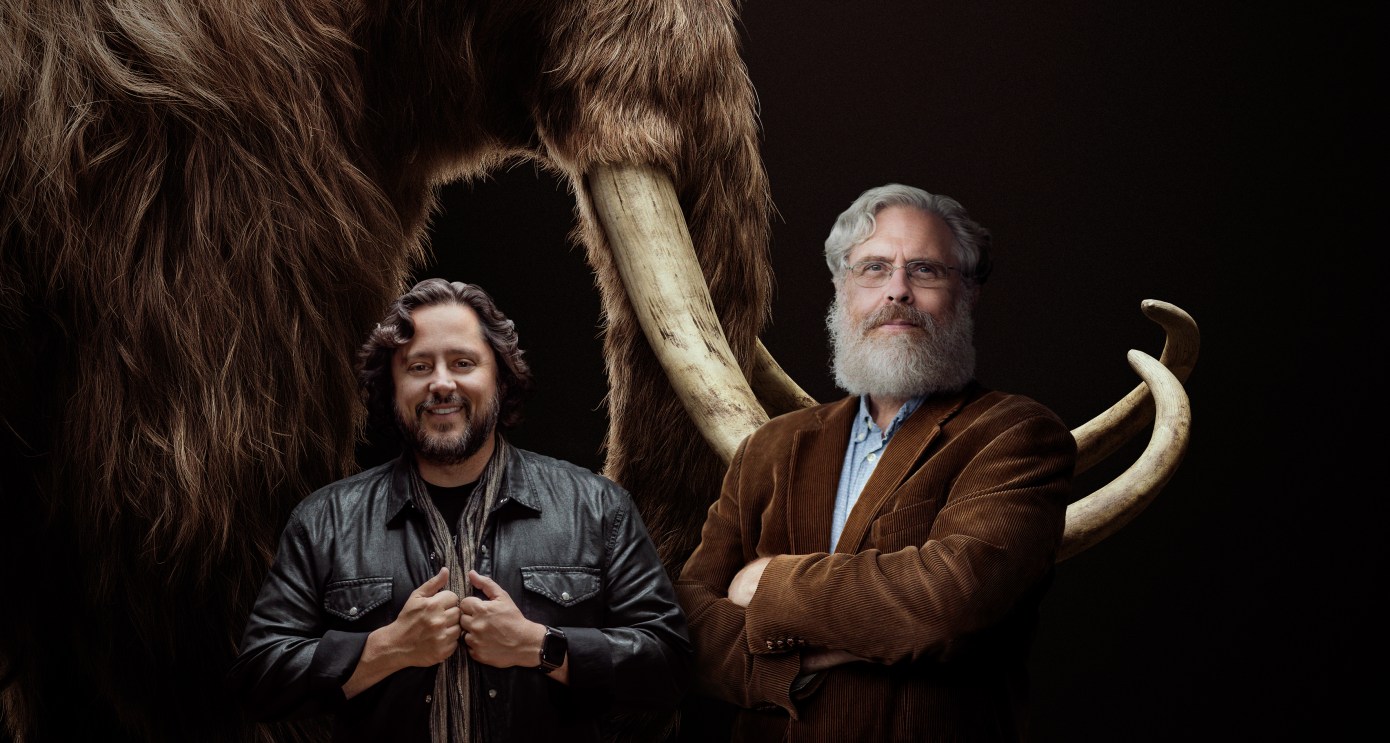
(TechCrunch) There are a growing number of companies interested in CRISPR’s potential to upend medicine. It’s probably safe to say there’s only one company interested in using the gene-editing system to create a living, breathing woolly mammoth. Or, at least, something pretty close to it.
That’s the primary mission of a new company called Colossal. Co-founded by maverick geneticist George Church and entrepreneur Ben Lamm, the former CEO of Hypergiant, the company aims to bring one of those creatures back to life using CRISPR to edit the genomes of existing Asian elephants. In that sense the creature would be very similar to a woolly mammoth, but would be more like an elephant-mammoth hybrid.
It’s a project that Church’s lab has been invested in for years. But now, Church and Lamm have managed to sell investors on the idea that bringing back a mammoth is more than a science-fiction project.
Today Colossal announced its launch and a $15 million seed round led by Thomas Tull, former CEO of Legendary Entertainment (the company responsible for the likes of Dune, Jurassic World, the Dark Knight). The round includes investments from Breyer Capital, Draper Associates, Animal Capital, At One Ventures, Jazz Ventures, Jeff Wilke, Bold Capital, Global Space Ventures, Climate Capital, Winklevoss Capital, Liquid2 Ventures, Capital Factory, Tony Robbins and First Light Capital.
“These two are a powerhouse team who have the ability to completely shift our understanding of modern genetics while developing innovative technologies that not only help bring back lost species, but advance the entire industry,” Robbins tells TechCrunch. “I am proud to be an investor in their journey.”
Researchers at MIT's McGovern Institute for Brain Research have discovered a bacterial enzyme that they say could expand scientists' CRISPR toolkit, making it easy to cut and edit RNA with the kind of precision that, until now, has only been available for DNA editing. The enzyme, called Cas7-11, modifies RNA targets without harming cells, suggesting that in addition to being a valuable research tool, it provides a fertile platform for therapeutic applications.
"This new enzyme is like the Cas9 of RNA," says McGovern Fellow Omar Abudayyeh, referring to the DNA-cutting CRISPR enzyme that has revolutionized modern biology by making DNA editing fast, inexpensive, and exact. "It creates two precise cuts and doesn't destroy the cell in the process, like other enzymes," he adds.
Up until now, only one other family of RNA-targeting enzymes, Cas13, has extensively been developed for RNA targeting applications. However, when Cas13 recognizes its target, it shreds any RNAs in the cell, destroying the cell along the way. Like Cas9, Cas7-11 is part of a programmable system; it can be directed at specific RNA targets using a CRISPR guide. Abudayyeh, McGovern Fellow Jonathan Gootenberg, and their colleagues discovered Cas7-11 through a deep exploration of the CRISPR systems found in the microbial world. Their findings were recently reported in the journal Nature.
Carlene Knight's vision was so bad that she couldn't even maneuver around the call center where she works using her cane.
"I was bumping into the cubicles and really scaring people that were sitting at them," says Knight, who was born with a rare genetic eye disease.
But that's changed as a result of volunteering for a landmark medical experiment. Her vision has improved enough for her to make out doorways, navigate hallways, spot objects and even see colors.
"It's nice. I don't scare people and I don't have as many bruises on my body," Knight says, laughing.
Knight is one of seven patients with a rare eye disease who volunteered to let doctors modify their DNA by injecting the revolutionary gene-editing tool CRISPR directly into cells that are still in their bodies. Knight and one other study volunteer gave NPR exclusive interviews about their experience.
This is the first time researchers worked with CRISPR this way. Earlier experiments had removed cells from patients' bodies, edited them in the lab and then infused the modified cells back into the patients.
And remember my friend, future events such as these will affect you in the future
Genetic diseases are a compelling target for viral gene therapy. One condition that scientists are investigating to see if they can treat with gene therapy is a rare genetic disease called Leber congenital amaurosis, or LCA. LCA is a progressive condition that disables critical cells within the retina. The damage begins at birth: it eventually robs patients of central vision and color perception, often rendering them legally blind. But there may be another way. On Wednesday, researchers presented evidence from a breakthrough gene-editing experiment that restored some color vision to patients with LCA vision loss.
CRISPR is already under investigation as a gene therapy for blood disorders like sickle cell disease and beta-thalassemia. It may well have other uses, such as treating cancer by editing mutated DNA. But the process is not without its hurdles. Treatments for blood disorders like these involve taking cells from the patient’s body, changing them in vitro in the lab, and then re-infusing them back into the patient’s body. That works great for blood, which you can take out, filter, and put back in with relatively few consequences.
Many people—around half of the adult population—are infected with a type of herpesvirus called human cytomegalovirus, or HCMV. Though mostly asymptomatic, the virus can be dangerous for immunocompromised people and unborn babies. Because HCMV is so widespread, the chance of a baby becoming infected in utero is around one in 200, and that infection can lead to problems with the baby's brain, lungs and growth.
In a new paper from Whitehead Institute Member Jonathan Weissman published on October 25 in Nature Biotechnology, Weissman and colleagues turn cutting-edge CRISPR and single cell sequencing technologies on this virus, providing the most detailed picture yet on how viral and human genes interact to create an HCMV infection—and revealing new ways to potentially derail the virus' progression through manipulating viral and host genes.
The research could provide an important road map for future studies of host-pathogen interactions, as well as inform antiviral drug design. Over the course of the project, the researchers generated a list of both viral and host genes that were either essential for the virus to replicate, or could potentially be manipulated to confer some immunity to the host cell. "Now that we have this list, we have a list of potential targets that one might now go ahead and develop drugs against," said Marco Hein, the first author and a former postdoctoral researcher in the Weissman Lab.
Targeted mutations to the genome can now be introduced by splitting specific mutator enzymes and then triggering them to reconstitute, according to research from the Perelman School of Medicine at the University of Pennsylvania. Led by graduate student Kiara Berríos under the supervision of Rahul Kohli, MD, Ph.D., an associate professor of Infectious Diseases at Penn, and Junwei Shi, Ph.D., an assistant professor of Cancer Biology, the investigations uncovered a novel gene editing technique that offers superior control compared to other existing techniques and has the potential to be used in-vivo. The technique has been patented, and the research is published in the latest issue of Nature Chemical Biology.
Base editors are one of the latest and most effective ways to achieve precise gene editing. In DNA targeted by base editors, C:G base pairs in DNA can be mutated to T:A or A:T base pairs can be turned to G:C. The base editors use CRISPR-Cas proteins to locate a specific DNA target and DNA deaminase enzymes to modify and mutate the target. Nevertheless, there was no way to trigger mutations at specific times or keep the editor in check to prevent undesired mutations.
Engineers devise a way to selectively turn on RNA therapies in human cells
Researchers at MIT and Harvard University have designed a way to selectively turn on gene therapies in target cells, including human cells. Their technology can detect specific messenger RNA sequences in cells, and that detection then triggers production of a specific protein from a transgene, or artificial gene.
Because transgenes can have negative and even dangerous effects when expressed in the wrong cells, the researchers wanted to find a way to reduce off-target effects from gene therapies. One way of distinguishing different types of cells is by reading the RNA sequences inside them, which differ from tissue to tissue.
New research led by Manchester University NHS Foundation Trust and The University of Manchester could revolutionize the diagnosis and treatment for people with Perrault syndrome, a rare genetic condition resulting in hearing loss in men and women, and early menopause or infertility in women.
The research, published in the American Journal of Human Genetics, was funded by organizations including, the National Institute for Health Research (NIHR) Manchester Biomedical Research Centre (BRC), Action Medical Research and The Royal National Institute for Deaf People (RNID).
The international collaboration was led by Professor Bill Newman, Consultant at Manchester University NHS Foundation Trust, and Genomic Solutions Associate Lead for Manchester BRC's Hearing Health theme.
To date, CRISPR enzymes have been used to edit the genomes of one type of cell at a time: They cut, delete or add genes to a specific kind of cell within a tissue or organ, for example, or to one kind of microbe growing in a test tube.
Now, the University of California, Berkeley group that invented the CRISPR-Cas9 genome editing technology nearly 10 years ago has found a way to add or modify genes within a community of many different species simultaneously, opening the door to what could be called "community editing."
While this technology is still exclusively applied in lab settings, it could be used both to edit and to track edited microbes within a natural community, such as in the gut or on the roots of a plant where hundreds or thousands of different microbes congregate. Such tracking becomes necessary as scientists talk about genetically altering microbial populations: Inserting genes into microbes in the gut to fix digestive problems, for example, or altering the microbial environment of crops to make them more resilient to pests.
Without a way to track the gene insertions—using a barcode, in this case—such inserted genes could end up anywhere, since microbes routinely share genes among themselves.
Detecting the activity of CRISPR gene editing tools in organisms with the naked eye and an ultraviolet flashlight is now possible using technology developed at the Department of Energy's Oak Ridge National Laboratory.
Scientists demonstrated these real-time detection tools in plants and anticipate their use in animals, bacteria and fungi with diverse applications for biotechnology, biosecurity, bioenergy and agriculture. The team described the successful development of the UV system in Horticulture Research and their proof-of-principle demonstration in ACS Synthetic Biology.
CRISPR technologies have quickly become the primary tools of bioengineering, and new versions are continually in development. Identifying whether an organism has been modified by CRISPR technology was previously a complex and time-consuming process.
"Before this, the only way to tell if genome engineering occurred was to do a forensic analysis," said Paul Abraham, a bioanalytical chemist and head of ORNL's Secure Ecosystem Engineering and Design Science Focus Area. "To be successful, you would need to know what the genome looked like before it was rewritten. We wanted to design a platform where we could proactively observe CRISPR activity."
Gene therapy is a powerful developing technology that has the potential to address myriad diseases. For example, Huntington's disease, a neurodegenerative disorder, is caused by a mutation in a single gene, and if researchers could go into specific cells and correct that defect, theoretically those cells could regain normal function.
A major challenge, however, has been creating the right "delivery vehicles" that can carry genes and molecules into the cells that need treatment, while avoiding the cells that do not.
Now, a team led by Caltech researchers has developed a gene-delivery system that can specifically target brain cells while avoiding the liver. This is important because a gene therapy intended to treat a disorder in the brain, for example, could also have the side effect of creating a toxic immune response in the liver, hence the desire to find delivery vehicles that only go to their intended target. The findings were shown in both mouse and marmoset models, an important step towards translating the technology into humans.
A paper describing the new findings appears in the journal Nature Neuroscience on December 9. The research was led by Viviana Gradinaru, Caltech professor of neuroscience and biological engineering, and director of the Center for Molecular and Cellular Neuroscience.
Many intractable diseases are the result of a genetic mutation. Genome editing technology promises to correct the mutation and thus new treatments for patients. However, getting the technology to the cells that need the correction remains a major challenge. A new study led by CiRA Junior Associate Professor Akitsu Hotta and in collaboration with Takeda Pharmaceutical Company Limited as part of the T-CiRA Joint Research Program reports how lipid nanoparticles provide an effective means for the delivery to treat Duchenne muscular dystrophy (DMD) in mice.
Last year's Nobel Prize for Chemistry to the discoverers of CRISPR-Cas9 cemented the impact of genome editing technology. While CRISPR-Cas9 can be applied to agriculture and livestock for more nutritious food and robust crops, most media attention is on its medical potential. DMD is just one of the many diseases that researchers foresee a treatment using CRISPR-Cas9.
Scientists have discovered that gene therapy and the diabetes drug metformin may be potential treatments for late-onset retinal degeneration (L-ORD), a rare, blinding eye disease. Researchers from the National Eye Institute (NEI), part of the National Institutes of Health generated a "disease-in-a-dish" model to study the disease. The findings are published in Communications Biology.
"This new model of a rare eye disease is a terrific example of translational research, where collaboration among clinical and laboratory researchers advances knowledge not by small steps, but by leaps and bounds," said Michael F. Chiang, M.D., director of the NEI, part of the National Institutes of Health.
L-ORD is a rare, dominantly inherited disorder, meaning that it can occur when there is an abnormal gene from one parent. L-ORD is caused by a mutation in the gene that encodes the protein CTRP5. People with the disorder develop abnormal blood vessel growth and deposits of apolipoprotein E, which is involved in fat metabolism within the retina. Symptoms, including difficulty seeing in the dark and loss of central vision, usually appear around age 50 to 60. As L-ORD progresses, cells in the retinal pigment epithelium (RPE), a layer of tissue that nourishes the retina's light-sensing photoreceptors, shrink and die. Loss of RPE leads to the loss of photoreceptors and in turn, to loss of vision.