13th February 2026 Protein restores aging brain stem cells Researchers in Singapore have identified a key protein that restores aging neural stem cells in laboratory models. Their study, published in the journal Science Advances, sheds new light on how the brain's regenerative capacity declines over time.
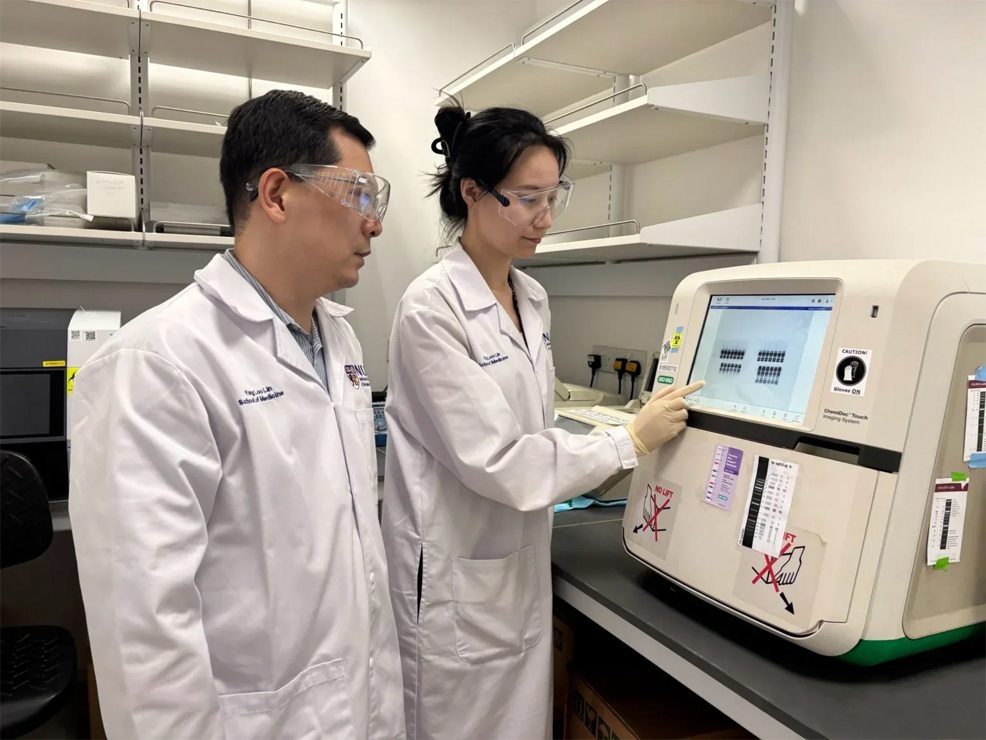
Until the late 20th century, neuroscientists considered the adult brain incapable of generating new neurons – a view overturned in the 1990s with the discovery of neural stem cells in the hippocampus, a region that plays a key role in learning and memory. These specialised cells persist into adulthood and continue producing fresh neurons, although their activity declines steadily with age. This gradual loss of regenerative capacity has long been associated with cognitive decline and increased vulnerability to neurodegenerative disease. A research team at NUS Medicine, part of Singapore's National University, has now identified a molecular driver that appears to control this process. The study, published in the journal Science Advances, was led by Assistant Professor Ong Sek Tong Derrick, with Dr Liang Yajing as first author. The researchers focused on a transcription factor known as cyclin D-binding myb-like transcription factor 1, or DMTF1. Transcription factors regulate gene expression by binding to DNA, switching genes on or off in specific cell types. Although the precise atomic structure of DMTF1 has not been determined experimentally, predictions generated by DeepMind's AlphaFold have allowed researchers to visualise its likely three-dimensional form, offering additional insight into how it may interact with DNA.
3D structural prediction of the DMTF1 protein, generated by AlphaFold.
The NUS researchers observed that DMTF1 levels fell significantly in aged neural stem cells. Using human-derived neural stem cells and laboratory models that simulate premature aging, they demonstrated that restoring DMTF1 expression revived the cells' ability to proliferate and regenerate. In other words, the aged stem cells regained characteristics typically seen in younger cells. To understand how this worked, the team conducted genome-wide binding and transcriptome analyses to see which genes DMTF1 controls. They found that DMTF1 boosts the activity of two key genes – Arid2 and Ss18 – which together form part of molecular machinery that keeps important growth genes accessible. When this system functions properly, neural stem cells can continue dividing and renewing themselves. When DMTF1, Arid2, or Ss18 are reduced, that support network falters and the stem cells begin losing their ability to self-renew. The study also examined telomere dysfunction. Telomeres, which cap the ends of chromosomes, shorten as cells divide and serve as one of the main biological hallmarks of aging. In neural stem cells with shortened telomeres, DMTF1 levels were suppressed. When the researchers restored DMTF1 expression, they were able to rescue regenerative capacity, even under conditions that mimicked age-related telomere erosion. These findings mark an encouraging step forward, although they remain at an early stage. The experiments were conducted primarily in vitro, and the team has not yet demonstrated improved memory or cognitive performance in living animals. They have also emphasised the need to ensure that increasing DMTF1 activity does not raise the risk of uncontrolled cell division in the brain, since this could lead to tumour formation.
Nevertheless, the work provides a clearer mechanistic framework for understanding how aging alters neural stem cell behaviour. Previous research had shown that stem cell function could be partially restored under certain conditions, but the molecular drivers remained poorly defined. With the identification of DMTF1 as a central regulator, the NUS team has now highlighted a potential therapeutic target. The longer-term goal will be to identify small molecules that can safely enhance DMTF1 expression or activity, according to the team. If future studies confirm that such interventions restore stem cell numbers and improve learning or memory in aging brains, this line of research could contribute to broader strategies aimed at delaying cognitive decline in humans. "Our findings suggest that DMTF1 can contribute to neural stem cell multiplication in neurological aging," said Dr Liang. "While our study is in its infancy, the findings provide a framework for understanding how aging-associated molecular changes affect neural stem cell behaviour, and may ultimately guide the development of successful therapeutics." Aging does not occur as a single, uniform process. It unfolds through interconnected molecular and cellular networks, many of which scientists are only just beginning to untangle. Studies such as this one suggest that key elements of these changes may prove reversible. As longevity research continues to identify the molecular switches that govern neurological decline, the prospect of maintaining brain function deeper into old age appears increasingly grounded in biology, rather than speculation.
Comments »
If you enjoyed this article, please consider sharing it:
|