10th December 2025 Stopping the swarm: Inside the global race to defeat drones As drones proliferate across battlefields, borders and city skies, governments are now racing to build the first comprehensive systems capable of detecting, disrupting and destroying them. A new generation of counter-drone weapons is reshaping the balance of power in modern security. A guest blog by Richard Fox.
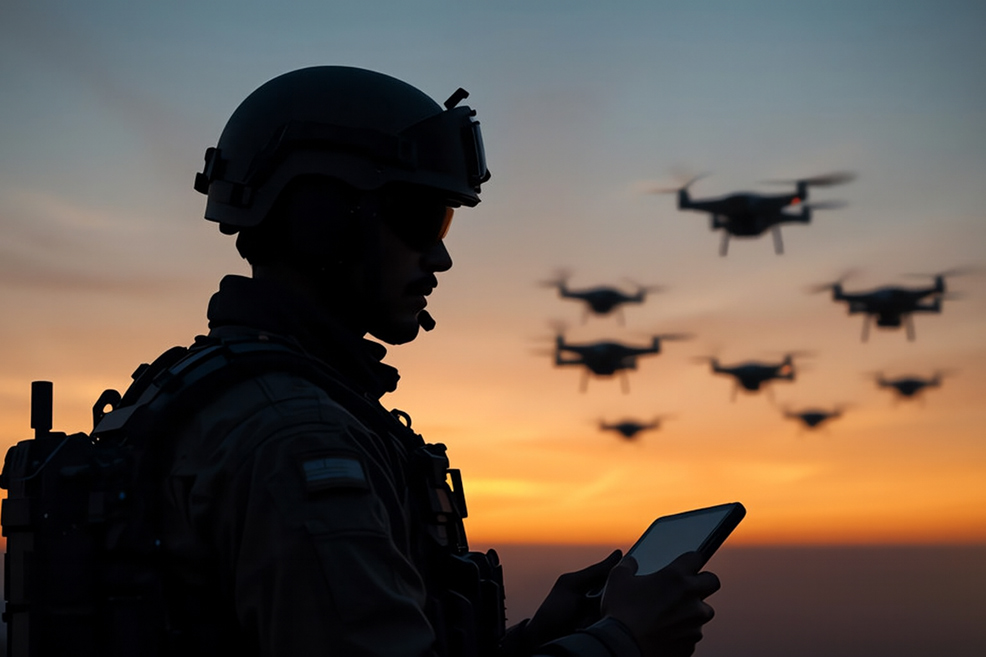
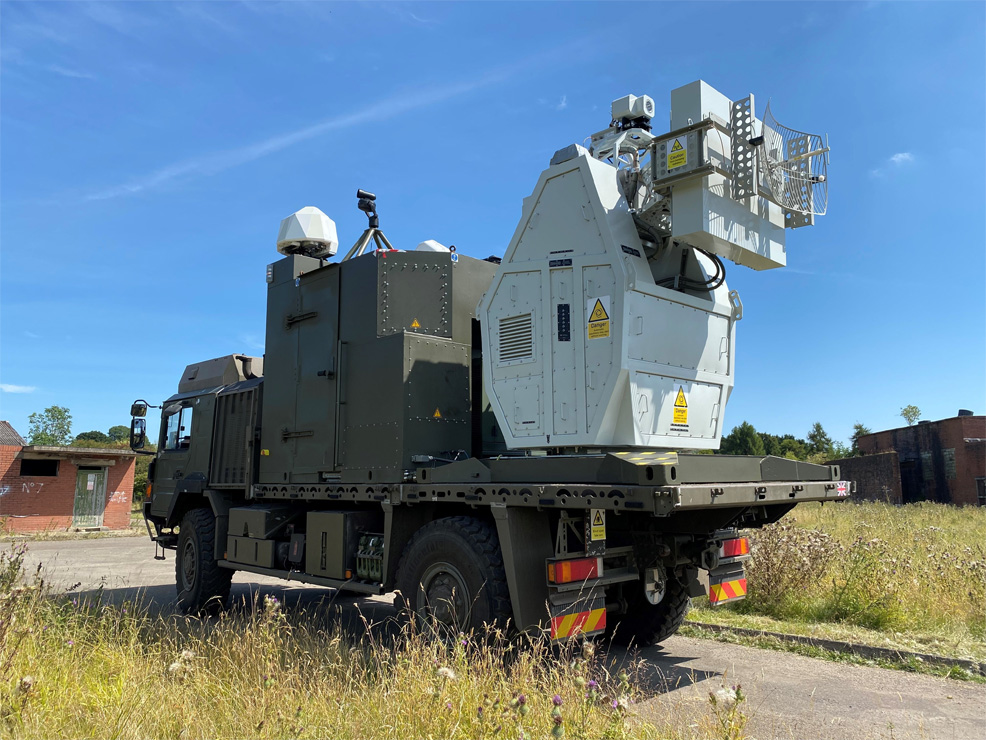
On a military training range in the hills of mid-Wales, a hundred small drones rise into the air like a cloud of metallic hornets. Within seconds, they begin to spread, testing the limits of human reaction time. A few years ago, this would have been the nightmare scenario for any army unit: too many airborne targets, too small and agile to track, too cheap to waste expensive missiles on. But on this overcast afternoon, a soldier in a portable control shelter presses a button. A burst of invisible energy surges across the valley. One by one, the drones fall out of the sky – first a handful, then dozens, and finally the whole swarm, clattering onto the grass in a storm of broken propellers. This was the UK's successful trial of a high-power microwave weapon – one of a new generation of systems promising to change the balance of power between drones and those trying to stop them. It's also a sign of something bigger: a rapidly escalating global effort to develop defences against Unmanned Aerial Systems (UAS), which in just three years have become one of the most disruptive technologies in both war and peace. Drones are no longer toys, nor even niche military tools. They are now so central to modern conflict, policing and organised crime that governments are racing to build the world's first truly comprehensive architecture for drone defence. And, unlike the expensive missile shields of the late twentieth century, this new system must counter threats that cost a few hundred pounds, can fly beneath radar and can be bought online with a credit card. Welcome to the counter-drone revolution.
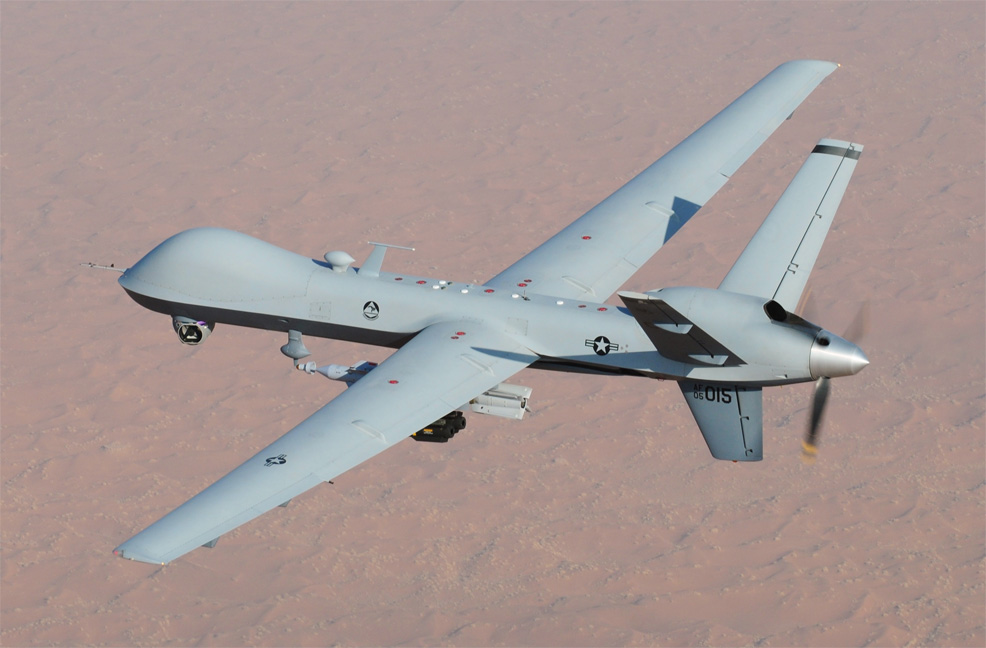
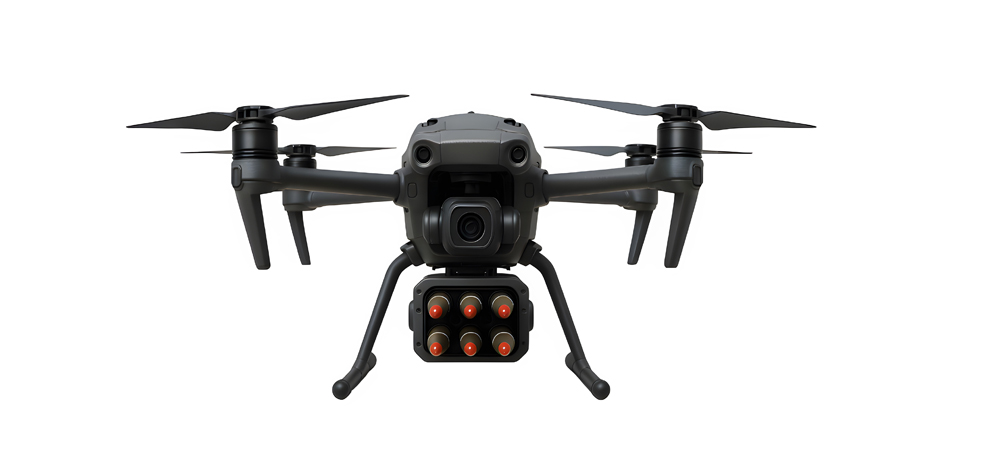
The drone revolution outpaces defence For most of the 2010s, drones were treated as a curiosity by defence establishments. They were disruptive, yes – but mostly in ways that could be managed with ad-hoc surveillance, occasional jamming, and the odd emergency measure around airports. The 2018 Gatwick incident, which shut down the UK's second-busiest airport for 36 hours, was treated as a freak occurrence. What came next made that view untenable. Over the past three years, drones have transformed the battlefield in Ukraine into the world's largest laboratory for unmanned warfare. Both Ukrainian and Russian units have used commercial quadcopters to spot artillery, drop grenades through tank hatches, and hunt small infantry groups hiding in trenches. First-person-view (FPV) drones – essentially remote-control kamikaze aircraft – cost so little that they can be used by the dozen to destroy heavily armoured vehicles. Suddenly, a £400 hobby drone could knock out a £4 million tank. "The problem for militaries," says one European defence official, "is that drones evolved on commercial timescales, not military ones. Defence procurement works in decades. Companies like DJI work in months." Even worse, defeating drones is significantly harder than flying them. Early countermeasures – radio-frequency jammers, basic radar, manual spotting – were never designed for a world in which dozens of tiny aircraft could appear simultaneously at ground level, skim over buildings, or emerge from behind tree lines. The concept of "air defence" simply didn't cover aircraft that weighed under a kilogram and flew at 30 metres. Ukraine exposed this vulnerability with brutal clarity. What had been a theoretical risk became a strategic crisis. The anti-drone boom If drone warfare was the shock, the counter-drone boom is the global response. Between 2022 and 2025, the market for anti-drone systems grew from a specialist niche into one of the fastest-expanding segments of the defence and security sector. Analysts estimate its value at $2-3 billion today, with projections surpassing $10 billion by 2030. In militaries and industry boardrooms alike, "C-UAS" – Counter-Unmanned-Aerial-Systems – has become the acronym of the moment. Multiple drivers are converging: Ukraine and NATO's eastern flank. Nations from Poland to Romania are now acquiring mobile anti-drone systems as urgently as they once bought tanks. Domestic vulnerability. Airports, prisons, energy sites and crowded events have all experienced drone disruptions or threats. Criminal innovation. Smugglers, drug cartels and gangs have adopted drones for surveillance, delivery and intimidation. Strategic anxiety. The fear of coordinated drone attacks on infrastructure – either by terrorists or hostile states – has moved from fiction to plausible threat. In the past three years, dozens of companies have scrambled into the market. Traditional defence giants such as Saab, Thales and Raytheon are joined by fast-growing specialists like DroneShield, Dedrone, and MyDefence. The result resembles the cybersecurity boom of the early 2000s – rapid growth, intense innovation, and a rush by governments to understand a threat that evolves faster than their purchasing cycles. "We're looking at a decade-long investment cycle," says one industry analyst. "Every country in Europe now believes it needs a national anti-drone strategy. That didn't exist before 2022."
How you stop a drone Stopping a drone turns out to be far more complicated than flying one. Modern counter-drone systems involve four distinct layers: detection, identification, soft-kill, and hard-kill. All four must work, or the system fails. 1. Detection Small drones are notoriously difficult to spot. They have: • tiny radar signatures • low thermal emissions • minimal sound profiles • the ability to hide among buildings or ground clutter Modern C-UAS systems rely on multi-sensor fusion – combining radar, radio-frequency scans, acoustic microphones and electro-optic/infrared cameras. Some systems can fuse data from more than a dozen sensor types. Artificial intelligence is now essential. Machine-learning algorithms can distinguish drones from birds, track multiple targets at once and predict their likely trajectories. 2. Identification Detection is only half the job. The system must determine: • Is this a drone? • What type? • Is it hostile? • Who controls it? • What is it carrying? In civilian airspace, this step is legally crucial. You cannot jam or destroy a drone if there's any doubt it's benign. 3. Soft-kill These methods disable a drone without blowing it up: • RF jamming disrupts the control link. • GPS spoofing misdirects the drone. • Cyber takeover forces it to land. • Net guns or interceptor drones capture it. But soft-kill has limitations. In Ukraine, Russia began deploying tethered drones with fibre-optic control cables, which are immune to radio jamming. Meanwhile, smugglers increasingly use drones with "return-to-home" failsafe programming: once jammed, the aircraft simply flies back to its launch point. 4. Hard-kill When all else fails, you destroy the drone. Historically, that meant using guns or missiles – expensive and risky in urban environments. But the past three years have brought dramatic advances: • Laser systems that burn through drone motors. • High-power microwave weapons that fry onboard electronics across a wide arc. • Interceptor drones that ram or trap attacking drones mid-air. The microwave system trialled in Wales is part of a new class of technologies promising to defeat swarms, the most feared drone threat. Traditional air defence cannot handle dozens of simultaneous targets. Directed-energy weapons can.
Europe's emerging 'drone wall' Europe has been notably proactive. The European Commission has proposed a continent-wide drone-defence architecture – popularly dubbed the "drone wall" – designed to protect the EU's borders and critical infrastructure. Under the initial plan, sensor networks along the eastern frontier would feed into a common European operating picture, allowing countries to track drones moving across borders in real time. Full operational capability is envisioned later in the decade. Individual states are also moving quickly: • Poland and Romania are buying mobile anti-drone radars and jammers. • Denmark has deployed systems combining wearable jammers and Doppler radar to protect airports and events. • The UK's NPSA has issued guidance requiring critical sites – airports, power stations, major venues – to adopt structured counter-drone plans. These steps raise new questions. How do you regulate jamming near civilian devices? Who is authorised to bring down a drone in a city? How do you ensure proportionality in a crowded environment? One civil aviation authority official describes counter-drone regulation as "the new frontier of public-space law." The arms race continues If counter-drone systems are improving, so are the drones. Autonomy Increasingly, drones can operate without human pilots. Using pre-programmed routes, optical navigation, terrain recognition or AI-guided flight, they can avoid jamming entirely. Tethered drones Russia's fibre-optic systems are an early example: impervious to RF attack. Smuggler adaptations Border forces in India and Europe report drones designed to drop payloads the moment jamming begins, or that immediately fly home, making arrests harder. Swarms The nightmare scenario remains a coordinated swarm. Dozens – or hundreds – of drones approaching simultaneously in a distributed formation could overwhelm most existing defences. Militaries worldwide now treat anti-swarm capability as a top technological priority. "Whatever we invent," says one defence scientist, "someone will build a drone that can get around it. This is a permanent arms race."
The future: national shields and everyday defence The next decade is likely to see the emergence of what some experts call national drone shields. These would combine: • distributed sensors across cities, borders and energy networks • AI-driven command centres interpreting drone behaviour • local interception units able to respond in seconds • directed-energy systems guarding high-value locations • routine airspace management for flights below 200 metres Drone defence may soon resemble cybersecurity: a permanent, multi-layered task that every government, company and major venue must take seriously. As for warfare, drones and anti-drones will become as foundational as tanks and artillery once were. Armies will field both combat drones and drone interceptors; infantry units will carry portable jammers; logistics convoys will be screened by autonomous sensors. And all of this is happening while the underlying technology – cheap motors, better batteries, open-source autopilots – continues to improve at the pace of consumer electronics rather than military hardware. A new kind of threat Perhaps the most striking feature of the drone era is its accessibility. The threats that now preoccupy generals and airport authorities alike do not cost millions. They cost hundreds. Anyone with enough money to buy a smartphone can buy a drone capable of causing disruption. And anyone with a screwdriver and a YouTube tutorial can turn that drone into something worse. That, ultimately, is why the anti-drone industry is booming. For the first time in decades, a serious security threat has arrived from the bottom up-from hobbyists, tinkerers, off-the-shelf gadgets, and the improvisational battlefield ingenuity of Ukrainian and Russian volunteers. Defending against that threat requires more than new weapons. It requires a new way of thinking about airspace, surveillance, critical infrastructure, and the blurred lines between civilian and military technology. As the last of the downed drones are collected from the Welsh hillside, a soldier watches technicians study the shattered components. "This time we had the advantage," he says. "Next time, they'll try something new. And we'll need to be ready again." The drone age is here – and the race to stop it has only just begun.
—
This blog originally appeared on foxmedia.co.uk.
Comments »
If you enjoyed this article, please consider sharing it:
|