2nd February 2026 Earth-sized exoplanet may lie in habitable zone Researchers have identified a promising Earth-sized exoplanet candidate in archival Kepler data, underlining how older observations continue to yield new worlds.
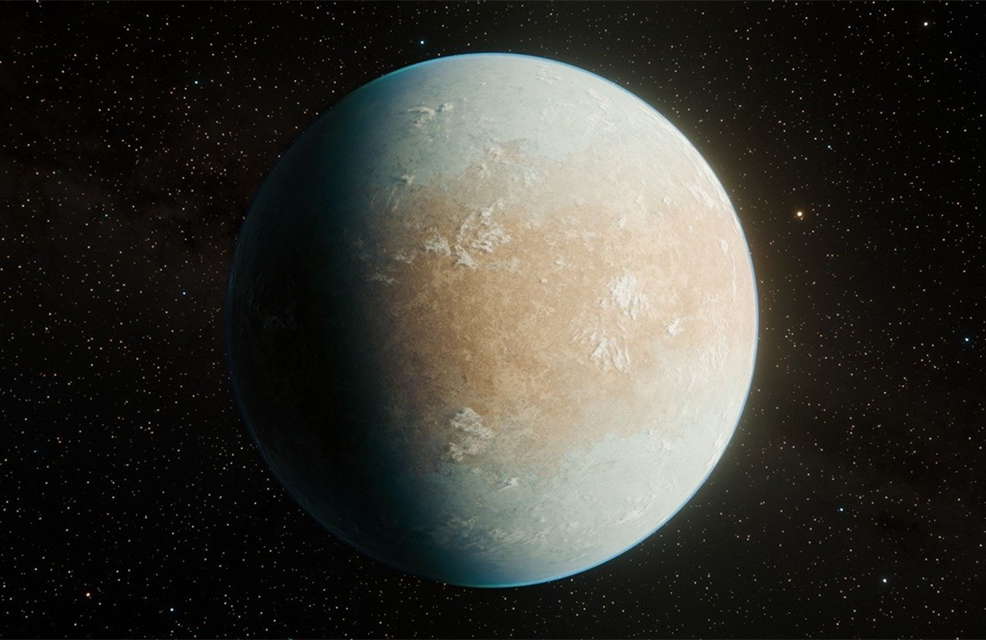
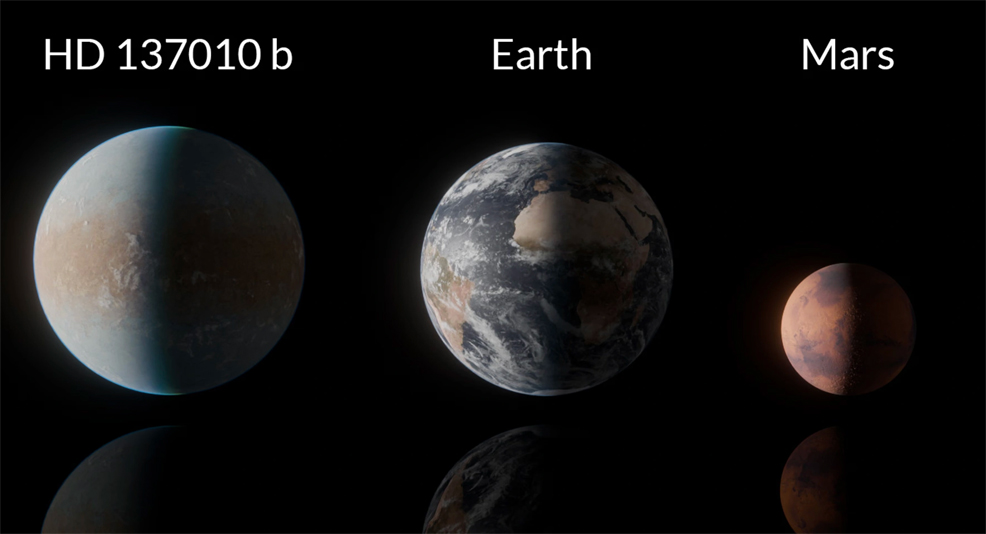
Astronomers have identified a compelling new exoplanet candidate, known as HD 137010 b, by reanalysing data collected in 2017 during the extended K2 phase of NASA's Kepler mission. The world lies 146 light-years from Earth and appears to orbit near the outer edge of its star's habitable zone, where liquid water could exist under the right atmospheric conditions. HD 137010 b is only slightly larger than our planet, with a diameter estimated at 1.06 times Earth's. Its orbital period is also remarkably similar, at 355 days, giving it a year almost as long as our own. Taken together, these traits – near-identical size and a familiar year length – make it one of the most Earth-like exoplanet candidates identified to date. A study on the discovery appears in The Astrophysical Journal Letters. "We project an incident flux of 0.29, which would place HD 137010 b near the outer edge of the habitable zone," the authors write. "This is the first planet candidate with Earth-like radius and orbital properties transiting a Sun-like star bright enough for substantial follow-up observations." In this context, "Sun-like" refers to the star's classification as a main-sequence star, rather than an exact match to the Sun's output. The candidate instead orbits a K-type star that is cooler and less luminous than our G-type Sun, meaning HD 137010 b receives significantly less stellar energy than Earth does. A simple estimate for the equilibrium temperature of a bare rocky surface would place average conditions well below the freezing point of water, possibly −68 °C, which is comparable to the coldest regions of Antarctica or the Martian plains. However, if the planet possesses a thick, heat-trapping atmosphere, surface temperatures could rise substantially, potentially allowing liquid water to persist in some regions despite the reduced stellar input.
Modelling of the planet's possible atmospheres suggests a roughly 40% chance of it lying within the "conservative" habitable zone and a 51% chance of falling within a broader "optimistic" definition, where liquid water could exist under favourable conditions. The discovery of HD 137010 b is based on a single observed transit, the brief dip in starlight that occurs when a planet passes in front of its star. Only one such event has been recorded so far, so it remains a planet candidate rather than a confirmed world. Additional transits will need to be observed to firmly establish its orbital period and rule out alternative explanations. Although its host star emits less energy than the Sun, it appears relatively bright from Earth compared with many other Kepler targets, which often lie thousands of light-years away. This makes HD 137010 b highly favourable for follow-up observations with current and future space telescopes. "What's very exciting about this particular Earth-sized planet is that its star is only [about] 150 light-years away from our Solar System," explains co-author Chelsea Huang, astronomer at the University of Southern Queensland. "The next best planet around a Sun-like star, in a habitable zone, [Kepler-186f] is about four times farther away and 20 times fainter." Whether HD 137010 b ultimately proves to be a frozen Earth analogue or something more temperate, this latest discovery highlights the enduring value of missions like Kepler, whose archives continue to yield new insights many years after operations ended. As increasingly powerful telescopes probe nearby stars in greater detail, findings like this offer a glimpse of what the next phase of exoplanet science may uncover.
Comments »
If you enjoyed this article, please consider sharing it:
|