18th August 2026 Robot breaks human records for running and jumping For the first time, a humanoid robot appears to have surpassed the best recorded human performances in both peak running speed and the standing high jump, following a new demonstration by China's Unitree Robotics.
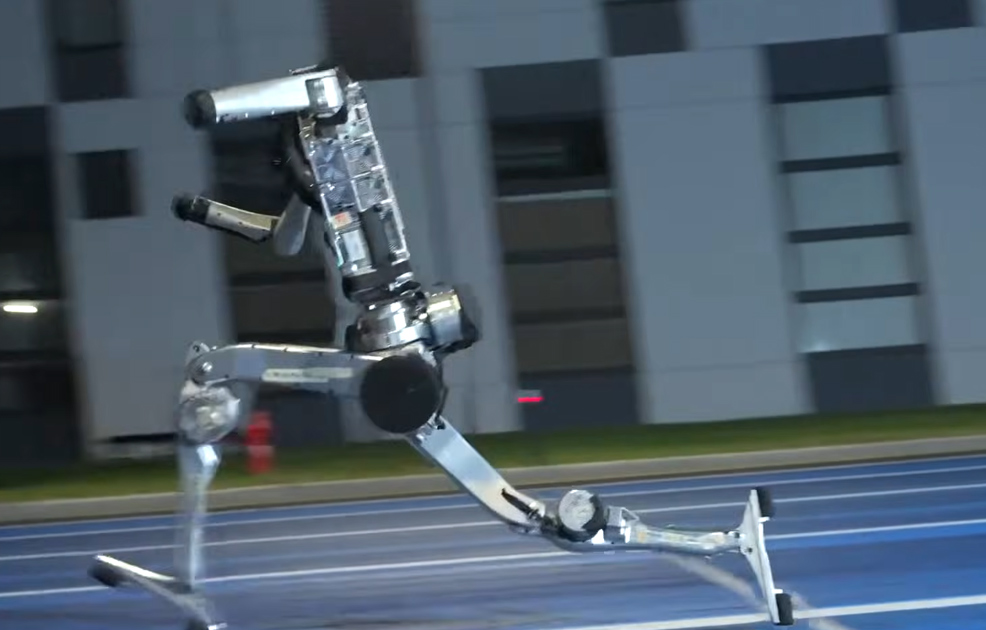
Founded in Hangzhou in 2016 by engineer Wang Xingxing, Unitree Robotics initially became known for its relatively inexpensive quadruped robots, before later expanding into humanoids such as the H1, G1 and R1. The company is now one of the world's largest humanoid robot manufacturers by sales, competing in an increasingly crowded global race that includes Tesla, Boston Dynamics and numerous Chinese firms. Unitree says it had produced and delivered around 18,000 bipedal humanoids across its various models by July 2026. Its latest prototype, nicknamed "Superman", demonstrates just how rapidly the physical capabilities of these machines are improving. Developed in little more than three months, the robot has legs measuring only 0.85 metres but can reportedly perform a standing high jump of 2 metres and reach a peak running speed of 12.66 metres per second. Unitree says the machine remains a work in progress, with further improvements expected over the coming months. If confirmed independently under comparable conditions, both figures would exceed the best human benchmarks. Usain Bolt reached a peak speed of around 12.42 m/s during his 9.58-second world-record 100 m in 2009, while the best-known standing high jump performance is 1.90 metres, achieved by Swedish athlete Rune Almén in 1980. The latter event disappeared from major international athletics after the early 20th century, meaning its modern record is unofficial. Unitree had already demonstrated a specially modified H1 reaching 10 m/s in April. That machine weighed 62 kg and had its head and hands removed to maximise performance. The latest prototype represents another substantial increase in speed, highlighting advances in motors, structural design, dynamic balance and motion-control software. Spectacular demonstrations are not the same as useful autonomous work, however. Reliability, dexterity, intelligence and cost remain major obstacles to widespread deployment. Even so, humanoid robots are clearly progressing at a remarkable pace, with physical capabilities now beginning to move beyond the limits of the human body.
Comments »
If you enjoyed this article, please consider sharing it:
|