10th September 2026 DeepMind maps 9 billion possible human DNA mutations AlphaGenome Atlas has used AI to predict the molecular effects of every possible single-letter change in the human genome, creating a powerful new resource for genetics and medicine.
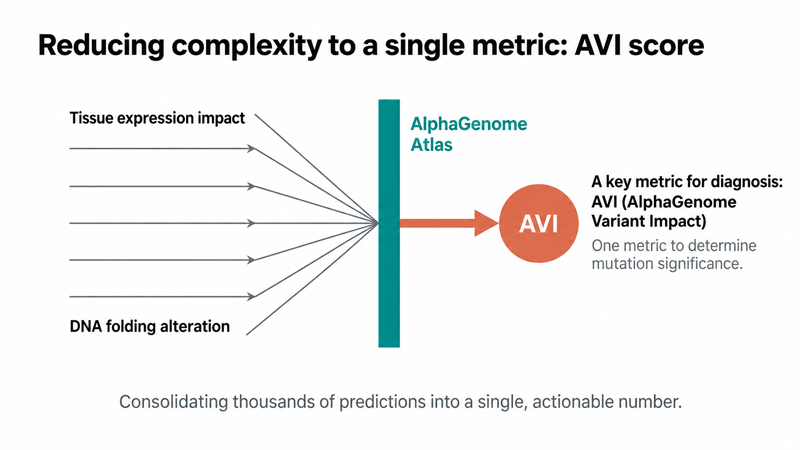
Google DeepMind has created the most comprehensive map yet of how tiny changes to human DNA could affect biological processes. Its new AlphaGenome Atlas contains predictions for around nine billion possible genetic variants, covering every single-letter substitution that could occur across the human genome. One copy of the human genome contains about three billion chemical "letters", known as bases, represented by A, C, G and T. At each position, the existing letter can in principle change into any of the other three. This gives roughly nine billion possible single-letter changes across the genome. Scientists cannot realistically test all these possibilities in laboratories. Instead, DeepMind used its AlphaGenome artificial intelligence model to predict their likely molecular effects. The company first introduced AlphaGenome in June 2025, before publishing details of the system in Nature in January 2026. The model examines DNA sequences and predicts how changes could affect processes including gene activity, RNA splicing, and the mechanisms that control when and where genes switch on. This becomes particularly useful outside the small portion of DNA that scientists understand most easily. Only about 2% of the human genome directly contains instructions for making proteins. The remaining 98% does not directly encode proteins and has proved much harder to interpret. Some of this non-coding DNA helps regulate gene activity, acting somewhat like a vast collection of switches and dials that influence when genes operate, in which cells, and at what intensity. Many genetic variants associated with human traits and diseases occur within these regions. AlphaGenome Atlas therefore covers both protein-coding DNA and this much larger regulatory landscape. For every possible variant, it provides thousands of molecular-effect predictions covering different aspects of gene regulation across cells and tissues. Previously, this wealth of information could make it difficult to judge quickly which mutations deserved the most attention. DeepMind has therefore introduced the AlphaGenome Variant Impact, or AVI, score, which condenses this complex information into a single number indicating how strongly a particular variant may affect molecular biology. Researchers can therefore use this score to rank large numbers of variants rapidly, while still examining the underlying predictions to see which processes, such as gene expression or RNA splicing, may have changed.
The resulting dataset is one petabyte in size, or about one million gigabytes. That makes it more than 30 times larger than the AlphaFold Database, DeepMind's earlier resource containing predicted structures for more than 200 million proteins. Researchers can search the Atlas free of charge for non-commercial use through an intuitive website, rather than having to run the computationally intensive AlphaGenome model themselves. Potential applications range from rare genetic disorders to much more common diseases and traits. A researcher analysing a person's genome may discover thousands of unusual variants, most of which have little or no effect. AlphaGenome could help narrow this list by identifying the changes most likely to disrupt an important biological process, allowing researchers to focus laboratory work on the strongest candidates. Unsolved rare diseases and hidden variants Early collaborators have already used the Atlas to identify and experimentally verify key variants in unsolved rare-disease research. In one example, a team at Massachusetts's Broad Institute used the AVI score to identify a previously overlooked variant affecting DNM1, a gene strongly linked to epileptic encephalopathy. AlphaGenome predicted that the variant created an incorrect splice site, leading to an abnormal extension of the resulting protein. Laboratory experiments then confirmed the prediction and found nearby variants with similar effects. In another example, researchers analysing data from 54,000 UK Biobank participants uncovered 22% more non-coding genetic associations, including regulatory variants affecting PLA2G7, which has been linked to aging. In the longer term, such tools could improve genetic diagnosis, reveal previously unknown causes of disease, identify new targets for drugs and help scientists understand how the genome shapes human biology. They could also guide research into cancer, inherited conditions and personalised medicine. The next steps will include testing AlphaGenome's predictions against much larger amounts of experimental and genomic data. Scientists will still need to confirm important findings experimentally, since an AI prediction alone cannot conclusively establish that a variant causes disease. AlphaGenome has not been validated or approved for clinical use. As researchers validate more of the Atlas and combine it with large genomic datasets, however, its usefulness should steadily grow. Rather than replacing laboratory biology, AlphaGenome could help scientists decide which of billions of possibilities deserve their attention first.
Comments »
If you enjoyed this article, please consider sharing it:
|