26th October 2026 Gene therapy partially restores sight in blind patients An experimental treatment combining gene therapy with specialised goggles has enabled some people with advanced retinal disease to detect and locate objects again. The breakthrough achieved improvements in light sensitivity of up to 62-fold.
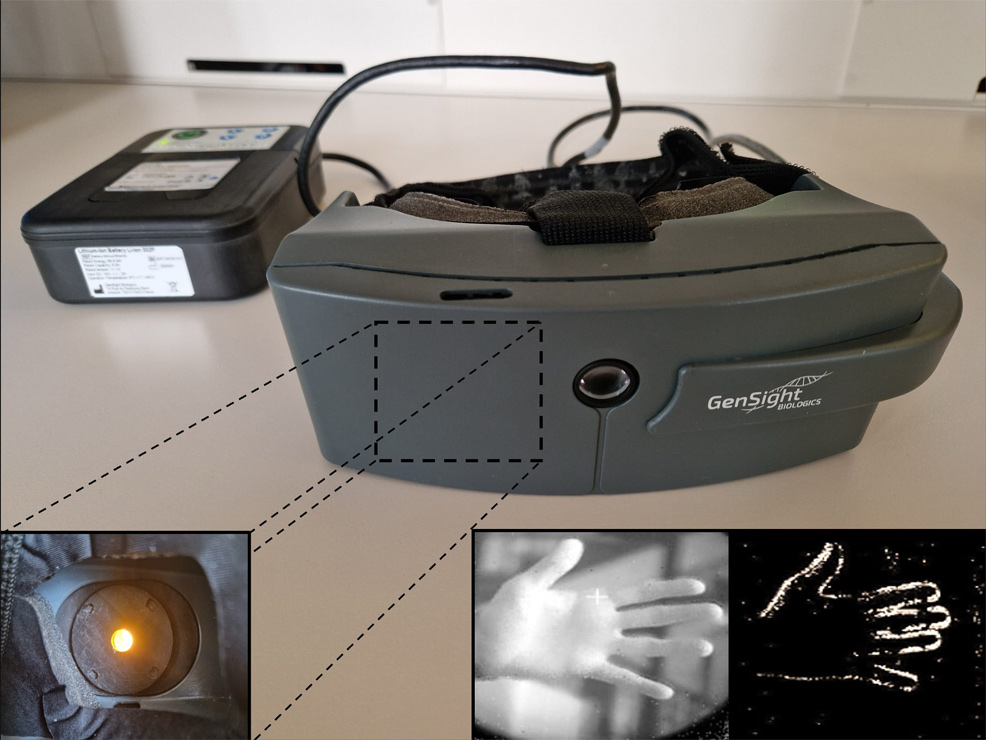
At least 2.2 billion people globally have some degree of near or distance vision impairment, according to the World Health Organization. While many cases involve treatable conditions such as cataracts or uncorrected eyesight, others arise from progressive diseases that permanently destroy the retina's light-sensitive cells, potentially leading to blindness. The number of people classified as blind is forecast to increase from 43 million in 2020 to 61 million by 2050, based on a study in The Lancet Global Health. Among the progressive diseases that can lead to blindness is retinitis pigmentosa (RP), a group of inherited retinal disorders affecting an estimated 1.5 million people worldwide. It often begins with poor night vision, followed by a gradual narrowing of the field of view as the retina deteriorates. With over 100 genes implicated in RP, developing effective treatments has proved particularly difficult. Now, an international team led by José-Alain Sahel at the University of Pittsburgh School of Medicine and Botond Roska at the Institute of Molecular and Clinical Ophthalmology Basel has reported encouraging results from an experimental treatment based on optogenetics. This technique uses light-sensitive proteins to control the activity of nerve cells. The team published their study in the New England Journal of Medicine earlier this month, just two days after Karl Deisseroth, Peter Hegemann and Georg Nagel won the Nobel Prize in Physiology or Medicine for pioneering work in this field. Ten adults with blindness due to advanced RP received a single injection into their worse-seeing eye. It delivered genetic instructions for a light-sensitive protein called ChrimsonR, enabling surviving retinal nerve cells to respond to amber light. Unlike gene therapies targeting specific genetic mutations, this approach does not depend on the particular mutation causing blindness. "Developing a separate treatment for every genetic cause of retinitis pigmentosa is proving tremendously difficult and costly. While we continue working on correcting specific gene defects, our goal is to develop a way to restore visual function regardless of which gene caused the disease," explained Professor Sahel, the study's first and co-corresponding author. Patients also received specialised goggles with a built-in camera, connected to a portable processor. Together, these capture their surroundings, convert visual information into patterns of amber light and project them onto the treated retina. This activates the modified cells, which then transmit signals to the brain.
This technology is similar in concept to the VISOR worn by Geordi La Forge in Star Trek: The Next Generation. Unlike that fictional device, which detects wavelengths beyond visible light and sends signals to the brain through neural implants, the real-world goggles stimulate genetically modified retinal cells and currently provide only basic visual perception. Seven participants showed increased light sensitivity, with improvements of up to 62-fold, including six who achieved clinically meaningful gains. Four of the eight who completed practical visual tests improved their ability to detect or locate objects. Some participants also demonstrated improvements in finding doorways or following lines. Brain recordings provided further evidence that visual signals reached the visual cortex. The small trial primarily assessed safety, with most adverse effects being mild or moderate. One participant experienced a temporary blockage of the central retinal artery immediately after the injection, but this resolved within minutes. While the treatment cannot yet restore normal sight, researchers aim to achieve much higher-resolution vision in future versions. Roska, who co-led the study, hopes to reach this goal within five to ten years – potentially allowing patients to recognise faces, read books and distinguish other fine details. Further trials must confirm the treatment's long-term safety and effectiveness. Improvements in cell targeting, light-sensitive proteins and wearable technology could ultimately enhance its capabilities, potentially offering hope to people with other forms of retinal degeneration. Looking much further ahead, Roska anticipates continued innovation and refinement "in the next 50 years", making the technology increasingly effective and easier to use. For instance, he envisages smart glasses eventually replacing today's bulky goggles. "We are only at the beginning of a long road," he said.
Comments »
If you enjoyed this article, please consider sharing it:
|