17th November 2026 Martin Rees: Evidence of alien life could emerge within 10–20 years Britain's former Astronomer Royal says that advances in astronomy could reveal evidence of simple extraterrestrial life in the 2030s or 2040s, although he is less optimistic about finding intelligent civilisations.
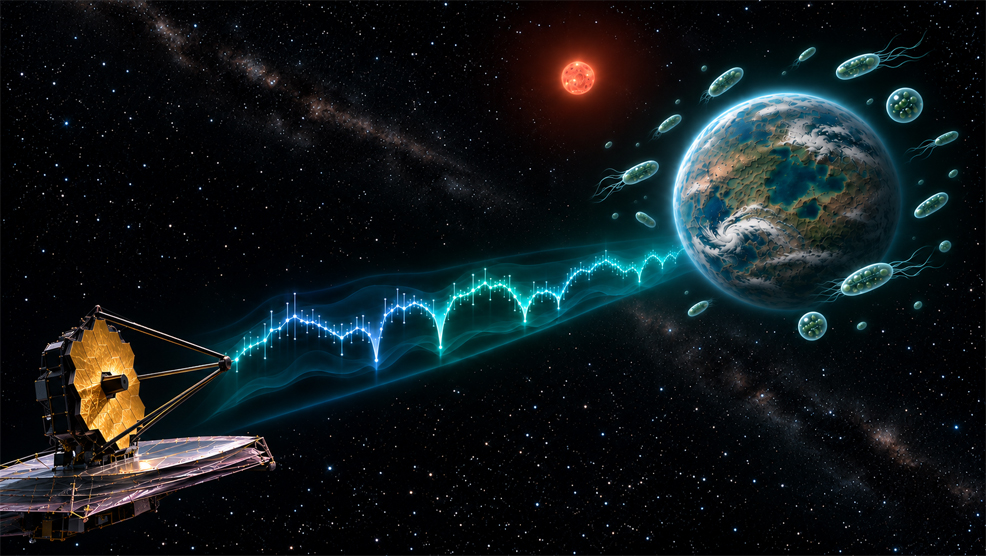
Lord Martin Rees, one of Britain's most distinguished astronomers and cosmologists, believes that evidence of life beyond Earth could emerge within the next 10 to 20 years. The 84-year-old scientist, who served as Astronomer Royal from 1995 to 2025, is a former President of the Royal Society and Master of Trinity College, Cambridge. Over a career spanning more than six decades, he has made important contributions to our understanding of quasars, black holes, galaxy formation and the evolution of the Universe. In a recent interview with the Rewind Yourself podcast, Rees discussed the possibility of detecting extraterrestrial life, alongside the technological challenges involved and the question of whether intelligent civilisations might exist elsewhere in the cosmos. He pointed to the extraordinary number of potentially habitable worlds in our galaxy, noting that the Milky Way could contain around a billion planets roughly the size of Earth, orbiting their stars at distances where conditions might allow liquid water to exist. A fundamental uncertainty, however, is whether life actually emerges under such conditions. Although scientists understand many aspects of biological evolution, the original transition from non-living chemistry to self-replicating organisms remains one of the greatest unanswered questions in science. Rees suggested that studying the atmospheres of distant planets could provide valuable clues about how readily life emerges elsewhere. By analysing the light passing through or reflected from these worlds, astronomers can search for chemical signatures potentially associated with biological activity. The challenge is immense, since planets are orders of magnitude fainter than their host stars, making it extremely difficult to isolate their signals and analyse their atmospheres. Nevertheless, new generations of telescopes are steadily overcoming these obstacles. Rees noted that observations are already revealing spectral features that may indicate complex molecules, although some interpretations remain tentative. "Within 10 or 20 years, I think we may, if simple life is widespread, have evidence of that," he said.
The prediction comes amid rapid advances in exoplanet research. As of today, astronomers have confirmed nearly 6,500 planets beyond our Solar System, compared with only a handful known in the early 1990s. Thousands of additional candidates await confirmation, while discoveries such as the TRAPPIST-1 system with seven Earth-sized worlds, several in or near the habitable zone, have provided important new targets for atmospheric studies. The James Webb Space Telescope is already analysing the atmospheric compositions of distant worlds. One intriguing example is K2-18 b, a sub-Neptune about 124 light-years away. Observations have confirmed methane, while researchers have also reported carbon dioxide and possible traces of dimethyl sulphide and dimethyl disulphide, chemicals that on Earth can be associated with biological processes. However, independent analyses have challenged these latter findings, and no convincing evidence of extraterrestrial life has yet been established. Over the coming years, several new observatories will greatly expand the search. NASA's Nancy Grace Roman Space Telescope, launched in August 2026 and due to begin its major surveys in 2027, is likely to detect approximately 100,000 additional exoplanets. The European Space Agency's Plato mission, scheduled to launch in early 2027, will focus on terrestrial planets around Sun-like stars, including potentially habitable worlds. Further advances will come from the Extremely Large Telescope in Chile, expected to achieve first light in 2029, as well as ESA's Ariel mission, launching in 2031, which will investigate the atmospheres of around 1,000 exoplanets. Although not all these facilities are designed specifically to detect life, their combined observations could provide a much clearer picture of planetary environments and the conditions that might support life. Looking further ahead, continued exponential growth in discoveries could push the total number of confirmed exoplanets beyond one million by 2050, more than 150 times today's tally.
Even then, distinguishing genuine biosignatures from non-biological processes will remain difficult. A single unusual molecule is unlikely to constitute proof. Instead, researchers will need multiple, mutually supporting observations, increasingly sophisticated computer models and independent verification before announcing such an extraordinary discovery. Rees is considerably more cautious about the prospects for intelligent extraterrestrial life. He suggested that Earth's progression from simple organisms to complex animals, and ultimately technological intelligence, may have depended on a series of unlikely evolutionary events. Even where intelligent civilisations do emerge, their lifespans might be very short compared with the billions of years over which planets exist. Rees raised the possibility of humanity eventually giving rise to "posthumans" capable of living beyond Earth, but also warned of the dangers of self-destruction. "Will we snuff ourselves out by misadventures in the next 100 years before that has a chance to happen?" he asked. The discovery of even simple microbial life, however, would rank among humanity's greatest scientific discoveries. It would fundamentally alter our understanding of biology and Earth's place in the Universe, while potentially influencing philosophy, religious thought and the future direction of space exploration. Rees' estimate also closely aligns with a longstanding Future Timeline prediction, which places the first definitive evidence of extraterrestrial life between 2035 and 2045. While his own outlook is more tentative, both suggest that the next two decades could mark a turning point in humanity's search for life beyond Earth. Rees explores these questions, alongside the wider mysteries of cosmology and the limits of scientific knowledge, in his forthcoming book, Secrets of the Cosmos: What Scientists Have Discovered and What We May Never Know, scheduled for publication on 18th February 2027.
Comments »
If you enjoyed this article, please consider sharing it:
|