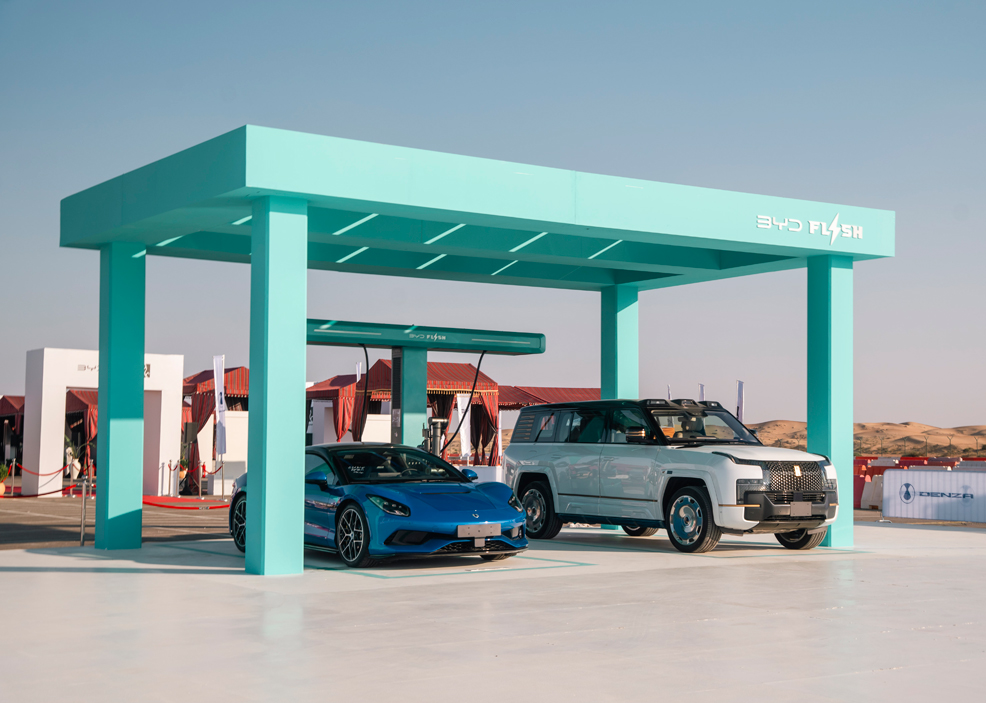
16th November 2026 BYD unveils futuristic solar-powered charging station with robotic arm Chinese electric vehicle giant BYD has demonstrated a new charging station in Abu Dhabi, combining solar energy, battery storage, ultra-fast charging and robotic automation. The system points towards a future in which electric vehicles can park and recharge with virtually no human intervention.
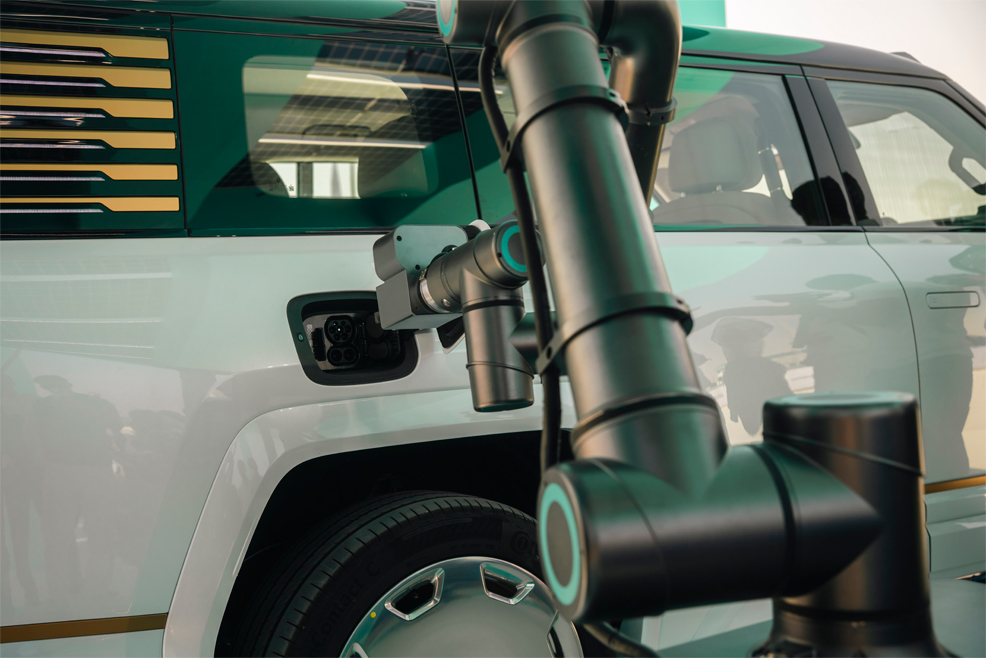
China's transition towards electric vehicles has progressed at remarkable speed, transforming the world's largest car market. Fully electric and plug-in hybrid vehicles accounted for a record 67.5% of new passenger car sales last month, up from 57.2% a year earlier. Alongside this shift, Chinese manufacturers are pioneering advances in battery technology, charging infrastructure and vehicle automation. The latest example comes from BYD, the world's largest electric vehicle manufacturer, which has unveiled a futuristic charging station in the Abu Dhabi desert. Announced this month, the installation is described as the world's first to integrate solar power generation, battery storage, ultra-fast charging and robotic automation into a single system. Perhaps its most innovative feature is a robotic arm that automatically plugs into the vehicle. Using cameras and force-feedback sensors, the arm locates the charging port, opens its cover and precisely inserts the connector. Combined with automated valet parking, this enables drivers to arrive at the charging station, then simply exit their vehicle and walk away. The car autonomously navigates to a designated charging space, where the robotic arm completes the connection without human assistance.
The installation incorporates BYD's FLASH Charging technology, capable of replenishing compatible batteries from 10% to 70% in just five minutes, or reaching 97% in nine minutes. Solar panels supplied by BYD Solar generate electricity, while on-site batteries store energy for later use. This combination could also enable charging stations to operate independently of the electricity grid, making them suitable for remote areas. BYD plans to establish 6,000 FLASH Charging stations worldwide by the end of 2027, although a commercial rollout date for its robotic charging system has yet to be confirmed. Looking further ahead, such technology could enable increasingly autonomous charging networks, reducing the need for human intervention while making electric vehicles more convenient and accessible. Combined with continued improvements in battery performance, charging speeds and renewable energy infrastructure, these innovations could help accelerate the global transition away from petrol and diesel vehicles.
Comments »
If you enjoyed this article, please consider sharing it:
|