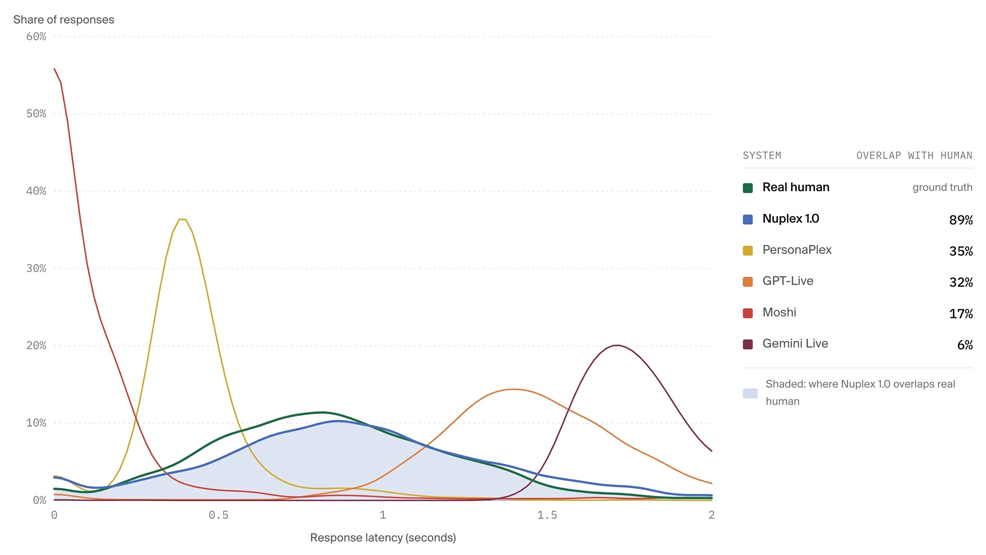
26th November 2026 AI video chatbots are remarkably lifelike A Seattle-based company has unveiled a pair of AI video chatbots capable of remarkably natural face-to-face conversations, with response timing that closely matches real humans almost 90% of the time, according to company tests.
For years, AI-powered video chatbots have promised natural, face-to-face conversations with virtual humans. However, their stiff expressions, awkward pauses and poorly synchronised speech often made it obvious that users were interacting with AI rather than real people. More recently, advances in generative AI have brought increasingly convincing faces, voices and interactions. Now, a Seattle-based startup may have unveiled the most lifelike examples yet. Founded in early 2025 by former Apple researchers, Nuance Labs aims to make interactions with artificial intelligence feel as natural as talking to another person. The company has attracted considerable investment, raising $60 million across two funding rounds, including $50 million in September 2026 from backers such as Lightspeed Venture Partners and Nvidia. Its research focuses on the subtleties of human communication, like tone of voice, facial expressions, eye movements and conversational timing. On 9th November, Nuance Labs introduced Emma, its first AI video persona, followed by Nora on 17th November. Both use a new model called Nuplex 1.0, which can listen, observe and respond simultaneously. They smile, blink, move their eyes, change their tone of voice and react to users while they are still speaking, creating a much more natural conversational flow. In tests involving 1,785 questions from recordings of real conversations, Nuance Labs reported an 89% overlap between Nuplex's response timing and that of human speakers, compared with just 35% for the next closest system. Independent researchers have not yet verified these results.
To achieve this level of realism, Nuance Labs worked with professional actresses, using their faces, voices and performances to create distinctive personalities. Rather than relying on generic facial expressions, the company built subtle individual mannerisms into its AI personas, such as a long blink, a slight squint or eyes that briefly wander before returning. The result feels considerably more spontaneous than earlier generations of video chatbots. The technology has already attracted considerable attention. By 23rd November, Nuance Labs reported more than one million conversations and 100,000 hours of face-to-face interaction through its public research preview. The company has also launched a beta version of its technology for developers, potentially opening the door to applications in customer service, professional training and other situations where natural human interaction plays an important role. Although Emma and Nora aren't quite perfect yet, their remarkably lifelike faces and interactions are a striking demonstration of just how far the technology has now progressed. As developers iron out the remaining imperfections, we appear to be on the cusp of seeing AI video chatbots that are virtually indistinguishable from real people. Perhaps this could happen as early as 2027. You can interact with both Emma and Nora through Nuance Labs' public research preview.
Comments »
If you enjoyed this article, please consider sharing it:
|