
![[+]](https://www.futuretimeline.net/images/buttons/expand-symbol.gif)
|
|
|
|
|
|
2042-2067
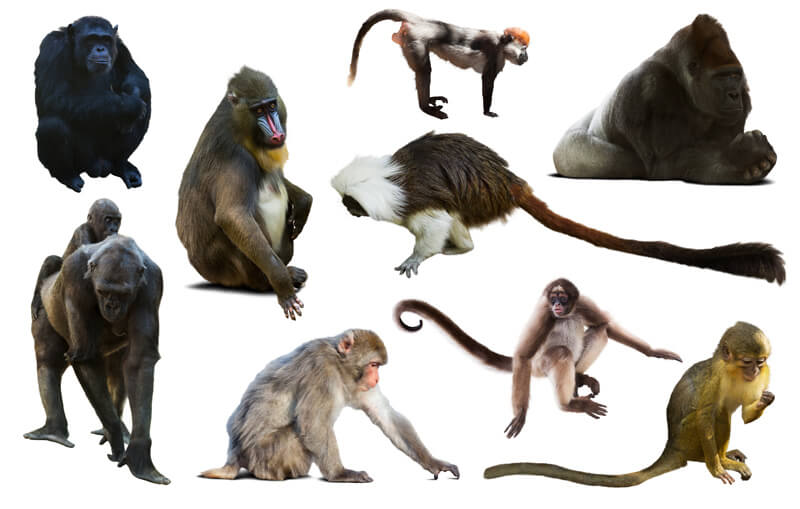
The majority of primate species are disappearing from the wild
During this time, most of the world's primate species are finally going extinct in the wild, despite many decades of conservation efforts. This includes the majority of prosimians, monkeys, lesser apes (i.e. gibbons) and great apes such as gorillas. More than 300 of the 504 known species are lost by the end of this period,* surviving only in zoos or private collections.
The relentless expansion of the global economy and the pressures to achieve ever more "growth" resulted in severe depletion of primates' habitat. Demand for palm oil, rubber and other commodities – along with a general increase in urban sprawl, road building, mining and other activities – led to millions of square kilometres of forest being cleared. In addition, climate change rendered vast areas more vulnerable to drought, fire and other damage. Poaching and the trade in body parts were yet more factors.
With a population now exceeding 9 billion, humanity's ecological footprint was growing so large and so rapidly that it was impossible to preserve these fragile environments on the timescales required. Although some conservation successes are achieved, they are few and far between; the overall outlook for primates remains poor. Preservation of DNA material is now being prioritised in the hope of resurrecting these species at some future date.
2042-2045
Tanzanite reserves are depleted
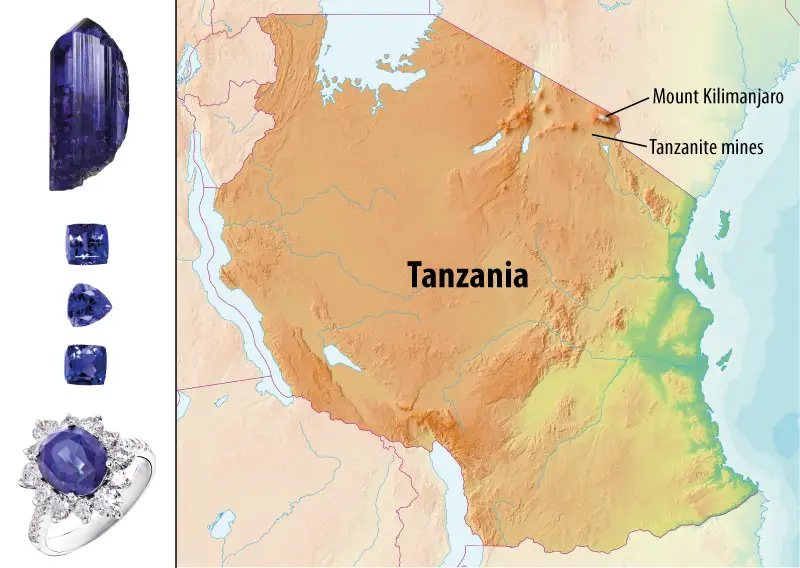
During the mid-Ediacaran – the geologic period immediately preceding the Cambrian – massive plate tectonic activity occurred in the area that would later become Mount Kilimanjaro, the tallest mountain on the continent of Africa. Occurring about 585 million BC, this process created intense heat and pressures, resulting in sedimentary strata being compressed and shaped into extremely tight, isoclinal folds. Within the "hinges" of these folds, small amounts of vanadium produced a blue and violet variety of the mineral zoisite.
In the late 20th century, humans discovered this mineral – which they named tanzanite – in a very small area just 7 km (4.3 mi) long and 2 km (1.2 mi) wide near the Mererani Hills in Tanzania, East Africa. The deposits appeared to be unique, located nowhere else on Earth, and found exclusively within this geologically complex part of Tanzania.
Following its discovery in 1967, two million carats (400 kg) were extracted over a four-year period before nationalisation of the mines. Production then declined with most work done by small-scale, artisanal miners. In 1990, the government split the mines into four sections: Blocks A, B, C and D. Large operators were awarded Blocks A and C, with Blocks B and D reserved for the local miners.
With Tanzania shifting away from socialism and into a market economy, investment grew rapidly. Between 1995 and 2000, the production of tanzanite increased more than ten-fold, with a resulting drop in prices.
In 2001, rumours emerged of Al Qaeda using the gemstone to raise funds for terrorist activities. Some retailers announced they would no longer sell it, and this led to a further decline in prices. However, a CIA report in 2002 cleared the industry of any links to Al Qaeda, and sales growth returned.
For the next several years, prices surged – reaching as high as $600+ per carat for the highest grades. While the Great Recession affected the gemstone at medium and lower grades, it remained in high demand at the finest grades. Prices began returning to pre-recession levels in the early 2010s.
Tanzanite had become highly popular in jewellery items. Its rarity and beauty made it the fifth leading gemstone in worldwide sales value – behind only diamond, emerald, ruby, and sapphire. However, Tanzania's new and incoming President, John Magufuli, identified serious problems in the region and took a hardline approach to the industry.
Rampant smuggling, tax evasion, and other illegal activity had plagued the mining operations for some time. Amid a decline in production, Magufuli ordered the military to build a 24 km perimeter wall, checkpoints, and CCTV cameras, to improve security and surveillance. His actions led to a drastic decline in smuggling and a major boost in tax revenue.
In June 2020, a new record for the world's largest rough tanzanite was set, after a small-scale miner found stones of 9.7 kg (21.3 lbs) and 5.1 kg (11.2 lbs) and sold them to the government for 7.74 bn Tanzanian Shillings (US$3.35 million),* shattering a previous record set in 2005.
Tanzanite continued to grow in popularity, fuelled by demand from China, India, and other emerging markets. An additional, longer-term factor now began to influence the price trend: scarcity, particularly of the finest grades. In 2018, Tanzania's National Bureau of Statistics estimated the total reserves of tanzanite at 109 million carats (21,800 kg).* Block C, by far the largest of the mining sites, had an estimated 87.1 million carats (17,420 kg) according to a separate report published in the same year.
While some flexibility remained in terms of further prospecting, the overall situation now appeared obvious – at projected extraction rates, tanzanite production would be nearing its end soon. Block C had been given a Life of Mine (LOM) until 2042,* while Blocks A, B and D had a similar outlook.*
2042
White people are a minority in the USA
America is a country founded on immigration.* Today, its population is more diverse and multicultural than ever. Following the 1965 immigration reform (which grew from the civil rights movement), the number of non-white people increased dramatically. This was particularly true of Latinos, who went from 6.3m in 1960* to over 50m by 2010.*
By the early 2010s, non-whites had already begun to outnumber whites in California, Hawaii, New Mexico, Texas and Washington DC, while nearly half of all children in the nation were non-white.* This trend continued over subsequent decades. By 2042, white people themselves are a minority.**
3D bioprinting of human organs
By 2042, the field of 3D bioprinting has reached a critical milestone, with the first bioprinted human organs beginning to move from clinical trials into wider use.* Although still in the early stages of adoption, this offers new hope to millions of patients worldwide and is poised to address the chronic shortage of donor organs.
During the early 2000s, the concept of 3D bioprinting transitioned from theoretical discussions to the first experimental models. Initially, researchers focused on simple tissue structures, paving the way to more advanced techniques. In the 2010s and early 2020s, progress accelerated with improvements in bioinks, biomaterials, and vascularisation methods. The development of Freeform Reversible Embedding of Suspended Hydrogels (FRESH) enabled 3D printing of more complex tissue architectures and became a pivotal innovation. This period also witnessed the first implantation of 3D-bioprinted human tissue in patients.
In the latter half of the 2020s and throughout the 2030s, researchers and engineers began to perfect the 3D bioprinting process, fuelled by global collaborations between academic institutions, biotech companies, and regulatory bodies. Key challenges were systematically addressed – including the need for devices able to produce even larger and more complex tissues at greater speeds, as well as ensuring immune tolerance and long-term viability of bioprinted organs in patients. Clinical trials in the late 2030s demonstrated that bioprinted organs could function effectively and safely in human patients, with successful vascularisation ensuring proper blood flow and the use of patient-specific cells minimising the risk of immune rejection. These and other breakthroughs set the stage for regulatory approval.
Today, in 2042, 3D bioprinted organs have been approved as a clinical alternative for transplants, marking a historic moment in medicine.* The ability to bioprint organs on demand is beginning to alleviate the waitlist for transplants, with potential to save thousands of lives in the coming years. Until now, around 20 people died each day in the United States alone while waiting for an organ transplant. Patients who may once have faced years of uncertainty, reliant on the hope of finding a compatible donor, can now receive custom-made organs tailored to their specific needs.
The impact of 3D bioprinting extends beyond just life-saving operations. Economically, this advancement is spurring the growth of new industries, such as those focused on biomanufacturing, and even sectors like cosmetics. Ethically, it has raised some important questions about the nature of life and the boundaries of human enhancement, prompting ongoing debates about the regulation and use of such powerful tools.
This technology is now inspiring further research into the bioprinting of even more complex and multifunctional tissues – such as neural networks and integrated organ systems. These integrated systems go beyond individual organs, combining multiple organs and tissues that work together to perform essential functions. For instance, scientists are exploring the bioprinting of entire circulatory, digestive, immune, and respiratory systems, representing a new and exciting frontier in regenerative medicine.
As this technology continues to evolve later in the century, it promises to enhance human capabilities in ways previously thought impossible. The progress made by 2042 marks the beginning of a new era, in which the limitations of biology are increasingly overcome by the possibilities of engineering.

Credit: lucadp/Adobe Stock
16K virtual reality is mainstream
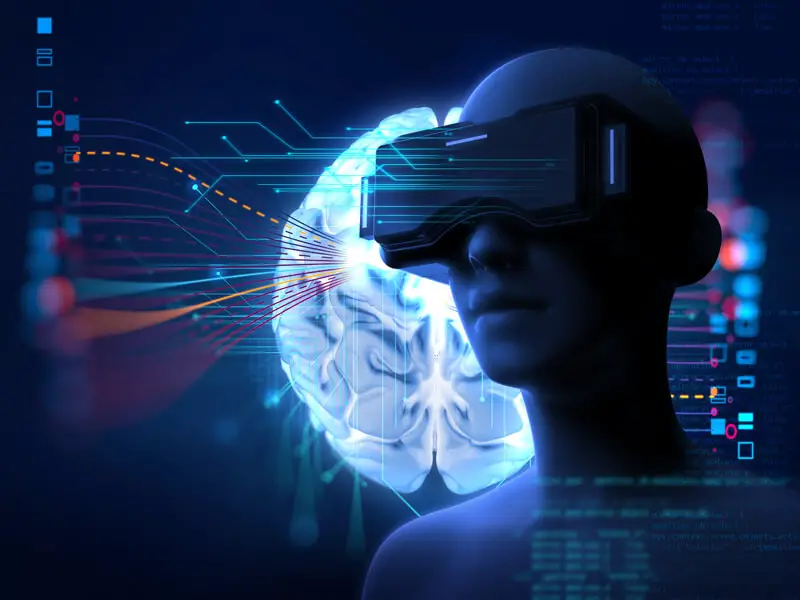
By the early 2040s, the audio-visual aspects of virtual reality (VR) have been largely perfected for mainstream users. Gaming and other applications now provide near-fully immersive experiences of both real world and imaginary places.
Most headsets now come with 16K as standard, which is quadruple the quality of 8K displays from 2030 and more than 16 times the pixel count of 4K devices from 2020.* The 16K format offers a photorealism that is practically impossible for the human eye to distinguish from the real world.**
Meanwhile, a mid-range graphics processing unit (GPU) of 2042 has more than 10 petaFLOPS of processing power, or about 1,000 times the equivalent product of 20 years earlier.*
Brain-computer interfaces (BCIs) have similarly improved by orders of magnitude. The somewhat niche and experimental BCIs of the 2020s and 2030s are being replaced by much more sophisticated versions, making brain signal data less noisy, aided by intelligent algorithms and improved sensor and wireless technology. This includes bidirectional read/write links to manipulate a user's peripheral vision* and expand their field of view, so the feeling of wearing a headset disappears and they are placed entirely "inside" the game. A player can move a character's limbs by merely thinking about them, while performing actions that are far more complex than with BCIs of previous decades.
This sense of immersion is enhanced in other ways – such as improved noise-cancelling techniques in the latest earphones, to block external sounds and further isolate a user from the real world. Audio in general is richer, more atmospheric, more varied and realistic, with sound waves manipulated in exquisite detail as they bounce around virtual environments and are influenced by different objects, surface textures and weather conditions. In addition, gone are the days of repetitive dialogue by non-player characters (NPCs), which can now generate and sustain natural conversations of indefinite length.
This variety and realism is apparent in character models too, which can use generative adversarial networks (GANs) to improve faces, expressions, clothing and fluidity of movements. While a certain 'uncanny valley' remains, the overall quality of graphics has now reached a breathtaking level, especially when experienced in 16K virtual reality.
The processing power of the latest CPUs and GPUs is allowing these NPCs to be placed in extremely complex and lifelike worlds. This is beautifully showcased in development platforms such as Unreal Engine 8.0, three generations more advanced than version 5.0 in 2020. For instance, an entire forest can now be rendered with sub-millimetre precision, showing unique and random features such as individual leaf marks or insect bites. Large cities are fully explorable in terms of shops, bars and other interiors, allowing a player to enter and meet with AI that responds in nuanced ways – as opposed to the limited number of venues and interactions in games of earlier decades.
This combination of 16K resolution, petaFLOPS of processing power, human-like AI, more advanced BCIs and audio techniques has allowed virtual reality to reach a whole new plateau of sophistication and capabilities. New form factors have emerged too, such as contact lenses with embedded displays.*
With graphical and audio effects in VR being essentially perfected, attention is now turning to the other senses (tactile, olfactory and taste), which have yet to achieve this level of immersion. Although some exciting developments have occurred in haptic feedback, such as new gloves and suits, a lot more research is needed on this technology. The olfactory and taste senses, meanwhile, remain at an even earlier stage, with only a few novelty consumer devices of poor quality and limited appeal. However, technology is becoming ever more compact and miniaturised, offering new possibilities for the decades ahead. Computer chips will soon reach the size of individual blood cells,* for example, enabling the first laboratory experiments of so-called "full-immersion virtual reality" in animal models.
NASA Uranus mission
Although visible to the naked eye, Uranus was never acknowledged as a planet by ancient observers, because of its dimness and slow orbit. With the advent of larger telescopes and new observational techniques, it was finally recognised by William Herschel in 1781. Initially believing he had found a comet or stellar disk, his later studies revealed its true nature and location as a world of our Solar System beyond Saturn.
Named after the Greek god of the sky, Uranus was calculated to orbit the Sun once every 84 years (compared with 11.9 for Jupiter and 29.5 for Saturn), at an average distance of 20 AU (3 billion km; 2 billion mi). This made it considerably more remote than its larger siblings, with a much lower temperature and greater concentration of "icy" volatiles such as water, ammonia, and methane. In fact, the lower atmosphere of Uranus was later determined as being one of the coldest places in the Solar System, at 49 K (−224 °C; −372 °F). Another notable feature was its axis of rotation being tilted sideways, placing the equator where most other planets would have their north and south poles.
Herschel discovered the first two moons – Titania and Oberon – in 1787. More were identified in 1851 by William Lassell (Ariel and Umbriel), and in 1948 by Gerard Kuiper (Miranda). These five had planetary mass, meaning they could be considered (dwarf) planets if they were in direct orbit about the Sun. The other remaining moons were discovered after 1985. All of these satellites were named after characters from the works of William Shakespeare and Alexander Pope. Rings around the planet were discovered in 1977; intermediate in complexity between the more extensive set around Saturn and the simpler systems around Jupiter and Neptune.
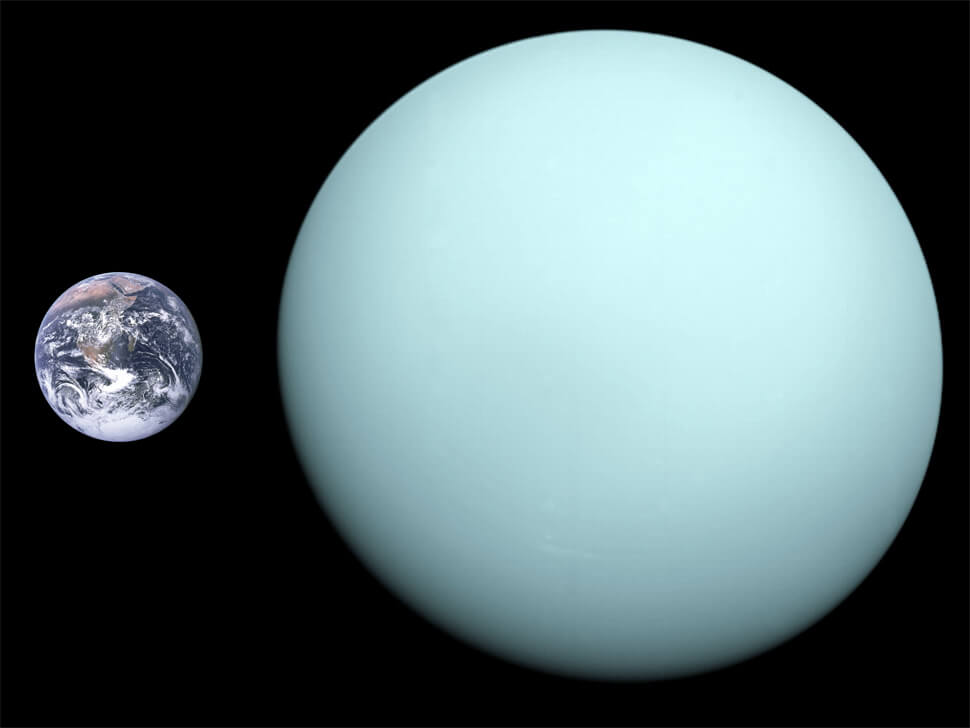
Until the late 20th century, the exploration of Uranus was solely through telescopes. This changed in 1986, when NASA's Voyager 2 spacecraft made its closest approach and passed within 81,500 km (50,600 mi) of the cloud tops. As it sped by, it studied the cold atmosphere, discovered 10 moons and examined Uranus' ring system, discovering two new rings. It also imaged the five largest moons, revealing that their surfaces were covered with impact craters and canyons. Voyager 2 was only a flyby, however, as opposed to an orbiter, so its time at Uranus was relatively brief.
Decades passed without further exploration of the ice giant – with attention instead shifting to Jupiter (Galileo and Juno), Saturn (Cassini–Huygens) and Pluto (New Horizons). Ongoing telescopic studies revealed various new moons, bringing the total number to 27. Several mission concepts for Uranus were discussed by NASA and ESA in the late 2000s and early 2010s, including a joint collaboration between the two agencies. However, these were considered to be of lower priority than Mars and Jupiter.
By the late 2010s, following the success of these various other missions around the Solar System, new exploration targets were needed and Uranus was now seen as a more promising candidate. Astronomers had recently discovered that exoplanets weighing about the same as Uranus and Neptune were more common than gas giants like Jupiter and Saturn. Determining the basic composition and interior structures of these ice giants would fill an important gap in the knowledge of how other star systems formed. A close-range study would also reveal more clues about the surprisingly dynamic icy moons, rings and bizarre magnetic fields; as well as potentially finding new satellites. Furthermore, in the decades following Voyager 2's visit, the orbit of Uranus had changed enough to illuminate more of its equator. This was making its atmosphere less bland and featureless than before, with a number of dramatic storms and swirls becoming visible.*
In its decadal survey for 2013-2022, NASA had included a return to Uranus or Neptune as one of its longer term objectives, with Uranus being favoured due to more convenient planetary alignments. In June 2017, NASA released a follow-up analysis – Ice Giants: Pre-Decadal Survey Mission Study Report* – as a precursor to the next decadal survey (2023-2032). This comprehensive, 529-page report outlined in more detail the options available for a return to both Uranus and Neptune; most of the concepts proposed detachable probes to be dropped into the ice giants' atmospheres, with the main spacecraft remaining in orbit for two to three years. Because of reduced sunlight in the outer Solar System, it was advised that a nuclear power source be used instead of solar. The science payloads of up to 150 kg included cameras (with spatial resolution of less than 100 metres), magnetometers, spectrometers and doppler imaging for the detection of "seismic waves" around the rocky core and icy mantle layers.
For Uranus, the optimal launch window was between 2030 and 2034, with a journey time of around 12 years. However, the development of new and more powerful rockets, such as NASA's heavy lift Space Launch System (SLS), provided the option to cut four years off the transit time. Thus, a mission timeframe of between 2038 and 2046 appeared most likely.* Using the SLS would require aerocapture techniques upon arrival – skimming the planet's outer atmosphere as a "braking manoeuvre" to avoid overshooting the target.
Despite aiming for a 2030 launch date, NASA experienced the usual delays and budget setbacks that had befallen so many of its earlier missions. Consequently, the Uranus mission was pushed closer to the end of its launch window. However, the SLS had been demonstrated for deep space travel and was now utilised for more rapid transit across the Solar System, offsetting the aforementioned delays.
By 2042, the Uranus mission is well underway, revealing a wealth of new scientific data about its atmosphere, interior, rings and satellites. The planet is globally surveyed with unprecedented detail; its dozens of moons are imaged in stunning resolution, while new moons are discovered too.
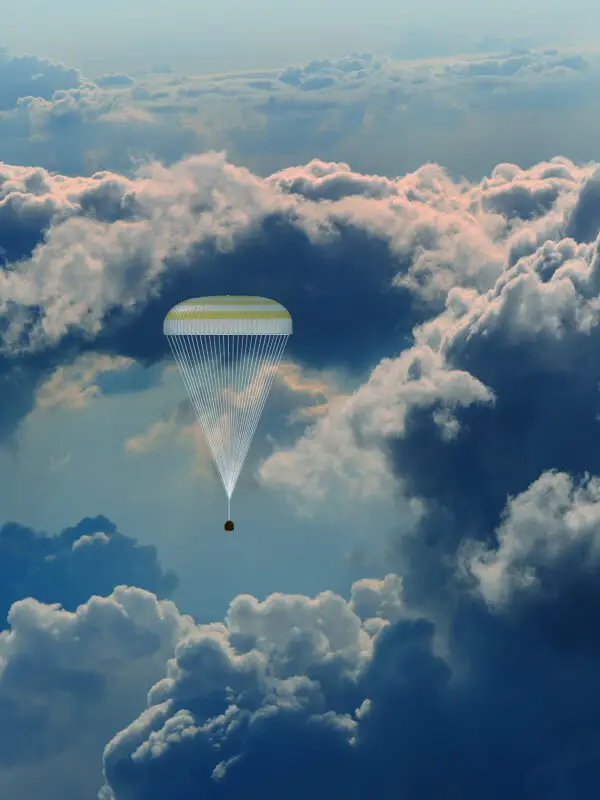
The Diary of Anne Frank enters the U.S. public domain
The Diary of Anne Frank was a book of the writings by the German-born diarist, Anne Frank, who documented her life in hiding between 1942 and 1944 during the Nazi occupation of the Netherlands in World War II. She and her family were apprehended in 1944, with Anne herself dying of typhus in the Bergen-Belsen concentration camp the following year.
Anne's father, Otto, the only survivor of the family, returned to Amsterdam after the war to find that her diary had been saved by one of the helpers, Miep Gies, and his efforts led to its publication in 1947. It became one of the world's most widely known books, with Anne gaining fame posthumously as perhaps the most discussed victim of the Holocaust. It was translated into more than 60 languages and formed the basis for several plays and films.
The diary received widespread critical and popular attention on the appearance of its English language version, Anne Frank: The Diary of a Young Girl by Doubleday & Company (USA) and Valentine Mitchell (UK) in 1952. The book later appeared in several lists of the top books of the 20th century.
The copyright of the Dutch version, published in 1947, expired in 2016, 70 years after the author's death as a result of a general rule in copyright law of the European Union. Following this, the original Dutch version was made available online. It then appeared on Wikisource, an online digital library of free content operated by the Wikimedia Foundation.
However, the diary was soon removed from Wikisource, after concerns over copyright. The Wikimedia Foundation was under the jurisdiction of U.S. law and therefore subject to the Digital Millennium Copyright Act (DMCA) – specifically title 17, chapter 5, section 512 of the United States Code. As the Foundation had noted in 2013: "The location of the servers, incorporation, and headquarters are just three of many factors that establish US jurisdiction ... if infringing content is linked to or embedded in Wikimedia projects, then the Foundation may still be subject to liability for such use—either as a direct or contributory infringer."
With 70 years having passed since Anne's death, her diary entered the public domain in the Netherlands on 1st January 2016 (although there was still some dispute about this). In the United States, however, the original text would remain under copyright until 2042.* This was due to a combination of several factors. Firstly, works published before 1978, in general, had a copyright of 95 years from date of publication, which in the case of Frank's diary was 1947. Secondly, foreign works of countries that were treaty partners to the United States were covered as if they were U.S. works. Thirdly, even if a country was not a treaty partner under copyright law at the time of a publication, the 1994 Uruguay Round Agreements Act (URAA) restored copyright to works that: had been published in a foreign country; were still under copyright in that country in 1996; and would have had U.S. copyright but for the fact they were published abroad.

The City of Trees project is completed in Manchester, England
The City of Trees is a project to plant three million new trees, one for every man, woman and child in Greater Manchester, England. Initiated by charities including the Community Forest Trust, it aims to transform over 20 square kilometres of unmanaged or vacant land into a productive and healthy state. This is achieved with help from public volunteers, community groups and local companies.
The trees are planted all over Manchester – in urban areas, streets, parks and gardens, as well as existing woodlands to expand their habitats and link to neighbouring areas of tree cover, which helps to improve biodiversity. Entirely new forests are also created.
The 25-year project is largely completed by the early 2040s.* Many of the first trees that were planted back in the early stages of the project have now grown to full maturity. Alongside the uptake of electric vehicles and other measures, the city is now enjoying much improved air quality, as well as better resilience to climate change. The benefits of trees include reduced heat* and air conditioning costs (saving up to 10% on energy consumption) and a reduction in flood risk (trees absorb surface water runoff, which would otherwise overload drainage systems, and reduce it by up to 80%* compared to asphalt surfaces). The presence of trees can also improve mental health,** increase educational performance and cognitive development, and create new jobs in timber and forest management.

Manchester, England. Credit: Moomusician
Older IBM mainframe clocks are overflowing
IBM first introduced a Time-of-Day (TOD) clock on its S/370 range of mainframe computers in 1970. The TOD provided a high-precision measure of real time, suitable for the indication of date and time of day. It appeared in subsequent generations of machines, such as the ESA/390 of 1990 and the IBM Z of 2006.
In addition to using a binary counter, the TOD clock required the specification of a time origin, or starting point. IBM defined this "epoch" as the time at which the TOD value would have been all zeros. The S/370, ESA/390, and IBM Z established the epoch for the TOD clock as 1st January 1900, 0 a.m. GMT.
The cycle of the clock is just under 143 years, meaning it wraps on 18th September 2042.* This reset has the potential to cause glitches for older computers that still operate as legacy or archive systems – similar to the Y2K phenomenon, 2038 problem, and SQL Server wrap of 2079.
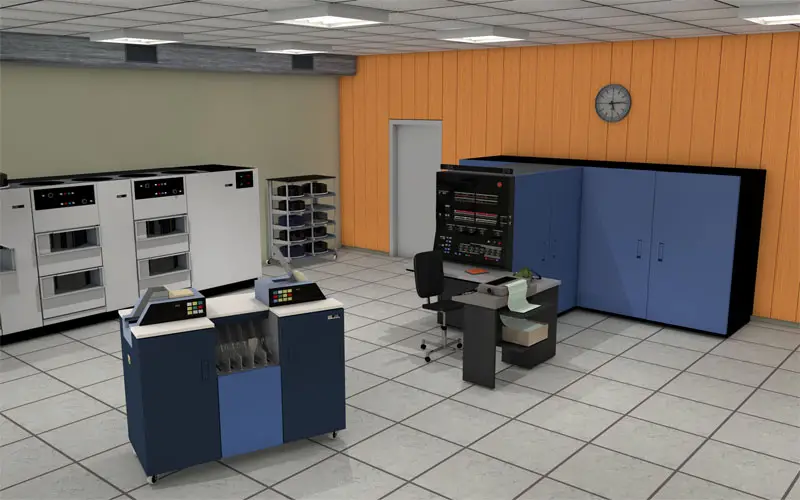
IBM S/370 mainframe computer. Credit: Oliver.obi, CC BY-SA 3.0, via Wikimedia Commons
« 2041 |
⇡ Back to top ⇡ |
2043 » |
If you enjoy our content, please consider sharing it:
References
1 Majority of primate species may vanish in next 25 to 50 years, New Scientist:
https://www.newscientist.com/article/2118359-majority-of-primate-species-may-vanish-in-next-25-to-50-years/
Accessed 19th April 2017.
2 Tanzanite: Tanzanian miner becomes overnight millionaire, BBC News:
https://www.bbc.co.uk/news/world-africa-53148612
Accessed 28th June 2020.
3 National Environment Statistics Report – Tanzania Mainland, National Bureau of Statistics (NBS) (Tanzania):
https://unstats.un.org/unsd/environment/Compendia/[...].pdf
Accessed 28th June 2020.
4 Presentation By H.E. Baraka H. Luvanda, Tanzania High Commissioner Of Tanzania Minerals And Metals Outlook, 2030, The High Commission of the United Republic of Tanzania - New Delhi:
https://www.in.tzembassy.go.tz/resources/view/presentation
Accessed 28th June 2020.
5 Tanzanite Mining, TanzaniteOne Mining Ltd:
https://www.tanzaniteone.com/tanzanite-mining
Accessed 28th June 2020.
6 History of immigration to the United States, Wikipedia:
http://en.wikipedia.org/wiki/History_of_immigration_to_the_United_States
Accessed 26th February 2012.
7 A Portrait of American Catholics on the Eve of Pope Benedict's Visit to the U.S., The Pew Forum:
http://www.pewforum.org/Christian/Catholic/A-Portrait-of-American-Catholics-on-the-Eve-of-Pope-Benedicts-Visit-to-the-US.aspx
Accessed 26th February 2012.
8 Hispanics Account for More than Half of Nation's Growth in Past Decade, Pew Hispanic Center:
http://www.pewhispanic.org/2011/03/24/hispanics-account-for-more-than-half-of-nations-growth-in-past-decade/#OtherTitle
Accessed 26th February 2012.
9 America's Tomorrow: Equity is the Superior Growth Model, PolicyLink:
http://www.policylink.org/sites/default/files/SUMMIT_FRAMING_WEB_20120110.PDF
Accessed 29th December 2017.
10 United States Population Projections: 2000 to 2050, United States Census Bureau:
http://www.census.gov/population/www/projections/analytical-document09.pdf
Accessed 26th February 2012.
11 Minorities set to be US majority, BBC:
http://news.bbc.co.uk/1/hi/7559996.stm
Accessed 26th February 2012.
12 "At the current pace of research, and barring changes in the regulatory landscape and current state of 3D bioprinting, 2042 is estimated as the timeframe for 3D-bioprinted solid organs to be approved as a clinical alternative for transplant..."
See Projecting a path for clinical translation of 3D-bioprinted human tissues, Medical Xpress:
https://medicalxpress.com/news/2022-10-path-clinical-3d-bioprinted-human-tissues.html
Accessed 24th August 2024.
13 3D-bioprinted human tissue and the path toward clinical translation, Science Translational Medicine:
https://www.science.org/doi/10.1126/scitranslmed.abo7047
Accessed 24th August 2024.
14 Virtual reality – future trends, Future Timeline – Data & trends:
https://www.futuretimeline.net/data-trends/19-virtual-reality-future-trends.htm
Accessed 31st May 2021.
15 AMD's graphics boss says VR needs 16K at 240Hz for 'true immersion', TweakTown:
http:/www.tweaktown.com/news/49693/amds-graphics-boss-vr-needs-16k-240hz-true-immersion/index.html
Accessed 31st May 2021.
16 Abrash: VR Needs to Hit 16K to Match 'Retinal Resolution', VR Focus:
https://www.vrfocus.com/2015/03/abrash-vr-needs-hit-16k-match-retinal-resolution/
Accessed 31st May 2021.
17 NVIDIA's GeForce 30 series – a major leap in graphical processing power, Future Timeline Blog:
https://www.futuretimeline.net/blog/2020/10/6-future-gpu-technology-timeline.htm
Accessed 31st May 2021.
18 Wireless brain linkage gets DARPA funding, Future Timeline Blog:
https://www.futuretimeline.net/blog/2021/01/28-wireless-brain-link-darpa-future-technology.htm
Accessed 31st May 2021.
19 "We predict that Apple's MR/AR product roadmap includes three phases: helmet type by 2022, glasses type by 2025, and contact lens type by 2030–2040."
See Kuo: Apple to Launch Mixed Reality Headset in Mid 2022 and Augmented Reality Glasses by 2025, Mac Rumours:
https://www.macrumors.com/2021/03/07/kuo-apple-mixed-reality-headset-2022/
Accessed 31st May 2021.
20 World's smallest single-chip system is <0.1 mm³, Future Timeline Blog:
https://www.futuretimeline.net/blog/2021/05/14-worlds-smallest-chip-volume-mm3.htm
Accessed 31st May 2021.
21 Strange mega storms sweep Uranus, BBC:
http://www.bbc.co.uk/earth/story/20150121-mega-storms-sweep-uranus
Accessed 25th June 2017.
22 Ice Giant Mission Study Final Report, NASA:
http://www.lpi.usra.edu/icegiants/mission_study/
Accessed 25th June 2017.
23 Revisiting the ice giants: NASA study considers Uranus and Neptune missions, The Planetary Society:
http://www.planetary.org/blogs/jason-davis/2017/20170621-revisiting-ice-giants.html
Accessed 25th June 2017.
24 Wikimedia Foundation removes The Diary of Anne Frank due to copyright law requirements, Wikimedia Foundation:
https://blog.wikimedia.org/2016/02/10/anne-frank-diary-removal/
Accessed 15th March 2017.
25 Project aims to grow a 'city of trees', BBC News:
http://www.bbc.co.uk/news/science-environment-38692022
Accessed 1st April 2017.
26 Urban trees can improve millions of lives by reducing air pollution and temperature, says report, Future Timeline Blog:
https://www.futuretimeline.net/blog/2016/11/1-2.htm
Accessed 1st April 2017.
27 Greater Manchester Transport Strategy 2040, Transport for Greater Manchester:
http://www.tfgm.com/2040/Pages/strategy/assets/2017/2-17-0078-GM-2040-Full-Strategy-Document.pdf
Accessed 1st April 2017.
28 Green spaces deliver lasting mental health benefits, Science Daily:
https://www.sciencedaily.com/releases/2014/01/140107093323.htm
Accessed 1st April 2017.
29 Green space keeps you from feeling blue, Science Daily:
https://www.sciencedaily.com/releases/2014/04/140411153322.htm
Accessed 1st April 2017.
30 Server Time Protocol Planning Guide, IBM Redbooks:
https://www.redbooks.ibm.com/abstracts/sg247280.html
Accessed 4th December 2022.
 |
|||||||||||||||||||||||||||||||
|
Latest predictions |
Timeline » 21st century |
Blogs » AI & Robotics |
Features » |
About us
|
|||||||||||||||||||||||||||
|
|
|||||||||||||||||||||||||||||||


