22nd January 2026 NASA lays groundwork for life-hunting telescope in the 2040s NASA has awarded contracts to seven companies to study technologies for the Habitable Worlds Observatory, a next-generation telescope that could provide sharper images of exoplanets.
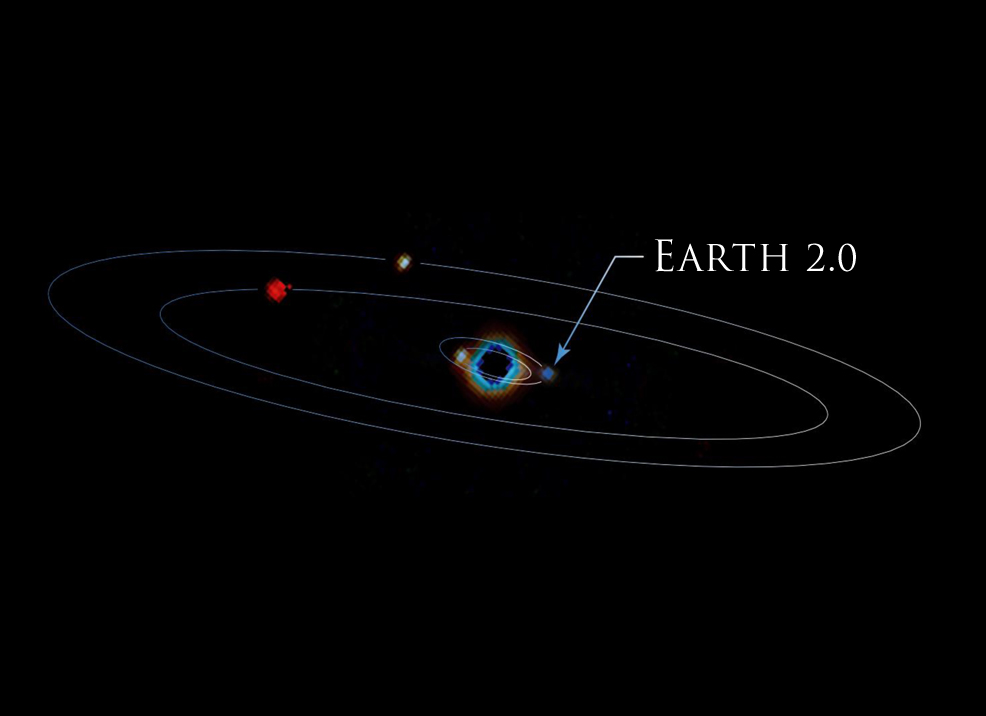
Astronomers have spent over three decades discovering thousands of planets beyond our Solar System, most of them detected through indirect methods such as stellar wobbles and tiny dips in starlight. These techniques can reveal an exoplanet's size, mass and orbit, but leave much unknown about the worlds themselves. Their surfaces, atmospheres, climates and potential oceans remain either poorly constrained or in most cases entirely unknown. A major new telescope called the Habitable Worlds Observatory (HWO) aims to change that, using direct observations to characterise and compare these distant worlds. Direct observations are not a new approach in exoplanet science, but they remain rare and technically demanding. Only 91 exoplanets have been directly imaged to date – less than 1.5% of the 6,080 confirmed total – almost all of them large, young gas giants orbiting far from their host stars. These worlds glow brightly in infrared light as they retain heat from their formation, making them far easier to detect than smaller, cooler planets. While such studies have provided valuable insights into planetary atmospheres and formation processes, they offer little information about Earth-sized planets in temperate orbits, which remain beyond the reach of today's telescopes. The HWO, which is being considered as a flagship NASA mission, aims to extend direct imaging into entirely new territory. By combining extreme optical stability with advanced starlight suppression, it would target rocky planets orbiting nearby Sun-like stars, including those within habitable zones. While its final objectives remain under study, earlier plans and concepts had suggested the characterisation of dozens of Earth-sized exoplanets, and the search for atmospheric signatures linked to climate and potential biological activity. Unlike previous efforts, which focused on rare and favourable targets, this new observatory would enable systematic comparisons between worlds, placing Earth into a broader planetary context for the first time.
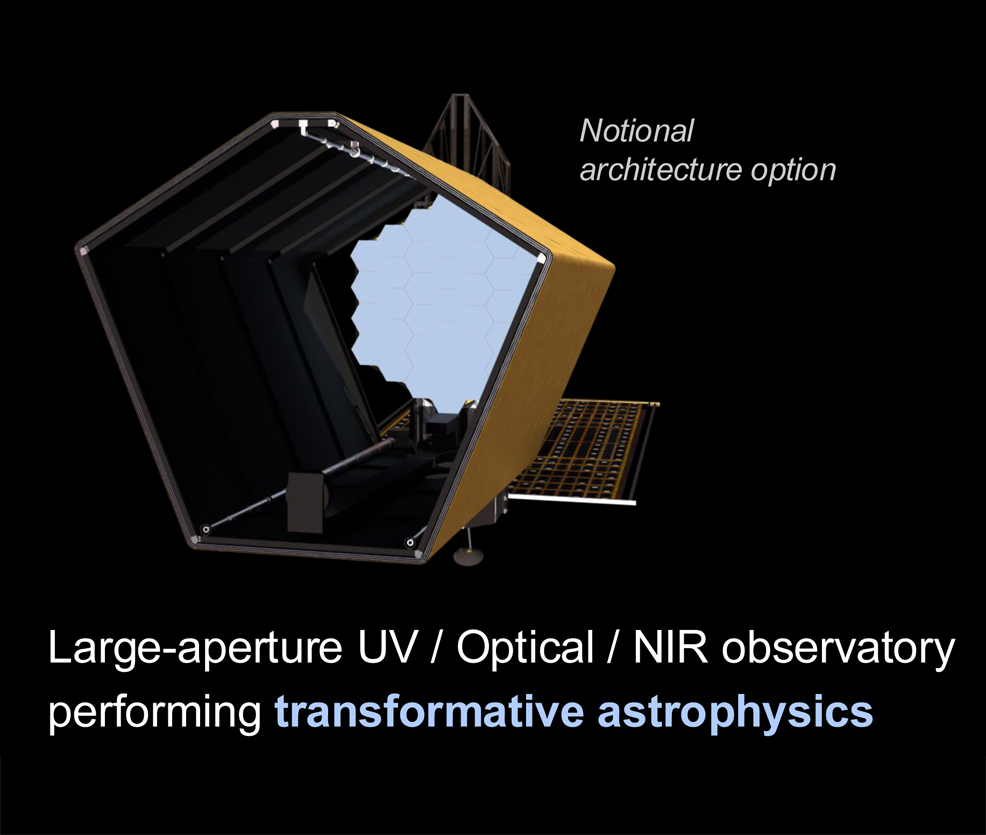
These ambitions come at a challenging moment for US space science. In recent months, concerns have grown over possible budget reductions at NASA, due to proposed spending cuts under the Trump administration. Some missions now face delays, descoping, or even cancellation, raising questions about the long-term viability of large observatories planned for the coming decades. Despite this uncertainty, NASA has signalled its intent to keep the Habitable Worlds Observatory moving forward by investing in early-stage technology development. The latest appropriations bill (released this month) provides $150 million for the HWO. The agency has now awarded study contracts to the following seven companies – Astroscale U.S., BAE Systems, Busek, L3Harris Technologies, Lockheed Martin, Northrop Grumman, and Zecoat Corporation – each tasked with exploring critical technologies for the mission. Together, their research will help determine which designs and performance targets are achievable, reducing risk ahead of any final mission approval. "Are we alone in the universe? is an audacious question to answer, but one that our nation is poised to pursue, leveraging the groundwork we've laid from previous NASA flagship missions. With the Habitable Worlds Observatory, NASA will chart new frontiers for humanity's exploration of the cosmos," said Shawn Domagal-Goldman, director of the Astrophysics Division at NASA's HQ in Washington. "Awards like these are a critical component of our incubator program for future missions, which combines government leadership with commercial innovation to make what is impossible today rapidly implementable in the future." To achieve its science goals, the HWO will require an optical system so exquisitely precise and stable that it moves no more than the width of an atom while conducting observations. Its mirror needs to be so smooth and perfectly shaped that its surface precision is achieved down to a level of 1 picometre – a trillionth of a metre – compared with billionths of a metre for today's most advanced space telescope. The mission's coronagraph – an instrument for blocking the extreme glare of a star to better see its orbiting planets – is likely to be orders of magnitude more capable than any space coronagraph ever built. The HWO would also be designed to allow servicing in space, to extend its lifetime and bolster its science over time. The mission team is now reported to be assessing two concepts: one with a six-metre mirror and another with an eight-metre mirror. If the larger version is ultimately selected, it would exceed the 6.5-metre collecting area of NASA's current flagship telescope, the James Webb Space Telescope. "HWO will be the most powerful telescope that NASA has ever launched," said Giada Arney, HWO project scientist. "We can do compelling science with a six-metre – but there are scientific reasons for pushing toward an eight-metre. Bigger apertures float everyone's boats." "The Habitable Worlds Observatory is exactly the kind of bold, forward-leaning science that only NASA can undertake," said NASA Administrator Jared Isaacman. "Humanity is waiting for the breakthroughs this mission is capable of achieving and the questions it could help us answer about life in the universe. We intend to move with urgency, and expedite timelines to the greatest extent possible to bring these discoveries to the world." If all goes according to plan, the HWO could launch in 2041. While many questions remain, this latest announcement makes clear that, for now, the search for habitable worlds beyond our Solar System continues to advance.
Comments »
If you enjoyed this article, please consider sharing it:
|