26th March 2026 New robot head pushes into the uncanny valley An ultra-realistic humanoid robot head from a Chinese startup is blurring the line between machine and human expression, raising fresh questions about where the uncanny valley begins – and whether it may soon disappear.
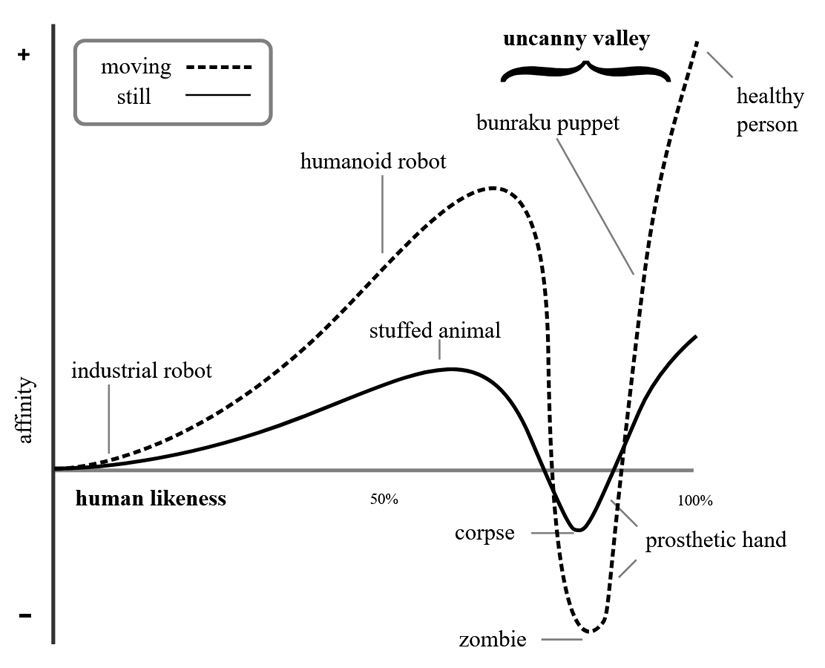
In recent years, humanoid robotics has made rapid strides in movement and dexterity, with companies building machines that can walk, lift and manipulate a range of objects, and navigate complex environments. Yet one of the hardest challenges has remained largely unsolved: creating a face that looks and behaves convincingly human. Now, a relatively new Chinese startup, AheadForm, appears to have taken a notable step forward. Founded in 2024, the company operates across several cities in China and internationally, including Shanghai, Beijing, Hangzhou, and New York. AheadForm has focused less on full-body robots and more on what might be described as the "social interface" of AI. Its latest demonstration, the Origin F1, consists of a humanoid head and partial upper torso, designed to replicate human facial behaviour with striking fidelity. The system uses a network of internal actuators beneath a flexible, skin-like surface, enabling subtle movements of the eyes, lips, and brows. These physical expressions are paired with an AI system described as the "Omni Model", which integrates vision, audio, and language processing to interpret and respond to human behaviour in real time. In video demonstrations circulating online this month, the Origin F1 blinks, glances, and shifts expression in ways that, from certain angles, are eerily similar to a real person. The effect is especially convincing at a slight distance, where small imperfections are less noticeable. The realism is further enhanced by AI-driven synchronisation, allowing facial movements to respond to spoken input and perceived emotional cues. This places the technology on the descending slope of what is known as the uncanny valley – a concept from robotics and psychology describing how human-like machines can provoke discomfort when they appear almost, but not quite, real. As realism increases, this unease typically intensifies before eventually fading if a machine becomes truly indistinguishable from a human. The Origin F1 appears to have edged closer to that point, representing a clear step above earlier models in terms of natural expression.
Uncanny valley. Credit: Smurrayinchester, CC BY-SA 3.0, via Wikimedia Commons
AheadForm's earlier work has explored similar territory, including highly expressive robotic heads, as well as stylised humanoids such as elves, a monk-like figure and a futuristic-looking female cyborg. However, the Origin F1 features even smoother motion and more convincing micro-expressions than previous iterations. Despite this progress, the system remains a demonstration platform rather than a commercial product. No specific applications have been confirmed as yet, although based on its previous work, the company has suggested potential roles in areas such as customer service, education, and companionship. What makes this development particularly interesting is its divergence from the current focus of the robotics industry. While firms such as Boston Dynamics and Tesla are geared towards physical labour and mobility, AheadForm is concentrating on emotional realism and human interaction. In this sense, the face itself becomes the product, acting as a bridge between artificial intelligence and human perception. Looking ahead, however, these two paths are going to converge. Future humanoid robots will combine the strength and autonomy of industrial machines with the expressive capabilities now emerging in systems like the Origin F1, resulting in machines that are not only physically capable, but socially fluent. Further progress in materials, actuation, and AI modelling could bring such systems close to full realism over the next decade or two. Ultimately, androids may become physically indistinguishable from humans in controlled settings, with profound implications for society. Questions around trust, identity, and emotional attachment are likely to become increasingly important, as machines move beyond tools and begin to occupy roles that feel distinctly – and perhaps uncomfortably – human.
Comments »
If you enjoyed this article, please consider sharing it:
|