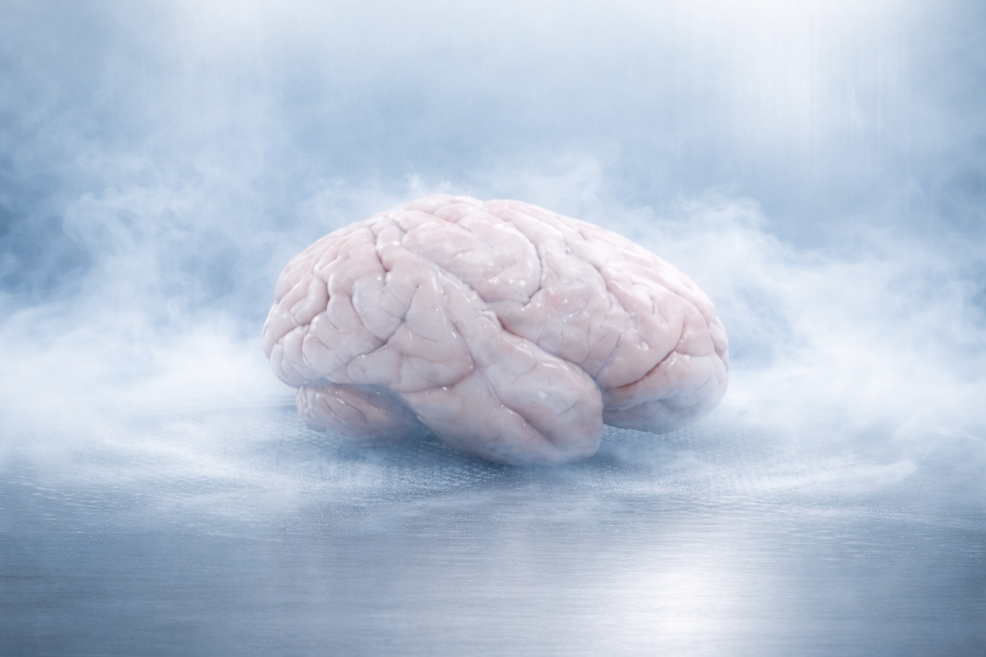
31st March 2026 Brain cryopreservation takes a notable step forward Researchers in the US have preserved the fine structure of a whole pig brain following death, offering new possibilities for long-term biostasis – although claims about future "revival" remain highly speculative.
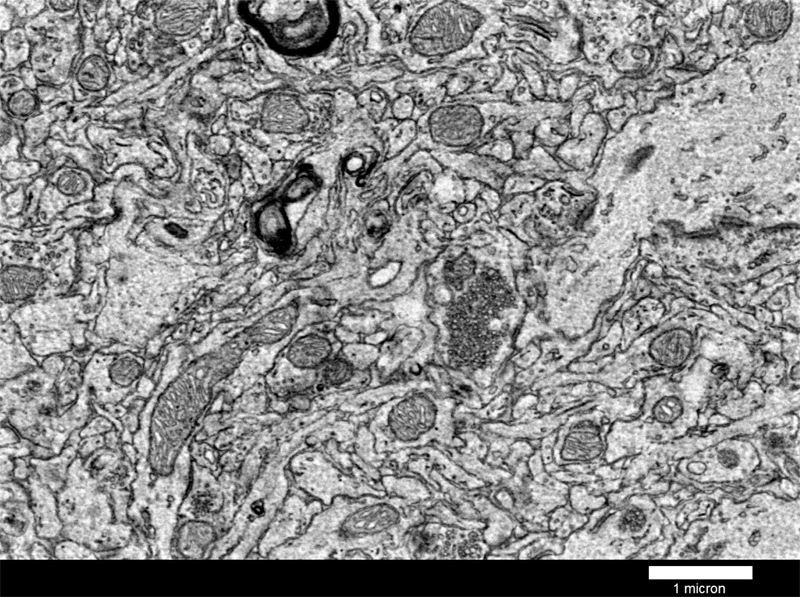
Scientists have developed a new method for preserving the microscopic structure of an entire mammalian brain after death, marking a potentially significant advance in neuroscience and long-term biostasis. The findings, currently available as a preprint and not yet peer reviewed, describe a technique that maintains brain ultrastructure with remarkable fidelity. The research, carried out by a team associated with the US company Nectome, focused on pigs, whose cardiovascular system and brain anatomy resemble those of humans. Using a modified form of aldehyde-stabilised cryopreservation (ASC), the team preserved the brain's ultrastructure – including neurons, synapses, membranes, and axonal processes – in fine detail. They also refined the timing and perfusion processes for post-mortem use following physician-assisted death, potentially allowing doctors to apply similar techniques in human cases. The procedure begins shortly after cardiac arrest. Researchers first flush blood from the brain, then introduce chemical fixatives to preserve its ultrastructure. They then add cryoprotectants to prevent the formation of damaging ice crystals during cooling. Rather than extreme cryogenic temperatures, the authors suggest that preserved brains can be stored at relatively moderate sub-zero temperatures, potentially about –35°C when combined with suitable cryoprotectants. Crucially, the study identifies a narrow "perfusability window" of around 14 minutes after cardiac arrest, during which this process must begin if the brain's structure is to be preserved. When the team operated within that window, electron microscopy revealed well-preserved cellular membranes, intact mitochondria, and clearly defined synapses. In these samples, they could trace neural processes through three-dimensional imaging, suggesting that the brain's wiring diagram remains largely preserved.
This level of structural fidelity matters because it could, in principle, support connectomics – the mapping of the brain's complete network of neural connections. The authors believe such preservation may one day enable high-resolution computational models, including the potential for whole human brain/body emulations in the distant future. No recovery of brain activity, consciousness, or memory emerged from this study. The new method preserves structure, not function. Nevertheless, the physical architecture of the brain appeared remarkably intact in the analysed samples. The team further suggests that preserved brains could remain stable for extraordinarily long periods – potentially thousands of years. They estimate that under consistent storage conditions of around –35°C, key molecular structures could degrade by as little as 0.1% over roughly 6,000 years. However, this remains a theoretical projection based on chemical stability rather than an experimentally verified timescale. The authors suggest that doctors could use such a protocol in terminally ill human patients following physician-assisted death if perfusion begins quickly enough. This raises ethical questions about how such techniques might be used on people in the future, particularly if expectations about "revival" become more optimistic than what current science supports. This follows progress reported in February 2025, when a separate team of researchers demonstrated the revival of frozen mouse brain tissue at the level of electrical activity. Together, these studies show how the field of cryopreservation is advancing along two distinct paths: preserving function in small samples, and preserving structure at the scale of an entire brain. The authors in this latest study argue that "structural—ultrastructural, to be precise—brain preservation" could "provide a bridge to hypothetical restorative technologies in the future." They also say that aldehyde fixation "allows the maintenance of all the critical aspects: the shape of cell membranes and the location and structure of informational biomolecules." While these results are impressive, major challenges remain. Preserving a brain's structure is only one step toward understanding or recreating its function, and the gap between the two remains vast. If future studies validate this method through peer review and replication, it could support new approaches to studying brain circuits, neurological disease, and the biological basis of memory. For now, however, the idea of reconstructing a human mind from preserved tissue continues to lie firmly in the realm of speculation.
Comments »
If you enjoyed this article, please consider sharing it:
|