2nd April 2026 Robots double the speed of solar farm construction Robotic systems in California are helping install solar panels at nearly twice the speed of traditional methods, marking a shift toward AI-driven infrastructure at scale.
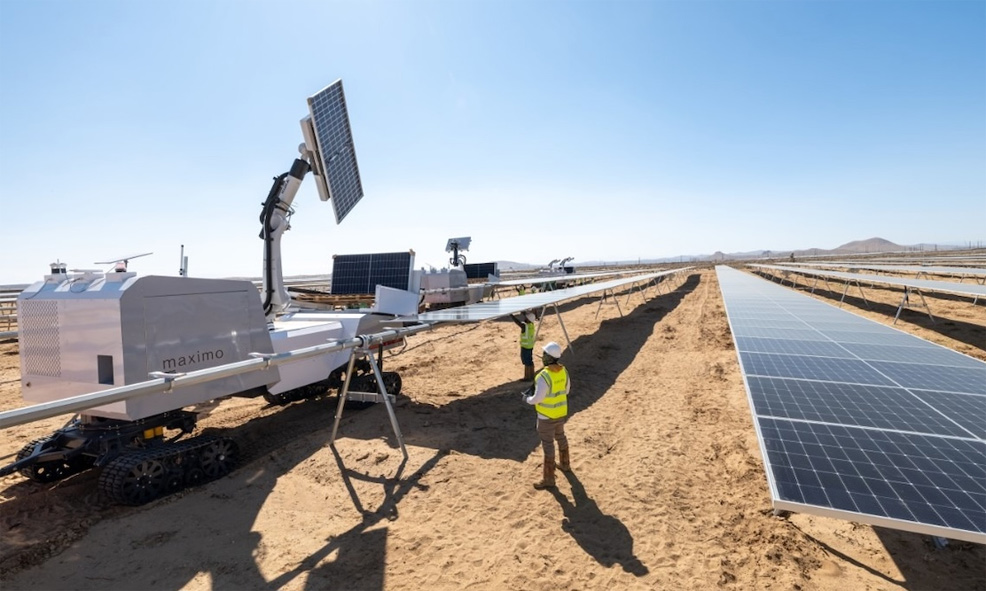
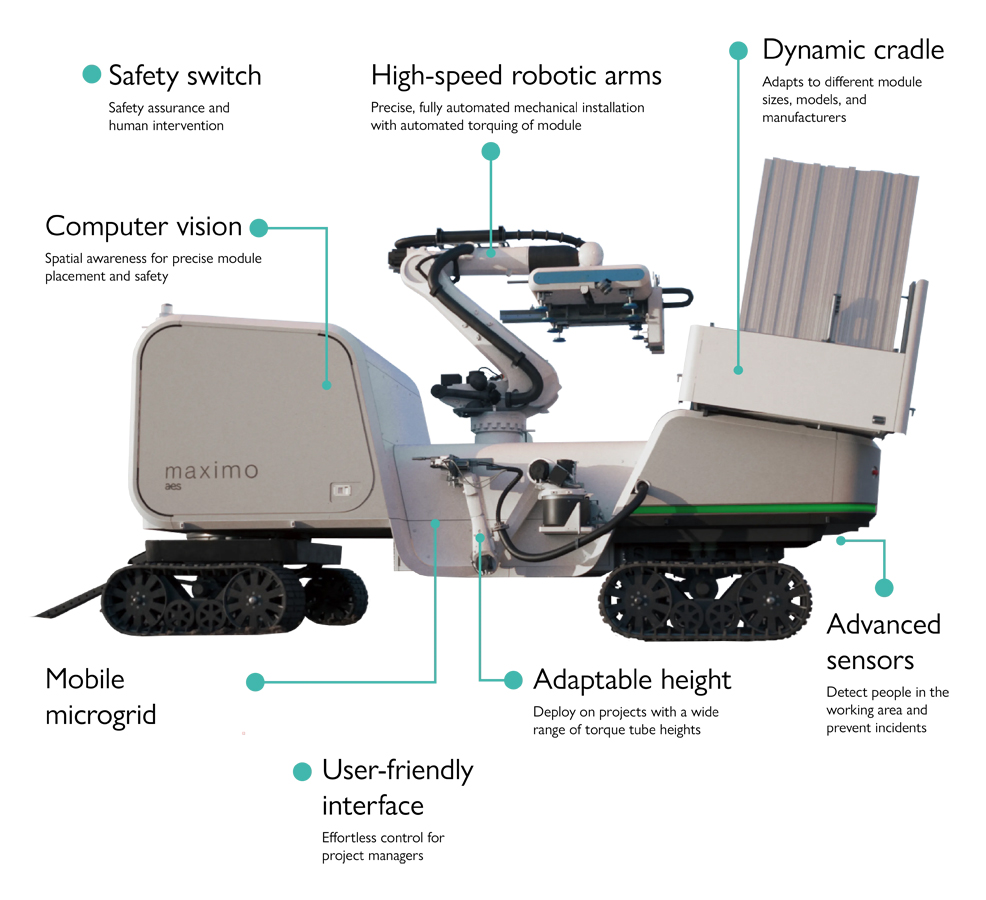
A new milestone in solar energy construction has been reached, with robotics company Maximo completing 100 megawatts (MW) of installation at a single site in southern California. The achievement, announced by parent company AES, occurred at its Bellefield facility, and signals a transition from early testing to sustained commercial deployment of robotic systems in utility-scale solar. As global electricity demand continues to rise – driven by data centres, vehicle electrification, and other growth areas – the need for faster, more efficient construction methods is becoming increasingly urgent. Maximo is described as "the world's first AI-enabled solar robot" and comes equipped with onboard sensors, machine vision, and a high-speed robotic arm capable of lifting, positioning, and securing solar panels with high precision. The system had installed nearly 10 MW of solar capacity by 2024. Having now surpassed 100 MW, AES is planning to ramp up even faster and deploy a massive 5 GW across its solar pipeline within the next few years. Rather than replacing human workers, the system operates alongside skilled technicians, integrating robotic module placement into existing construction workflows. At Bellefield, a fleet of four robots worked in parallel, delivering a substantial boost in productivity while maintaining high safety and quality standards. Performance data from the site highlights the scale of improvement: the robots consistently installed more than one solar module per minute, with crews achieving up to 24 modules per hour per person – nearly double the output of traditional installation methods in the region. The system is also claimed to provide major cost savings, reducing overall expenditure by around half during the installation phase.
Behind this performance is a combination of AI, robotics, machine vision, and physics-based simulation. Development and training of the Maximo robots involved the use of advanced simulation tools from technology giant NVIDIA, allowing engineers to refine their behaviour before deployment in the field. Once operational, cloud-based platforms continuously analyse performance data, enabling ongoing optimisation. The result is a system capable of powerful, real-time data processing, operating reliably in complex construction environments where terrain, weather, and logistics can vary significantly. This marks another important step forward for "physical AI" – the application of artificial intelligence to real-world machines performing physical tasks. "Physical AI is a powerful force for accelerating real-world energy infrastructure," said Marc Spieler, Senior Director of Energy, NVIDIA. "By combining AI infrastructure, simulation, and edge AI, platforms like Maximo demonstrate how physical AI can accelerate solar panel installation while maintaining high reliability in complex environments." The project at Bellefield, Kern County, demonstrates that robotic solar installation is no longer experimental. It is now scaling toward gigawatt-level deployment, potentially reshaping how large energy projects are built in the future. Further improvements are already in development, with next-generation Version 4 robots expected to deliver even greater performance. Looking ahead, the United States is expected to install hundreds of gigawatts of new solar capacity over the coming decade. Robotic solutions such as Maximo could help overcome labour shortages, reduce costs, and accelerate the rollout of clean energy infrastructure.
Comments »
If you enjoyed this article, please consider sharing it:
|