7th April 2026 AI cuts MRI scan times by more than half Artificial intelligence is helping hospitals dramatically reduce MRI scan times while also boosting image quality, with a leading cancer centre in Amsterdam reporting a drop from 23 minutes to just 9 minutes for certain procedures.
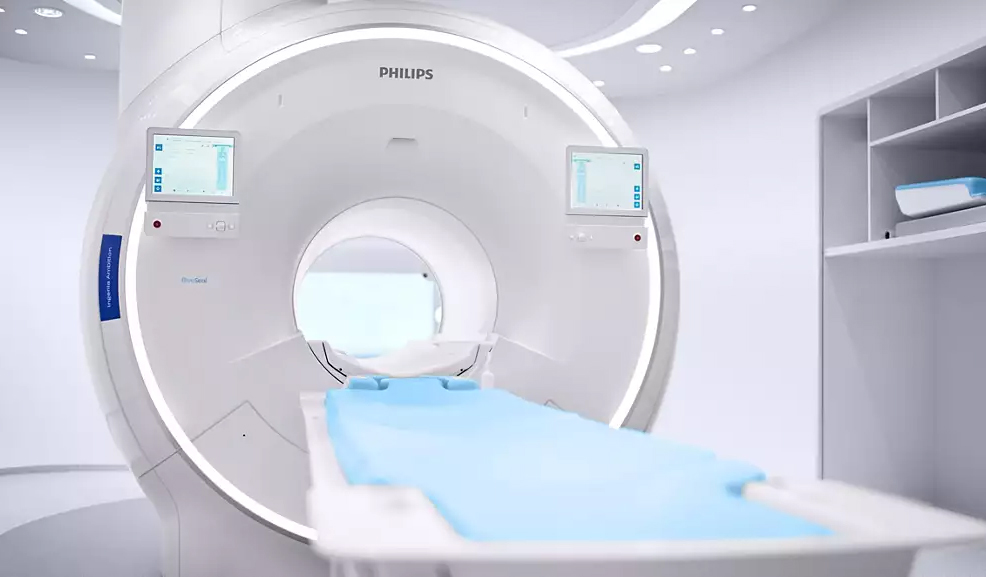
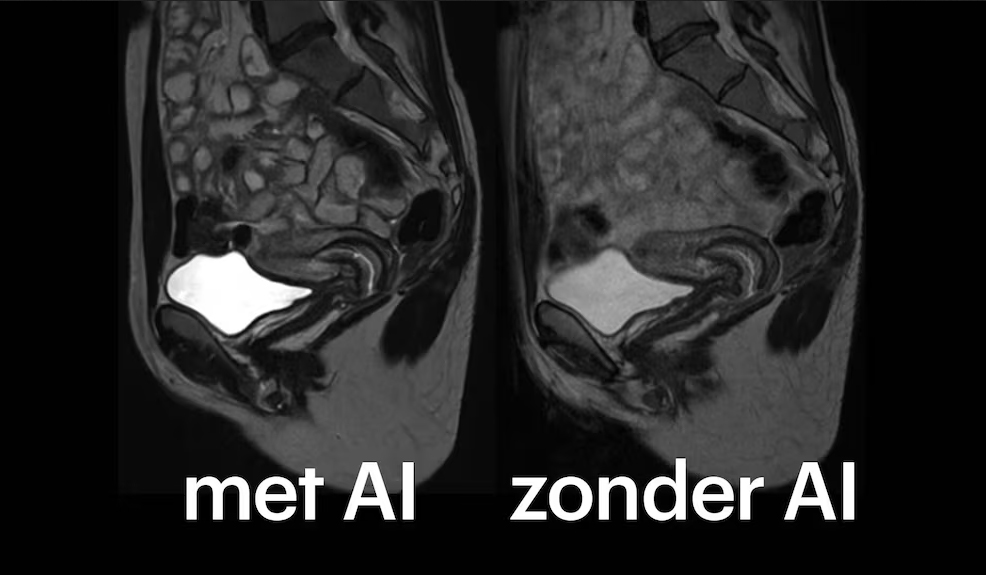
At the Antoni van Leeuwenhoek Hospital, clinicians have begun using new AI-powered software to accelerate how raw scan data is converted into medical images. The system runs on advanced MRI hardware developed by Dutch company Philips, combining compressed sensing techniques with a dual-AI reconstruction process. In some cases, such as lower abdomen imaging, this has reduced scan times from 23 minutes to just 9 minutes. Rather than changing how scans are captured, the technology focuses on how the data is processed. The AI predicts and reconstructs missing information in a mathematically efficient way, allowing the scanner to collect less data while also producing higher-quality images. According to Philips, the system achieves up to 80% higher image sharpness than conventional methods, with deep learning technology applied directly to MR signals to remove noise and preserve fine detail. This reduces the time patients need to remain inside the machine, which can be noisy and confined. Radiologist Doenja Lambregts explained the benefit in practical terms: "The AI helps the scanner process the information into images. The software calculates in a smart way what should be shown in the images. That way you get a good image faster." Shorter scans also improve image clarity. Patients often struggle to remain perfectly still for long periods, while internal motion from breathing and organ activity can blur results. "You can't tell your intestines to stay still," Lambregts noted, highlighting a long-standing limitation of MRI imaging.
The impact on hospital workflow is already significant. The Amsterdam team reports that it can now perform around 18 additional examinations per week. Previously, many scans required evening or weekend appointments. Now, more patients can be seen during standard daytime hours, easing pressure on staff and helping to reduce waiting lists. This development reflects a broader trend across healthcare systems. In the UK, for example, Hull University Teaching Hospitals NHS Trust last year reported similar gains using AI-assisted MRI reconstruction, cutting scan times by 10 to 15 minutes for certain procedures. A routine head MRI fell from 30 to 20 minutes, while a prostate scan dropped from 45 to 30 minutes, increasing daily patient throughput. Despite these promising results, researchers caution that the evidence base for AI-accelerated MRI remains limited. Some studies show improvements in image quality and efficiency, while others highlight the need for further validation to ensure diagnostic accuracy remains consistent across different use cases. Even so, the direction of travel is clear. As AI models continue to improve, scan times are likely to fall further, potentially transforming MRI from a slow and resource-intensive process into a faster, more accessible diagnostic tool. For patients, that could mean shorter, more comfortable scans. For hospitals, it could mean fewer backlogs and better use of expensive equipment. And for healthcare systems under growing strain, it offers a glimpse of how AI may help deliver more care with the same resources. Looking further ahead, early forms of portable, low-field MRI systems have already begun to emerge for limited use cases such as bedside brain imaging. In the longer term, continued advances in hardware, AI, and miniaturisation could lead to compact or even handheld scanners, offering high-quality imaging in fractions of a second rather than minutes.
Comments »
If you enjoyed this article, please consider sharing it:
|