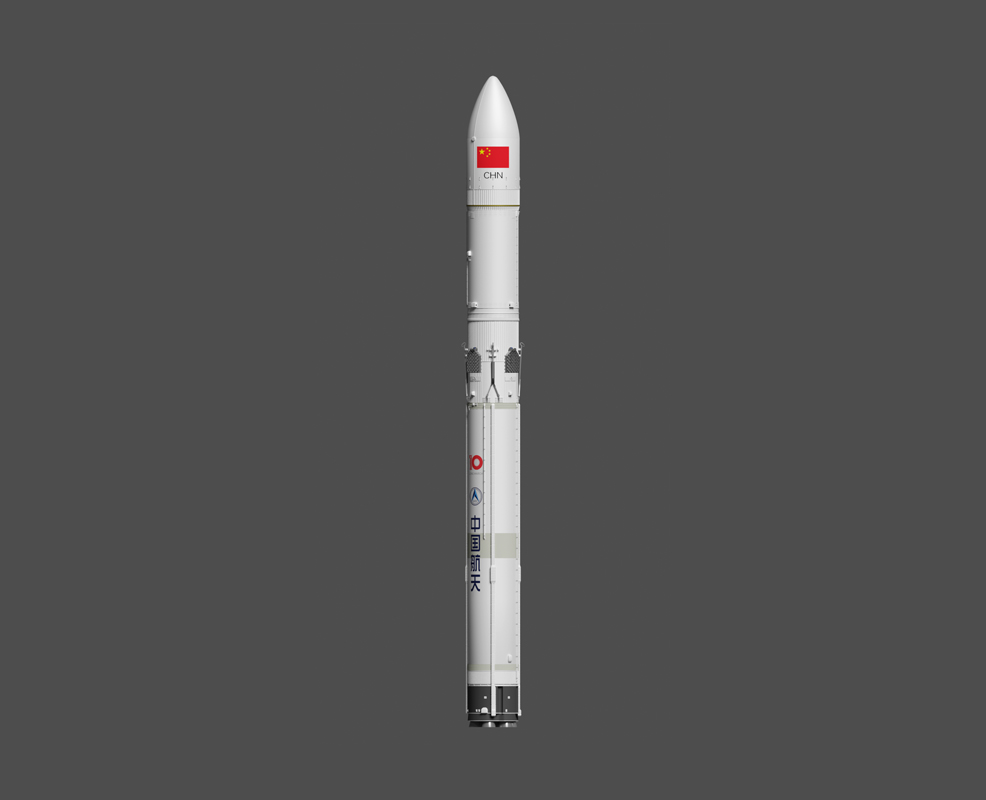
10th July 2026 China challenges SpaceX with its first rocket recovery at sea The successful recovery of a reusable Long March 10B booster brings China closer to matching SpaceX and could intensify competition across the global launch industry.
China has successfully recovered an orbital-class rocket booster for the first time, marking an important breakthrough in its efforts to develop cheaper and more frequently reusable launch systems. The Long March 10B, which is 63.6 m (209 ft) tall, can deliver up to 16,000 kilograms (35,275 lb) to low Earth orbit in its reusable configuration. For comparison, the Falcon 9 has carried about 17,500 kilograms (38,581 lb) to low Earth orbit while still recovering its first-stage booster. With a first stage powered by kerosene and liquid oxygen and a second stage using liquid methane and liquid oxygen, the rocket lifted off from Hainan at 04:15 UTC today. Its upper stage placed a satellite into its designated orbit, while the first stage returned vertically towards an offshore recovery platform. Rather than touching down on deployable landing legs, as SpaceX's Falcon 9 does, four hooks mounted on the booster engaged a cross-shaped, high-strength arresting net. LiDAR units positioned around the platform tracked the rocket's position and attitude, while coordinated movements of the net widened the capture window and specialised cables absorbed the remaining energy, leaving the booster suspended above the deck. This makes the Long March 10B only the fifth orbital-class launch system to achieve a controlled, powered recovery of a first-stage booster, after the Falcon 9 (2015), Falcon Heavy (2018), Starship's Super Heavy booster (2024), and New Glenn (2025). China also becomes the first country outside the United States to accomplish this feat. Remarkably, the Long March 10B succeeded during its maiden flight, matching the Falcon Heavy, whose two Falcon 9-derived side boosters landed during its debut.
Although SpaceX remains far ahead – having recovered and reflown Falcon 9 boosters hundreds of times – China's breakthrough could mark the beginning of a serious challenge to its dominance. Until now, China had never successfully recovered an orbital-class booster. If the Long March 10B can demonstrate reliable and rapid reuse, it could sharply reduce launch costs and narrow the gap with Elon Musk's company. The development team aims to refly the recovered Long March 10B booster before the end of 2026. A successful reflight could accelerate China's progress in deploying vast satellite megaconstellations, providing domestic rivals to Starlink and expanding the country's orbital communications infrastructure. The wider Long March 10 programme could also support China's plans for crewed exploration of the Moon. Today's breakthrough could also spur faster investment by SpaceX and other Western launch providers. As China and the United States compete for commercial, scientific and military influence beyond Earth, reusable rockets are becoming a central technology in a rapidly intensifying space race.
Comments »
If you enjoyed this article, please consider sharing it:
|