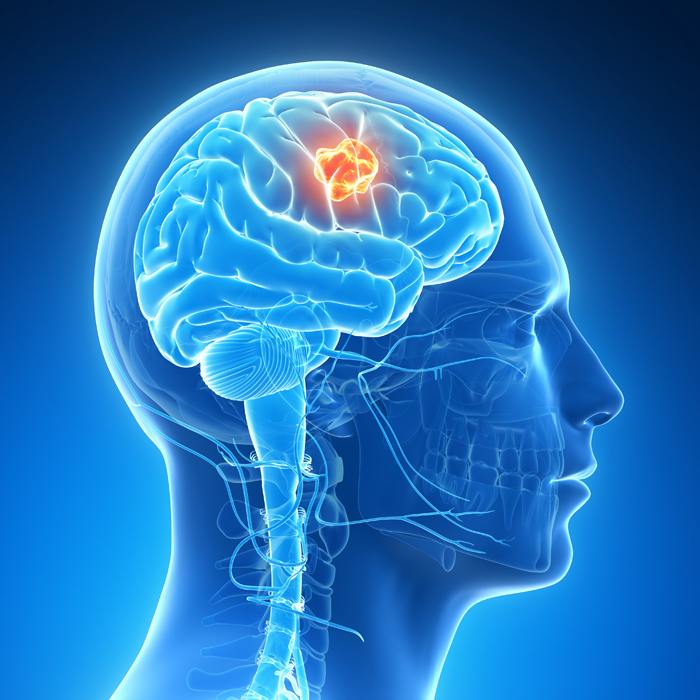
23rd July 2026 New hope for treating deadliest brain cancer Engineered immune cells have eliminated glioblastoma in preclinical models, raising hopes for future treatments against a cancer with very poor survival rates.
Scientists have developed an experimental cell therapy that could offer hope against glioblastoma, the most aggressive and difficult-to-treat form of brain cancer. The work, led by researchers at King's College London and McMaster University in Canada, uses chimeric antigen receptor T-cell therapy, better known as CAR-T. This approach typically involves removing a patient's own T cells, genetically engineering them to recognise a specific target on cancer cells, and returning them to the body. CAR-T has already transformed outcomes for some blood cancers, but solid tumours such as glioblastoma have proved much harder to treat. Glioblastoma is especially lethal because it spreads through the brain in thread-like patterns, making complete removal almost impossible. Even after surgery, radiotherapy and chemotherapy, microscopic remnants can remain and later regrow. Average survival is only 12 to 18 months after diagnosis, while just 5% of patients live beyond five years. In their new study, published in Nature, the team focused on a protein called GPNMB. This was found not only on glioblastoma cells, but also on macrophages – immune cells that are normally part of the body's defences, but which glioblastoma can recruit and reprogramme to help the tumour grow, resist treatment and suppress immune attacks. By engineering CAR-T cells to recognise GPNMB, the researchers were able to attack the cancer on two fronts: the tumour itself, and the immune cells helping to protect it. In several preclinical models – including models grown from human patient tumours – the therapy eliminated detectable tumours and led to long-term disease-free survival.
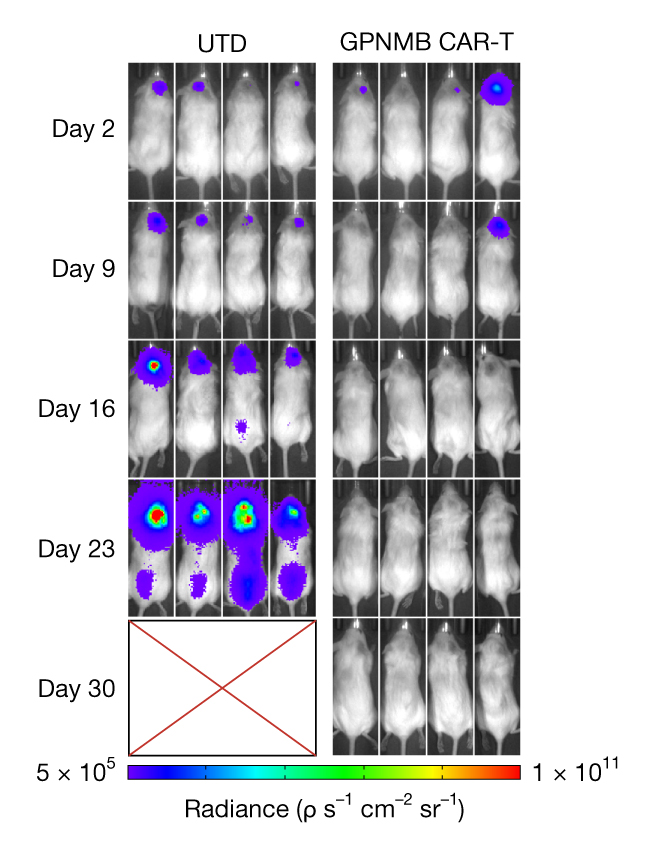
GPNMB-targeting CAR-T cells eliminate glioblastoma in a preclinical model.
Bioluminescence imaging of mice implanted with patient-derived glioblastoma cells shows tumour growth in animals receiving untransduced T cells (UTD), while the tumour signal becomes undetectable following GPNMB CAR-T treatment.
"Instead of treating glioblastoma as only a mass of cancer cells, we need to think of it as a connected tumour–immune ecosystem," said senior author Professor Sheila Singh, Professor of Neuro-oncology and Neurosurgery at both King's College London and McMaster University. "Our approach targets both the tumour and the environment that allows it to thrive. By going beyond the cancer cells alone, we are also targeting immune cells that help shield the tumour from treatment." The results remain early-stage, and the treatment has not yet been tested in humans. The next steps are likely to involve further safety testing, refinement and work towards clinical trials. If successful, this approach could one day provide a much-needed new option for patients facing one of the deadliest cancers. Over the longer term, therapies such as this could form part of a much wider transformation in neuro-oncology. In a related Future Timeline prediction published last year, we explored how advances in immunotherapy, nanomedicine, early detection and AI-assisted treatment could reduce brain and nervous system cancer mortality to near-zero levels in developed countries by the 2080s.
Comments »
If you enjoyed this article, please consider sharing it:
|