30th August 2026 NASA launches flagship Roman Space Telescope One of the most powerful astronomical observatories ever built will survey the cosmos on an unprecedented scale, revealing new planets, stars, galaxies and clues to the nature of the universe itself.
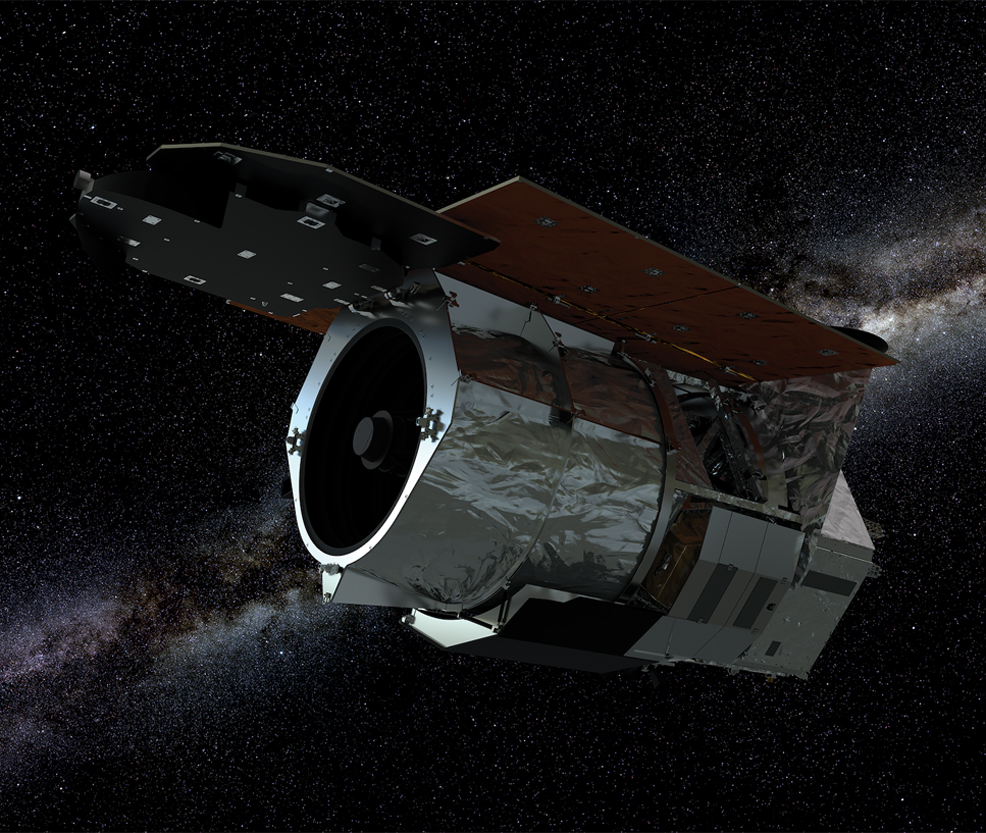
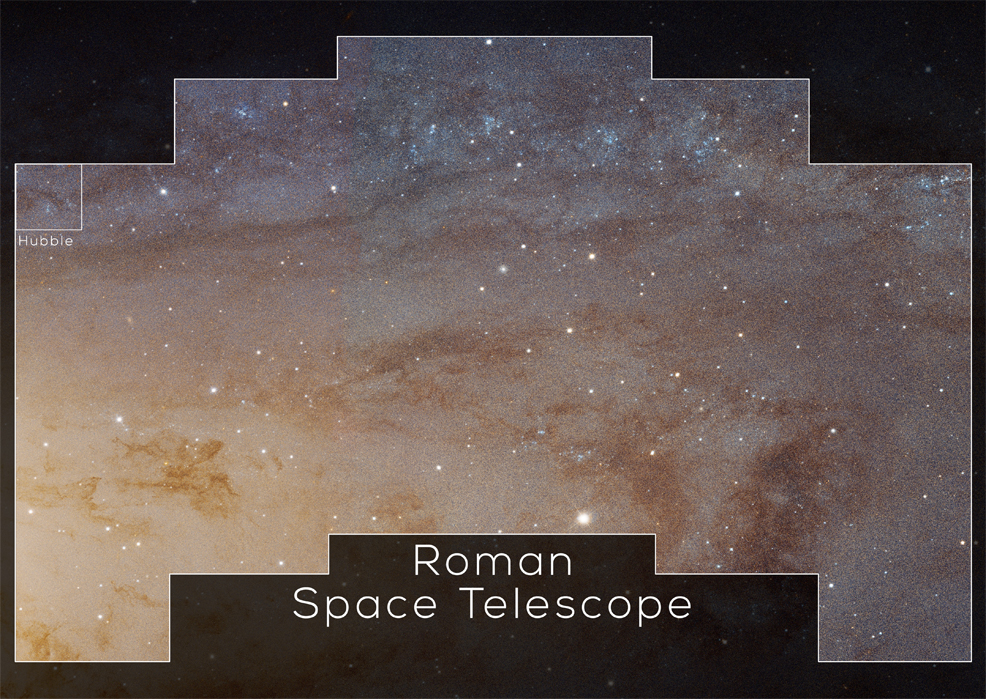
NASA today launched its Nancy Grace Roman Space Telescope aboard a SpaceX Falcon Heavy rocket from Kennedy Space Center in Florida. The flagship observatory now begins a three-month journey and commissioning period on its way to the Sun-Earth L2 point, about 1.5 million km (1 million miles) from Earth. Roman will use a 2.4 m (7.9 ft) mirror, the same diameter as Hubble's, but its Wide Field Instrument will capture at least 100 times more sky in a single exposure while maintaining similar sensitivity and infrared resolution. It will be capable of surveying the sky up to 1,000 times faster than Hubble.
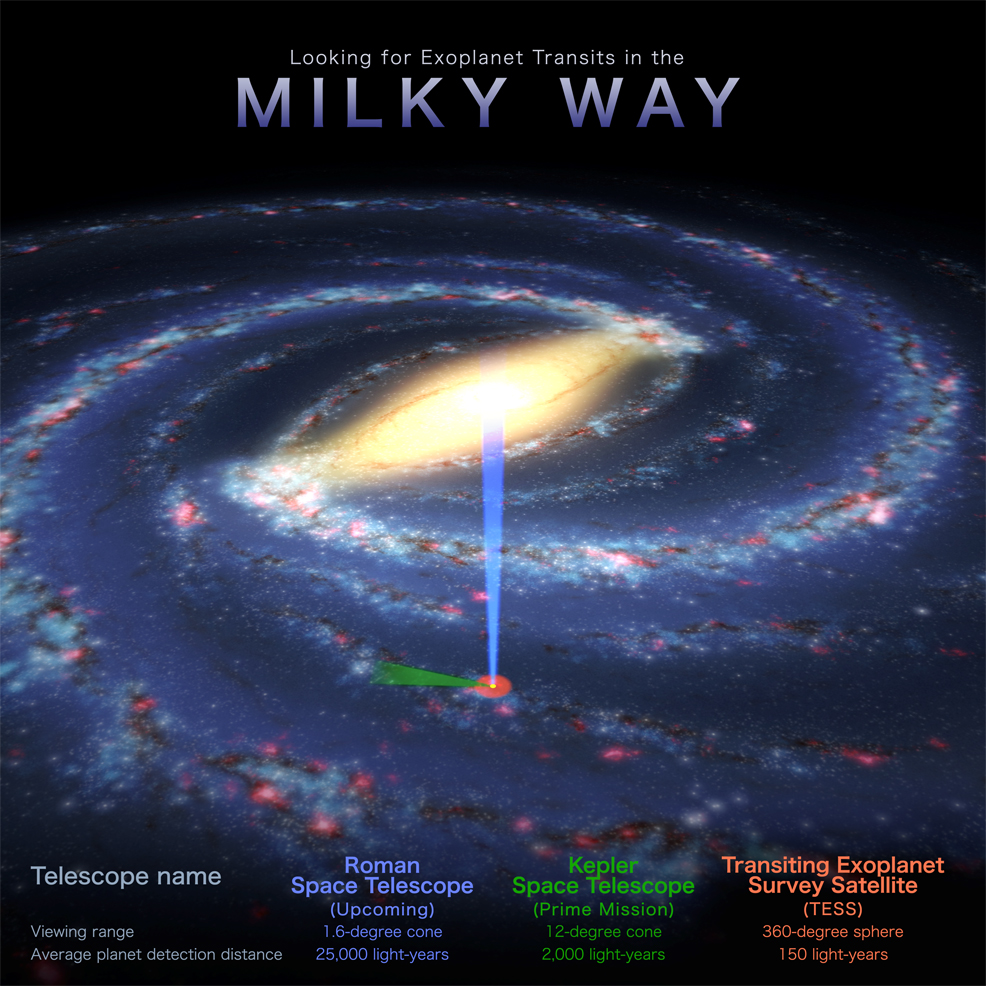
During its five-year primary mission, Roman will map billions of galaxies and vast numbers of stars, helping astronomers measure how dark matter shapes cosmic structure and how dark energy drives the accelerating expansion of the universe. The telescope will also become a prolific planet hunter. NASA expects its surveys to reveal around 100,000 transiting exoplanets, plus a further 2,500 through gravitational microlensing, including rocky worlds smaller than Mars and even free-floating "rogue" planets. These observations will target the Galactic Centre at distances of up to 26,000 light-years, much farther than previous exoplanet surveys by Kepler and TESS.
The same observations should uncover more than 1,000 neutron stars, hundreds of stellar-mass black holes and around 1,000 previously unknown objects in the Kuiper belt, with sensitivity to bodies only about 10 km (6 mi) across. Roman also carries an experimental coronagraph that will block stellar glare and demonstrate advanced technology for directly imaging Jupiter-like exoplanets in relatively close orbits around nearby stars. NASA will now deploy, calibrate and test the observatory during its journey to L2. Roman should become fully operational in early 2027, when NASA plans to release its first public science images.
Comments »
If you enjoyed this article, please consider sharing it:
|