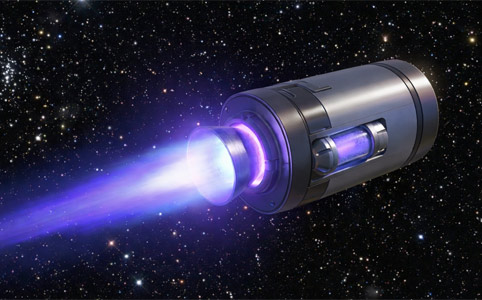
The first quarter of the 23rd century is marked by humanity's transition from interstellar probes to the earliest crewed journeys beyond the Solar System, driven by breakthroughs in antimatter propulsion.
Japanese researchers have created a tough, flexible plastic made from plant cellulose that breaks down quickly and safely in salt water. Unlike most "biodegradable" plastics, it leaves behind no microplastics.
By the 2170s, antimatter is no longer just a catalyst in hybrid engines; it now powers the main propulsion stages of many space probes, enabling routine exploration of neighbouring star systems.
New research suggests that even if we cured almost every aspect of aging, humans might still struggle to live beyond about 150 years, due to the slow and unavoidable accumulation of random DNA errors in our cells.
Industrial-scale, gram-level antimatter production is now enabling a revolution in hybrid space propulsion, as well as unlocking new capabilities in defence, energy transport, and high-energy research.