![[+]](https://www.futuretimeline.net/images/buttons/expand-symbol.gif)
|
|
|
|
|
|
2015-2019
Personal genome sequencing enters the mainstream
The use of bioinformatics in healthcare is growing exponentially during this time,* thanks in large part to the falling cost of genome sequencing. This is creating a new generation of personalised diagnosis and treatments that can be specifically tailored to an individual's own DNA.
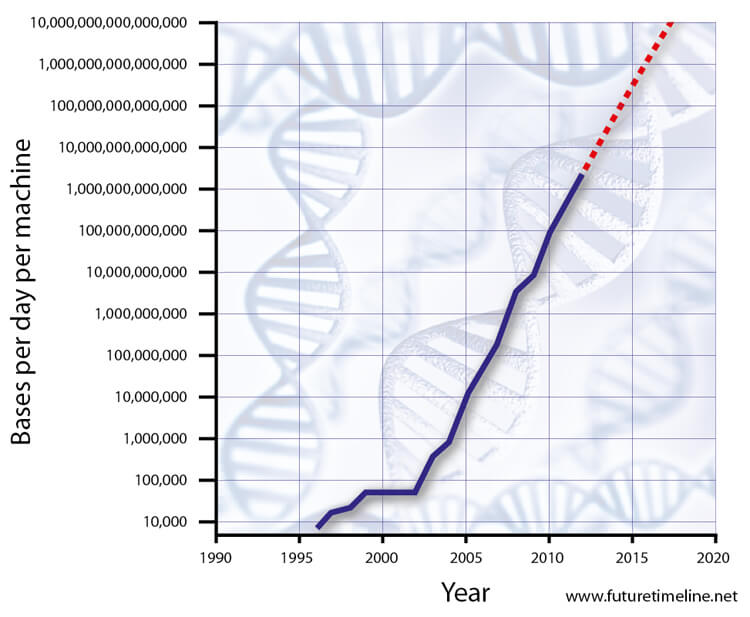
After the Human Genome Project was finished in 2003, its potential for public use began to be realised. It had taken nearly 15 years and billions of dollars to identify and map all 3.3 billion base pairs in the human genome. However, the methods used to achieve this goal were improving at a rate even faster than Moore's Law in computer chips.* From 2008, the cost per genome went into freefall.
Among the early adopters was 23andMe, a company which offered partial genome sequencing to customers. Despite a slowdown of cost reductions in the early 2010s,* along with regulatory hurdles,* this company along with a range of others entering the market had already opened the floodgates. In the second half of the 2010s, average costs for whole genome sequencing would continue to fall* – reaching less than $1000** – while even greater advances were made in the portability* of machines for analysing samples. Thanks to nanopores and other novel technology,* these were now becoming so compact and fast that it was possible to get results from a handheld device in a matter of hours, at low cost.
By the end of this decade, these genome sequencers have a wide range of practical applications. They can be used at crime scenes, for example, to analyse biological evidence without having to return to the laboratory, saving time and money. Foreign aid workers in developing nations can identify viruses and verify water quality. Food inspectors can check for harmful pathogens in restaurants. Wildlife biologists can study genes in the field.
But perhaps the most widespread use of genome sequencing is now among the general public, who can utilise it for a mere fraction of the cost in the previous decade. Just as the Internet seemed to appear out of nowhere during the mid-1990s, personalised genomics is now entering the mainstream. Its popularity stems from the health benefits and medical insights it offers: after the base pairs are sequenced, an individual's genotype can be cross-referenced with a database of published literature to determine the likelihood of trait expression and disease risk later in life. This allows them to prepare years or even decades in advance and to seek treatment or advice at a much earlier stage.* By 2020, tens of millions of human genomes have been sequenced in countries around the world. At the same time, however, concerns are being raised over privacy of information and the potential for "genetic discrimination", as well as the psychological impact of test results.
Five-year survival rates for thyroid cancer are nearing 100%
The thyroid is one of the largest endocrine glands. Found in the neck, it controls how quickly the body uses energy, makes proteins and controls how sensitive the body is to other hormones. It does so by producing thyroid hormones which regulate metabolism and affect the growth and rate of function of many other systems in the body.
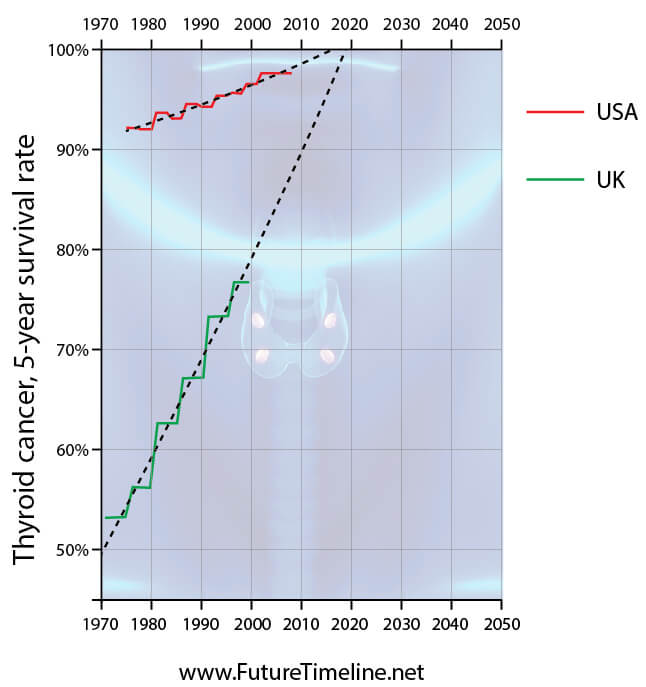
Worldwide, an estimated 213,000 people were diagnosed with thyroid cancer in 2008. More than a quarter of cases occurred in the US. However, treatments already existed that offered an excellent prognosis. In addition to surgery (which included thyroidectomy, lobectomy and tracheostomy), numerous drugs were being developed that improved the outlook for sufferers still further. In the second half of the 2010s, five-year survival rates are approaching 100% in much of the developed world.**
Virtual reality makes a comeback
Exponential improvements in processing power (doubling every 18 months) are enabling the creation of highly lifelike graphics and 3D environments. At the same time, faster broadband is opening up new frontiers in cyberspace, allowing the development of Web 3.0 – the next generation of Internet. This is being combined with developments in on-person hardware, creating renewed interest in virtual reality.* Having been something of a gimmick in the 1990s, it is now becoming a serious tool for business, leisure, education and training. Much of the content in these 3D environments is user-generated, with online communities for sharing and exchanging virtual objects, buildings, avatars, etc. Among the hardware configurations to emerge is a circular treadmill-like interface, allowing players to move freely and naturally in all directions.*

2015
Lithuania joins the Eurozone
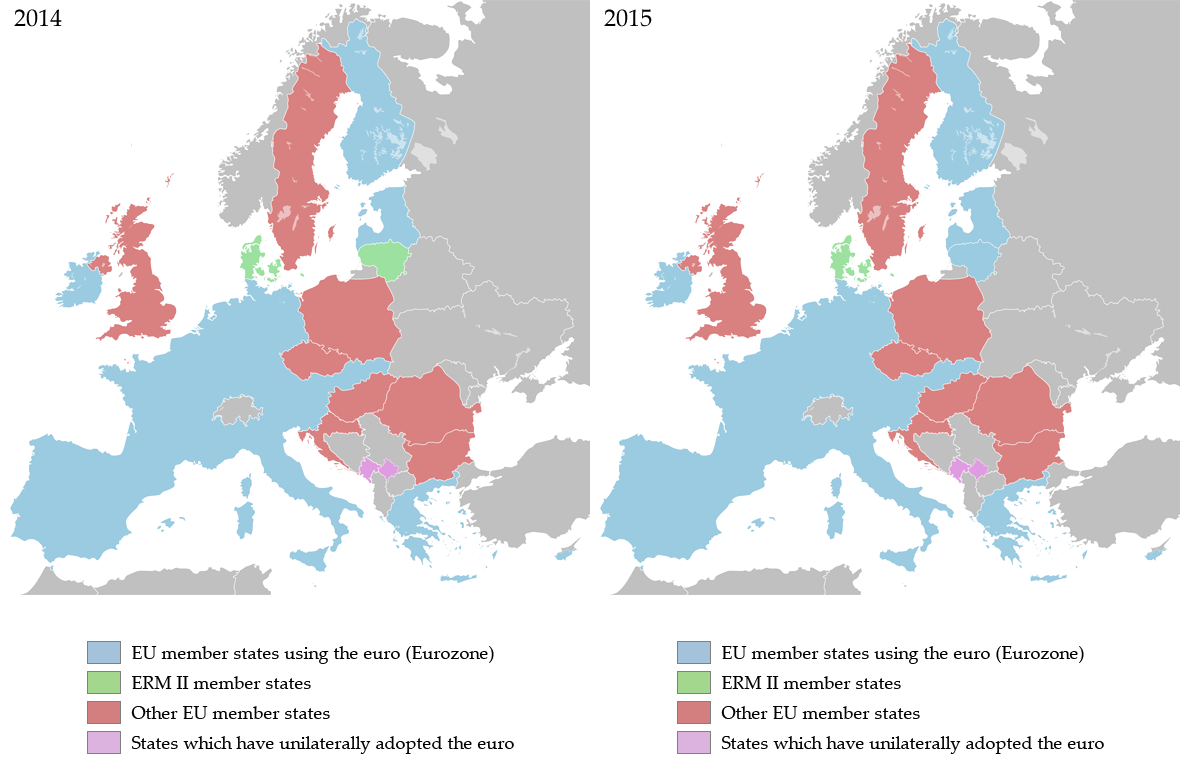
On 1st January 2015, Lithuania officially adopts the euro as its currency, replacing the litas and becoming the 19th Eurozone country. The euro had previously been expected to replace the litas in 2007, but the economic crisis and persistent high inflation – reaching 11% in October 2008, well above the acceptable limit of 4.2% – delayed Lithuania's adoption. In July 2014, the Council of the European Union agreed that Lithuania met its entry criteria and would be allowed to adopt the euro as its currency.
The Eurasian Union is formed
The Eurasian Union (EAU) is a political and economic union consisting of Russia, Belarus, Kazakhstan, Armenia and Kyrgyzstan. It creates a single economic market of 171 million people and a gross domestic product of US$3 trillion. The idea, based on the EU's integration, was brought to attention in October 2011 by then-Prime Minister of Russia, Vladimir Putin, but was first proposed as a concept by the President of Kazakhstan, Nursultan Nazarbayev, during a 1994 speech at a Moscow university.
In November 2011, the presidents of Belarus, Kazakhstan and Russia agreed on a target of establishing the EAU by 2015. The agreement included a roadmap for future integration and established the Eurasian Commission (modelled on the European Commission) and the Eurasian Economic Space, which started work on 1st January 2012. A treaty to enlarge the group to include Armenia was signed in October 2014 and Kyrgyzstan followed in December 2014, with all five members officially establishing the Union in January 2015.
It was speculated that future expansion of the Union might allow membership for other countries with close historical or cultural ties – such as Finland, Hungary, the Czech Republic, Bulgaria, China and Mongolia, incorporating them into a common state body with Russian as the common language of communication and economic cooperation. According to Vladimir Putin, the Eurasian Union would build upon the "best values of the Soviet Union". However, critics expressed some concern at this "re-Sovietization" of Russia and Central Asia. The United States opposed the integration effort on human rights grounds.*
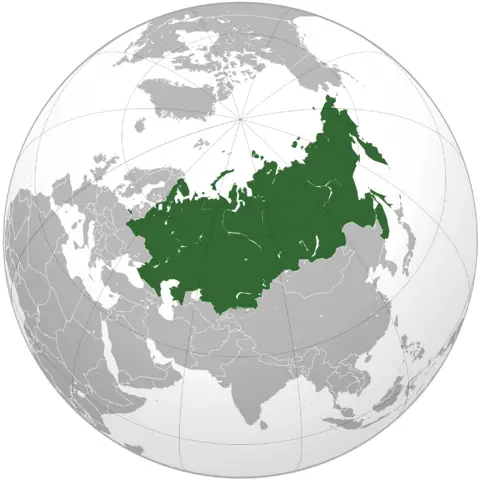
Credit: Ranko15 (CC BY-SA 3.0)
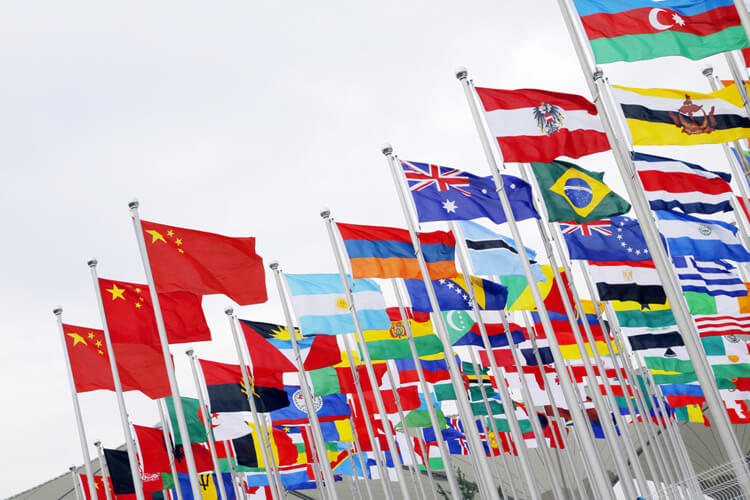
Expo 2015 is held in Milan, Italy
The Universal Exposition is held in Milan this year, the first time the city has hosted the event since 1906. The main theme of the exposition is the future availability of food and water supplies and the state of nutrition and health in the years to come. New technology is on display with the aim of reducing poverty and famine around the world, as well as the spread of infectious diseases. A working prototype of a vertical farm is also presented as an alternative to traditional agricultural methods. The event is a catalyst for talks among concerned parties such as farmers, non-profit organisations, humanitarian workers and environmentalists, initiating new movements for change. More than 100 nations from around the world participate in the Expo, which runs from 1st May until 31st October. By the time it finishes, many millions of people have visited.*
The Large Hadron Collider reaches its maximum operating power
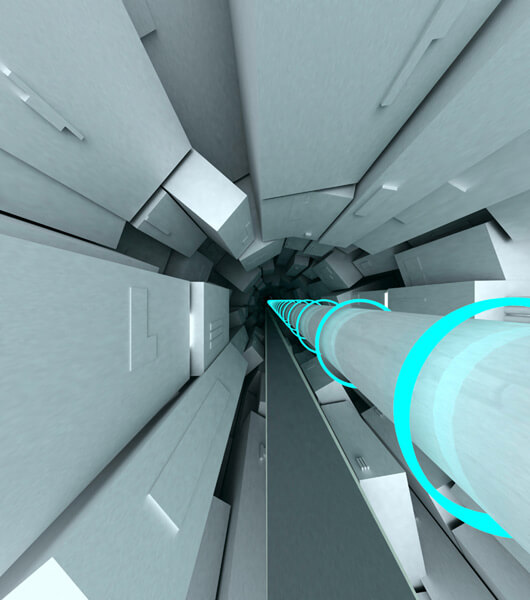
The Large Hadron Collider (LHC) is the world's largest and highest-energy particle accelerator. By smashing together sub-atomic particles at close to the speed of light, it aims to recreate the conditions that existed just a fraction of a second after the birth of the universe. In doing so, it is expected to address some of the most fundamental questions in physics.
The LHC lies in a tunnel 27 kilometres (17 mi) in circumference, as much as 175 metres (574 ft) beneath the Franco-Swiss border near Geneva, Switzerland. This synchrotron is designed to collide opposing particle beams of either protons at an energy of 7 tera-electronvolts (7 TeV) per particle, or lead nuclei at 574 TeV per nucleus. The term "hadron" refers to particles composed of quarks.
The machine was built by the European Organisation for Nuclear Research (CERN) with the intention of testing various predictions of high-energy physics, including the existence of the hypothesised Higgs boson, and of the large family of new particles predicted by supersymmetry. It was built in collaboration with over 10,000 scientists and engineers from over 100 countries, as well as hundreds of universities and laboratories.
In September 2008, the proton beams were successfully circulated in the main ring of the LHC for the first time – but nine days later its operations were halted due to a serious malfunction. In November 2009, they were successfully circulated again, the first recorded proton-proton collisions occurring three days later at the injection energy of 0.45 TeV per beam. After the 2009 winter shutdown, the LHC was restarted and the beam was ramped up to half power, 3.5 TeV per beam (i.e. half its designed energy). In March 2010, the first planned collisions took place between two 3.5 TeV beams – a new world record for the highest-energy particle collisions. The LHC continues to operate at half power until 2015, when it reaches maximum capacity of 7 TeV.*
Initially, the experiment sparked fear among the public that the collisions might produce a doomsday scenario, involving microscopic black holes or hypothetical particles known as strangelets. Two CERN-commissioned safety reviews examined these concerns and concluded that the experiments at the LHC presented no danger and that there was no cause for concern, a conclusion endorsed by the American Physical Society. The LHC would be followed by even bigger particle accelerators in 2028 and 2035.
The first self-regulating artificial heart
In 2013, French Professor Alain Carpentier engineered the first self-regulating artificial heart, using biomaterials and electronic sensors. The device weighed 900g, was roughly the same size as a real heart and could imitate its functions exactly. In a 10-hour operation, it was successfully implanted within a 75-year-old patient at the Georges Pompidou European Hospital in Paris.*
Permanent artificial hearts had been around since 1982, with similar inventions that preceded them going back to the 1940s. Unlike previous versions, however, Carpentier's invention was the first to be completely artificial and self-regulating. Electronic sensors and microprocessors could monitor blood pressure and flow in real time – instantly adjusting the pulse rate – while a "pseudo-skin" made of biosynthetic, microporous materials could prevent blood clots, which had been a major issue in the past. By 2015, after a period of clinical trials, it is available within the European Union priced between 140,000 and 180,000 euros (about US$190,000 to $250,000).*
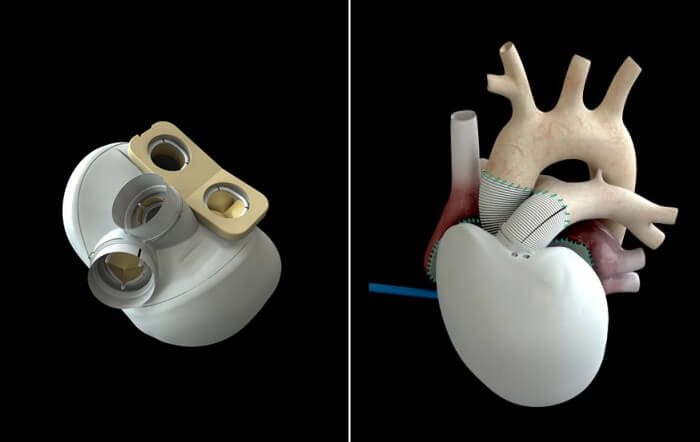
Credit: CARMAT
A new generation of hi-tech supercarriers
The first in a new generation of US aircraft carriers is laid down this year. The Gerald R. Ford-class will replace the aging Nimitz-class which has been in service since 1975. This new class of ship includes some major improvements over previous generations. These include: increased automation, electromagnetic aircraft launch systems to replace previous steam mechanisms, increased stealth, a new type of nuclear reactor for more efficient power consumption, high tech radar and flight control, as well as the ability to carry the new F-35 Lightning II fighter jet. Ten carriers are commissioned in total, at a cost of $14bn each (including research and development). The 10th and final ship is launched by 2040.*

Queen Elizabeth II is the longest reigning monarch in British history
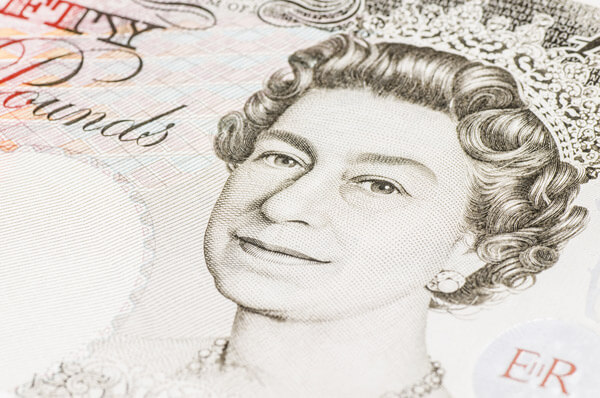
On 10th September 2015, Elizabeth II becomes the longest reigning monarch in British history – surpassing the record held by Victoria, her great-great grandmother. Having ascended to the throne on 6th February 1952, Elizabeth II has now reigned for 63 years and 217 days.*
The six decades of her reign have witnessed enormous changes on the world stage – including the dismantling of the British Empire, the civil rights movement, the growing empowerment of women in society, the development of the Space Age, accelerating globalisation, the fall of communism in Europe, the end of the Cold War, the dawn of the information age, and the rise of China, to name but a few.
Now aged 89, she is becoming noticeably frailer and has scaled back her official duties. The next milestone (assuming she lives that long) will be in 2022 – her Platinum Jubilee. Her eldest son Charles will succeed her, becoming King Charles III.
Personal biometric scanners for online banking
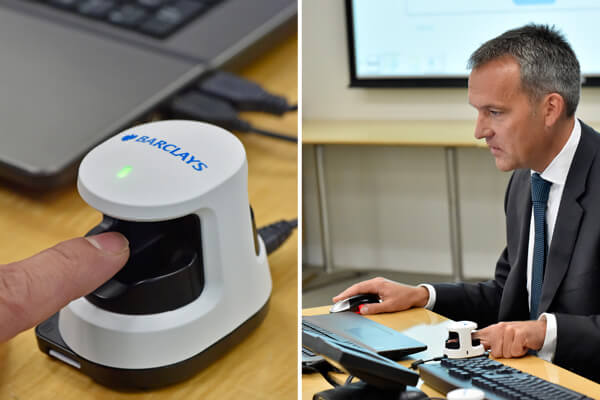
In 2015, the United Kingdom introduces Finger Vein Authentication Technology (VeinID) to improve banking security.** These devices are initially provided to corporate clients, but soon made available to regular consumers. Other countries had already used this form of personal biometric scanning in certain banks and cash machines, but the UK is the first to offer it for homes and remote offices globally.
Desktop card readers, phone authentication and PIN codes are no longer needed, as vein pattern recognition is both faster and more reliable. It is practically impossible to spoof or replicate – even more accurate than fingerprint ID – and the finger must be attached to a live human body in order for veins in the finger to be scanned. The process takes just two seconds, using a near-infrared (NIR) LED and monochrome CCD camera sensor to make the red pigment in blood (haemoglobin) absorb NIR light, with veins appearing as dark lines. No public record is kept, as the user's pattern is stored on their SIM card only.
Windows 10 is released by Microsoft
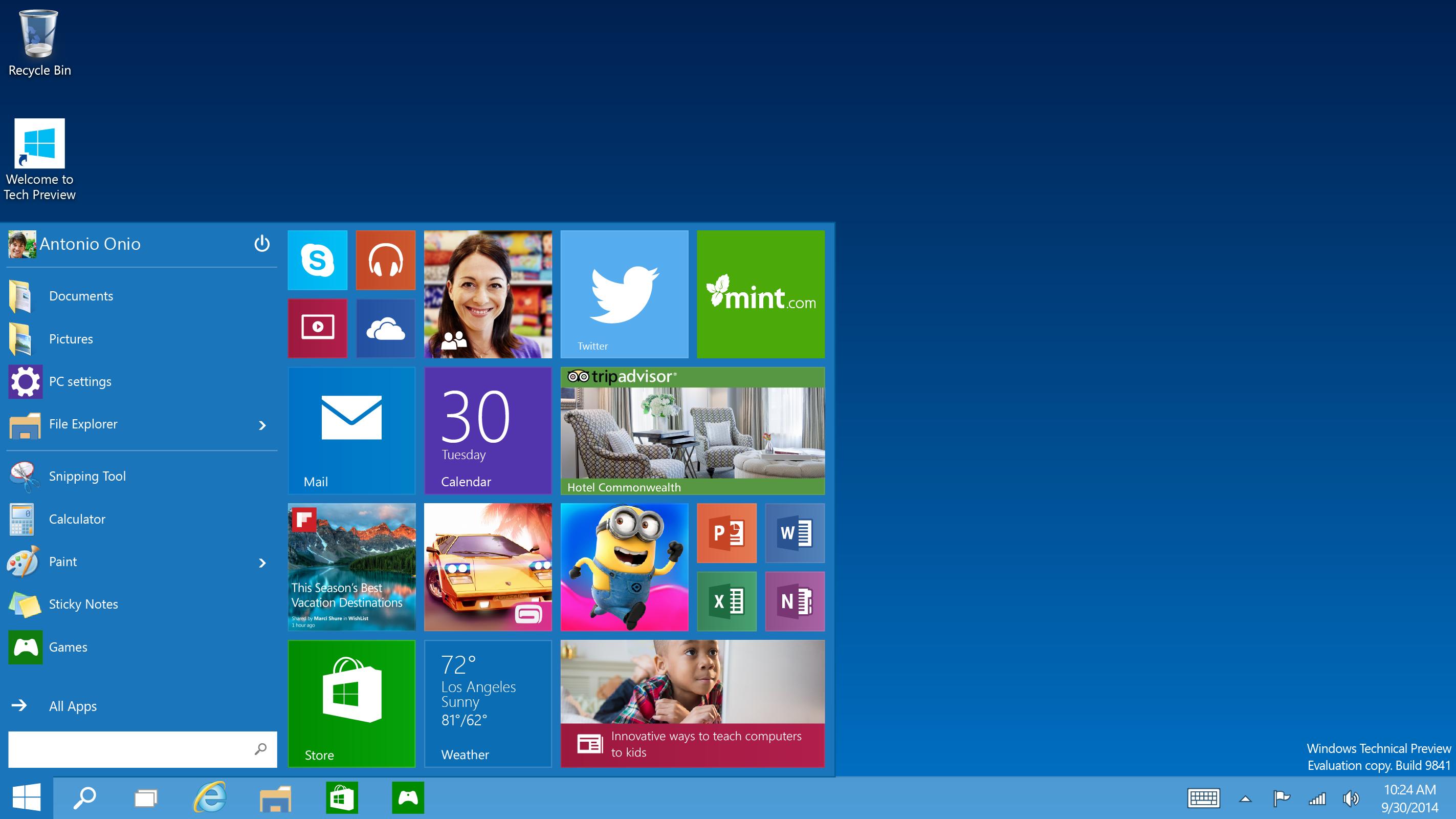
Following the much-criticised Windows 8, Microsoft launches a major overhaul of the operating system in 2015. Skipping past version 9.0, this instead becomes Windows 10. It is designed to run on a wide range of platforms – including the "Internet of Things" – with a tailored experience for each. Windows 10 addresses a number of usability issues, refining the "Metro" interface and bringing back the traditional Start Menu. Users can now switch between multiple desktop screens for a tidier workspace. The OS features a more unified code base, for improved compatibility and simpler transfer of data between various devices and services. There is a greater focus on apps. Advanced gesture recognition is also incorporated, now that 3D cameras are becoming more common. It also deals with power management issues. Initially codenamed "Threshold", it is released in the second half of 2015.**
Click to enlarge
Dawn arrives at Ceres
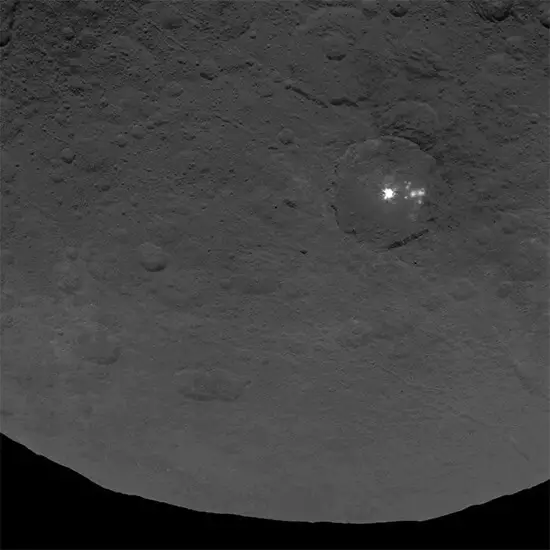
Dawn was a robotic spacecraft sent by NASA on a mission to the asteroid belt.* It reached Vesta in 2011, before rendezvousing with the dwarf planet, Ceres, in March 2015. Ceres and Vesta are the two most massive members of the asteroid belt: 950 and 530 km in diameter, respectively. Dawn was the first probe to study and photograph them at close range. Both bodies formed very early in the history of the Solar System, thereby retaining a record of events and processes from the time of the formation of the terrestrial planets.
Of particular interest on Ceres were two distinct bright spots (high-albedo features) inside a crater,* which led to speculation about a possible cryovolcanic origin or outgassing. NASA later said the spots were consistent with highly reflective materials containing ice or salts, but that cryovolcanism was unlikely. Higher resolution images also confirmed that, instead of one or two spots, there were actually several. In addition to being the first probe to explore a dwarf planet, Dawn was also the first to enter into orbit around a celestial body, study it, and then re-embark under powered flight to a second target. (previous multi-target missions, such as the Voyager program, involved rapid planetary flybys).
New Horizons arrives at Pluto
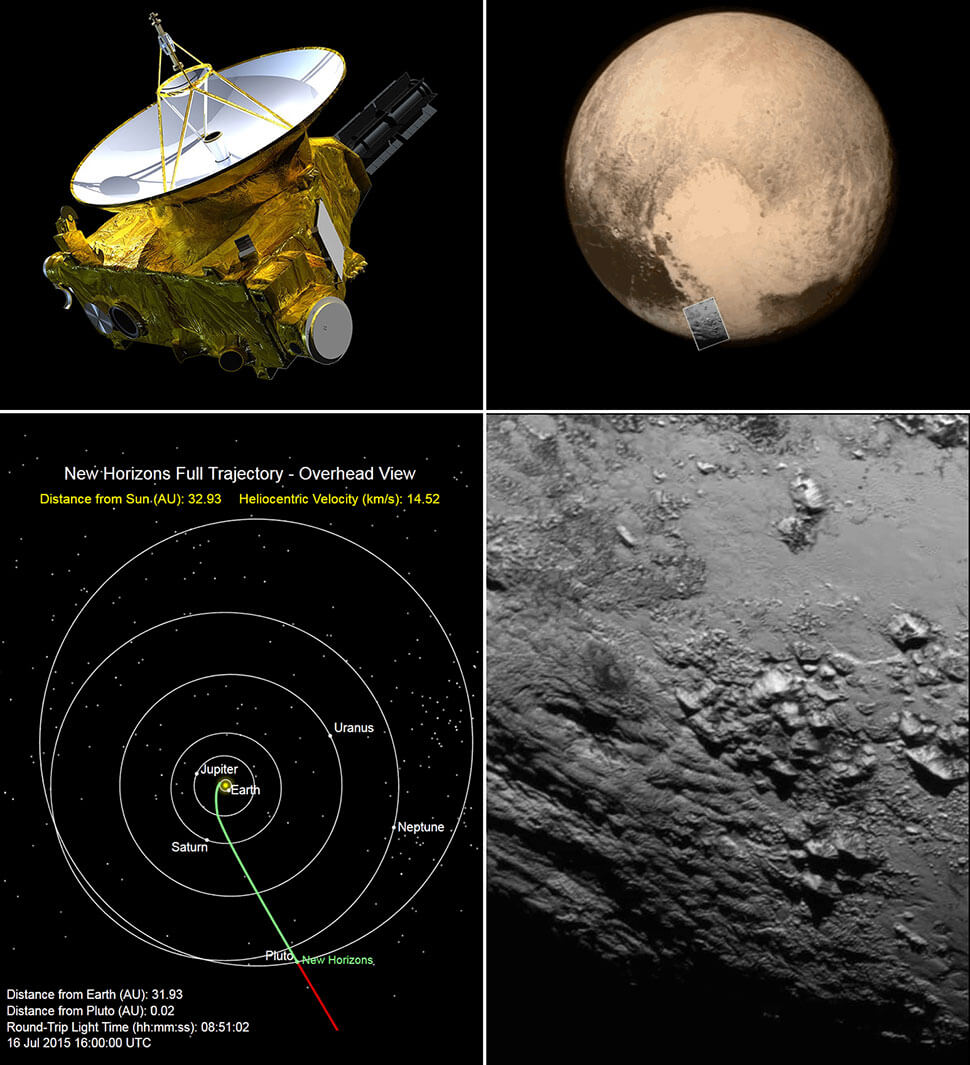
In July 2015, NASA's New Horizons spacecraft performed a close flyby of Pluto, becoming the first mission in history to visit the distant world. This probe – launched in January 2006 – had travelled 3 billion km through space. At its closest approach, it flew 12,600 km (7,800 mi) above the surface, with a relative velocity of 13.8 km/s (49,600 km/h; 30,800 mph).
The initial photos revealed a surprisingly young terrain, evidenced by the lack of impact craters and suggesting that volcanism or some other geological process reshaped the landscape within the last 100 million years. The onboard cameras showed icy mountains reaching up to 11,000ft (3,300m) high, comparable to North America's Rocky Mountains. A large, light-coloured region measuring 1,590 km (990 mi) across was nicknamed "the heart" and then formally named Tombaugh Regio, in honour of astronomer Clyde Tombaugh who discovered Pluto in 1930. New measurements also showed that Pluto was slightly larger than previously thought, with a diameter of 2,370 km (1,472 mi), compared to earlier estimates of 2,306 km (1,432 mi).
Because of the vast distance between Pluto and Earth (radio communications took four and a half hours, even at the speed of light), it was only possible to return a faint signal at 1 or 2 kilobytes per second. It would therefore take over a year to transmit all of the images and data. New Horizons would continue to explore the Pluto system for five months, including its five moons, before entering the Kuiper belt* and eventually leaving the Solar System, heading in the direction of the constellation Sagittarius.*
Electric car ownership reaches 1 million worldwide
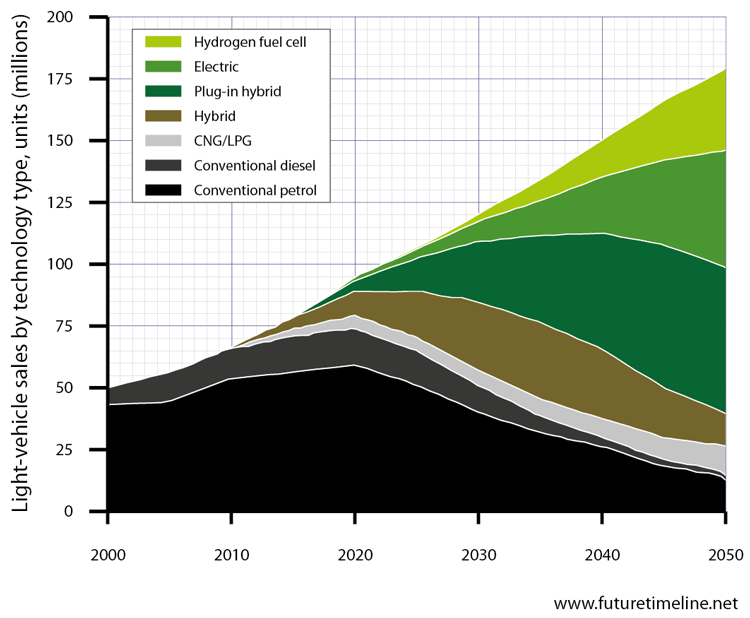
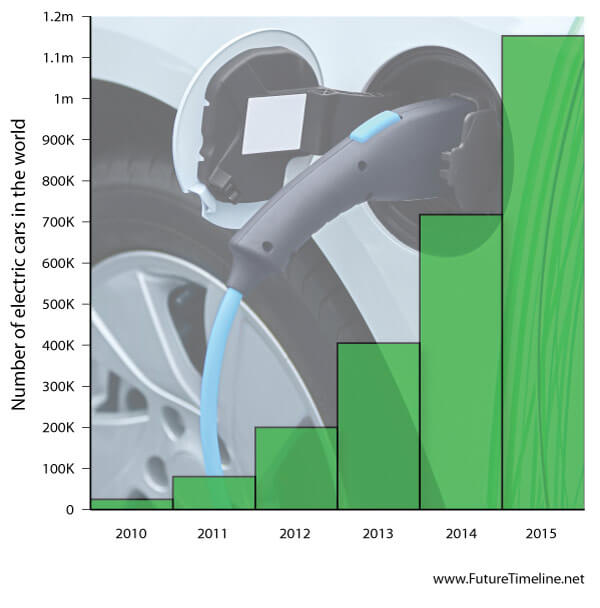
In 2010, there were about 25,000 electric cars on the world's roads. This number grew exponentially during the next five years,* reaching over a million by the end of 2015. Pure electric car sales were led by Japan with a 28% market share of global sales, followed by the United States with a 26% share, China at 16%, France with 11% and Norway with 7%.* On a per capita basis, the leaders by far were Norway (6.1%) and the Netherlands (5.55%) with Iceland (0.94%) considerably behind in third place.* The biggest electric car companies were Nissan, GM/Opel, Toyota, Tesla and Ford.
Despite growing rapidly, electric cars still only accounted for a tiny percentage (0.1%) of the billion or so total cars in the world. The main factors limiting their uptake were the high cost (even after government incentives), range anxiety, charging times and lack of public recharging infrastructure. A number of notable innovations were underway, however, that would allow these vehicles to continue their upward trend.
Arguably the greatest advance was an ongoing fall in the price of batteries; from an average of $900/kWh in 2010, to under $600/kWh in 2015 and forecast to reach $300/kWh by 2020. Battery production would see a dramatic increase with Tesla's "Gigafactories" beginning in 2017.* Tesla was also constructing a "supercharger network", offering high-speed charges for free. By the end of 2015, around 98 percent of the US population would lie within range of a station. Networks were being established in Europe and Asia too.
Battery swapping was another method being developed, whereby a depleted battery is exchanged for a fully charged one in five minutes, saving the delay of waiting for the battery to charge. The first modern commercial deployment of this technology* ended in bankruptcy for the company involved* – but others would continue to develop and standardise the technology.
Other opportunity areas for cutting costs included vehicle lightweighting to extend range, electric-drive systems fully integrating motors and electronics, employing wide bandgap semiconductors, nanotechnology materials and non-rare earth motors. Further into the future, wireless electricity* becomes a fairly common feature of urban centres and this further enhances the appeal of electric cars.
With increasing concerns over energy and the environment – alongside breakthroughs in technology and cost – these vehicles have a bright future in the years and decades ahead.*
Trucks with emergency braking systems are mandatory in Europe
In November 2015, an EU law comes into effect which mandates that all new trucks must be fitted with emergency braking and collision warning systems.* This has been introduced in an effort to lower the number of rear-end collisions, which account for a significant proportion of road accidents.
A radar and camera, working together to identify and monitor vehicles in front, can prevent a collision with a moving target at relative speeds of up to 44 mph (70 km/h). When the system detects a vehicle that the truck will hit at its current speed, the warning system activates a constant red light in the windscreen in order to attract the driver's attention.
If the truck fails to detect any reaction from the driver, such as steering or braking, the light begins to flash red accompanied by a beeping sound. If there is still no reaction, the system applies the brakes gently. When all this fails too, an emergency braking system is activated, bringing the truck to a complete stop. In addition, to alert other drivers to the situation, the brake lights on the rear of the truck will change from fixed to flashing.
By the end of this decade, the system is being extended to cars, too.* As more and more technology appears both in vehicles and road infrastructure, the number of accident fatalities continues to trend downwards,* reaching almost zero in the latter half of the century, with human drivers being entirely replaced by AI.
The deadline for the Millennium Development Goals
In 2000, the largest gathering of world leaders in history took place, as 193 UN member states met in New York to discuss the Millennium Development Goals (MDGs). These were eight international objectives with ambitious targets for developing countries, most of them to be achieved by the end of December 2015.*
• Goal 1: Eradicate extreme poverty and hunger
– By 2015, reduce by half the proportion of people living on less than $1 a day.
– By 2015, reduce by half the proportion of people who suffer from hunger.
• Goal 2: Achieve universal primary education
– By 2015, ensure a full course of primary schooling for boys and girls alike.
• Goal 3: Promote gender equality and empower women
– By 2005, eliminate gender disparity in primary and secondary education; and at all levels of education by 2015.
• Goal 4: Reduce child mortality rates
– By 2015, reduce by two-thirds the number of children dying under age five.
• Goal 5: Improve maternal health
– By 2015, reduce by three quarters the number of women dying from complications of pregnancy and childbirth.
• Goal 6: Combat HIV/AIDS, malaria, and other diseases
– By 2015, halt and begin to reverse the spread of HIV/AIDS.
– By 2015, halt and begin to reverse the incidence of malaria and other major diseases.
• Goal 7: Ensure environmental sustainability
– Reverse the loss of environmental resources.
– By 2015, halve the proportion of people lacking access to safe drinking water.
– By 2020, achieve significant improvement in the lives of at least 100 million slum dwellers.
• Goal 8: Develop a global partnership for development
– Address the special needs of the least developed countries, landlocked nations and small island developing states.
– Deal comprehensively with the debt problems of developing countries through national and international measures, in order to make debt sustainable in the long term.
– In cooperation with the private sector, make available the benefits of new technologies, especially information and communications technologies.

To accelerate progress towards the MDGs, the G-8 Finance Ministers met in London in June 2005 and reached an agreement to provide enough funds to the World Bank, the IMF and the African Development Bank to write off $55bn of debt owed by the Heavily Indebted Poor Countries (HIPC). This would allow these impoverished nations to re-channel the money saved from the cancelled debt to social programs for improving health and education and for alleviating poverty.
Achieving the MDGs would not necessarily depend on economic growth alone and expensive solutions. In the case of MDG 4, some developing countries like Bangladesh showed that it was possible to reduce child mortality with only modest growth, via inexpensive but effective interventions such as measles immunisation. A number of important and innovative new technologies were also emerging – such as the $100 laptop project,* the LifeSaver bottle* and the genetic engineering of mosquitoes.*
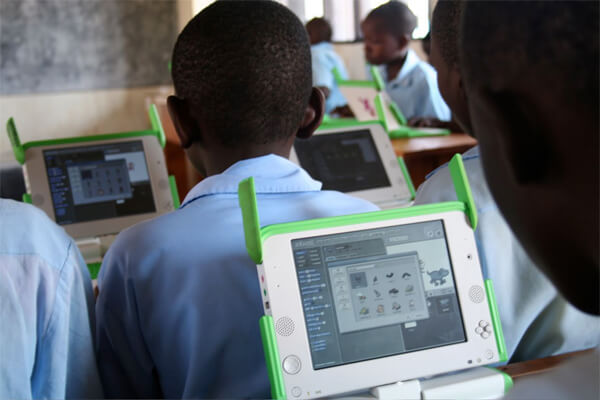
The $100 laptop project. Credit: cellanr
By 2010, some countries had achieved many goals, while others were not on track to realise any. The countries with major success stories included China (whose citizens in poverty fell from 452m to 278m), India, Brazil, Thailand, Vietnam, Cuba, Honduras, Nicaragua, Ecuador and Ethiopia.
However, some regions in Sub-Saharan Africa failed to make any significant changes in improving their quality of life. The prevalence of hunger in the Democratic Republic of Congo (DRC), for example – Africa's 2nd largest country – more than doubled, while Zimbabwe saw a nearly 50% increase in poverty and Kenya's child mortality rate increased from 105 to 128 per 1000.
Progress towards reaching the goals was therefore mixed. There were setbacks and disappointments. But overall, the reduction in poverty and increased access to health, education, technology and other essential services was without precedent in many countries' histories. Of particular note was the number of deaths due to AIDS, which saw a dramatic levelling off and decline.* A new set of goals is established for 2016-2030.
« 2014 |
⇡ Back to top ⇡ |
2016 » |
If you enjoy our content, please consider sharing it:
References
1 The Singularity Is Near, by Ray Kurzweil:
http://www.amazon.com/Singularity-Near-Humans-Transcend-Biology/dp/0143037889/
Accessed 3rd January 2014.
2 Compressive genomics, Nature Biotechnology:
http://www.nature.com/nbt/journal/v30/n7/full/nbt.2241.html
Accessed 3rd January 2014.
3 DNA Sequencing Costs, National Human Genome Research Institute:
http://www.genome.gov/sequencingcosts/
Accessed 3rd January 2014.
4 Regulating 23andMe to Death Won't Stop the New Age of Genetic Testing, Wired:
http://www.wired.com/opinion/2014/01/the-fda-may-win-the-battle-this-holiday-season-but-23andme-will-win-the-war/
Accessed 3rd January 2014.
5 Global Next Generation Sequencing Report: Market Size, Segmentation, Growth and Trends by Provider - 2013 Edition, PRNewswire:
http://www.prnewswire.com/news-releases/global-next-generation-sequencing-report-market-size-segmentation-growth-and-trends
Accessed 3rd January 2014.
6 Why big data breathes new life into health care, diginomica:
http://diginomica.com/2013/09/05/four-reasons-big-data-breathes-life-health-care/
Accessed 3rd January 2014.
7 DNA Sequencing Costs, National Human Genome Research Institute:
http://www.genome.gov/sequencingcosts/
Accessed 7th January 2018.
8 A cheap, portable and disposable DNA sequencer, Future Timeline Blog:
https://www.futuretimeline.net/blog/2012/02/24.htm
Accessed 3rd January 2014.
9 Nanopore DNA sequencing: New approaches to an old challenge, National Human Genome Research Institute:
http://www.genome.gov/27555651
Accessed 3rd January 2014.
10 Angelina Jolie's mastectomy account raises awareness of gene testing, The Guardian:
http://www.theguardian.com/society/2013/may/14/angelina-jolie-mastectomy-breast-cancer
Accessed 3rd January 2014.
11 Cancer Stat Facts: Thyroid Cancer, National Cancer Institute:
https://seer.cancer.gov/statfacts/html/thyro.html
Accessed 31st December 2017.
12 Thyroid cancer statistics, Cancer Research UK:
http://www.cancerresearchuk.org/health-professional/cancer-statistics/statistics-by-cancer-type/thyroid-cancer
Accessed 31st December 2017.
13 Sony: Virtual reality gaming's 'going to be absolutely amazing', ComputerAndVideoGames.com
http://www.computerandvideogames.com/309486/news/sony-virtual-reality-gamings-going-to-be-absolutely-amazing/
Accessed: 29th June 2011.
14 Omni virtual reality interface is launched on Kickstarter, Future Timeline Blog:
https://www.futuretimeline.net/blog/2013/06/7-2.htm
Accessed 8th June 2013.
15 Clinton Calls Eurasian Integration An Effort To 'Re-Sovietize', Radio Free Europe/Radio Liberty:
http://www.rferl.org/content/clinton-calls-eurasian-integration-effort-to-resovietize/24791921.html
Accessed 18th February 2013.
16 World Expo 2015 Milan – The Official Site:
http://en.expo2015.org/
Accessed 11th August 2011.
17 Large Hadron Collider, Wikipedia:
https://en.wikipedia.org/wiki/Large_Hadron_Collider
Accessed 19th January 2014.
18 First-in-Man Implantation of CARMAT's Bioprosthetic Artificial Heart, BusinessWire:
https://www.businesswire.com/news/home/20131220005702/en/First-in-Man-Implantation-CARMAT%e2%80%99s-Bioprosthetic-Artificial-Heart
Accessed 7th January 2018.
19 Carmat self-regulating artificial heart implanted in first human subject, GizMag:
http://www.gizmag.com/carmat-self-regulating-artificial-heart/30237/
Accessed 25th December 2013.
20 Gerald R. Ford class aircraft carrier, Wikipedia:
http://en.wikipedia.org/wiki/Gerald_R._Ford_class_aircraft_carrier
Accessed 23rd May 2011.
21 List of longest-reigning British monarchs, Wikipedia:
http://en.wikipedia.org/wiki/List_of_longest-reigning_British_monarchs
Accessed 29th July 2011.
22 Barclays first in UK to launch new Biometric Reader for customers, Barclays:
http://www.newsroom.barclays.com/Press-releases/Barclays-first-in-UK-to-laun%20ch-new-Biometric-Reader-for-customers-bab.aspx
Accessed 25th September 2014.
23 Barclays brings finger vein biometrics to internet banking, Wired:
http://www.wired.co.uk/news/archive/2014-09/05/barclays-finger-scanner
Accessed 25th September 2014.
24 Microsoft unveils Windows 10 system with Start Menu, BBC:
http://www.bbc.co.uk/news/technology-29431412
Accessed 30th September 2014.
25 Announcing Windows 10, Microsoft:
http://blogs.windows.com/bloggingwindows/2014/09/30/announcing-windows-10/
Accessed 30th September 2014.
26 Dawn – Journey to the Asteroid Belt, NASA:
http://www.nasa.gov/mission_pages/dawn/main/index.html
Accessed 19th April 2010.
27 Bright Spots on Ceres Likely Ice, Not Cryovolcanoes, Universe Today:
http://www.universetoday.com/119235/bright-spots-on-ceres-likely-ice-not-cryovolcanoes/
Accessed 16th July 2015.
28 See 2022.
29 See 2038.
30 The Electric Vehicle Revolution Is Nigh (Infographic), Clean Technica:
http://cleantechnica.com/2014/07/28/electric-vehicle-revolution-nigh-infographic/
Accessed 16th October 2014.
31 Global EV Outlook – Understanding the Electric Vehicle Landscape to 2020, International Energy Agency (via Selectra):
https://selectra.co.uk/sites/selectra.co.uk/files/pdf/globalevoutlook_2013.pdf
Accessed 11th July 2019.
32 Electric vehicle market share in 19 countries, ABB:
http://www.abb-conversations.com/2014/03/electric-vehicle-market-share-in-19-countries/
Accessed 16th October 2014.
33 Tesla and Panasonic to build $5 billion "Gigafactory", Future Timeline Blog:
https://www.futuretimeline.net/blog/2014/08/3.htm
Accessed 16th October 2014.
34 Battery switch stations could revolutionise the electric car industry, Future Timeline Blog:
https://www.futuretimeline.net/blog/2012/04/9.htm
Accessed 16th October 2014.
35 Charging station – Battery swapping, Wikipedia:
https://en.wikipedia.org/wiki/Charging_station#Battery_swapping
Accessed 16th October 2014.
36 Wireless power transfer, Wikipedia:
https://en.wikipedia.org/wiki/Wireless_power_transfer
Accessed 1st February 2020.
37 Light-vehicle sales by technology type, units (millions), Future Timeline:
https://www.futuretimeline.net/21stcentury/images/future-car-technology-2020.gif
Accessed 16th October 2014.
38 Volvo Trucks introduces Collision Warning with Emergency Brake, Volvo Trucks Global:
http://www.volvotrucks.com/trucks/global/en-gb/newsmedia/pressreleases/Pages/pressreleases.aspx?pubId=14200
Accessed 19th January 2013.
39 See 2019.
40 American Gun Deaths to Exceed Traffic Fatalities by 2015, Bloomberg:
http://www.bloomberg.com/news/2012-12-19/american-gun-deaths-to-exceed-traffic-fatalities-by-2015.html
Accessed 19th January 2013.
41 The UN – Millenium Development Goals:
http://www.un.org/millenniumgoals/
Accessed 28th August 2011.
42 '$100 laptop' production begins, BBC:
http://news.bbc.co.uk/1/hi/technology/6908946.stm
Accessed 28th August 2011.
43 Michael Pritchard makes filthy water drinkable, TEDTalks:
http://www.youtube.com/watch?v=rXepkIWPhFQ
Accessed 28th August 2011.
44 See Biology & Medicine > Malaria
45 Millenium Development Goals Report Card: Measuring Progress Across Countries, Overseas Development Institute:
http://www.odi.org.uk/resources/download/5027.pdf
Accessed 28th August 2011.
 |
|||||||||||||||||||||||||||||||
|
Latest predictions |
Timeline » 21st century |
Blogs » AI & Robotics |
Features » |
About us
|
|||||||||||||||||||||||||||
|
|
|||||||||||||||||||||||||||||||