A new statistical analysis by the United Nations, in a report released yesterday, shows that global population could reach nearly 11 billion by the end of this century. That's about 800 million, or 8 percent, more than the previous projection of 10.1 billion, issued in 2011.
The projected rise is mostly due to fertility in Africa, where the U.N. had expected birth rates to decline more quickly than they have. The current population on the continent is about 1.1 billion and is now expected to reach 4.2 billion, nearly a fourfold increase, by 2100.
"The fertility decline in Africa has slowed down or stalled to a larger extent than we previously predicted, and as a result the African population will go up," said Adrian Raftery, a University of Washington professor of statistics and sociology.
The new U.N. estimates use statistical methods developed by Raftery and his colleagues at the UW Center for Statistics and the Social Sciences. The group's improved fertility forecasting methods – combined with updated data from the U.N. – were used to project long-term consequences of fertility change in Africa since the last population estimate in 2011.
New to this year's projection are finer-tuned statistics that anticipate the life expectancies of men and women across the 21st century. At the global level, life expectancy is projected to reach 76 in the period 2045-2050, and 82 in 2095-2100. People in developed countries could live on average to 89 by 2100, compared to about 81 in developing regions. This is assuming no radical breakthrough in longevity treatments, however.
By far the largest expected population increase is in Nigeria, projected to rise from 184 million now, to 914 million in 2100. Eight of the top ten increases are in Africa, with India in second place. The United States is eighth.
In other areas of the world, few significant changes are expected. Europe may see a small decline because of fertility continuing below replacement level, while other nations around the globe may see modest increases due to longer life expectancies, Raftery said.
There's no end in sight to the increase of world population, he added, yet the topic has gone off the agenda in favour of other pressing global issues, including poverty and climate – both of which have ties to world population.
"These new findings show that we need to renew policies, such as increasing access to family planning and expanding education for girls, to address rapid population growth in Africa," Raftery said.
The UN gives high and low variants of its projections, assuming that women have an average of half a child more or less than the best projection. That leaves a large uncertainty, from 7 billion to nearly 17 billion, in the range for potential world population by the end of this century.
By contrast, the UW research group has developed probabilities of future population levels to be coupled with best forecasts. "Our probability intervals are much tighter, ranging from 9 billion to 13 billion in 2100," Raftery said.
At the Electronic Entertainment Expo (E3), AMD has unveiled a new 5 GHz CPU processor – the AMD FX-9590 – the most powerful member of the legendary AMD FX family of CPUs.
These 8-core CPUs deliver new levels of gaming and multimedia performance for desktop enthusiasts. AMD FX-9000 Series CPUs will be available initially in PCs through system integrators.
“At E3 this week, AMD demonstrated why it is at the core of gaming,” said Bernd Lienhard, corporate vice president and general manager, Client Products Division at AMD. “The new FX 5 GHz processor is an emphatic performance statement to the most demanding gamers seeking ultra-high resolution experiences, including AMD Eyefinity technology. This is another proud innovation for AMD in delivering the world’s first commercially available 5 GHz processor.”
“AMD continues to push the envelope when it comes to desktop capabilities and power performance,” said Wallace Santos, CEO and founder of MAINGEAR. “In unveiling the world’s first 5 GHz 8-core CPU, AMD continues to lead the way in innovation while providing our customers with a best-in-class experience. We are thrilled to be part of this exciting launch.”
The new 5 GHz FX-9590 and 4.7 GHz FX-9370 feature “Piledriver” architecture. They are unlocked for easy overclocking and pave the way for enthusiasts to enjoy even higher CPU speeds and related performance gains. Additionally, these processors feature AMD Turbo Core 3.0, to dynamically optimise performance across CPU cores and enable maximum computing for the most intensive workloads.
AMD was the first to break the 1 GHz barrier in May of 2000 and continues to set the standard in technology innovation including the first Windows compatible 64-bit PC processor and the first native dual-core and quad-core processors. AMD also introduced the first APU (unifying CPU and Radeon graphics on the same chip) and the first x86 quad-core SoC, continuing forward with HSA architectures and programming models.
The new AMD FX CPUs will be available globally beginning this summer. Two models will be available:
FX-9590: Eight “Piledriver” cores, 5 GHz Max Turbo
FX-9370: Eight “Piledriver” cores, 4.7 GHz Max Turbo
A new report shows that the Human Genome Project – founded in 1990 – created a $966 billion science boom, returning over 60 times the initial investment.
The new Battelle study released by United for Medical Research illustrates how the genetics and genomics industry's impact on the U.S. economy has reached nearly a trillion dollars. This report is based on new data collected over the previous two years, and represents an update to the highly-cited Battelle 2011 report tracking the growth of the industry and its links to the federally funded Human Genome Project (HGP).
The updated report, "The Impact of Genomics on the U.S. Economy" demonstrates that the HGP and related research continue to yield significant U.S. economic growth, with $966 billion in impact, more than 53,000 genomics-related jobs and $293 billion in personal income, leveraged from a total research and development investment of $14.5 billion from 1988 through 2012.
The original report showed the U.S. federal government's $3.8 billion funding of the HGP between 1988 and 2003 drove $796 billion in U.S. economic impact, due to the growth of genomics technology and its use in healthcare, energy, agriculture and other sectors.
Carrie Wolinetz, president of United for Medical Research: "As the largest single undertaking in the history of life sciences, the Human Genome Project has paid back extraordinary dividends on the U.S. government’s investment. This report illustrates the vital role that key federal research funding plays in growing the U.S. economy, creating new industries and innovative technologies and producing the diagnostics and treatments that can save lives."
Martin Grueber, research leader and co-author: "Between 1988 and 2012, the federal government's $14.5 billion investment in the field of genomics represents an expenditure of only $2 per year per U.S. resident, with an enormous economic and societal impact from that investment."
Despite the economic downturn over the last five years, the genomics industry continued to thrive – a trend that is likely to be sustained in the near future. In 2012 alone, human genome sequencing and related research and industry activities directly and indirectly generated:
$65 billion in U.S. economic output
$31 billion toward 2012 U.S. Gross Domestic Product
$19 billion in personal income
152,000 jobs (direct and indirect)
In addition to jobs and the economy, the Human Genome Project has had a profound impact on health. Genetics and human genome mapping have pioneered new diagnostics for a wide range of diseases impacting society including cancer, heart disease and Alzheimer’s.
"The research that has followed this work has the potential to better identify who is at greatest risk of a cancer like mine, and how to best treat it," said Ian Lock, an osteosarcoma survivor and volunteer with the American Cancer Society Cancer Action Network.
In a related story, the U.S. Supreme Court today ruled that genes cannot be patented – with significant implications for future medical research.
Large-scale expansion of agriculture in the Amazon through deforestation will be a no-win scenario, according to a new study.
Published in the journal Environmental Research Letters, the new study finds that deforestation will not only reduce the capacity of the Amazon's natural carbon sink, but will also inflict climate feedbacks lowering the productivity of pasture and soybeans.
The researchers used model simulations to assess how the agricultural yield of the Amazon would be affected under two different land-use scenarios: a business-as-usual scenario, where recent deforestation trends continue and new protected areas are not created; and a governance scenario which assumes Brazilian environmental legislation is implemented.
They predict that by 2050, less precipitation caused by deforestation will reduce pasture productivity by 30 per cent in the governance scenario and by 34 per cent in the business-as-usual scenario.
Furthermore, increasing temperatures could cause a reduction in soybean yield by 24 per cent in a governance scenario and by 28 per cent under a business-as-usual scenario.
Through a combination of the forest biomass removal itself, and the resulting climate change – which feeds back on the ecosystem productivity – the researchers calculate that biomass on the ground could decline by up to 65 per cent for the period 2041-2060.
Brazil faces a huge challenge, as pressure mounts to convert forestlands to croplands and cattle pasturelands in the Amazon region. A fine balance must be struck, however, as the natural ecosystems sustain food production, maintain water and forest resources, regulate climate and air quality, and ameliorate infectious diseases.
No-win scenario
Lead author of the study, Dr Leydimere Oliveira: “We were initially interested in quantifying the environmental services provided by the Amazon and their replacement by agricultural output. We expected to see some kind of compensation or off put, but it was a surprise to us that high levels of deforestation could be a no-win scenario – the loss of environmental services provided by the deforestation may not be offset by an increase in agriculture production.”
The effects of deforestation will be worst in the eastern Pará and northern Maranhão regions. Here, local precipitation appears to depend strongly on forests, and changes in land cover would drastically affect the local climate – possibly to a point where agriculture becomes unviable.
“There may be a limit for expansion of agriculture in Amazonia. Below this limit, there are not important economic consequences of this expansion. Beyond this limit, the feedbacks that we demonstrated start to introduce significant losses in the agriculture production,” added Dr Oliveira.
The study involved a collaboration between the Federal University of Viçosa, Federal University of Pampa, Federal University of Minas Gerais and the Woods Hole Research Center.
Faced with growing environmental and economic pressures on transportation, cities are reexamining how and where parking is provided, and developing a more balanced view to better manage parking supply and demand.
Credit: Libelium
Enabled by new technologies, innovative approaches to parking are becoming a cornerstone of cities' mobility strategies. According to a new report from Navigant Research, the installed base of on-street smart parking spaces will surpass 950,000 worldwide by 2020, with a six-fold increase in annual revenue.
“The parking industry is going through its biggest evolution since the introduction of the first parking meters in Oklahoma City in 1935,” says Eric Woods, research director. “It is being transformed by new technologies that are increasing operational efficiency and customer expectations, and by new perspectives on the role of parking within cities.”
Essentially, the goal of smart parking is to enable both drivers and parking managers to optimise the use of parking capacity and reduce congestion on the roads. A number of technologies provide the basis for smart parking solutions – including vehicle sensors, wireless communications, and data analytics. Smart parking is also made viable by innovation in areas such as smartphone apps for customer services, mobile payments, and in-car navigation systems.
At the heart of the smart parking concept is the ability to access, collect, analyse, disseminate in real time, and act on parking usage information. In the future, this will form part of a growing "Internet of Things" bringing devices, systems and people closer together – greatly improving the speed and efficiency of the world around us.
Aerospace company Boeing has been showing off its new robot painters.
These machines glide along tracks on either side of a 777 wing. Manually, it takes a team of humans 4.5 hours to do the first coat. The robots do it in 24 minutes with perfect quality. By midsummer, all 777 wings will be painted this way. Worldwide, the population of robots employed in service and industrial roles is growing exponentially and forecast to reach over 100 million by 2020.
According to Gallup's annual Values and Beliefs poll, ideological attitudes in the U.S. are shifting to the left.
While economic liberalism remains stagnant, the percentage describing their social views as "liberal" or "very liberal" has achieved a new peak of 30%. This is 6% higher than in 2001. Of those who already consider themselves Democrat or leaning Democrat, the trend is even more pronounced, with 50% now having liberal views on social issues, compared to 35% in 2001. The percentage of Democrat or leaning Democrat voters with "conservative" views on social issues has dropped from 20% in 2001 to just 14% now.
Gallup conducted telephone interviews with a random sample of 1,535 adults, aged 18 and older, in all 50 U.S. states and the District of Columbia. The interpretation of what qualifies as "social issues" was left to the respondent; the question did not define or provide examples of these types of issues. However, the survey results are in line with Gallup's recent finding that Americans are more accepting on a wide range of moral issues – including gay marriage, abortion, having a baby outside of marriage, divorce, polygamy, human cloning and the use of stem cells in medical research. These trends appear set to continue until at least 2020.
Planetary Resources, the asteroid mining company, has launched a campaign for the world's first crowdfunded space telescope. This will provide unprecedented public access to space and place the most advanced exploration technology into the hands of students, scientists and a new generation of citizen explorers.
Planetary Resources' technical team, who worked on every recent U.S. Mars lander and rover, will provide direct access to an ARKYD space telescope making space widely available for inspiration, exploration and research. "I've operated rovers and landers on Mars, and now I can share that incredible experience with everyone," said Chris Lewicki, President and Chief Engineer of Planetary Resources. "People of any age and background will be able to point the telescope outward to investigate our Solar System, deep space, or join us in our study of near-Earth asteroids."
Using Kickstarter, a platform for supporting innovative projects, the company has set a campaign goal of US$1 million. They will use the proceeds to launch the telescope, fund the creation of a public interface, cover the fulfilment costs for all of the products and services listed in the pledge levels, and fund the immersive educational curriculum for students. Proceeds raised beyond this goal will allow for more access to classrooms, museums and science centres, and additional use by individual Kickstarter backers.
Peter Diamandis, Co-Founder and Co-Chairman: "When we launched Planetary Resources last year, we had an extraordinary response from the public. Tens of thousands of people contacted us and wanted to be involved. We are using this Kickstarter campaign as a mechanism to engage the community in a productive way. In the last 50 years, space exploration has been led by national governmental agencies with their own set of priorities; and now we're changing the nature of exploration. We're developing the most advanced space technology ever made available to the public. Let's explore the cosmos together!"
Eric Anderson, Co-Founder and Co-Chairman: "Since the public announcement of Planetary Resources last April, the company has doubled in size, brought on key strategic partners, was awarded numerous contracts and is on track for its primary mission of identifying and prospecting asteroids within this decade."
Pledge Level Highlights:
Your Face in Space – For $25, the team will upload an image of yourself to display on the ARKYD, snap a photo of it with the Earth in the background, and transmit it back to you. This "photo booth" allows anyone to take (or gift) a unique Space Selfie image that connects a personal moment with the cosmos in an unprecedented, yet tangible way.
Support Education – Pledgers can offer a school, science centre, university, or any interested group of their choice access to the ARKYD for use in interactive educational programming.
Earn a Place in History – Have a newly discovered asteroid named after you.
The full pledge list and ARKYD technical specifications can be found here.
Electric car manufacturer Tesla has announced a significant expansion of its Supercharger network. This enables Tesla Model S drivers to travel long distances, for free, indefinitely. In addition to expansion of the network itself, Tesla has improved the technology behind the Superchargers to significantly reduce the time it takes to charge – in some cases cutting charging time in half.
A year from now, the Tesla Supercharger network will stretch across the continent, covering almost the entire population of the U.S. and Canada. The expansion of this network will mean that Model S drivers can take the ultimate road trip – whether that's LA to New York, Vancouver to San Diego, or Montreal to Miami – without spending a cent on fuel.
Co-founded by Elon Musk, Tesla Motors' goal is to accelerate the world's transition to electric mobility with a full range of increasingly affordable electric cars. The California-based firm designs and manufactures EVs, as well as EV powertrain components for partners such as Toyota and Daimler. Tesla has delivered more than 10,000 electric vehicles to customers in 31 countries. For more information, visit teslamotors.com.
In a significant move to address climate change, the world's biggest polluter has announced that it will impose a cap on carbon emissions by 2016.
China is responsible for a quarter of the world's man-made CO2. Since 2000, the country has seen an unprecedented rise in coal use, with new power plants being constructed seemingly every week. Beijing recently made the headlines for its shocking level of air pollution, up to 50 times the safe level recommended by the World Health Organisation. It is estimated that over 80 million people could die from lung disease in China by 2033. More importantly, over 99% of published, peer-reviewed climate studies agree that human industrial output of heat-trapping CO2 is now higher than Earth's natural ability to reabsorb, which could have potentially devastating consequences in the long term.
In order to address both a growing public health problem and soaring greenhouse gases, the National Development and Reform Commission (NDRC) has proposed a ceiling on carbon emissions, a plan it wants to start implementing from 2016. This will need approval from China's cabinet, the State Council, but the NDRC is said to be extremely influential, and the government as a whole appears increasingly committed to the environment. If adopted, the nation's "carbon intensity" – defined as CO2 per dollar of economic output – would decline around 40 per cent by 2020, compared to 2005 levels.
China's announcement is clearly a step in the right direction and will improve the dynamics of international negotiations. Professor Nicholas Stern, whose 2006 report is the single most influential document on climate change, had this to say: "This is very exciting news. Such an important move should encourage all countries, and particularly the other large emitters such as the United States, to take stronger action on climate change. And it improves the prospects for a strong international treaty being agreed at the United Nations climate change summit in 2015."
However, there is still a long way to go. The scale of the problem is truly colossal. To avoid plunging the world into an environmental catastrophe, it is estimated that over two-thirds of fossil fuels must remain in the ground by 2050, representing trillions of dollars in lost assets. Given the momentum already locked into the system, it is almost certain that we have passed the point of no return, with major disruption now inevitable. At some point, a WW2-scale mobilisation of resources and technology will be needed to address the issue – involving the deployment not just of clean energy but also carbon sequestration and geoengineering. A recent review of literature on the subject found that climate scientists are biased not toward "alarmism" (as often claimed by the mainstream media), but rather the reverse: toward cautious and conservative estimates.
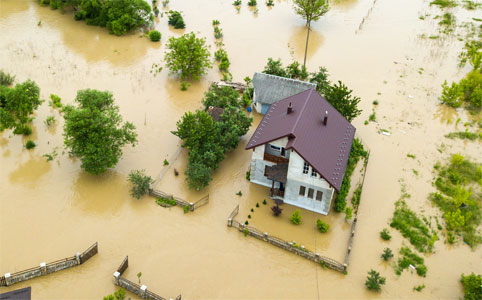
We tend to think of climate change as being decades into the future, but climate disasters are already displacing millions of people worldwide.
Click to enlarge
The Internal Displacement Monitoring Centre (IDMC) has released its Global Estimates 2012 report. This reveals that over 32.4 million people were forced to flee their homes in 2012 by disasters such as floods, storms and earthquakes. While Asia and west and central Africa bore the brunt, 1.3 million were displaced in rich countries, with the USA particularly affected.
98% of all displacement in 2012 was related to climate and weather events, with flood disasters in India and Nigeria accounting for 41% of the total. In India, monsoon floods displaced 6.9 million, and in Nigeria 6.1 million people were newly displaced. While over the past five years 81% of global displacement has occurred in Asia, in 2012 Africa had a record high for the region of 8.2 million people newly displaced – over four times more than in any of the previous four years.
"In countries already facing the effects of conflict and food insecurity such as in Nigeria, Pakistan, and South Sudan, we observe a common theme," says Clare Spurrell, Chief Spokesperson for IDMC. "Here, vulnerability to disaster triggered by floods is frequently further compounded by hunger, poverty and violence; resulting in a 'perfect storm' of risk factors that lead to displacement."
There is also increasing scientific evidence that climate change will become a factor. A 2012 Special Report from the Intergovernmental Panel on Climate Change (IPCC) found that there is evidence to support the claim that "[d]isasters associated with climate extremes influence population mobility and relocation, affecting host and origin communities."
IDMC’s report highlights how disaster-induced displacement takes a toll in both rich and poor countries with the USA appearing among the top ten countries with the highest levels of new displacement, with over 900,000 people being forced to flee their homes in 2012. People in poorer countries, however, remain disproportionately affected and make up 98% of the global five year total.
"In the US following Hurricane Sandy, most of those displaced were able to find refuge in adequate temporary shelter while displaced from their own homes," says Spurrell. "Compare this to communities in Haiti, where hundreds of thousands are still living in makeshift tents over three years after the 2010 earthquake mega-disaster, and you see a very different picture."
According to the IDMC report, a critical component to improving community resilience and government responses to disasters is better data collection on people who have been displaced. "Currently, the information available is biased, often only focusing on the most visible people who take shelter in official evacuation sites or camps," says Spurrell. "We need to know more about those who seek refuge with families and friends, people who are repeatedly displaced by smaller disasters, or those who are stuck in prolonged displacement following a disaster – not just those that make headlines."
Improvements in lithium ion (Li-ion) battery technology are helping to accelerate the worldwide market for electric vehicles (EVs).
In the last few years, automakers have shifted from nickel-metal hydride (NiMH) batteries to Li-ion batteries. This shift represents a major endorsement of Li-ion chemistry and its ability to perform consistently in an automotive environment. According to a new report from Navigant Research, total worldwide capacity of Li-ion batteries for transportation applications will increase more than ten-fold, from 4,400 megawatt-hours (MWh) in 2013 to nearly 49,000 MWh by 2020.
"Li-ion technology continues to improve, as increased energy densities translate into smaller and lighter battery packs with more power," says David Alexander, senior research analyst with Navigant Research. "At the same time, leading battery cell manufacturers have built new factories utilising the latest production techniques, including greater automation and faster throughput. This will lead to a reduction in the cost per kilowatt-hour (kWh) over the next few years, provided that volumes continue to increase."
The market for Li-ion batteries will primarily be driven by the growth of battery electric vehicles (BEVs), as they utilise much larger battery packs than plug-in hybrid electric vehicles (PHEVs). Today, most BEVs use battery packs ranging from 16 kWh to 85 kWh, compared to PHEVs that typically use packs ranging from 4 kWh to 16 kWh. Additionally, many recently introduced hybrid vehicles, such as the Honda Civic Hybrid, use Li-ion batteries, and the percentage of hybrids using Li-ion technology is expected to grow steadily as automakers update their models.
The report, "Electric Vehicle Batteries", provides a detailed examination of the growing market for Li-ion batteries, including profiles of all of the leading Li-ion battery manufacturers. Forecasts for revenues from Li-ion batteries, segmented by vehicle type, are included, along with vehicle roadmaps for hybrid, PHEV, and BEV sales by region. The report also includes a review of competing energy storage technologies, including ultracapacitors and nickel-metal hydride batteries. An Executive Summary of the report is available for free download on the Navigant Research website.
This week, atmospheric CO2 reached a worrying milestone: 400 parts per million, a level not seen in more than five million years. The last time Earth had this concentration of greenhouse gases, average sea levels were 25m higher than today, and steaming jungles covered northern Canada.
Before the Industrial Revolution, global average CO2 was about 280 parts per million (ppm). During the last 800,000 years, CO2 fluctuated between 180 ppm during ice ages and 280 ppm during interglacial warm periods. Today's rate of increase is over 100 times faster than the increase that occurred when the last ice age ended. Scientists warn that a "safe" limit for CO2 concentration is 350 ppm. On current trends, we are heading for somewhere between 900-1,000 ppm by the end of this century, with a global average temperature rise of 6ºC (11ºF). In other words, the end of modern civilisation.
Once emitted, CO2 added to the atmosphere and oceans remains there for thousands of years. Thus, climate changes forced by CO2 depend primarily on cumulative emissions, making it progressively more and more difficult to avoid further substantial climate change. 99.8 percent of peer-reviewed, published climate studies agree that global warming is real. Any "slowdown" of atmospheric and land warming in recent years is vastly outweighed by ocean heat content, a fact which is often ignored by the mainstream media and blogosphere.
In a letter to Barack Obama, 150 high-profile Democrats have urged the president to use his next four years to take meaningful action on climate change. This includes blocking the controversial Keystone Pipeline, which would be equivalent to 51 new coal-fired power plants if allowed to go ahead. The letter, reproduced in full below, follows in the wake of a similar message from businesses last month.
President Barack Obama
The White House
1600 Pennsylvania Ave NW
Washington, DC 20500
Dear President Obama,
As business leaders, philanthropists, and supporters of your 2008 and 2012 campaigns, we write to urge you to reject the Keystone XL tar sands pipeline and to do everything in your power to accelerate the transition away from fossil fuels and to clean energy sources.
We have read of your admiration for President Lincoln, surely the most beloved of all presidents. He made one of the most important decisions of his presidency and for our nation when he decided that he would fight for the 13th Amendment to end slavery even if it took every ounce of his political capital. Your decision on Keystone may not be so weighty, but we believe it holds a comparable urgency and importance, not strictly as a pipeline decision but as a presidential choice that will signal a fundamentally new direction for our nation.
We urge you to proclaim with clarity and purpose that our nation will transition away from carbon-based fossil fuels to job-creating clean energy. As challenging as this may be, the costs pale in comparison to the human consequences of unchecked climate disruption. We must help impacted communities and industries. We cannot make these changes overnight, but we must make them. Yours is the last presidency in which it is possible for America to choose a responsible path forward for itself, before climate disruption becomes unmanageably dangerous. "Winning" a safe climate future is a long game, but we can lose it very quickly - on your watch. As the IEA starkly warned, continued investment in capital intensive, long-lived fossil fuel infrastructure like Keystone XL will "lock in" emission trajectories that make catastrophic climate disruption inevitable.
The Keystone decision affords you a rare opportunity to pivot away from fossil fuels and towards a clean energy future in a way that signals the necessary sea change. The controversy associated with the decision is commensurate with its historic significance. Of course, no single decision is technically decisive with respect to climate disruption. But those who dismiss the Keystone decision as "merely symbolic" underestimate both its substantive importance and its place in history and your presidency.
This decision more than any other will signal your direction, your commitment, your resolve. It is the biggest, most explicit statement you will make in this historic moment, the moment when America turns from denial to solutions - or fails to.
Under trying circumstances and against entrenched opposition, you have led America toward a clean energy future by improving fuel efficiency standards, extending clean energy production tax credits, and asserting EPA authority to regulate coal-fired power plants. Your call to action on climate change in your State of the Union and Inaugural addresses inspired us. We thank you for this leadership, and urge you to push now, beyond what official Washington deems possible, toward what we know is necessary.
We pledge to support you in every way possible as you help our nation "respond to the threat of climate change, knowing that failure to do so would betray our children and future generations." We believe in the power and promise of clean energy. We believe it's time to look our kids and grandkids - the prospective victims of still-preventable climate disasters - in the eye and say, "We will do what must be done to protect you. We will make this better." But they won't believe us until we stop making it worse. That's why we urge you in the strongest possible terms to reject the Keystone XL tar sands pipeline.
With hope and determination to build a healthy future, and the deepest respect for your leadership,
Last year, US company Terrafugia achieved a milestone in its goal of developing a flying car. A production prototype of the "Transition" – a two-seater personal aircraft/car hybrid – completed its first test flight at New York's Plattsburgh International Airport. It became the first vehicle in the world to meet the standards of both the FAA (Federal Aviation Administration) and the NHTSA (National Highway Traffic Safety Administration). Commercial sales of the Transition are expected within two years at a cost of $279,000.
Terrafugia has now released a video, seen below, of another vehicle it is working on. "TF-X" – a more advanced concept – would take-off vertically, rather than needing a runway. It could seat four passengers (double that of the Transition) and fit into a standard home garage. With a hybrid-electric motor, the TF-X would be able to recharge its batteries either from the engine, or by plugging into electric car charging stations.
Advances in materials and technology will make the concept possible, according to the company. Carbon-fibre for the skin is lighter and stronger than metals, for example, while engines are becoming ever more compact and powerful. The TF-X is the "next logical progression".
"I would caution anyone from saying this is science fiction," says John Brown, editor of the Roadable Times. "They have a track record of doing what they say. We need to take this seriously." For more information, visit the official website.
We live in exponential times. Computers, the Internet, smartphones, genetics, nanotechnology, robots, clean energy and a host of other technologies are disrupting older, established industries. While these rapidly emerging trends could threaten many larger businesses, they present some amazing opportunities for smaller startups. In his latest video, co-founder and chairman of Singularity University, Peter Diamandis, describes a simple analogy that can be applied to this situation, offering hope for a brighter future. Visit his official website at diamandis.com.
At the end of a long day, it can be more convenient to order your groceries online while sitting on the living room couch instead of making a late-night run to the store. New research shows it's also much more environmentally friendly to leave the car parked and opt for groceries delivered to your doorstep.
University of Washington engineers have found that using a grocery delivery service can cut carbon dioxide emissions by at least half when compared with individual household trips to the store. Trucks filled to capacity that deliver to customers clustered in neighbourhoods produced the most savings in carbon dioxide emissions.
"A lot of times, people think they have to inconvenience themselves to be greener, and that actually isn't the case here," said Anne Goodchild, UW associate professor of civil and environmental engineering. "From an environmental perspective, grocery delivery services overwhelmingly can provide emissions reductions."
Consumers have increasingly more grocery delivery services to choose from. AmazonFresh operates in the Seattle area, while Safeway's service is offered in many U.S. cities. FreshDirect delivers to residences and offices in the New York City area. Last month, Google unveiled a shopping delivery service experiment in the San Francisco Bay Area, and UW alumni recently launched the grocery service Geniusdelivery in Seattle.
As companies continue to weigh the costs and benefits of offering a delivery service, Goodchild and Erica Wygonik, a UW doctoral candidate in civil and environmental engineering, looked at whether using a grocery delivery service was better for the environment, with Seattle as a test case. In their analysis, they found delivery service trucks produced 20 to 75 percent less carbon dioxide than the corresponding personal vehicles driven to and from a grocery store.
They also discovered significant savings for companies – 80 to 90 percent less carbon dioxide emitted – if they delivered based on routes that clustered customers together, instead of catering to individual household requests for specific delivery times.
Credit: Goodchild/Wygonik, UW
"What's good for the bottom line of the delivery service provider is generally going to be good for the environment, because fuel is such a big contributor to operating costs and greenhouse gas emissions," Wygonik said. "Saving fuel saves money, which also saves on emissions."
The researchers used an EPA modelling tool which calculated emissions at a much more detailed level than previous studies have done. Their work was funded by the Oregon Department of Transportation and published in the Journal of the Transportation Research Forum.
Orbital Sciences Corporation has completed a successful test launch of its new Antares rocket. This is part of a NASA program in which private companies will deliver supplies to the International Space Station (ISS), a role once provided by the now-retired Space Shuttle.
Lift-off took place on Sunday at 5:00 pm (EDT), from the Mid-Atlantic Regional Spaceport (MARS) located at NASA’s Wallops Flight Facility in eastern Virginia. This was followed by payload separation approximately 10 minutes later and mission completion at about 18 minutes after launch, once the rocket’s upper stage completed planned maneuvers to distance itself from the payload.
The test flight demonstrated all operational aspects of the new Antares launcher, including the ascent to space and accurate delivery of a simulated payload to a target orbit of 150 by 160 miles, with an inclination of 51.6 degrees. This is the same launch profile it will use for Orbital’s upcoming cargo resupply missions to the ISS.
“Today marked a giant step forward for the Antares program, with a fully successful inaugural flight of the largest and most complex rocket the company has ever developed and flown, said Mr. David W. Thompson, Orbital’s Chairman and Chief Executive Officer. “With its successful test flight from the MARS pad at Wallops Island, we will now move forward toward completing the full demonstration mission of our system to resupply the International Space Station with essential cargo in just a couple of months.”
Artist's depiction of Orbital's Cygnus spacecraft approaching the International Space Station. Credit: Orbital
Sunday’s test launch, dubbed the Antares A-ONE mission, was conducted under the Commercial Orbital Transportation Services (COTS) Space Act Agreement Orbital entered into with NASA in 2008. Following a successful demonstration mission to the ISS of Orbital’s complete system in mid-2013, including the launch of the first Cygnus cargo logistics spacecraft, Orbital will begin regular operational cargo delivery missions to the Space Station under its Commercial Resupply Services (CRS) contract with NASA. The $1.9 billion CRS contract calls for the delivery of up to 20,000 kg (44,000 lb) of essential supplies to the ISS over eight separate missions from 2013 to 2016.
In addition to supporting cargo missions to the ISS, the new Antares rocket will offer other commercial, civil government, and defense and intelligence customers affordable and reliable medium-class launch services for medium-class satellites that do not require the industry’s larger, more expensive launch vehicles. Moving upward from its traditional focus on small-class rockets, Orbital’s Antares medium-class launcher will provide a major increase in the payload launch capability that the company can provide to NASA, the U.S. Air Force and other potential customers. It is designed to launch spacecraft weighing up to 6,350 kg (14,000 lbs) into low-Earth orbit, as well as lighter payloads into higher-energy orbits.
"Today's successful test flight demonstrates an additional private space-launch capability for the United States and lays the groundwork for the first Antares cargo mission to the International Space Station later this year," said John Holdren, director of the Office of Science and Technology Policy. "The growing potential of America's commercial space industry and NASA's use of public-private partnerships are central to President Obama's strategy to ensure U.S. leadership in space exploration while pushing the bounds of scientific discovery and innovation in the 21st century. With NASA focusing on the challenging and exciting task of sending humans deeper into space than ever before, private companies will be crucial in taking the baton for American cargo and crew launches into low-Earth orbit."
For the first time, solar energy accounted for all new utility electricity generation capacity added to the U.S. grid last month, according to the Federal Energy Regulatory Commission’s (FERC’s) latest report.
More than 44 megawatts (MW) of solar electric capacity was brought online from seven projects in California, Nevada, Arizona, New Jersey, Hawaii, and North Carolina. All other energy sources combined added no new generation.
Solar also had a strong showing in FERC’s quarterly generation numbers, accounting for about 30 percent of all new utility-scale capacity. The report focuses exclusively on larger facilities and does not include energy generated by net-metered installations. Net-metered systems account for more than half of all U.S. solar electric capacity.
“This speaks to the extraordinary strides we have made in the past several years to bring down costs and ramp up deployment,” said Rhone Resch, president and CEO of the Solar Energy Industries Association. “Since 2008, the amount of solar powering U.S. homes, businesses and military bases has grown by more than 600 percent — from 1,100 megawatts to more than 7,700 megawatts today. As FERC’s report suggests, and many analysts predict, solar will grow to be our nation’s largest new source of energy over the next four years.”
FERC’s report supports other findings which show solar power to be one of the fastest growing energy sources in the U.S., powering homes, businesses and utility grids across the nation. The Solar Market Insight annual edition shows the U.S. installed 3,313 megawatts (MW) of solar photovoltaics (PV) in 2012, a record for the industry.
Some of this growth is attributed to the fact that the cost of a solar system has dropped by nearly 40 percent over the past two years, making solar more affordable than ever for utilities and consumers.
“In 2012, the U.S. brought more new solar capacity online than in the three prior years combined,” Resch added. “These new numbers from FERC support our forecast that solar will continue a pattern of growth in 2013, adding 5.2 GW of solar electric capacity. This sustained growth is enabling the solar industry to create thousands of good jobs and to provide clean, affordable energy for more families, businesses, utilities, and the military than ever before.”
Today, America’s solar industry employs 119,000 workers throughout the country. That’s a 13.2 percent growth over 2011’s jobs numbers, making solar one of the fastest-growing job sectors in the nation. Solar grid parity is forecast to reach almost 10 percent of the U.S. by 2022.
As President Obama unveils his budget for the coming year, dozens of major U.S. companies have signed a "Climate Declaration," urging federal policymakers to take action on climate change, asserting that a bold response to the climate challenge is one of the greatest economic opportunities of the 21st century.
Signatories of the Climate Declaration are among the country's best-known consumer brands – including Starbucks, Intel, eBay, Nike, Levi Strauss & Co, IKEA, Jones Lang LaSalle, L'Oréal, the North Face, the Portland Trail Blazers, Timberland and Unilever, among others (a full list of signatories is available at www.climatedeclaration.us).
Over the course of an ongoing campaign by Ceres and its BICEP (Business for Innovative Climate & Energy Policy) coalition, other businesses, as well as individuals, will be encouraged to sign the Declaration and join the call to action.
"The signers of the Climate Declaration have a clear message for Washington: Act on climate change. We are, and it's good for our businesses," said Anne Kelly, Director of BICEP. "The cost of inaction is too high. Policymakers should see climate change policy for what it is: an economic opportunity."
Together, the Declaration signatories provide approximately 475,000 U.S. jobs and generate a combined annual revenue of approximately $450 billion. Extreme weather events like Hurricane Sandy are affecting growing numbers of these companies and exposing the United States’ economic vulnerability to climate change.
"From droughts that affect cotton crops to Hurricane Sandy, which caused extensive damage to our operations, climate affects all aspects of our business," said Eileen Fisher, CEO of New York-based apparel firm Eileen Fisher, which suffered severe damage and business interruption during the 2012 storm. "As a socially and environmentally responsible company, we are trying to affect positive change, but business can't do it alone. We need the support of strong climate legislation."
The signatories of the Declaration are calling for Congress to address climate change by promoting clean energy, boosting efficiency and limiting carbon emissions – strategies that these businesses already employ within their own operations.
"Businesses understand that planning for a successful future takes investment today. One of the most important things Congress can do to grow our economy and protect our planet is to pass smart climate change legislation this year. Our workforce, supply chain and consumers are counting on us to lead the way," said Anna Walker, Director, Government Affairs and Public Policy at Levi Strauss & Co.
BICEP members have supported several climate-driven policies, including historic automotive fuel economy standards signed into law in 2012 and the extension of the Production Tax Credit for wind power. Innovation within the transportation, electric power sectors and IT sectors, among others, will be essential to meeting the climate challenge.
"eBay is committed to driving a future for commerce that embraces clean energy innovation and is ultimately more sustainable," said Lori Duvall, Global Director, Green at eBay Inc. "Our efforts extend across our data, employee and distribution center portfolios, our shipping and logistics infrastructure, as well as the actions of buyers, sellers, and merchants on our platforms. We see our participation in this coalition as a key element in bringing to life our vision for enabling greener forms of commerce over the long term."
The Climate Declaration comes on the heels of Obama’s renewed commitment to combat the threat of climate change and a recent study from Ceres, Calvert Investments and WWF indicating that a strong majority of Fortune 100 companies have set renewable energy or greenhouse gas reduction goals. Recent polls conducted by Gallup and Yale University, respectively, indicate that a majority of Americans believe climate change is happening and that corporations, as well as government officials, should be doing more to address the issue.
The defence contractor, Lockheed Martin, has reported a new method for desalination that is vastly cheaper and more efficient, using nanotechnology.
Lockheed Martin has been awarded a patent for "Perforene" – a new molecular filtration system that is designed to meet the growing global demand for potable water. This material works by removing sodium, chlorine and other ions from seawater and other sources.
Dr. Ray Johnson, senior vice president and chief technology officer: "Access to clean drinking water is going to become more critical as the global population continues to grow, and we believe that this simple and affordable solution will be a game-changer for the industry. Perforene ... is just one example of Lockheed Martin's efforts to apply some of the advanced materials that we have developed for our core markets, including aircraft and spacecraft, to global environmental and economic challenges."
According to a UN report last year, over 780 million people around the world do not have access to clean drinking water. Tom Notaro, Lockheed business manager for advanced materials: "One of the areas that we're very concerned about in terms of global security is the access to clean and affordable drinking water. As more and more countries become more developed ... access to that water for their daily lives is becoming more and more critical."
Perforene was developed by placing holes that are one nanometre or less in a membrane of graphene. These are small enough to trap ions while dramatically improving the flow-through of water molecules, reducing clogging and pressure. Being just one atom thick, graphene is both strong and durable, making it far more effective at sea water desalination at a fraction of the cost of traditional reverse osmosis systems.
John Stetson, senior engineer: "It's 500 times thinner than the best filter on the market today and 1,000 times stronger. The energy that's required and the pressure that's required to filter salt is approximately 100 times less."
In addition to desalination, the Perforene membrane can be tailored to other applications – including capturing minerals, through the selection of the size of hole placed in the material to filter or capture a specific size particle of interest. Lockheed Martin has also been developing processes that will allow the material to be produced at scale. The company is now seeking commercialisation partners.
A desalination plant in Dubai, United Arab Emirates
After three years of construction, a major milestone has been achieved for renewable energy in the Middle East, with the opening of a 100 megawatt (MW) solar power plant.
The Shams solar power station is located near Abu Dhabi, United Arab Emirates. With 258,000 parabolic trough mirrors, covering 2.5 sq km (0.97 sq mi), it generates up to 100 megawatts (MW) of power, making it the largest station of its kind in the world. It will offset 175,000 tons of CO2 per year – the equivalent of planting 1.5 million trees or taking 15,000 cars off the road – and its electrical output will be enough to power 20,000 homes.
The project is a collaboration between Abu Dhabi Future Energy Company (Masdar), Spain's Abengoa Solar and France's Total S.A. Masdar has a 60% stake, while Abengoa Solar and Total S.A. each have 20%. This newly completed first part, Shams 1, will be followed by two additional stations, Shams 2 and Shams 3, similar in size to the original.
The President of the UAE, Sheikh Khalifa bin Zayed Al Nahyan, expressed his pride in the inauguration of Shams 1: "Expanding our leadership into renewable sources of power demonstrates the United Arab Emirates' commitment to maintaining its position as a major provider of energy. The inauguration of Shams 1 is a major milestone in our country's economic diversification and a step toward long-term energy security."
Abu Dhabi, the nation's capital, has a goal of generating 7% of its power from renewables by 2020. This ambitious target will require 15 plants like Shams 1. Other countries in the region are undertaking similar plans. Saudi Arabia, for example, intends to install 41 gigawatts of solar energy by 2032. It is hoped that much of this energy, along with future additions, will be integrated into a continent-wide "super grid" by 2050.
Santiago Seage, the CEO of Abengoa Solar: "The Middle East holds nearly half of the world's renewable energy potential. The abundance of solar energy is an opportunity to integrate sustainable, clean sources of power that address energy security and climate change. The region needs more projects like Shams 1, and we look forward to pushing the boundaries of future energy."
Samsung this week unveiled its latest flagship smartphone – the Galaxy S4. Even lighter and thinner than its predecessor, it features a 13-megapixel back camera, and a 5-inch display with 441 ppi (1920×1080) resolution. It will be available in late April, on 327 networks and in 155 countries.
Other new features include:
• Eye-tracking: pause video and scroll through pages using eye movements alone
• Dual Camera: take simultaneous photos and videos, using both rear and front cameras, and blend them together
• Air View: hover with your fingers to preview the content of an email, S-Planner, image gallery or video without having to open it
• Air Gesture: change a music track, scroll up and down a web page, or accept a call with a wave of your hand
• Story Album: curates content, such as SNS posts, memos, location and weather information, as well as photos and videos, to create a photo album which is personalised around your timeline of special occasions and events
• Group Play: means you can enjoy music, photos and games with those around you, without requiring a Wi-Fi AP or cellular signal
• S-Health software: empowers your life by keeping you up-to-date with health and wellbeing information through a range of accessories
• Samsung WatchON: the Galaxy S4 will transform into an IR remote to control your home entertainment system including TV, set-top box, DVD player and even air conditioner.
Telecoms expert Ernest Doku from uSwitch.com: "The debut of nifty eye motion-sensitive controls allowing users to pause video and scroll through pages with eye movements alone is smart. For commuters crammed in trains – or just those who love a bit of futuristic tech that makes their lives easier – this novel feature will really help the Galaxy S4 to stand out."
Geoengineering, the use of human technologies to alter Earth's climate system – such as injecting reflective particles into the upper atmosphere to scatter incoming sunlight back to space – has emerged as a potentially promising way to mitigate the impacts of climate change. But such efforts could present unforeseen new risks. That inherent tension, argue two professors from UCLA and Harvard, has thwarted both scientific advances and the development of an international framework for regulating and guiding geoengineering research.
In an article published yesterday in the journal Science, Edward Parson of UCLA and David Keith of Harvard University outline how the current deadlock on governance of geoengineering research poses real threats to the sound management of climate risk. Their article advances concrete and actionable proposals for allowing further research – but not deployment – and for creating scientific and legal guidance, as well as addressing public concerns.
"We're trying to avoid a policy train wreck," said Keith, professor of public policy at John F. Kennedy School of Government and Gordon McKay Professor of Applied Physics at the School of Engineering and Applied Sciences at Harvard University. "Informed policy judgments in the future require research now into geoengineering methods' efficacy and risks. If research remains blocked, in some stark future situation, only untested approaches will be available."
"Our proposals address the lack of international legal coordination that has contributed to the current deadlock," said Parson, a professor of law and faculty co-director of the Emmett Center on Climate Change and the Environment at the UCLA School of Law. "Coordinated international governance of research will both provide the guidance and confidence to allow needed, low-risk research to proceed and address legitimate public concerns about irresponsible interventions or a thoughtless slide into deployment."
Stratospheric Particle Injection for Climate Engineering (SPICE) is a UK government-funded geoengineering research project that aims to assess the feasibility of injecting particles into the stratosphere from a tethered balloon for the purposes of solar radiation management. Credit: Hugh Hunt
In their paper, the authors state that progress on research governance must advance four aims:
Allow low-risk, scientifically valuable research to proceed.
Give scientists guidance on the design of socially acceptable research.
Address legitimate public concerns.
End the current legal void that facilitates rogue projects.
Parson and Keith argue that scientific self-regulation is not sufficient to manage risks and that scientists need to accept government authority over geoengineering research. They emphasise that initial steps should not require new laws or treaties but can come from informal consultation and coordination among governments.
The authors also propose defining two thresholds for governance of geoengineering research: a large-scale threshold to be subject to a moratorium and a separate, much smaller threshold below which research would be allowed. Keith, for example, is currently developing an outdoor experiment to test the risks and efficacy of stratospheric aerosol geoengineering, which would fall below the proposed allowable threshold.
The authors emphasise that this article proposes only first steps. In the near term, these steps frame a social bargain that would allow research to proceed; in the long term, they begin to build international norms of cooperation and transparency in geoengineering.
An oceanic phytoplankton bloom in the South Atlantic Ocean, off the coast of Argentina. Encouraging such blooms with iron fertilisation could lock up carbon on the seabed. Credit: NASA
KLM, the flag carrier airline of the Netherlands, is to operate its first-ever series of biofuel-powered intercontinental flights.
KLM has formed a partnership with Schiphol Group, Delta Air Lines and the Port Authority of New York and New Jersey, that will see weekly flights between John F. Kennedy Airport and Schiphol using sustainable biofuel. Flight KL642 is operated by a Boeing 777-200 every Thursday.
The fuel itself is obtained using cooking oil, recycled and refined in Louisiana. This is supplied by SkyNRG, a company which KLM founded in 2009 together with ARGOS (North Sea Petroleum) and Spring Associates. SkyNRG is now the world’s market leader for sustainable kerosene, supplying over 15 carriers worldwide and the operating partner in KLM’s BioFuel program.
Like all human activities involving combustion, most forms of aviation release carbon dioxide and other greenhouse gases into Earth's atmosphere, contributing to the acceleration of global warming and (in the case of CO2) ocean acidification. Rapid growth of air travel in recent years has produced a large increase in total pollution attributable to aviation. In the European Union, greenhouse gas emissions from aircraft soared by 87% between 1990 and 2006.
Biofuel is widely considered to be one of the primary means by which the industry can reduce its carbon footprint. After a multi-year technical review by aircraft makers, engine manufacturers and oil companies, biofuels were first approved for commercial use in July 2011. Since then, a number of airlines have begun experimenting with their use. KLM flew the world's first commercial biofuel flight – carrying 171 passengers from Amsterdam to Paris – and is now able to offer its first intercontinental service.
Camiel Eurlings, KLM managing director: "I am proud that KLM is once again demonstrating its leading role in developing sustainable biofuel. For eight years in a row, KLM, together with Air France, has been sector leader on the Dow Jones Sustainability Index. Alongside this biofuel series we are starting a study to further identify sustainability gains in fuel, weight and CO2 reduction throughout the entire flight process. We are striving to achieve the 'optimal flight' together with research institutes, suppliers, airports, and air traffic control. We are combining new and existing technology, processes, and efficiency initiatives to achieve this. Cooperation is a priority."
Scientists have expressed concerns about land-use changes in response to greater demand for crops needed in biofuels. The focus is now on second generation sustainable biofuels that do not compete with food. Another major issue is cost. Cooking oil-based fuel, like that used in KLM's new service, is currently $10/gallon, around three times more expensive than regular jet fuel. However, it is hoped this can be reduced in the future. The International Air Transport Association (IATA) believes that a 6% share of sustainable, 2nd generation biofuels is achievable by 2020.
In addition to its use of biofuels, KLM is aiding research by the Delft University of Technology to develop a new aircraft that is 50% more efficient and 50% quieter. This could be ready to fly by 2025.
Environmental concerns among citizens around the world have been falling since 2009 and have now reached twenty-year lows, according to a multi-country GlobeScan poll.
The findings are drawn from the GlobeScan Radar annual tracking poll of citizens across 22 countries. A total of 22,812 people were interviewed face-to-face or by telephone. Twelve of these countries have been regularly polled on environmental issues since 1992.
Asked how serious they consider each of six environmental problems to be — air pollution, water pollution, species loss, automobile emissions, fresh water shortages, and climate change — fewer people now consider them “very serious” than at any time since tracking began 20 years ago.
Climate change is the only exception, where concern was lower from 1998 to 2003 than it is now. Concern about air and water pollution, as well as biodiversity, is significantly below where it was even in the 1990s. Many of the sharpest falls have taken place in the past two years.
The perceived seriousness of climate change has fallen particularly sharply since the unsuccessful UN Climate Summit in Copenhagen in December 2009. Climate concern dropped first in industrialised countries, but this year’s figures show that concern has now fallen in major developing economies such as Brazil and China as well.
Despite the steep fall in environmental concern over the past three years, majorities still consider most of these environmental problems to be "very serious," Water pollution is viewed as the most serious environmental problem among those tested, rated by 58 percent as very serious. Climate change is rated second least serious out of the six, with under half (49%) viewing it as "very serious."
GlobeScan Chairman Doug Miller comments: "Scientists report that evidence of environmental damage is stronger than ever — but our data shows that economic crisis and a lack of political leadership mean that the public are starting to tune out. Those who care about mobilising public opinion on the environment need to find new messages in order to reinvigorate a stalled debate."
The rise of connected devices will drive mobile data revenues past voice revenues globally by 2018, according to a new report from the Global System Mobile Association (GSMA). This data explosion will provide better access to healthcare and education, help lift people out of poverty, fight hunger and reduce carbon emissions.
Mobile data is being driven by a surge in demand for connected devices and machine-to-machine (M2M) communications, as we accelerate towards a truly networked world. This is transforming the socioeconomic future of people in both developed and developing countries. The new GSMA report, produced in collaboration with PwC, reveals how innovative mobile connected products and services will revolutionise people's lives over the next five years:
In developed countries:
Mobile health could save $400 billion in healthcare costs in OECD countries
Connected cars could save one in nine lives through emergency calling services, providing quicker and more accurate location and response times
Mobile education can reduce student drop-outs by eight per cent
Smart metering can cut carbon emissions by 27 million tonnes – the equivalent of planting 1.2 billion trees
In developing countries:
Mobile health could save one million lives in sub-Saharan Africa
Automotive data will improve food transport and storage, helping feed more than 40 million people annually – equivalent to the entire population of Kenya
Mobile education can enable 180 million students to further their education
Smart cities with intelligent transport systems could reduce commute times by 35 per cent, giving commuters back a whole week each year
Michael O'Hara, Chief Marketing Officer, GSMA: "Mobile data is not just a commodity, but is becoming the lifeblood of our daily lives, society and economy, with more and more connected people and things. This is an immense responsibility and the mobile industry needs to continue collaborating with governments and key industry sectors to deliver products and services that help people around the world improve their businesses and societies."
The increase in mobile operator data revenues is a global trend, across both developed and emerging markets. In 2012, Japan became the first country where data revenues exceeded voice revenues, due largely to the availability of advanced mobile broadband networks and a higher adoption of the latest smartphones, tablets and connected devices. This year, Argentina's data revenues will exceed voice revenues – attaining this milestone ahead of the US and UK, which will reach this point in 2014. Kenya will experience this shift in 2016, with global revenues following in 2018 as mobile broadband continues to thrive.
New research from Indiana University has found that machine learning – the same computer science discipline that helped create voice recognition systems, self-driving cars and credit card fraud detection systems – can drastically improve both the cost and quality of health care in the United States.
Using an artificial intelligence framework, combining Markov Decision Processes and Dynamic Decision Networks, IU School of Informatics and Computing researchers Casey Bennett and Kris Hauser show how simulation modeling that understands and predicts the outcomes of treatment could reduce healthcare costs by over 50 percent while also improving patient outcomes by nearly 50 percent.
The work by Hauser, assistant professor of computer science, and PhD student Bennett improves upon their earlier work that showed how machine learning could determine the best treatment at a single point in time for an individual patient.
By using a new framework that employs sequential decision-making, the previous single-decision research can be expanded into models that simulate numerous alternative treatment paths out into the future; maintain beliefs about patient health status over time even when measurements are unavailable or uncertain; and continually plan/re-plan as new information becomes available. In other words, it can "think like a doctor."
"The Markov Decision Processes and Dynamic Decision Networks enable the system to deliberate about the future, considering all the different possible sequences of actions and effects in advance, even in cases where we are unsure of the effects," Bennett said.
Moreover, the approach is non-disease-specific – it could work for any diagnosis or disorder – simply by plugging in the relevant information.
The new work addresses three vexing issues related to health care in the U.S.:
Rising costs, expected to reach 30 percent of GDP by 2050;
Quality of care, where patients receive correct diagnosis and treatment less than half the time on a first visit;
Lag time of 13 to 17 years between research and practice in clinical care.
"We're using modern computational approaches to learn from clinical data and develop complex plans through the simulation of numerous, alternative sequential decision paths," Bennett said. "The framework here easily out-performs the current treatment-as-usual, case-rate/fee-for-service models of health care."
Bennett is also a data architect and research fellow with Centerstone Research Institute, the research arm of Centerstone, the nation's largest not-for-profit provider of community-based behavioral health care. The two researchers had access to clinical data, demographics and other information on over 6,700 patients who had major clinical depression diagnoses, of which about 65 to 70 percent had co-occurring chronic physical disorders like diabetes, hypertension and cardiovascular disease.
Using 500 randomly selected patients from that group for simulations, the two compared actual doctor performance and patient outcomes against sequential decision-making models, all using real patient data. They found great disparity in the cost per unit of outcome change when the artificial intelligence model's cost of $189 was compared to the treatment-as-usual cost of $497.
"This was at the same time that the AI approach obtained a 30 to 35 percent increase in patient outcomes," Bennett said. "And we determined that tweaking certain model parameters could enhance the outcome advantage to about 50 percent more improvement at about half the cost."
While most medical decisions are based on case-by-case, experience-based approaches, there is a growing body of evidence that complex treatment decisions might best be handled through modeling rather than intuition alone.
"Modeling lets us see more possibilities out to a further point, which is something that is hard for a doctor to do," Hauser said. "They just don't have all of that information available to them."
Using the growing availability of electronic health records, health information exchanges, large public biomedical databases and machine learning algorithms, the researchers believe the approach could serve as the basis for personalised treatment through integration of diverse, large-scale data passed along to clinicians at the time of decision-making for each patient. Centerstone alone, Bennett noted, has access to health information on over 1 million patients each year.
"Even with the development of new AI techniques that can approximate or even surpass human decision-making performance, we believe that the most effective long-term path could be combining artificial intelligence with human clinicians," Bennett said. "Let humans do what they do well, and let machines do what they do well. In the end, we may maximise the potential of both."
"Artificial Intelligence Framework for Simulating Clinical Decision-Making: A Markov Decision Process Approach" was published recently in Artificial Intelligence in Medicine. The research was funded by the Ayers Foundation, the Joe C. Davis Foundation and Indiana University.
A new book – Overheated: The Human Cost of Climate Change – predicts a grim future for billions of people in this century. It is a factual account of a staggering human toll, based on hard data. Author Andrew Guzman, an authority on international law and economics, is a professor and associate dean at UC Berkeley School of Law.
Guzman has studied intractable economic problems – such as poverty, recessions, and trade wars. But, in recent years, one problem loomed larger than all the rest: climate change. It became impossible to fathom the economic impact of state actions without including global warming in the equation.
"Climate change is the most important problem facing the international community in the 21st century," Guzman said. "It's a problem that no country alone can solve, but a solution is imperative."
Countless books exist on the scientific aspects of climate change, but not one on why people should care, said Guzman. So he decided to write for a popular audience, to engage them, to capture their imaginations in a way that would communicate the depth of the problem.
Guzman adopted the predictions of scientists who expect a minimum warming of two degrees Celcius. But even such a modest calculation will mean unprecedented migrations, flooding, famine, and war. It will decimate infrastructures we take for granted, crippling roadways, sewers, and irrigation systems. Social services we rely on (sanitation, transportation, heath care) will cease working normally, and humans will find themselves competing for ever more scarce resources.
"Climate change is going to damage the very foundations upon which we've built our civilization. I don't think people understand how pervasive this problem is," Guzman said.
Examples of the impact of climate change include:
• Flooding and forced migration will push citizens to crowded cities or refugee camps, creating ripe conditions for the spread of infectious diseases. It could lead to a global pandemic similar to the 1918 Spanish Flu that killed 3 percent of the world's population. In the U.S. today, that would mean nine-ten million deaths.
• California's Sierra Snowpack, its most important water source, will have shrunk by a third by 2050. No plan exists for how the state will find enough water for its projected 50 million residents.
• Rising seas will displace populations, ruin farmland, and destroy infrastructure. Bangladesh alone will lose 17 percent of its land mass, the equivalent of the U.S. losing Alabama, Tennessee, Kentucky, Ohio, and every inch of land to the East.
• Rainfall-dependent crop production in Nigeria may fall by 50 percent. Social chaos and the fight over dwindling oil resources could lead to the creation of a terrorist breeding ground.
• Water flow to the Indus River will drop by 35 percent, as glaciers melt. India and Pakistan, which have had four wars since the 1940s, will have to share this shrinking resource. At issue is life and death for tens of millions on both sides of the border – and both countries have nuclear weapons.
Guzman acknowledges that it is tempting to ignore the problem or deny its very existence. The harsh reality, however, is that we have to do something now to stem a full-blown disaster in our lifetime. One of the biggest hurdles: political opposition.
"Solving this problem is not going to be free. But as long as politicians are punished for imposing economic costs now in exchange for larger economic gains later, it will be an impossible problem to solve," he said.
In fact, the world's largest emitters of the greenhouse gases (GHG) that cause global warming – the U.S., the E.U., China, India, and Brazil – have failed to come to a substantive agreement to reduce carbon output. Carbon dioxide is one of the most damaging of the GHG emissions. Guzman is convinced that U.S. will balk at signing any international accord until its people demand it.
"People have to accept the fact that, as with social security, public education, or military expenditures, we have to pay now for benefits later," he said.
As an economist, Guzman suggests a simple policy solution for the United States: a carbon tax. Taxing carbon up the supply chain as far as possible would raise the price of fossil fuels – and encourage the development of alternative energy.
Guzman isn't promoting one particular solution; he says a Cap-and-Trade program to regulate GHG emissions could be just as viable. Most important is that we take action. Raise the price of carbon sufficiently to keep the planet from overheating and "prevent human tragedy on a scale the world has never seen." It's a scenario that haunts him daily.
"I'm terrified for my children – for everybody's children," he said. "The world they are going to inhabit when they're my age in 2050 is not a pretty place. If I have grandchildren, it'll be even worse. One of the features of this problem, which is chilling, is that if you just decide to live with it, it doesn't stabilize. It gets worse and worse with every passing year or decade that we fail to act."
Joe Romm is among the Internet's leading defenders of climate science, and a proponent of renewable energy solutions. With his Climate Progress blog – named by TIME magazine as one of the "Top 15 Green Websites" – he's one of the journalists that other journalists read to keep up with climate policy. In a pivotal moment for America's energy policy, fellow green advocate Peter Sinclair interviews Dr. Romm for an orientation on where we are, and where we are going:
The next generation of space shuttle has moved a step closer, with Lockheed Martin appointed to certify and manufacture the Dream Chaser.
The Dream Chaser is a space plane being developed by Sierra Nevada Corporation (SNC) Space Systems. Intended to carry up to seven astronauts, it will provide low-cost, commercial transportation services to and from low Earth orbit, including the International Space Station (ISS). This vehicle would launch vertically on an Atlas V rocket and land horizontally on conventional runways. It is designed for simple maintenance and quick turnaround.
Sierra Nevada this week announced that Lockheed Martin would be joining its Dream Chaser team. Lockheed Martin will be an exclusive partner to SNC on NASA's Certification Products Contract and was chosen from multiple bids. It will build the composite structure at NASA's Michoud Assembly Facility in New Orleans, under the $212m Space Act Agreement. This is part of a multiphase space technology program, funded by the U.S. government and administered by NASA.
SNC has already performed numerous tests on models and components. Later this month, an engineering prototype of the Dream Chaser will be shipped to NASA's Dryden Flight Research Center, to begin unmanned flight tests. The vehicle will be dropped from 2.3 miles (3.6 km) and attempt a runway landing at Edwards Air Force Base, California. Similar tests were performed on NASA's space shuttle Enterprise in 1977, at the same location. The Dream Chaser is designed as a smaller, lighter and safer successor to the shuttle. If all goes according to plan, more extensive tests will follow in 2014, with trips to low-Earth orbit which include a pilot on board. Lockheed Martin will build this more advanced vehicle, as part of the new partnership just announced by Sierra Nevada. It is hoped that commercial operation can begin by 2017 – ending America's current dependence on Russian Soyuz spacecraft to provide an orbital taxi service.
Mark Sirangelo, head of SNC's Space Systems: "The SNC team is thrilled that Lockheed Martin will be joining our expanding world-class team of partner organizations also working to certify the Dream Chaser Space System for crewed flights to the International Space Station for NASA. The CPC contract offers the Dream Chaser team the opportunity for a more robust technical interchange with NASA as we work to develop a safe, reliable orbital crew transportation system. This contract capitalizes on SNC's success working with NASA's Commercial Crew Program, as well as Lockheed Martin's expertise in developing and certifying Orion's beyond low Earth orbit human spaceflight hardware as part of NASA's Exploration Program. Our team will work towards the common goal of certifying the Dream Chaser to provide the next generation human transportation system."
South Korea has conducted its first successful orbital launch, using the Naro-1 rocket to place a satellite in orbit around the Earth.
The Naro-1 is South Korea's first carrier vehicle. Its maiden flight took place on 25th August 2009 – from the country's new spaceport, the Naro Space Center. However, it failed to reach orbit as the payload separation system malfunctioned. The following year, a second attempt was made – but this too ended in failure, with the spacecraft exploding two minutes after blast off.
Yesterday at 07:00 UTC (16:00 KST), a third attempt was made – this time successfully. Officials confirmed that everything had gone as planned; the Naro-1 had reached its target altitude and deployed its satellite 540 seconds after the launch. Science Minister, Lee Ju-ho, told reporters that South Korea would use this "overwhelming moment as a strong, dynamic force" to help drive an independent space programme.
The satellite now in orbit, STSAT-2C, has a mass of 100 kg (220 lb) and is designed to collect climate data. Further plans are being made for a 75-ton thrust engine by 2018 and a 300-ton launch vehicle by 2021. The space program has so far cost US$471 million.
With its successful launch of the Naro-1, South Korea becomes only the 11th independent nation to develop orbital launch capability. This has occurred just one month after the country's immediate neighbour – North Korea – also deployed its first rocket into space with the successful December 2012 launch of the Unha-3. It also comes in the wake of news that North Korea is planning a third nuclear test. Chinese Navy official Yin Zhuo said that South Korea has been competing with Japan for favour with the United States, and the launch aims to strengthen relations with the U.S.
Looked at from a historical perspective, the graph below appears to show that we're extremely far from having all of the world's nations in this space-faring club. However, a number of game-changing technologies in the coming decades could greatly accelerate this trend.
An explosion in extreme wealth is exacerbating inequality and hindering the world's ability to tackle poverty, Oxfam has warned, in a briefing published ahead of the World Economic Forum in Davos next week.
Credit: joeborg / Shutterstock
The $240 billion net income in 2012 of the richest 100 billionaires would be enough to make extreme poverty history four times over, according to "The cost of inequality: how wealth and income extremes hurt us all". The agency is calling on world leaders to curb today's income extremes and commit to reducing inequality to at least 1990 levels.
The richest one per cent has increased its income by 60 per cent in the last 20 years, with the financial crisis accelerating rather than slowing this trend.
In its report, Oxfam warns that extreme wealth is economically inefficient, politically corrosive, socially divisive and environmentally destructive. This is corroborated by evidence from past studies by organisations like the Equality Trust, showing a clear correlation between inequality and social problems.
Barbara Stocking, Oxfam Chief Executive: "We can no longer pretend that the creation of wealth for a few will inevitably benefit the many – too often the reverse is true. Concentration of resources in the hands of the top one per cent depresses economic activity and makes life harder for everyone else – particularly those at the bottom of the economic ladder. In a world where even basic resources such as land and water are increasingly scarce, we cannot afford to concentrate assets in the hands of a few and leave the many to struggle over what's left."
Members of the richest one per cent are estimated to use as much as 10,000 times more carbon than the average US citizen.
Oxfam said world leaders should learn from the current success of countries such as Brazil, which has grown rapidly while reducing inequality – as well as the historical success such as the United States in the 1930s when President Roosevelt's New Deal helped bring down inequality and tackle vested interests. Roosevelt famously warned: "the political equality we once had won is meaningless in the face of economic inequality."
Stocking added: "We need a global new deal to reverse decades of increasing inequality. As a first step, world leaders should formally commit themselves to reducing inequality to the levels seen in 1990. From tax havens to weak employment laws, the richest benefit from a global economic system which is rigged in their favour. It is time our leaders reformed the system so that it works in the interests of the whole of humanity rather than a global elite."
Closing tax havens – which hold as much as $32 trillion (£20tr), or a third of all global wealth – could yield an additional $189bn (£118bn) in additional tax revenues.
In addition to a tax haven crackdown, elements of a global new deal could include:
a reversal of the trend towards more regressive forms of taxation;
a global minimum corporation tax rate;
measures to boost wages compared with returns available to capital;
increased investment in free public services and safety nets.
The second asteroid mining company in less than a year will soon be announced.
Last year, Planetary Resources was announced as the world's first commercial asteroid mining company. Co-founded by Peter Diamandis and Eric Anderson, its stated goal was "to expand Earth's natural resource base" by developing a series of telescopes, probes and robotic vehicles. With a single asteroid containing more precious metals than ever mined in history, this endeavour could potentially "add trillions of dollars to the global GDP" and "enable humanity's prosperity to continue for centuries to come."
Planetary Resources – with a team of high-profile backers – generated overwhelming interest from the public. Since that press conference, the firm has signed an agreement with Virgin Galactic enabling multiple launches for its spacecraft.
It now appears that a second company has entered the race. Although its website is rather sparse, we understand that Deep Space Industries will be announcing their plans on 22nd January. From the little information gleaned elsewhere, former Astrobotic Technology President David Gump is said to be involved. The firm is developing "a breakthrough process for manufacturing in space" and intends to pursue "an aggressive schedule."
Deep Space Industries will showcase their plans at the Santa Monica Museum of Flying, California. The Science Channel's Geoff Notkin will host the event, which will include a video showing the new spacecraft and the company's other plans. When more information becomes available, we will of course post it here.
The Institution of Mechanical Engineers calls for urgent action to prevent 2 billion tonnes of all food produced in the world ending up as waste.
A new report by the Institution of Mechanical Engineers finds that as much as 50% of all food produced around the world never reaches a human stomach – due to issues as varied as inadequate infrastructure and storage facilities, through to overly strict sell-by dates, "buy one get one free" offers and consumers demanding cosmetically perfect food.
With UN predictions that there could be about an extra three billion people to feed by the end of this century and an increasing pressure on the resources needed to produce food – including land, water and energy – the Institution is calling for urgent action to tackle this waste.
• between 30% and 50% (about 1.2-2 billion tonnes) of food produced around the world each year is thrown away;
• as much as 30% of UK vegetable crops are not harvested due to them failing to meet exacting standards based on their physical appearance, while up to half of the food that's bought in Europe and the USA is thrown away by the consumer;
• about 550 billion m³ of water is wasted globally in growing crops that never reach the consumer;
• it takes 20-50 times the amount of water to produce 1 kilogram of meat than 1 kilogram of vegetables;
• the demand for water in food production could reach 10–13 trillion m³ a year by 2050. This is 2.5 to 3.5 times greater than the total human use of fresh water today and could lead to more dangerous water shortages around the world;
• there is the potential to provide 60-100% more food, by eliminating losses and waste, while at the same time freeing up land, energy and water resources.
Dr Tim Fox, Head of Energy and Environment at the Institution of Mechanical Engineers said: "The amount of food wasted and lost around the world is staggering. This is food that could be used to feed the world's growing population – as well as those in hunger today. It is also an unnecessary waste of the land, water and energy resources that were used in the production, processing and distribution of this food."
He continued: “The reasons for this situation range from poor engineering and agricultural practices, inadequate transport and storage infrastructure through to supermarkets demanding cosmetically perfect foodstuffs and encouraging consumers to overbuy through buy-one-get-one free offers.
“As water, land and energy resources come under increasing pressure from competing human demands, engineers have a crucial role to play in preventing food loss and waste by developing more efficient ways of growing, transporting and storing foods.
“But in order for this to happen Governments, development agencies and organisation like the UN must work together to help change people’s mindsets on waste and discourage wasteful practices by farmers, food producers, supermarkets and consumers.”
By 2075, the UN predicts that the world’s population is set to reach around 9.5 billion, which could mean an extra three billion mouths to feed. A key issue to dealing with this population growth is how to produce more food in a world with resources under competing pressures – particularly given the added stresses caused by global warming and the increasing popularity of eating meat – which requires around 10 times the land resources of food like rice or potatoes.
The world produces about four billion metric tonnes of food per year, but wastes up to half of this food through poor practices and inadequate infrastructure. By improving processes and infrastructure, as well as changing consumer mindsets, we would have the ability to provide 60-100% more food to feed the world’s growing population.
LG and Samsung both announced 55in OLEDs last year, but LG is the first to make its commercially available.
OLED stands for "Organic Light Emitting Diode". Organic LEDs emit their own light through organic compounds in response to electrical input, as opposed to LCD or LCD LED displays which require separate backlighting. This allows each individual pixel in the OLED screen to emit red, green and blue colour to create a picture, while the lack of backlighting creates darker blacks and an ultra-thin screen. Pictures are extremely vibrant and natural in appearance, with consistent colour and superior contrast.
After many years of research and development, LG Electronics (LG) has announced that it will begin accepting pre-orders for its eagerly-awaited 55-inch WRGB OLED TV (Model 55EM9700) in South Korea this month, with deliveries scheduled to begin in February. Other markets where the next-generation TV is being sold will be announced in the next several weeks along with their prices. The announcement comes just days before the 2013 Consumer Electronics Show (CES), where an early version of the TV last year was awarded “Best of Show.”
More than 1,400 LG retail stores in South Korea will begin accepting orders from consumers for KRW 11 million – approximately US $10,000 – starting today (3rd January). As the first and only company to announce availability of the next-generation TV technology, LG is prepared to ramp up quickly to take the lead in the OLED segment that is expected to reach 7.2 million units in 2016, by which time it should be much more affordable.
“We are extremely pleased to be able to make this announcement at the start of the new year because we believe that OLED will usher in a whole new era of home entertainment,” said Havis Kwon, President and CEO of LG’s Home Entertainment Company. “Not since colour TV was first introduced 60 years ago has there been a more transformational moment. When high definition TV was first introduced 15 years ago, the public’s reaction was ‘wow!’ but when customers see our razor-thin OLED TV for the first time, they’re left speechless. That’s a clear indicator as any that OLED TV is much more than just an incremental improvement to current television technology.”
Only 4 millimeters (0.16 inches) thin and weighing less than 10 kilograms (22 pounds), LG’s OLED TVs produce astoundingly vivid and realistic pictures thanks to its superior WRGB technology. In addition to the standard three colours, LG’s unique Four-Colour Pixel system features a white sub-pixel, which works in conjunction with the conventional red, blue, green setup to create the perfect colour output. LG’s exclusive "Colour Refiner" delivers even greater tonal enhancement, resulting in images that are more vibrant and natural than anything seen before. The 55-inch OLED TV also offers an infinite contrast ratio, which maintains optimal contrast levels regardless of ambient brightness or viewing angle.
Even before its launch, LG’s OLED TV was turning heads all over the world. In addition to being named Best of Show at CES 2012, the influential Industrial Designers Society of America recognised the TV with a coveted IDEA Award. Meanwhile, LG received the European Display Achievement 2012-2013 Award from the European Imaging and Sound Association (EISA). And to cap it off, LG’s OLED received Korea’s Good Design President Award in October.
This dwarfs the 819 mile (1,318 km) route between Beijing and Shanghai which opened in June 2011. The new line is described by officials as "one of the most technically advanced in the world" and will cut the previously 20-hour journey to just 8 hours. It has a total of 35 stops, with trains running at 186 mph (300 km/h), although the line is designed to accommodate future speeds of up to 220 mph (350 km/h). The route will be extended to Hong Kong by 2015.
China already has the world's biggest high speed rail (HSR) network, covering over 5,800 miles (9,300 km) of routes. As it continues to grow and become more developed, the country has even bigger ambitions. With $300 billion of investment between 2010 and 2020, it will construct over 11,000 miles (17,600 km) of new HSR lines, reaching 5 billion journeys per year and giving 90% of its population access to the network.
Trains are also being developed for other lines that could eventually travel at 625 mph (1,000 km/h), shattering previous speed records. These would use vacuum tubes which avoid the problem of heat from air friction.
From nationalisation in Argentina, to enforced procurement in Kazakhstan – the rising risks of resource nationalism are firmly on the radar of extractive firms operating around the world. Maplecroft Associate Director James Smither talks to the Financial Times about where he sees the primary risks of resource nationalism emerging over 2013.
A new survey argues that solar power will become much cheaper through 2025, while expanding greatly in use — but for these trends to continue for the long term, will require a committment to funding research.
Prices for solar modules — the part of solar panels that produce electricity — will continue to fall, in line with the long-term trend since 1980, according to a survey of experts by Near Zero, a nonprofit energy research organisation. However, for prices to keep falling for the long term will require continued committment to research, such as on materials used for making solar modules.
To get a sense of what future prices for solar power are likely to be, as well as other challenges and bottlenecks that the industry faces, Near Zero conducted a formal, quantitative survey (an "expert elicitation") that drew from industry, universities and national labs. By aggregating forecasts made independently by a variety of experts, these results reflect the collective wisdom of the group about how the solar power industry is most likely to develop, and also help to characterise the range of uncertainty about the future.
The survey asked experts for their expectations of future prices for modules, as well as the expenditures for other parts, known as "balance of system" expenses. They were also asked how much solar power they expected would be installed in the coming years.
The experts expected the price of solar power systems will fall sufficiently that it will be far more competitive than it is today. They forecast a large expansion of the amount of installed solar power, increasing more than 10 times over the decade from 2010 to 2020, an expansion that will continue at a similar rate until at least 2025.
However, this success story is dependent on solar power prices continuing to fall, which will require continued and possibly increased levels of spending on research and development, the experts said. If solar power prices continue to fall as expected, then the large expansion of installed solar power could be achieved while requiring spending less each year than the world currently is spending on solar power installations. But if prices were to hold steady rather than falling, then the same expansion of solar power, over the period 2012 to 2025, would cost at least 50% more — adding up to several hundred billion dollars.
Wind power could soon be cost-competitive with traditional fossil fuels, even without government subsidies. General Electric (GE), Virginia Tech and the National Renewable Energy Laboratory will begin work on a project that could fundamentally change how wind blades are designed, manufactured and installed.
Most of the electricity costs for wind are tied up in the initial capital investments made in the wind turbines themselves. New technology advancements that reduce these costs could substantially lower the overall cost of wind energy.
“GE’s weaving an advanced wind blade that could be the fabric of our clean energy future,” said Wendy Lin, a GE Principal Engineer and leader on the U.S. Department of Energy’s Advanced Research Projects Agency (ARPA-E) project. “The fabric we’re developing will be tough, flexible, and easier to assemble and maintain. It represents a clear path to making wind even more cost competitive with fossil fuels.”
According to GE, this new blade design could reduce blade costs by 25%-40%, making wind energy as economical as fossil fuels without government subsidies.
GE’s research will focus on the use of architectural fabrics, which would be wrapped around a metal spaceframe, resembling a fishbone. Fabric would be tensioned around ribs which run the length of the blade and specially designed to meet the demands of wind blade operations.
Conventional wind blades are constructed out of fibreglass, which is heavier and more labour and time-intensive to manufacture. Advances in blade technology will help spur the development of larger, lighter turbines that can capture more wind at lower wind speeds. Current technology doesn’t easily allow for construction of turbines that have rotor diameters exceeding 120 metres because of design, manufacturing, assembly and transportation constraints. Wider, longer wind blades are tougher to move and manoeuvre, and molds which form the clamshell fiberglass structure cost millions of dollars to acquire. GE’s new fabric-based technology would eliminate these barriers.
With this new approach to making wind blades, components could be built and assembled on site, meaning design engineers no longer have to concern themselves with manufacturing and transportation limitations. Taken together, these improvements will help reduce start-up costs and the cost of wind-generated electric in general.
It’s estimated that to achieve the national goal of 20% wind power in the U.S., wind blades would need to grow by 50% – a figure that would be virtually impossible to realise given the size constraints imposed by current technology. Lighter fabric blades could make this goal attainable.
“Developing larger wind blades is the key to expanding wind energy into areas we wouldn’t think of today as suitable for harvesting wind power. Tapping into moderate wind speed markets – in places like the Midwest – will only help grow the industry in the years to come,” Lin went on to say.
The use of fabrics to reduce weight and provide a cost-effective cover dates back to the World War I era, when it was used on airplanes. Over the years, fabric has proved to be rugged and reliable and GE has already begun using this spaceframe/tension fabric design in the construction of wind towers for better aesthetics, cost, and protection.
The $5.6M ARPA-E project will span three years. GE’s blade architecture will be built to achieve a 20 year lifespan, with no regular maintenance to tension fabrics required.
A company called Momentum Machines aims to revolutionise the fast food industry with a new machine that can produce hamburgers at industrial speeds.
Yet another industry could soon be handed over to machines, as automation continues its unending progress. San Francisco-based Momentum Machines is planning a new chain of restaurants in which food preparation and cooking is done entirely by robots, at a rate of 400 burgers per hour. Customers will have the option of precisely tailoring their burger and the finished product will even arrive in a neatly-wrapped bag.
The company claims their machine "does everything employees can do except better" and could save the country $9 billion a year in labour. These savings could allow restaurants to spend twice as much on high quality ingredients and the gourmet cooking techniques for making the ingredients taste better. It would also improve hygiene, as well as reducing preparation space and real estate requirements, with an entire kitchen being replaced by a small metallic box. Staff would be more relaxed and less stressed with a robot doing most of the hard work, making customer service better.
The company aims to market its machines to third parties including other restaurants, convenience stores, food trucks and even in vending applications.
What will this mean for jobs in the future? Momentum Machines has this to say:
"The issue of machines and job displacement has been around for centuries and economists generally accept that technology like ours actually causes an increase in employment. The three factors that contribute to this are:
1. the company that makes the robots must hire new employees,
2. the restaurant that uses our robots can expand their frontiers of production which requires hiring more people,
and
3. the general public saves money on the reduced cost of our burgers. This saved money can then be spent on the rest of the economy. We take these issues very seriously so please feel free to tell us how we can help with this transition."